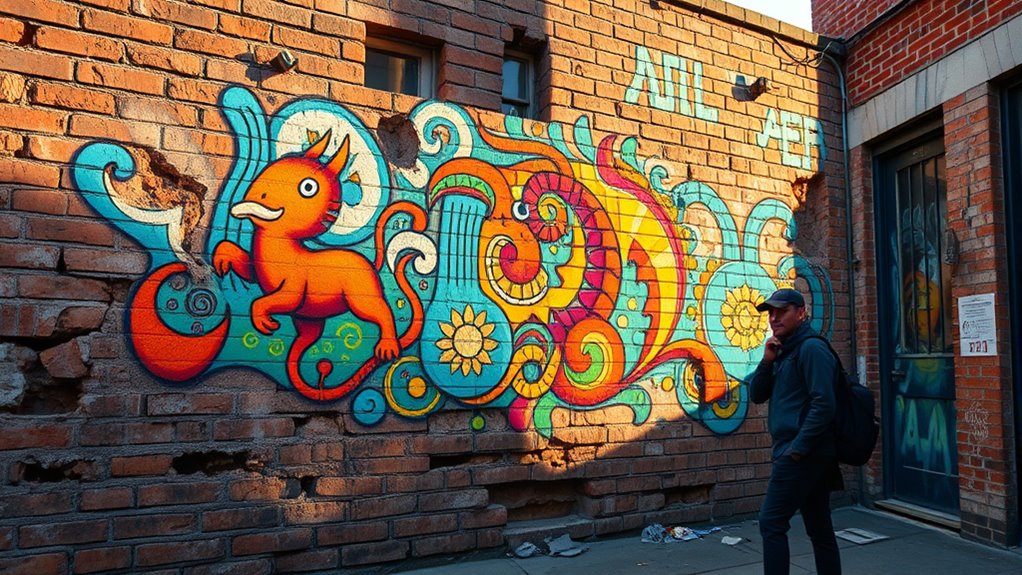

Street art and graffiti have evolved from rebellious acts to mainstream artistic expressions that shape urban environments. As urban art festivals gain popularity, they celebrate diverse styles and create lively spaces filled with music and conversation. Local governments now embrace murals as valuable features, recognizing their role in boosting tourism and community pride. This vibrant form of creativity tells powerful stories and reflects local cultures. Discover more about its transformation and impact in communities.
Key Takeaways
- Street art evolved from rebellion and social commentary to a celebrated form of artistic expression reflecting urban life and community stories.
- Urban art festivals transformed neighborhoods into vibrant canvases, attracting global artists and fostering community engagement through diverse styles and creative celebrations.
- Artists have expanded their techniques beyond traditional spray paint, incorporating mixed media and digital art, showcasing their skills and pushing creative boundaries.
- Local governments increasingly recognize the economic benefits of street art, promoting tourism and revitalizing neighborhoods through murals and installations as valued public features.
- Mainstream acceptance of urban art is driven by its storytelling power, enhancing cityscapes, celebrating diversity, and integrating art into everyday life.
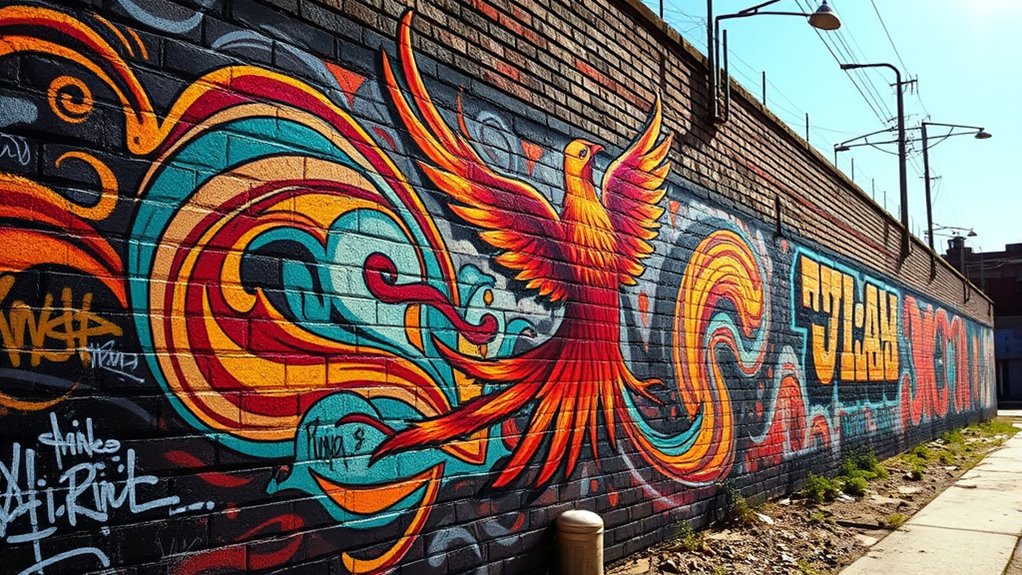
Although you might pass by it every day without a second thought, street art and graffiti are vibrant expressions of creativity that reflect the pulse of urban life. These art forms have evolved from the fringes of society to become celebrated aspects of contemporary culture. You may notice that they not only beautify neglected spaces but also tell stories about the communities they inhabit. Graffiti culture has roots in rebellion, social commentary, and personal expression. As you walk through city streets, you’ll likely encounter murals that provoke thought or inspire hope, showcasing how artists use their talents to engage with the public.
Street art and graffiti vividly capture urban life, transforming neglected spaces into powerful stories of community and creativity.
Urban art festivals have played a significant role in bringing graffiti and street art into the mainstream. These events transform ordinary neighborhoods into vibrant canvases, attracting artists and enthusiasts from around the world. You might find yourself strolling through an urban art festival, witnessing talented creators at work, and feeling the buzz of creativity in the air. These festivals celebrate diversity, allowing artists to showcase their unique styles while connecting with a broader audience. It’s a feast for the senses, with music, food, and engaging conversations filling the atmosphere.
As graffiti culture gains recognition, you’ll see more artists pushing boundaries and experimenting with new techniques. It’s not just about spray paint anymore; artists are incorporating mixed media, installations, and even digital art into their work. You might be surprised to discover that many of these creators are highly skilled and take their craft seriously. They’re often self-taught, yet their work reflects years of dedication and passion. This transformation has led to a growing appreciation for street art as a legitimate form of artistic expression.
You may also notice how public spaces are slowly being redefined by this movement. Once frowned upon, murals and installations are becoming sought-after features in city planning. Local governments are recognizing the economic benefits of street art, from increased tourism to revitalized neighborhoods. The impact of art can foster community pride and engagement, bridging gaps between residents and artists.
Frequently Asked Questions
How Can I Get Involved in Street Art as an Artist?
To get involved in street art as an artist, start by seeking artistic inspiration in your surroundings. Explore local murals and engage with other artists. Join community outreach programs that focus on urban art, which can help you network and learn from experienced creators. Attend workshops or art events to hone your skills and gain exposure. Don’t hesitate to share your work on social media to connect with a broader audience and showcase your talent!
What Materials Are Commonly Used for Street Art and Graffiti?
For street art and graffiti, you’ll commonly use spray paint and stencils. Spray paint gives you a vibrant range of colors and quick application, perfect for large pieces. Stencils allow you to create intricate designs and maintain consistency across your work. You might also consider markers and brushes for finer details. Experimenting with different materials can help you develop your unique style and techniques, making your art stand out in the urban landscape.
Are There Legal Ways to Create Street Art?
Yes, there are legal ways to create street art! You can obtain legal permits from local authorities, allowing you to paint in designated areas. Consider collaborating with community organizations to create public murals, which often receive support and funding. By following these legal avenues, you can express your creativity without the risk of fines or vandalism charges. Just remember to respect local guidelines and the community’s sentiments while you work.
How Do Cities Regulate Street Art and Graffiti?
Cities regulate street art and graffiti through public space policies that define where and how you can create art. They often designate specific areas for murals while enforcing strict rules against unauthorized works. You might see vibrant pieces around, but you’ll also notice graffiti removal strategies in action, as local authorities swiftly paint over or clean up unapproved art. This constant push and pull shapes the urban landscape you navigate daily.
What Impact Does Street Art Have on Local Communities?
Street art substantially impacts local communities by fostering community engagement and strengthening cultural identity. When you see vibrant murals, it encourages conversations among residents, sparking pride in shared heritage. These artworks often reflect local stories, struggles, and aspirations, making you feel more connected to your surroundings. As artists transform blank walls into expressive canvases, they create a sense of belonging, inviting you to participate in the ongoing narrative of your neighborhood.
Conclusion
Street art and graffiti have transformed from rebellious expressions to celebrated forms of urban art, capturing the hearts of many. Today, over 60% of people in major cities appreciate street art, recognizing its power to spark conversations and inspire change. This vibrant art form not only beautifies neighborhoods but also gives a voice to the voiceless. As you stroll through the streets, take a moment to appreciate the stories behind the spray cans and stencils—you might just find your perspective shifting.