
TL;DR

Get business pricing on monitors, keyboards and dev gear
- Business-only prices and quantity discounts
- Tax-exempt purchasing
- Multiple users, one account, clear invoices
A new smartphone feature leverages LED lights and AI to detect hidden cameras. While promising, it is still in early development, with details and effectiveness under evaluation. This innovation could impact privacy and security practices.
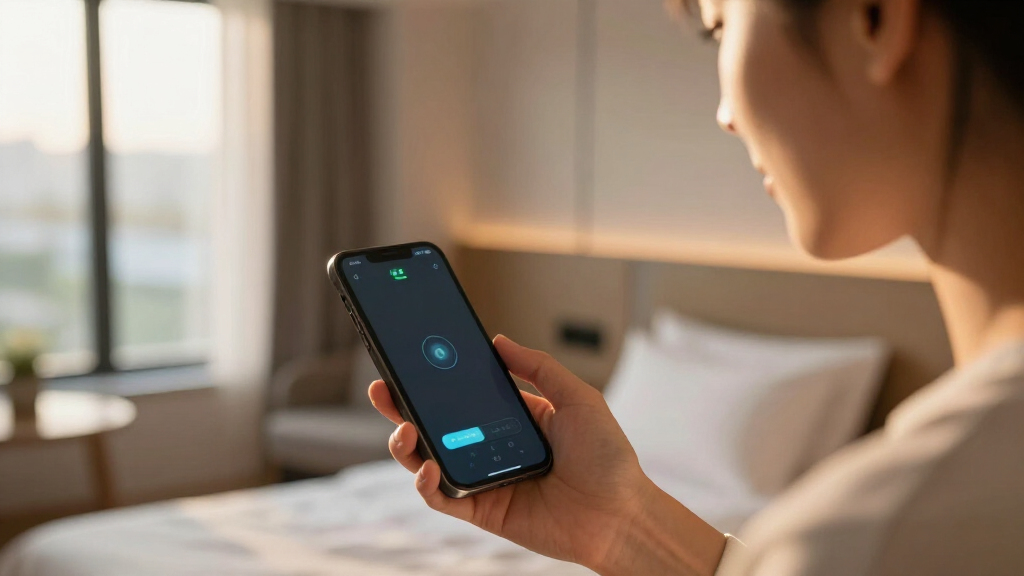
A new smartphone feature that uses LED lights combined with AI to detect hidden cameras has been reported, sparking widespread interest. The technology aims to help users identify covert surveillance devices in their surroundings, addressing growing privacy concerns. While the feature is still in early stages and not yet widely available, initial demonstrations suggest it could become a significant tool for personal security.
The technology involves the smartphone’s LED flash and sensor array working in tandem with AI algorithms to identify reflections or distortions caused by hidden cameras. According to patent filings and early prototypes, the system analyzes light patterns and reflections when the LED flashes, seeking anomalies consistent with camera lenses or electronic components. This approach leverages the fact that camera lenses often reflect light differently than other objects, allowing detection without specialized equipment.
Sources familiar with the development indicate that the feature is designed to be user-initiated, with the phone emitting a brief LED flash and then analyzing the reflected light through AI-powered image processing. Early tests have reportedly shown promising results in controlled environments, successfully identifying small hidden cameras in various objects and locations. However, the technology’s accuracy, false positive rate, and effectiveness in complex real-world scenarios remain unconfirmed.
Potential Impact on Privacy and Security
This innovation could significantly enhance personal privacy by giving individuals a practical tool to detect hidden surveillance devices, which are increasingly used in both malicious and benign contexts. It could empower users to identify covert cameras in hotel rooms, bathrooms, or private spaces, helping prevent unauthorized surveillance. However, the technology also raises concerns about misuse, such as false accusations or privacy violations, if not properly regulated or understood.
Experts suggest that if successfully commercialized, this feature could influence security practices, prompting more widespread adoption of privacy protection tools integrated into everyday devices. It could also stimulate regulatory discussions about surveillance and privacy rights, especially as detection technology becomes more accessible.
As an affiliate, we earn on qualifying purchases.
Emerging Trends in Privacy Tech and Surveillance Detection
The concept of using smartphones to detect hidden cameras is part of a broader trend in privacy-focused technology, driven by increasing awareness of covert surveillance and espionage. Over recent years, reports of hidden cameras in private spaces have surged, prompting demand for accessible detection methods. Prior to this development, specialized equipment such as RF detectors and lens finders were typically required, limiting accessibility for average users.
The idea of integrating detection capabilities into smartphones has been discussed in patent applications and research proposals, but practical implementations have been limited. The recent interest appears to be triggered by patent filings and prototype demonstrations, though details remain unconfirmed and unverified publicly. The technology’s effectiveness, cost, and user acceptance will determine its future impact.
As an affiliate, we earn on qualifying purchases.
Unconfirmed Effectiveness and Deployment Timing
Details about the actual performance, reliability, and accuracy of this LED-based detection system are still unclear. It is not yet confirmed whether the technology can reliably identify hidden cameras in diverse real-world environments or if it will be available to consumers soon. The extent of false positives or negatives remains unknown, and regulatory or privacy concerns have yet to be addressed.
privacy security camera detection device
As an affiliate, we earn on qualifying purchases.
As an affiliate, we earn on qualifying purchases.
Next Steps for Development and Verification
Further testing, independent validation, and refinement are expected before the technology is commercialized. Companies involved may release more detailed information, demonstrations, and possibly beta versions in the coming months. Regulatory agencies and privacy advocates are likely to monitor the development closely, especially regarding misuse or false detection issues.
As an affiliate, we earn on qualifying purchases.
Key Questions
It is not yet confirmed whether the technology can reliably detect all types of hidden cameras in real-world conditions. Testing is ongoing, and accuracy remains to be validated.
When might this feature become available to consumers?
There is no official timeline yet. The technology is still in early development stages, with potential commercial release possibly months or years away.
Are there privacy concerns associated with this detection technology?
Yes, the widespread availability of camera detection tools raises privacy and misuse concerns, including false accusations or privacy violations if used improperly.
Could this technology be used maliciously?
While designed for privacy protection, any detection technology could potentially be misused for stalking or harassment if not properly regulated.
Traditional methods often require specialized equipment like RF detectors or lens finders, which are less accessible for everyday users. Smartphone-based detection aims to be more user-friendly but is still in early testing stages.
Source: hn
Columbus Day / Indigenous Peoples' Day Picks
long weekend sales
As an affiliate, we earn on qualifying purchases.