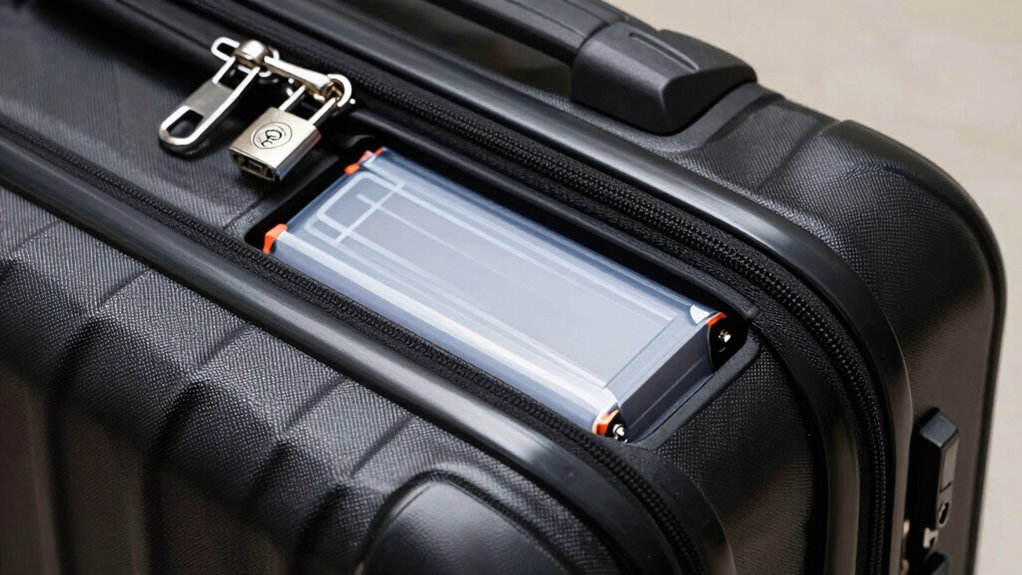
When traveling with smart luggage, the TSA focuses on how lithium-ion batteries are installed and handled to guarantee safety. You must carry batteries in carry-on luggage, protected from damage, and avoid charging batteries in checked bags. Be prepared to show proof of approval if asked and keep batteries accessible for inspection. Following these guidelines helps prevent delays and keeps your trip smooth. To learn specific packing tips and avoid common mistakes, continue exploring the essentials.
Key Takeaways
- Lithium-ion batteries in smart luggage must be approved, properly installed, and carried in carry-on bags to comply with TSA regulations.
- Batteries should be protected from damage, stored separately, and removed if requested during security screening.
- Spare batteries are only permitted in carry-on luggage, not checked bags, and must be in protective cases.
- Travelers should organize and disclose electronic devices and batteries to speed up security checks.
- Familiarity with TSA rules on battery watt-hours and proper handling prevents delays and potential confiscation.
Why TSA Is Concerned About Batteries in Smart Luggage
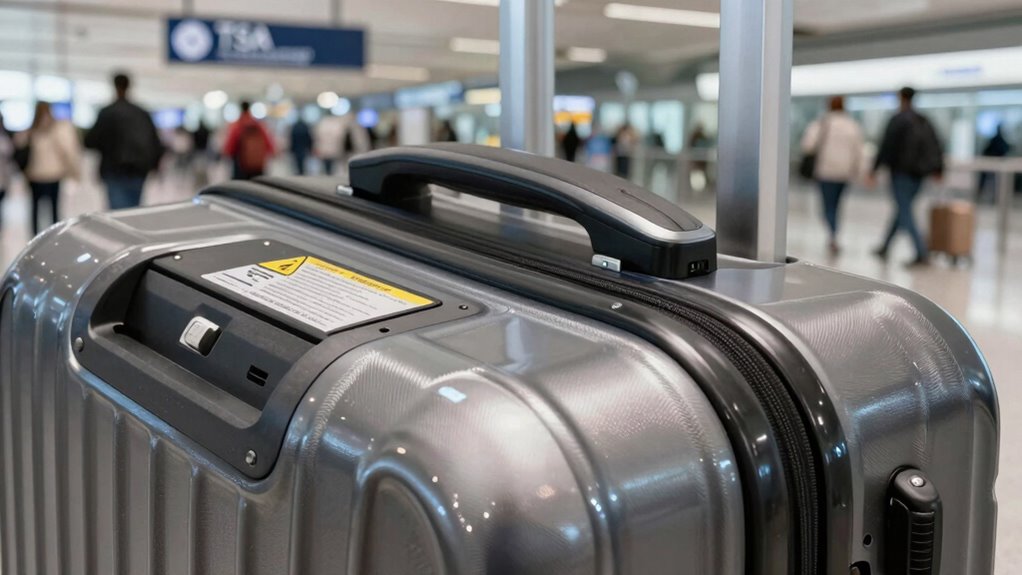
Because smart luggage often contains lithium-ion batteries, the TSA is highly concerned about potential safety risks. A battery fire caused by a faulty or damaged lithium battery can quickly escalate, posing serious danger to passengers and crew. To prevent this, the TSA enforces strict lithium regulations, requiring batteries to be installed properly and that only approved devices are carried onboard. These regulations aim to minimize the risk of thermal runaway, which can lead to fires or explosions. Since smart luggage integrates batteries into its structure, the TSA closely scrutinizes these bags during security screening. Ensuring that batteries are compliant and properly protected helps reduce the chances of dangerous incidents, keeping everyone safe during air travel. Proper handling of batteries during transport is crucial to prevent accidents and comply with airline safety standards. Smart locks and office gear can also enhance security and safety in various environments. Proper handling and understanding of fire safety protocols are essential when traveling with powered smart luggage. Additionally, understanding battery safety standards can further help travelers comply with TSA requirements and reduce risks during flights. Recognizing the importance of battery inspection procedures during security checks ensures that all batteries meet safety guidelines before boarding.
TSA Rules for Traveling With Batteries in Smart Luggage
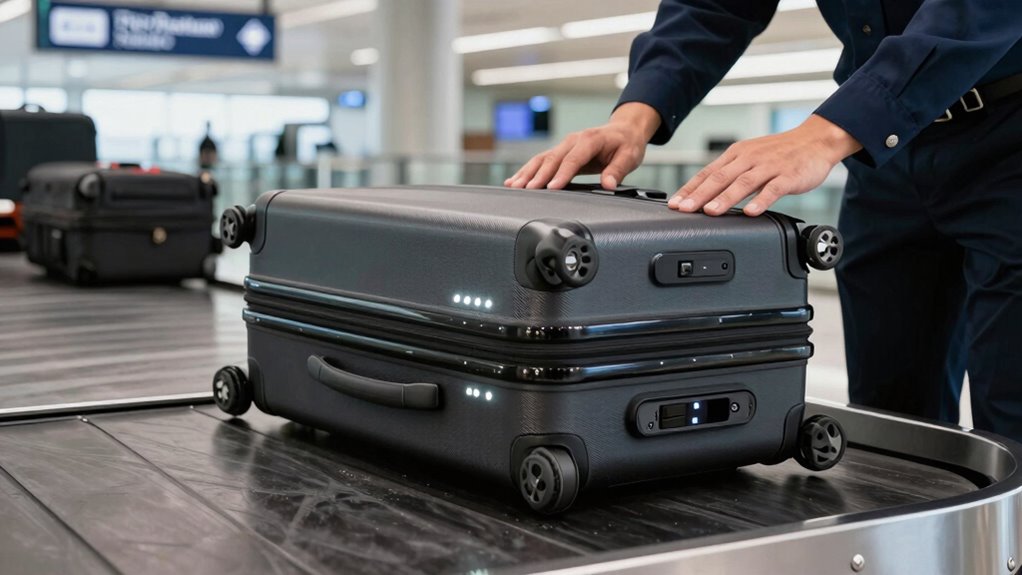
When traveling with smart luggage that contains lithium-ion batteries, it’s important to follow TSA rules to guarantee safety and compliance. Lithium battery regulations specify that batteries installed in your luggage must be installed in the device or carried separately in your carry-on bag. You should also make sure your smart luggage’s weight stays within airline limits, as overweight luggage can cause delays or extra fees. TSA generally permits batteries with a capacity of up to 100 watt-hours; anything above that requires airline approval. Always carry spare batteries in your carry-on, not in checked baggage. Be prepared to remove batteries if asked, and keep them protected from damage. Proper understanding of battery management can help prevent potential hazards during travel. Additionally, being aware of airline battery policies can prevent unexpected issues during security checks. Staying informed about lithium battery safety can further help you avoid potential hazards. It’s also advisable to check with your airline beforehand to confirm any specific battery storage requirements, as policies may vary between carriers. Following these rules helps ensure your smart luggage travels smoothly through security checkpoints.
How to Pack Your Smart Luggage Safely and Follow TSA Guidelines
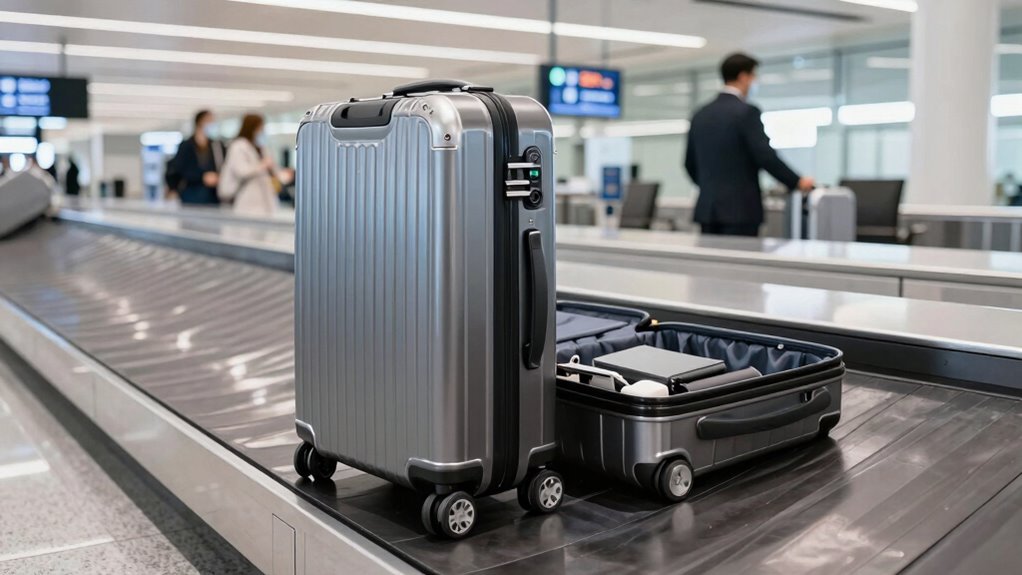
To pack your smart luggage safely and comply with TSA guidelines, start by securing all batteries properly. Remove or disconnect batteries if possible, and store them in carry-on luggage rather than checked bags. If your luggage has built-in charging stations, verify they are turned off and not accessible during security checks. Keep your luggage within the airline’s weight limits to avoid additional screening or fees, and pack smartly to prevent overpacking, which can damage batteries or devices. Use compartments or protective cases for electronics to prevent damage. Remember, TSA agents may need to inspect your luggage, so keeping batteries and devices organized speeds up the process. Additionally, using power protection can help prevent damage to your devices during travel. Properly battery management not only ensures compliance but also enhances the safety of your electronic devices throughout your journey. Being aware of Free Floating concepts related to electronics and safety can further help in understanding how to handle your devices securely. Incorporating safe packing techniques can reduce the risk of damage during transit and streamline the security process. Recognizing the importance of battery safety can help prevent potential hazards during travel. Following these steps helps ensure your smart luggage travels smoothly and remains compliant with TSA rules.
Common Mistakes to Avoid When Traveling With Smart Luggage Batteries
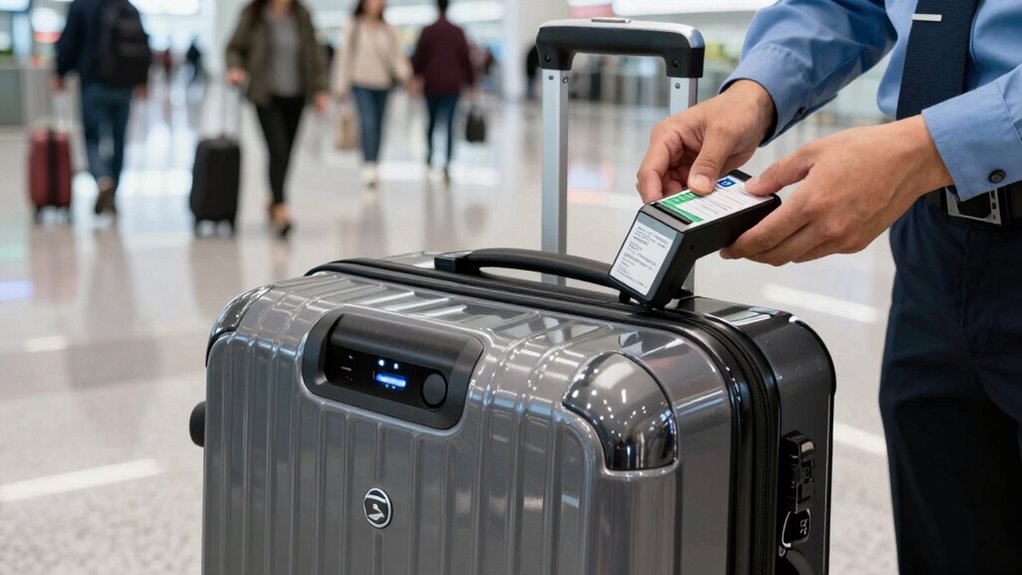
Travelers often make simple mistakes with their smart luggage batteries that can lead to delays or damage. One common error is neglecting proper battery storage, which can cause short circuits or fires. Always store batteries in accordance with TSA guidelines, avoiding extreme temperatures. Properly disconnect and secure batteries before travel. To prevent issues, follow this table:
| Mistake | Consequence | Solution |
|---|---|---|
| Improper battery storage | Damage or safety hazards | Store in approved containers |
| Charging in checked luggage | Fire risk | Charge only in carry-on, follow protocols |
| Overcharging batteries | Shortened lifespan or damage | Use manufacturer-recommended chargers |
| Leaving batteries loose | Loss or damage | Secure batteries in designated cases |
| Ignoring TSA rules | Delays or confiscation | Follow TSA guidelines strictly |
Additionally, familiarize yourself with battery safety regulations to ensure compliance and safe travel. Being aware of battery capacity limits can also help prevent issues during security checks. Proper storage practices can also help prevent battery damage, ensuring batteries remain safe and functional over time. Implementing correct storage techniques is essential for maintaining battery health and safety. Ensuring that batteries are stored and handled properly can also extend their lifespan, reducing the need for replacements and ensuring safety.
Tips for a Smooth Security Check When Flying With Smart Luggage
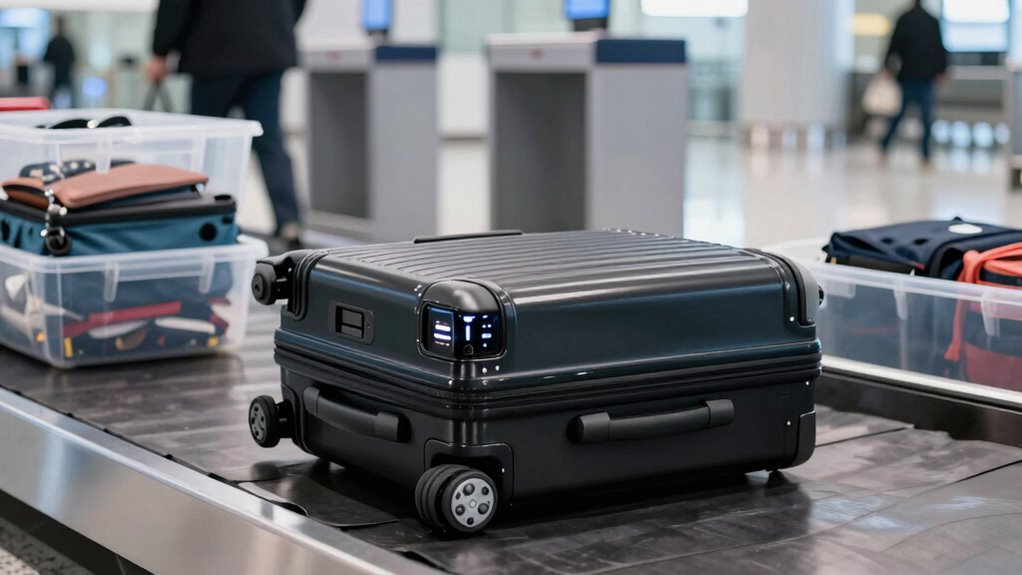
Managing security checks with smart luggage can be straightforward if you prepare properly. First, remove your smart bag from your carry-on or checked luggage during screening, especially if it contains a wireless charging feature. This helps TSA agents examine the battery and electronics more efficiently. Keep your battery warranties handy, in case you need to verify your device’s safety or replacement options. If your luggage has removable batteries, take them out and carry them separately in approved protective cases. Be honest about smart features—disclose any batteries or electronic components if asked. Familiarize yourself with TSA guidelines on lithium-ion batteries and smart luggage. Additionally, understanding smart device regulations can help you avoid unexpected delays during security checks. Being aware of halal traditions can also help travelers respect local customs during security checks when traveling internationally. Staying organized and transparent speeds up the process, reducing delays and ensuring a smooth security check.
Frequently Asked Questions
Can I Fly With Smart Luggage That Has Removable Batteries?
Yes, you can fly with smart luggage that has removable batteries, but you need to follow airline policies and international regulations. Always remove the batteries and carry them in your hand luggage, as airlines typically require. Check specific airline rules before your flight, since policies can vary. Also, guarantee the batteries are protected from short circuits, and pack them properly to avoid issues during security screening.
Are There Specific Brands of Batteries TSA Approves for Smart Luggage?
You might wonder if TSA approves specific brands of batteries for smart luggage. The answer is, TSA emphasizes battery safety and recommends using batteries from reputable brands with proven safety records. While the TSA doesn’t endorse certain brands explicitly, sticking to well-known, certified batteries guarantees compliance and reduces risks. Prioritize brand approvals, follow manufacturer instructions, and always carry batteries in carry-on luggage to keep your travel safe and smooth.
How Do TSA Officers Verify the Battery Type in Smart Luggage?
TSA officers verify the battery type in your smart luggage through battery inspection and verification procedures. They may ask you to remove the battery for inspection or use an app or device to check its specifications. During security checks, officers look for proper labeling and documentation. Be prepared to cooperate, answer questions, and follow instructions to guarantee smooth verification. This process helps confirm your battery’s compliance with safety regulations.
What Happens if My Smart Luggage’s Battery Is Damaged During Security?
If your smart luggage’s battery gets damaged during security screening, expect a bit of chaos—because TSA sees damaged batteries as a risk. They’ll likely remove and isolate it, delaying your journey. Battery damage triggers special procedures, and security staff will assess the situation carefully. So, while you might hope for a smooth screening, damage turns your travel into a mini adventure of its own—one you didn’t sign up for.
Are There Size Restrictions for Batteries in Smart Luggage?
Yes, there are size restrictions for batteries in smart luggage. You should check the battery capacity, which must typically be under 100Wh, or about 2.7Wh per lithium-ion cell. If your battery exceeds these limits, you’ll need special approval, and it may be prohibited altogether. Always verify the lithium content and capacity before traveling, and consider removing the battery if it’s close to or over the limit to avoid security issues.
Conclusion
By following TSA’s battery rules, you’ll navigate airport security as smoothly as a well-oiled machine. Think of these guidelines as your trusty map through the baggage maze—avoiding pitfalls and ensuring your smart luggage gets you where you need to go without a hitch. Stay informed, pack carefully, and keep batteries within the allowed limits. That way, your journey remains a breeze, not a storm, letting your smart luggage shine like a guiding star on your travel adventure.