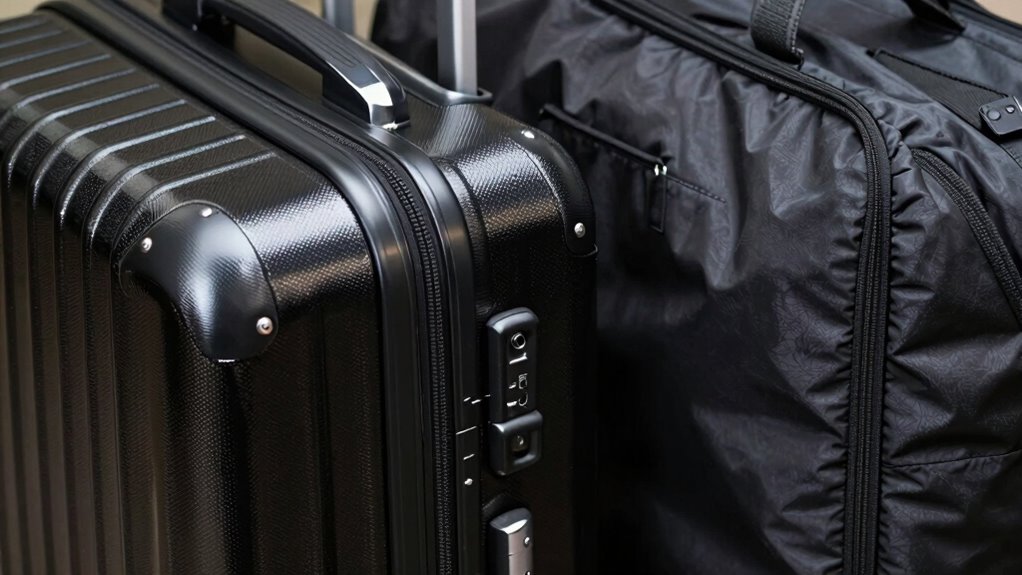

Hard-side luggage generally offers better protection for your valuables and can handle rough handling thanks to its rigid shell that resists impacts, scratches, and dents. Soft-side bags are more flexible and easier to pack, but they’re more vulnerable to impacts and damage from sharp objects. If you want maximum impact resistance and long-term durability, hard shells are the better choice. To find out more about how each type performs in different situations, keep exploring the options.

Get business pricing on monitors, keyboards and dev gear
- Business-only prices and quantity discounts
- Tax-exempt purchasing
- Multiple users, one account, clear invoices
Key Takeaways
- Hard-side luggage offers superior impact resistance and better protection against shocks and rough handling.
- Soft-side luggage absorbs impacts through flexible fabrics, reducing the risk of dents and cracks.
- Hard shells provide enhanced security features and better protection for fragile or valuables items.
- Soft-sided bags are more vulnerable to tears and deformation but allow easier packing and quick access.
- Both types can be weather-resistant; hard-shell cases generally offer better moisture and environmental protection.
As an affiliate, we earn on qualifying purchases.
What’s the Difference Between Hard-Side and Soft-Side Luggage?
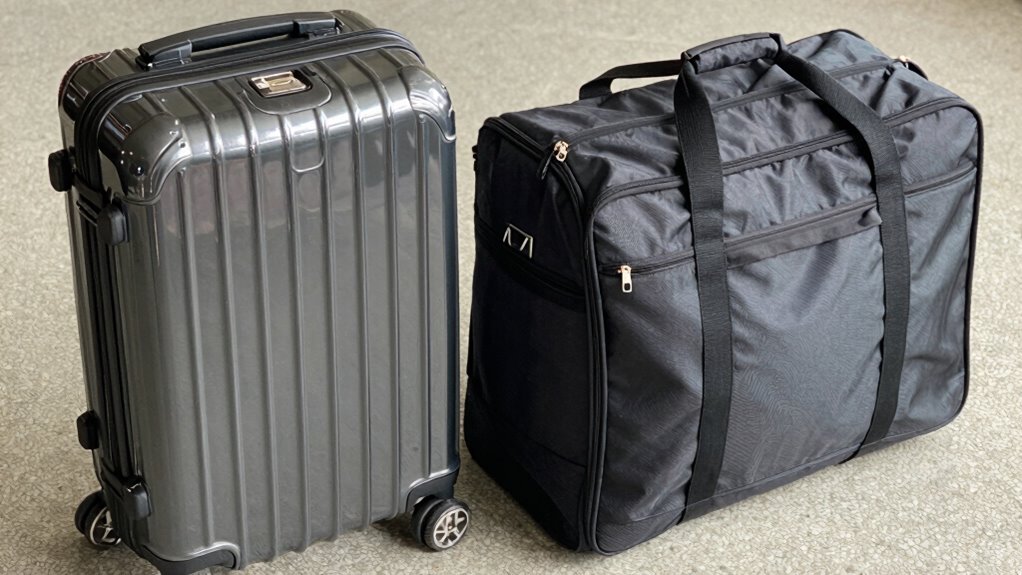
When choosing between hard-side and soft-side luggage, understanding their key differences can help you make the right decision. Hard-side luggage is typically made from lightweight, durable materials like polycarbonate or ABS, which keeps the overall weight manageable while offering solid protection. Soft-side luggage, on the other hand, is usually crafted from fabrics such as nylon or polyester, often making it slightly lighter and more flexible. This flexibility allows for easier packing and squeezing into tight spaces. Color options also vary; soft-sided bags tend to come in a wider range of vibrant hues and patterns, giving you more choices to match your style. While material weight influences portability, the variety of color options lets you personalize your luggage to suit your taste. Additionally, some soft-sided luggage incorporates cabling solutions or compartments designed to organize electronic accessories more efficiently. Understanding the material durability of each type can also help in selecting luggage that withstands frequent travel and rough handling. Furthermore, the security features offered by each type can impact your choice, especially for travelers concerned about theft or tampering. Considering the water resistance properties of these materials can also be important for protecting your belongings in different weather conditions.
As an affiliate, we earn on qualifying purchases.
Which Luggage Is More Impact-Resistant and Durable?
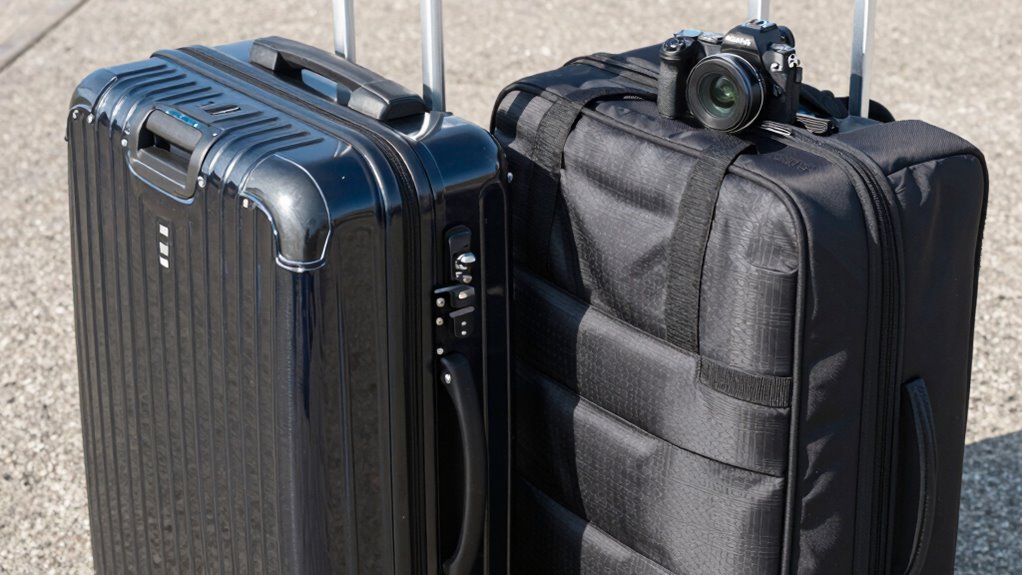
Hard-side luggage generally offers greater impact resistance and durability because its rigid shells can absorb shocks and protect your belongings more effectively. This sturdy exterior helps withstand rough handling and protects items inside, especially when facing unexpected impacts. Its solid structure also aids in maintaining proper weight distribution, minimizing stress on zippers and seams that can break over time. While soft-side luggage can be resilient, it often relies on fabric and flexible materials, which may wear out faster under rough conditions. Additionally, hard-shell cases typically feature better interior organization options, helping you secure your items and prevent shifting during transit. impact resistance is a crucial factor in choosing luggage for travel. Moreover, the material quality of hard-side luggage often contributes to its overall longevity, making it a reliable choice for frequent travelers. Selecting proper material selection can significantly enhance the durability of your luggage over time. Hard-side luggage’s ability to resist scratches and scuffs also makes it more suitable for protecting your belongings in challenging environments. Furthermore, impact absorption properties help it withstand drops and knocks better than soft-side alternatives. Overall, if impact resistance and durability are your top priorities, hard-side luggage tends to better safeguard your belongings during travel.
impact resistant hardside suitcase
As an affiliate, we earn on qualifying purchases.
As an affiliate, we earn on qualifying purchases.
How Do Security Features Compare in Hard-Side and Soft-Side Luggage?
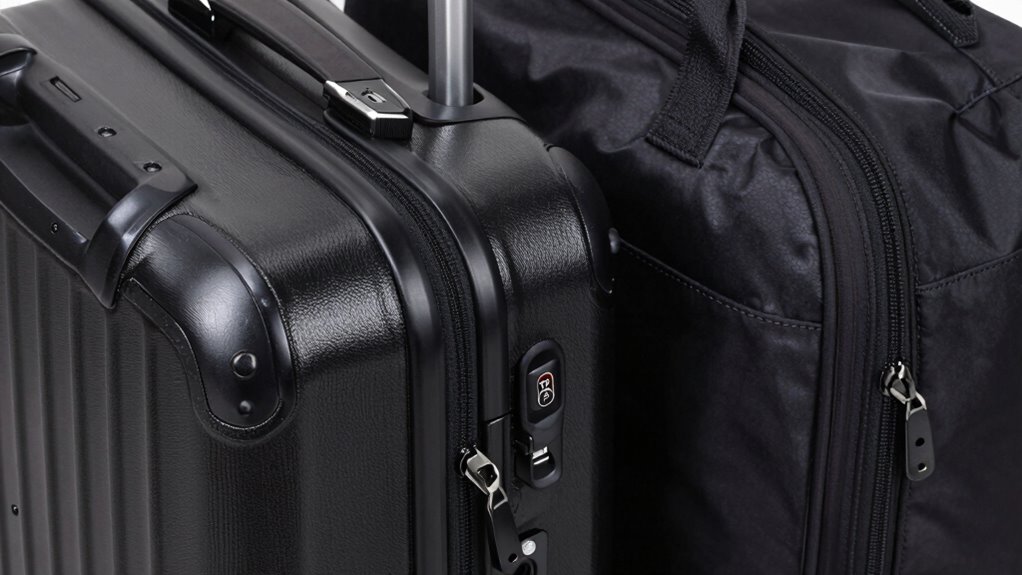
Security features in luggage can vary considerably depending on the design, and understanding these differences helps you choose the right option for your travel needs. Hard-side luggage often includes integrated security locks that are built into the case, providing a sturdy barrier against tampering. Soft-side luggage usually relies on external security locks, which can be added to zippers or clasps. When selecting your luggage, look for TSA approval on the locks, ensuring airport security can open and inspect your bag without damage. Both types can feature combination locks, key locks, or padlocks, but hard-side cases tend to offer more robust security due to their solid construction. Additionally, security features in luggage can include smart locks or electronic access controls for added protection. Ultimately, choose a design with quality security locks and TSA approval to keep your belongings safe during travel.
As an affiliate, we earn on qualifying purchases.
How Practical Is Each Type for Packing and Travel Convenience?
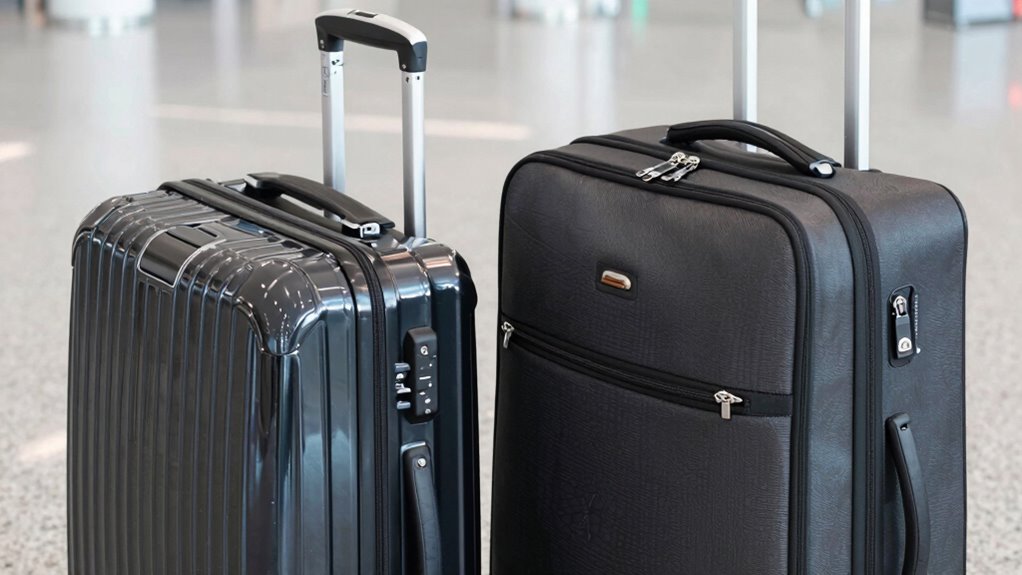
Choosing the right luggage for packing and travel convenience depends largely on your specific needs and preferences. Hard-side luggage offers better packing efficiency because its structured design keeps items secure and organized, making it easier to pack tightly. It also provides a smooth surface for stacking and accessing contents quickly. Soft-side luggage, on the other hand, tends to be more flexible, allowing you to squeeze in extra items or fit into tight spaces more easily. It often features external pockets for quick access to travel essentials, enhancing travel ease. Both types are portable, but soft-side bags are generally lighter and easier to maneuver through crowded airports or tight storage spaces. Additionally, considering door swings and stair proportions can help in planning storage options for your luggage at home. Ultimately, your choice depends on whether you prioritize organized packing or flexible, lightweight travel convenience.
Which Luggage Protects Your Belongings Better in Rain and Snow?

When traveling in rain or snow, your luggage’s ability to protect your belongings becomes essential. Soft-side bags made with waterproof fabric and high weather resistance can keep your items dry, even in heavy downpours. Hard-side luggage offers a rigid shell that shields better against moisture and snow, preventing leaks. Consider this comparison:
| Feature | Soft-Side Luggage | Hard-Side Luggage |
|---|---|---|
| Waterproof Fabric | Usually includes water-resistant materials | Often has waterproof exteriors |
| Weather Resistance | Good with protective covers or coatings | Excellent, provides full shell protection |
| Protection in Rain/Snow | Keeps items dry if properly sealed | Offers superior moisture barrier |
Both types provide weather resistance, but hard sides typically give better protection in harsh conditions. Weather resistance is a key factor to consider when choosing luggage for unpredictable climates, especially when expecting heavy rain or snow. Additionally, understanding nail biology can remind travelers of the importance of durable, well-maintained luggage to prevent damage during transit. Proper luggage durability can significantly enhance the protection of your belongings in challenging weather conditions.
How Do Hard-Side and Soft-Side Bags Handle Airport Bumps and Rough Handling?
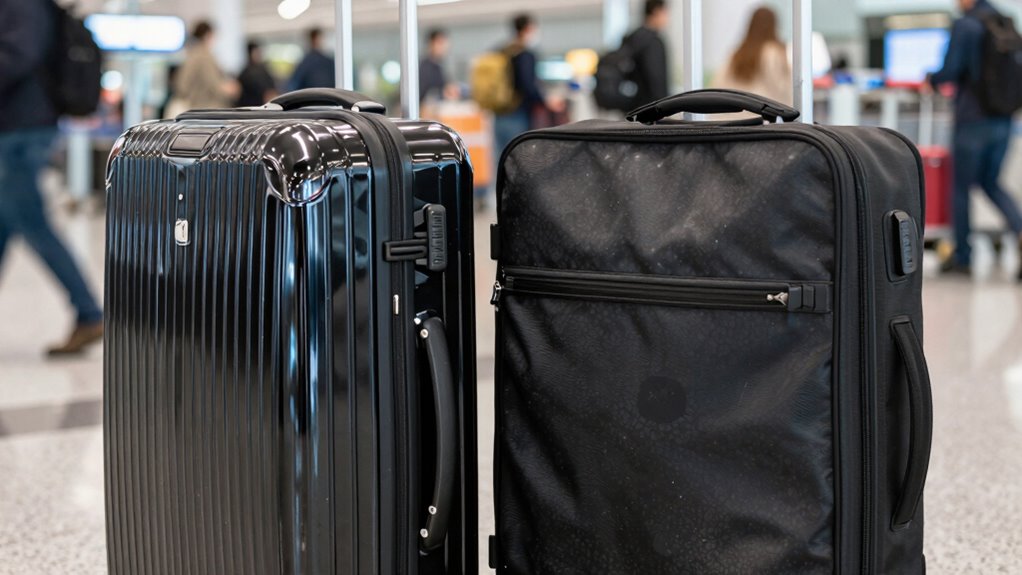
When your luggage hits airport bumps or rough handling, how well it absorbs impacts matters. Hard-side bags often resist pressure but can crack under extreme force, while soft-side bags typically flex more but might not protect fragile items as well. Considering durability and impact resistance helps you choose the right bag for tough travel conditions.
Impact Absorption Capabilities
Hard-side luggage typically offers better protection against impacts because its rigid exterior absorbs and deflects shocks more effectively. When handling weight during rough handling, this rigidity helps prevent dents and breakage. However, the material flexibility of soft-sided bags allows them to absorb impacts by flexing slightly, which can cushion the contents. Soft-side bags often absorb bumps better because they can bend around objects and conform to pressures, reducing the force transmitted to your belongings. Conversely, hard shells deflect impacts outward, minimizing direct force transfer. While hard cases are more resistant to penetration, soft-sided luggage’s flexibility makes it more adaptable to sudden shocks. Additionally, the impact absorption capabilities of each type can influence how well your belongings are protected during transit. The material flexibility of soft-sided bags allows them to conform more easily to other items in your luggage, providing additional cushioning. Moreover, impact distribution plays a crucial role in minimizing damage during rough handling. Overall, both types handle airport bumps differently, with hard-side excelling in deflection and soft-side in impact absorption through flexibility.
Durability Under Pressure
Hard-side luggage tends to withstand airport bumps and rough handling better because its rigid shell resists deformation and maintains its shape under pressure. Its material rigidity helps protect contents during transit. However, consider these points:
- Material flexibility: Soft-side bags often adapt better to pressure, absorbing impacts without cracking.
- Weight considerations: Hard-shell luggage tends to be heavier, which might affect handling and baggage fees.
- Handling roughness: Soft-side bags may endure rough handling through their flexible fabric, but they risk internal damage if the exterior is punctured or torn.
While hard-side luggage offers superior protection against pressure, soft-side options excel in adaptability, especially when weight and flexibility are factors. Your choice depends on whether you prioritize rigid protection or adaptable resilience.
Resistance to Cracks
Ever wondered how luggage materials withstand the impact of airport bumps and rough handling? Hard-side bags, often made of polycarbonate or aluminum, tend to resist cracks better because of their rigid structure. However, if they do suffer a crack, it’s usually more noticeable and harder to repair. Soft-side luggage, typically crafted from durable fabrics like ballistic nylon or polyester, offers greater material flexibility, making it less prone to cracking under pressure. Plus, the flexibility allows the bag to absorb shocks better, reducing the risk of cracks forming. In addition, soft-side options often maintain their aesthetic appeal longer, even after rough handling. Overall, soft-side bags provide better resistance to cracks thanks to their flexible materials, but hard-side bags can be more vulnerable if cracks do develop.
Are Soft-Side Bags More Vulnerable to Theft or Damage?

Soft-side bags can be more vulnerable to theft because they often have easier access points. They may also be more susceptible to damage from rough handling or sharp objects. Considering these factors helps you decide if softness fits your travel needs. Additionally, ergonomic design features can influence how well a bag protects its contents during transit. Being aware of security features can further enhance the safety of your belongings while traveling. Furthermore, the resale value of soft-side bags tends to decline more quickly if damaged or heavily used. Understanding the material quality of soft-side luggage can also determine its durability and long-term protection. Moreover, user reviews often highlight real-world durability issues that can influence your choice.
Vulnerability to Theft
Are soft-side bags more vulnerable to theft or damage? Soft-sided luggage can be more attractive to thieves due to their accessible design. To improve theft prevention, you should consider these security measures:
- Use lockable zippers or TSA-approved locks to secure compartments.
- Keep valuables in inner pockets or hidden compartments.
- Stay alert in crowded areas, where pickpocketing is more common.
While soft-sided bags offer flexibility, their fabric and zippers can be easier targets for theft. However, implementing strong security measures greatly reduces this risk. Remember, being aware of your surroundings and using theft prevention tactics helps protect your belongings. Overall, soft-side luggage can be just as secure as hard-side options when you actively take steps to safeguard your bag.
Susceptibility to Damage
While soft-sided bags offer flexibility and lightweight convenience, they tend to be more vulnerable to damage during travel. The fabric’s breathability makes these bags more susceptible to tearing or punctures if handled roughly. Additionally, soft-sided luggage often relies on less rigid materials, so impacts or pressure can deform or dent the bag more easily than hard-shell cases. Weight considerations also play a role; lighter soft bags may sacrifice padding, increasing the risk of damage to your belongings. While they’re easier to squeeze into tight spaces, their fabric and flexible structure don’t provide the same level of protection against drops or knocks. Overall, soft-sided luggage offers convenience but requires careful handling to avoid damage during transit.
Which Luggage Lasts Longer and Handles Wear & Tear Better?

When it comes to durability, hard-side luggage generally outperforms soft-side options because its rigid exterior provides better resistance to impacts and rough handling. This means it often lasts longer and handles wear and tear more effectively. To maximize its lifespan, consider these factors:
- Security features—hard shells often include integrated locks that prevent damage and theft.
- Weight considerations—hard-side luggage tends to be heavier, so you’ll want to balance durability with ease of handling.
- Wear resistance—hard shells resist scratches and dents better, maintaining their appearance over time.
While soft-side luggage can be more flexible and lightweight, it’s more prone to tears and fabric wear. Your choice depends on prioritizing longevity versus convenience.
Is Hard-Side or Soft-Side Luggage More Cost-Effective for Protection?
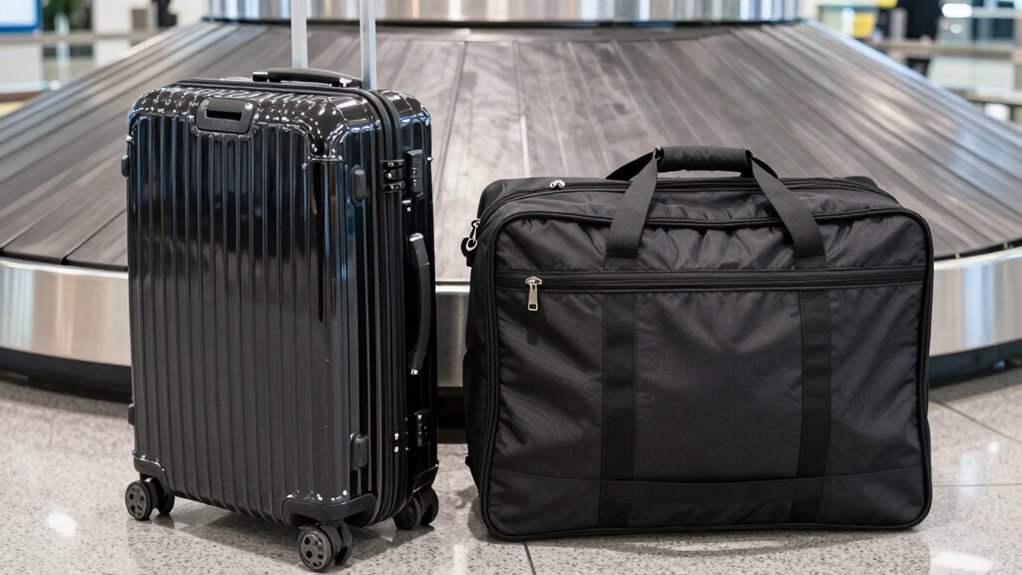
When comparing hard-side and soft-side luggage, you’ll notice differences in purchase prices that can impact your budget. Over time, durability plays a key role in how cost-effective each option is, especially if you travel often. Considering both initial costs and long-term protection helps you choose the best value for your needs.
Purchase Price Differences
Are hard-side and soft-side luggage priced differently when it comes to protection? Yes, generally, hard-shell options tend to be more expensive upfront due to their sturdy materials. When doing a price comparison, consider these points:
- Hard-side luggage often costs more initially but offers better impact protection.
- Soft-side luggage usually has lower starting prices, making it a budget option.
- Over time, soft-sided bags might require repairs or replacements, affecting overall cost.
If you’re on a tight budget, soft-side luggage provides a cost-effective choice with decent protection, but if your priority is durability and safety, investing in a hard-shell might be worth the extra expense. Remember, the right option depends on your specific protection needs and budget.
Long-Term Durability
Hard-side luggage generally proves more durable over the long term because its sturdy shells resist impacts and wear better than soft-sided bags. Its rigid material provides excellent protection against rough handling, preventing cracks and tears that can develop over time. While hard shells offer less material flexibility, they tend to maintain their shape and integrity longer, reducing the risk of damage. Weight considerations are important—you might find hard-side bags heavier, but this added weight often correlates with increased durability. Soft-sided luggage can stretch or deform under pressure, which might compromise protection after frequent use. If you prioritize long-term durability and cost-effectiveness, hard-side luggage’s resilience makes it a smarter choice, especially for frequent travelers or those carrying valuable or fragile items.
Which Luggage Style Best Fits Your Travel Needs and Keeps Your Valuables Safe?
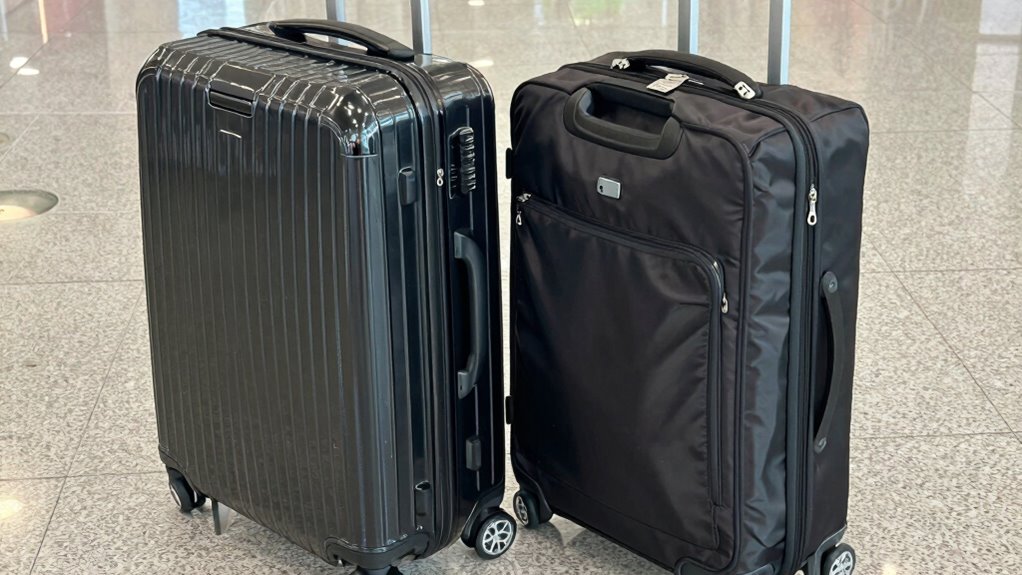
Choosing the right luggage style depends on your travel needs and how much security you require for your valuables. If you prefer easy access and lightweight options, soft-side luggage is ideal because it offers flexibility and expands easily. On the other hand, hard-side luggage provides superior protection, especially if you carry fragile items or valuable travel accessories. Consider these factors:
Choose soft-sided for flexibility and easy access; opt for hard-sided for better protection and security.
- Security needs: Hard shells deter theft and protect delicate belongings.
- Accessibility: Soft-sided bags often have external pockets for quick access to essentials.
- Durability: Choose based on your travel environment—rough terrains favor hard shells, while urban settings suit soft-sided options.
Matching your luggage style with your travel needs ensures your valuables stay safe and your journey smoother.
Frequently Asked Questions
How Do Hard-Side and Soft-Side Luggage Affect Weight Limits?
Hard-side luggage often adds a bit more weight, which can reduce your available weight capacity, limiting your packing efficiency. Soft-side bags tend to be lighter, giving you more room for essentials within the airline’s weight limit. When choosing, consider how much you pack; if you carry heavy items, a soft-side option might help you maximize your weight capacity and pack more efficiently without risking overage fees.
Can Soft-Side Luggage Be Reinforced for Better Protection?
Yes, you can reinforce soft-side luggage for better protection. Use reinforced fabric to strengthen vulnerable areas, and look for luggage with soft shell durability features like double stitching or padded panels. Adding corner guards or internal padding also boosts durability. This way, your soft-side luggage becomes more resilient against impacts and rough handling, ensuring your belongings stay safe without sacrificing flexibility or weight limits.
Are There Specific Travel Destinations Better Suited for Each Luggage Type?
Imagine your luggage as a trusty steed—hard-side for rugged adventures and soft-side for elegant escapes. For luxury destinations, soft-side luggage blends seamlessly with upscale environments, offering flexibility and style. In contrast, adventure travel calls for durable hard-side cases that withstand rough terrains. Choose accordingly, so your luggage is perfectly suited to the journey, whether you’re strolling through refined city streets or conquering untamed wilderness.
How Does Luggage Material Impact Long-Term Wear and Tear?
Your luggage’s material durability considerably impacts its long-term wear and tear. If you choose durable, wear-resistant materials like polycarbonate or ballistic nylon, your luggage will withstand frequent trips and rough handling better. Soft-side bags with high-quality fabrics tend to bend and stretch, but may show wear faster. Hard-side luggage generally offers better protection and resists cracks over time, making it ideal for frequent travelers seeking longevity.
What Are the Environmental Impacts of Manufacturing Hard Vs Soft Luggage?
You might be surprised, but the environmental impacts of manufacturing hard versus soft luggage are complex. Hard luggage often involves plastics that pose recycling challenges and rely on less sustainable materials. Soft luggage, usually made from fabrics, can sometimes utilize more eco-friendly, recyclable textiles. However, both face sustainability issues, and choosing options with eco-conscious materials helps reduce environmental harm. Your choices can influence manufacturing practices and promote better environmental stewardship.
Conclusion
Choosing between hard-side and soft-side luggage depends on your travel needs. Did you know that studies show soft-sided bags are 30% more likely to be stolen due to easier access? If durability and impact resistance matter most, hard-side might be your best bet. But if convenience and flexibility are key, soft-side offers great benefits. Consider your destinations and valuables to pick the luggage that keeps your belongings safest and your trips stress-free.
Fall Picks
fall essentials
As an affiliate, we earn on qualifying purchases.