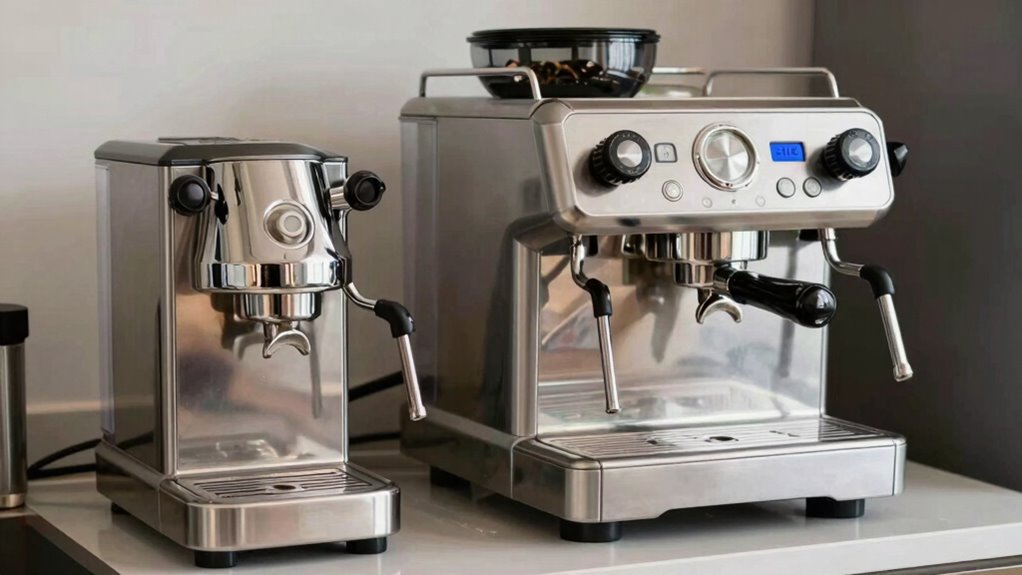

Choosing between a single boiler and a dual boiler espresso machine depends on what you need. A single boiler heats water for brewing and steaming in one chamber, so you might wait to switch modes. A dual boiler has separate chambers, letting you brew and steam at the same time with stable temperatures. If you want consistent quality and faster workflow, a dual boiler is ideal. Keep exploring to see which suits your coffee style best.
Key Takeaways
- Single boiler machines heat water in one tank, handling brewing and steaming but can’t do both at once.
- Dual boiler machines have separate chambers for brewing and steaming, allowing simultaneous operation and better temperature stability.
- Single boilers are cheaper, simpler, and easier to maintain, ideal for home use and beginners.
- Dual boilers cost more but provide faster recovery, consistent temperature, and are better for high-volume or professional use.
- Proper maintenance and choosing the right type ensure better coffee quality, machine longevity, and overall satisfaction.
What Is a Single Boiler Espresso Machine and How Does It Work?
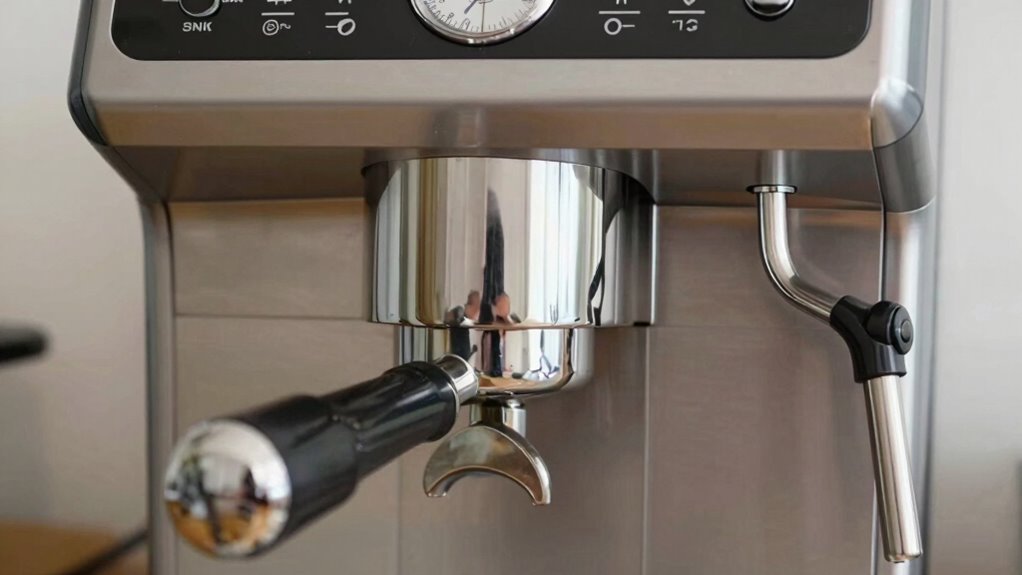
Have you ever wondered how a single boiler espresso machine brews your favorite coffee? It all comes down to its simple design, where one boiler handles both brewing and steaming. Temperature regulation is key here; since the boiler heats water to a specific temperature, it must be carefully controlled to guarantee ideal extraction. The boiler capacity plays a crucial role, as a larger capacity allows for multiple shots or steaming without reheating, but it also means longer heat-up times. When you make espresso, the machine heats water directly in the boiler, and you have to wait for it to reach the right temperature before brewing. This setup is straightforward, reliable, and often more affordable, making it perfect for home use. Understanding boiler operation is essential to optimizing your espresso experience, especially when considering maintenance and troubleshooting. Additionally, mastering temperature stability can significantly improve the consistency of your brews and steaming performance. Recognizing the importance of energy efficiency can also help you select the best machine for your needs and reduce operational costs. Incorporating proper calibration techniques can further enhance your brewing results and prolong your machine’s lifespan.
What Are the Main Features of Dual Boiler Espresso Machines?
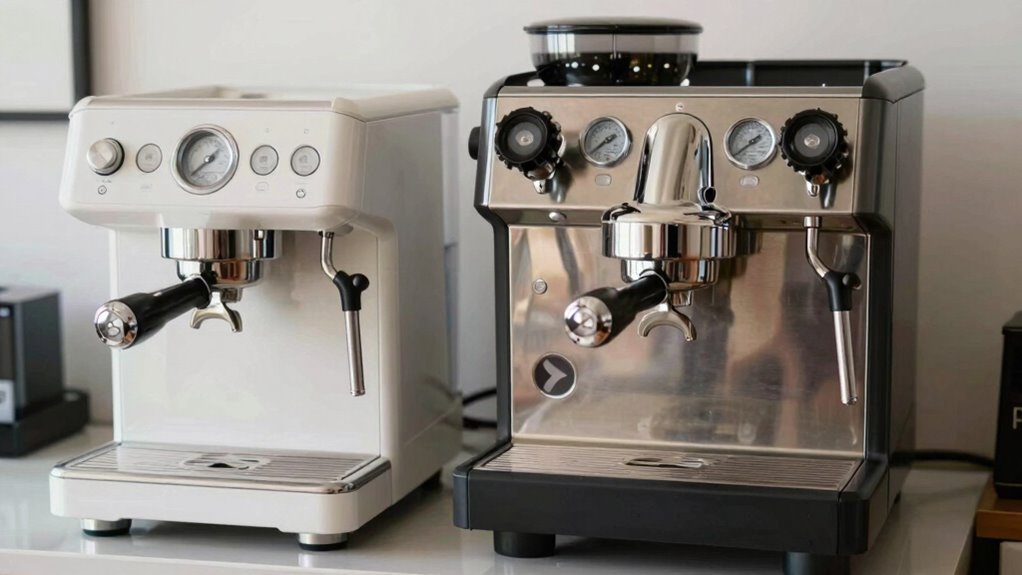
Wondering what sets dual boiler espresso machines apart? Their main features include excellent temperature stability and consistent brewing performance. With separate boilers for brewing and steaming, you can maintain precise temperatures for each function without fluctuations. This dedicated setup helps prevent temperature fluctuations and ensures optimal extraction conditions for your espresso. The dedicated boilers also allow you to switch seamlessly between brewing and steaming without waiting for the machine to heat up again. Plus, dual boilers often include advanced temperature control systems, ensuring stable heat levels throughout your session. temperature stability is a key advantage, enabling more reliable and high-quality espresso shots. Additionally, the separate boilers can reduce the buildup of ear wax odor or other smells that might interfere with the aroma of your coffee. This setup also contributes to the overall durability of the machine, making it a worthwhile investment for home baristas. These features give you the confidence to produce cafe-quality espresso at home, with reliable brewing consistency and precise temperature management that single boilers struggle to match. Furthermore, the efficient heat transfer provided by dual boilers helps to extend the lifespan of your espresso machine by reducing wear on components.
How Do Single and Dual Boilers Differ in Heating and Temperature Control?

Single and dual boiler espresso machines handle heating differently, which impacts how they control temperature during brewing and steaming. Single boilers heat water in one chamber, so you must wait for the machine to switch between brewing and steaming modes, affecting temperature consistency. This means you might experience fluctuations in temperature, making it harder to maintain steady results. In contrast, dual boilers have separate chambers for brewing and steaming, allowing each to operate independently. This setup provides better temperature control and consistency, so your espresso stays at the right temperature throughout. Additionally, dual boilers tend to be more heating efficient because they don’t need to pause for temperature adjustments, ensuring consistent performance and quicker alternatives between brewing and steaming.
Which Type of Espresso Machine Is Best for Beginners?
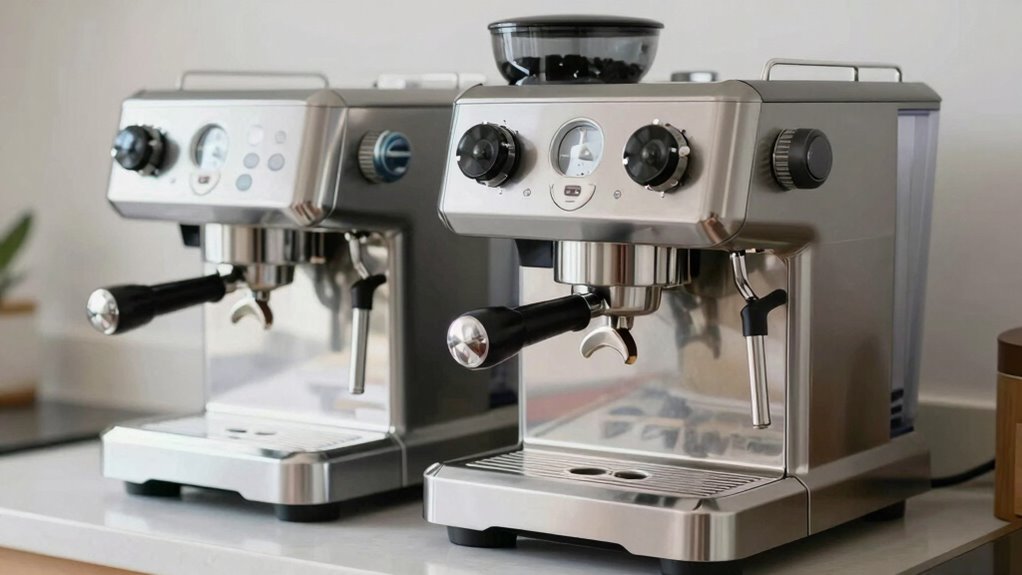
If you’re new to making espresso, you’ll want a machine that’s simple to operate and easy to maintain. Budget-friendly options are often best for beginners, but be sure to weigh ongoing costs like replacement parts and cleaning supplies. Choosing the right machine means balancing ease of use, affordability, and low maintenance to get started confidently.
Ease of Use
For beginners, choosing an espresso machine that’s easy to operate can make all the difference in building confidence and enjoying the brewing process. Machines with user friendly operation and intuitive controls simplify this learning curve. Look for models with straightforward interfaces, such as clearly labeled buttons or dials, and minimal setup steps. Dual boilers often have more complex controls, which can be overwhelming, while single boilers typically offer a more streamlined experience. Consider features like automatic shot dosing or pre-programmed settings that reduce guesswork. These features help you focus on perfecting your espresso without fuss. Additionally, machine controls that are designed with beginners in mind can significantly enhance your overall experience by reducing frustration. When selecting a machine, user interface design plays a crucial role in ensuring a smooth learning process. A well-designed control layout can make troubleshooting easier and help you become more proficient quickly. Incorporating intuitive controls can also reduce the time needed to master your machine and improve your confidence. Ultimately, an intuitive control layout guarantees you spend less time troubleshooting and more time enjoying your favorite coffee at home. Incorporating clear instruction manuals and accessible customer support can further boost your confidence as you learn.
Cost and Maintenance
When choosing an espresso machine for beginners, cost and maintenance are important factors to contemplate. A clear price comparison helps you find options that fit your budget without sacrificing quality. Single boiler machines typically cost less upfront and are easier to maintain, making them ideal for beginners. Dual boiler models tend to be pricier, but their advanced features can justify the investment if you’re serious about espresso. Also, consider warranty coverage; a longer warranty can save you money on repairs down the line. Regular cleaning and descaling are essential regardless of the type, but machines with straightforward maintenance routines reduce your effort and expenses. Overall, balancing initial cost, ongoing maintenance, and warranty support guides you toward the best machine for your needs.
Why Does Temperature Stability Matter for Great Coffee?
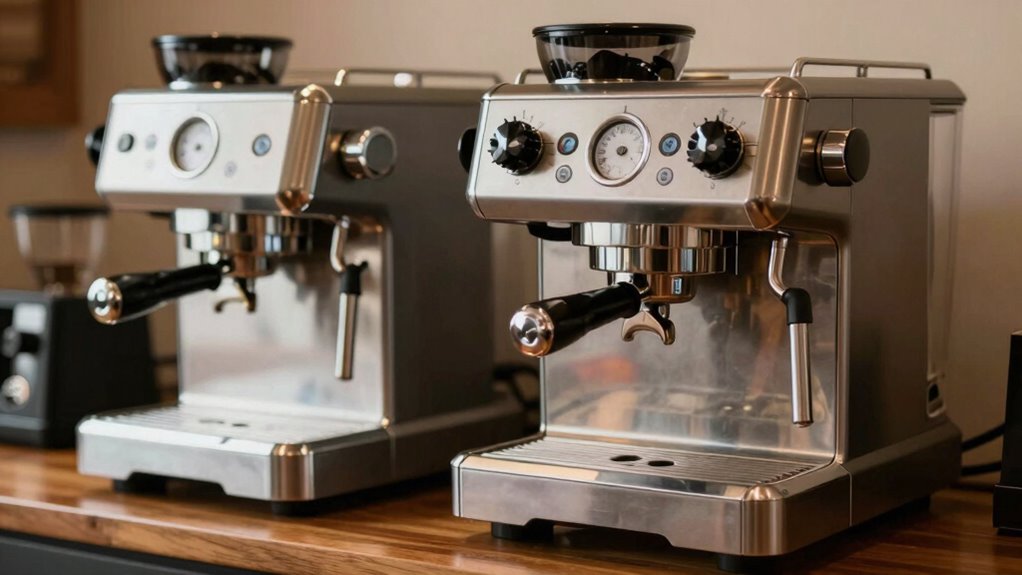
Maintaining a stable brew temperature is key to opening the full flavor of your espresso. When the temperature fluctuates, it can lead to over- or under-extraction, ruining the taste. Consistent brew temperatures ensure you get the rich, balanced flavor you’re after. Additionally, temperature stability can be influenced by the design of your espresso machine, such as whether it has a single boiler or dual boiler system. The choice between these designs often affects how well the machine maintains that crucial temperature consistency, impacting your overall espresso experience. Proper machine design features can help minimize temperature fluctuations and improve extraction quality. Selecting the right system can also influence the brewing process and your ability to achieve optimal results. Understanding how different boiler configurations affect thermal stability can help you make a more informed decision when choosing equipment.
Consistent Brew Temperatures
Have you ever noticed how some shots taste consistently rich and balanced, while others fall flat? That’s often due to temperature stability. When your espresso machine maintains steady brewing temperatures, it ensures brewing consistency. Fluctuating temperatures can lead to under-extracted or over-extracted coffee, ruining flavor. Proper gear care and maintenance can also help keep your machine functioning at optimal temperature stability. To achieve this, look for:
- Precise temperature control systems
- Minimal temperature fluctuations during brewing
- Consistent heat source
- Reliable boiler design
These features help your machine maintain a stable temperature throughout the extraction process. Additionally, understanding the boiler design can help you choose equipment that offers better temperature control. By doing so, you’ll get more reliable results, richer flavors, and a smoother shot every time. Temperature stability is essential for brewing consistency, making your espresso experience much more predictable and satisfying.
Impact on Flavor Extraction
Consistent brew temperatures directly influence how effectively your coffee’s flavors are extracted. When the temperature stays stable, you achieve better flavor extraction, capturing the nuanced notes and aroma that make your espresso enjoyable. Fluctuating temperatures can lead to under or over-extraction, resulting in bitter or weak tastes. This temperature stability also helps prevent the formation of microplastics in dust, which can be a concern in less controlled environments. This inconsistency affects taste consistency, making every shot unpredictable. A machine with good temperature stability ensures that each espresso maintains the same high-quality flavor profile. If your machine struggles to hold a steady temperature, you might notice your coffee tasting different from shot to shot. For the best flavor extraction and reliable taste, choosing an espresso machine that maintains consistent brew temperatures is essential. It’s the key to consistently delicious coffee.
Pros and Cons of Single Boiler Espresso Machines
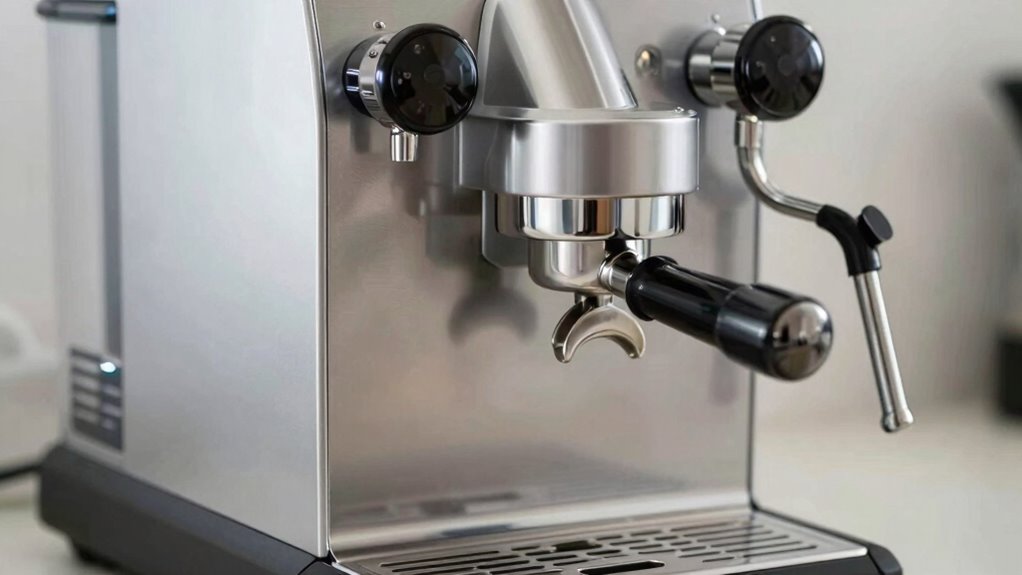
Single boiler espresso machines are popular for their simplicity and affordability, but they come with both advantages and drawbacks. You benefit from lower initial costs and easier maintenance, making them great for beginners. However, they limit your ability to milk froth and brew simultaneously, which can slow down your workflow. When it comes to energy consumption, single boilers tend to be more efficient since they use less power overall. But, you’ll need to wait between steaming and brewing because the water temperature can’t be adjusted independently.
- Limited multitasking for milk frothing and espresso extraction
- Longer wait times between brewing and steaming
- Lower energy consumption compared to dual boilers
- Suitable for occasional or home use over high-volume settings
Pros and Cons of Dual Boiler Espresso Machines

Dual boiler espresso machines address the limitations of single boiler models by allowing you to brew and steam simultaneously. This means you can prepare your espresso shots and steam milk without waiting, saving you time. However, dual boilers tend to be more durable due to their robust construction, often resulting in longer machine lifespan. On the downside, they’re generally less energy efficient because they keep two separate boilers heated, which consumes more power. Additionally, dual boiler machines usually come with a higher price tag, making them a bigger investment upfront. While they excel in consistency and speed, their size and energy consumption might be drawbacks if you have limited space or aim to reduce electricity use. Overall, their durability and performance can outweigh these cons for serious espresso enthusiasts.
How to Decide Between a Single and Dual Boiler for Your Home Coffee Setup
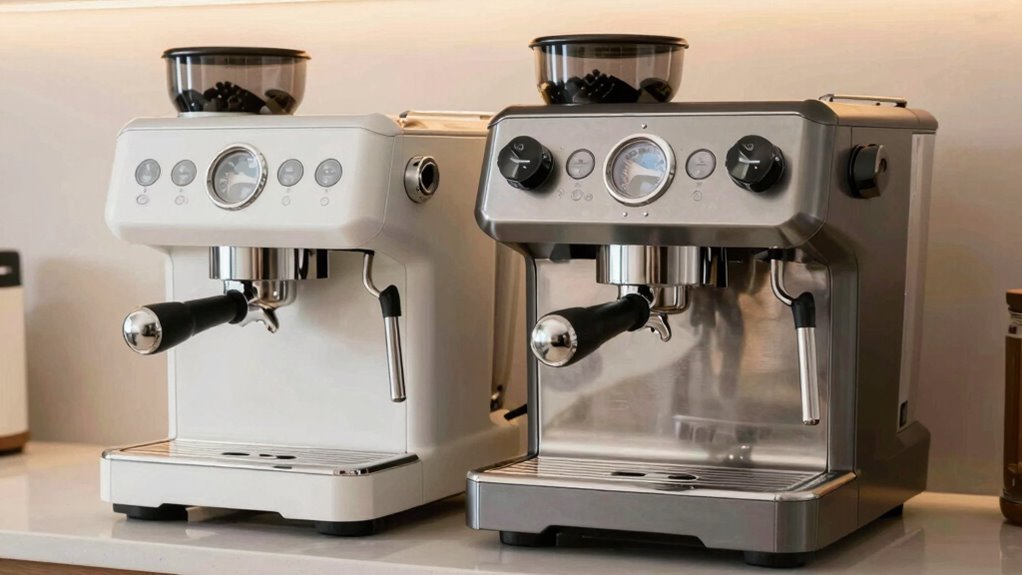
Choosing between a single and dual boiler depends on your priorities for brewing speed and quality. You should also consider your budget and how complex the machine is to operate. Think about how often you’ll use it and what your specific coffee needs are.
Brewing Speed and Quality
When it comes to brewing speed and quality, your choice between a single and dual boiler considerably impacts how quickly and consistently you can produce espresso. A dual boiler allows you to brew faster because both boilers operate simultaneously, reducing wait times between steaming and extracting shots. This setup also enhances shot quality by maintaining stable temperature and pressure, resulting in more consistent results. On the other hand, a single boiler requires you to wait for the boiler to heat up or switch modes, which slows down brewing speed. However, it can still produce excellent shot quality if managed properly. Consider these factors:
- Faster brewing with dual boilers
- Consistent shot quality with temperature stability
- Less downtime between tasks
- More control over brewing parameters
Cost and Complexity
Deciding between a single and dual boiler depends largely on your budget and willingness to manage complexity. Single boilers are usually more affordable, featuring lower pricing differences, making them ideal if you’re just starting out or have a tight budget. They’re simpler to set up and maintain, which reduces setup complexity. Dual boilers, however, come with a higher price tag, reflecting their advanced features and dedicated heating for brewing and steaming. The setup process is more involved, requiring more space and technical know-how. If you value convenience and lower initial costs, a single boiler might be better. But if you’re serious about espresso quality and want faster, more consistent results, investing in a dual boiler could be worth the extra complexity and expense.
Usage Frequency and Needs
If you frequently brew espresso and steam milk in quick succession, a dual boiler machine can keep up with your needs, ensuring consistent temperature and speed. This setup is ideal if you often make multiple drinks back-to-back or want the flexibility for different types of coffee. Consider your usage patterns and environment:
- In commercial settings, high demand calls for dual boilers to prevent delays.
- For home use with regular, multiple espresso shots, a dual boiler offers efficiency.
- If you value travel portability, single boiler machines are more compact and lightweight.
- Occasional coffee brewing and steaming may be easily handled by a single boiler, saving space and cost.
Matching your frequency of use and needs helps determine whether a dual boiler or single boiler best suits your lifestyle.
Are Dual Boilers Worth the Extra Cost?
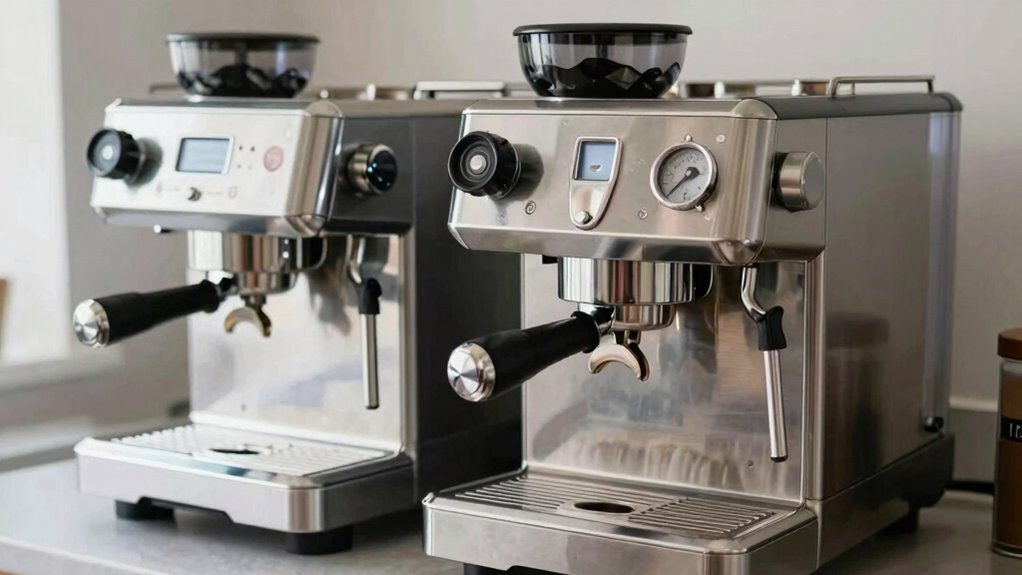
Dual boiler espresso machines often come with a higher price tag, but they can offer significant benefits for serious enthusiasts. When you do a price comparison, you’ll notice that dual boilers tend to cost more upfront. However, they are more energy efficient because they heat water in two separate boilers, reducing the need to constantly reheat the machine. This means quicker recovery times and more consistent temperature control during brewing and steaming. If you frequently make multiple drinks or value precision, the investment can be worthwhile. While the initial cost is higher, the improved efficiency and performance can save you money and time in the long run. Ultimately, whether they’re worth it depends on how often you brew and your desire for consistency.
Tips for Maintaining and Getting the Most Out of Your Espresso Machine
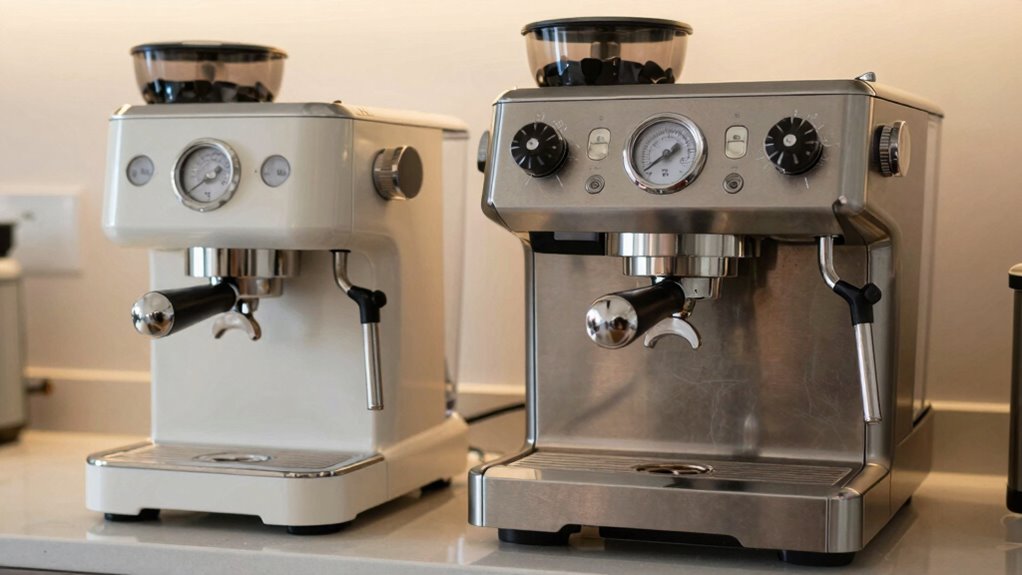
Maintaining your espresso machine properly guarantees it continues to perform at its best and extends its lifespan. Regular cleaning prevents build-up and ensures peak flavor. Prioritize water filtration; using filtered water reduces mineral deposits and protects internal components. Descale your machine periodically to prevent clogs and preserve machine longevity. Always follow manufacturer instructions for cleaning cycles and use recommended cleaning products. Keep the portafilter and drip tray clean daily. Check seals and gaskets for wear and replace them as needed. Using water filtration not only improves coffee quality but also minimizes maintenance needs. Proper maintenance ensures consistent espresso quality and extends your machine’s life, making every brew worth the effort.
Frequently Asked Questions
Can I Switch Between Brewing and Steaming on Single Boiler Machines?
On a single boiler machine, you can’t switch directly between brewing and steaming because it uses one temperature for both. You’ll need to adjust the temperature control to shift from brewing to steaming, which takes time. While the steam wand lets you froth milk, the temperature must be set correctly beforehand. This process might cause some delays, but with practice, you’ll get smoother transitions.
How Long Does It Take for a Dual Boiler Machine to Heat Up?
Think of a dual boiler machine as a well-trained athlete—ready quickly. It typically takes about 15-20 minutes for it to heat up, reaching ideal temperature stability for both brewing and steaming. This faster heating time means you’ll spend less waiting and more time enjoying your espresso. The quick readiness ensures consistent results, making it ideal if you crave efficiency without sacrificing quality.
Are Dual Boilers More Energy-Efficient Than Single Boiler Models?
Dual boilers generally use more energy because they heat two separate chambers, leading to higher energy consumption. However, if you’re committed to sustainability practices, this increased energy use might be a concern. You can offset this by choosing energy-efficient models and practicing smart usage, like turning off the machine when not in use. Ultimately, weigh the benefits of faster, more consistent brewing against the slightly higher energy consumption for a greener choice.
What Maintenance Is Required for Dual Boiler Espresso Machines?
Think of your dual boiler espresso machine as a finely tuned orchestra needing regular tuning. You should descale it every 1-3 months, depending on usage, to prevent mineral buildup. Gasket replacement is essential every 1-2 years to guarantee a proper seal and peak performance. Regular cleaning of the steam and brew groups, along with checking water filters, will keep your machine humming smoothly and producing perfect espresso shots effortlessly.
Do Dual Boiler Machines Require More Space Than Single Boiler Ones?
Dual boiler machines usually require more space than single boiler ones. Their larger machine footprint means you’ll need extra countertop space to accommodate the additional components. If you have limited kitchen area, a single boiler might be a better fit, as it’s more compact. Keep in mind, dual boilers offer faster operation and better temperature stability, but they do demand a bit more room on your countertop.
Conclusion
Choosing between a single and dual boiler espresso machine boils down to your brewing needs. If you crave barista-quality shots with perfect temperature stability, a dual boiler is like having a world-class barista at your beck and call. However, if you’re just starting out or on a budget, a single boiler offers fantastic results without breaking the bank. Whichever you pick, proper maintenance will turn your coffee moments into an art form—making every cup a masterpiece.