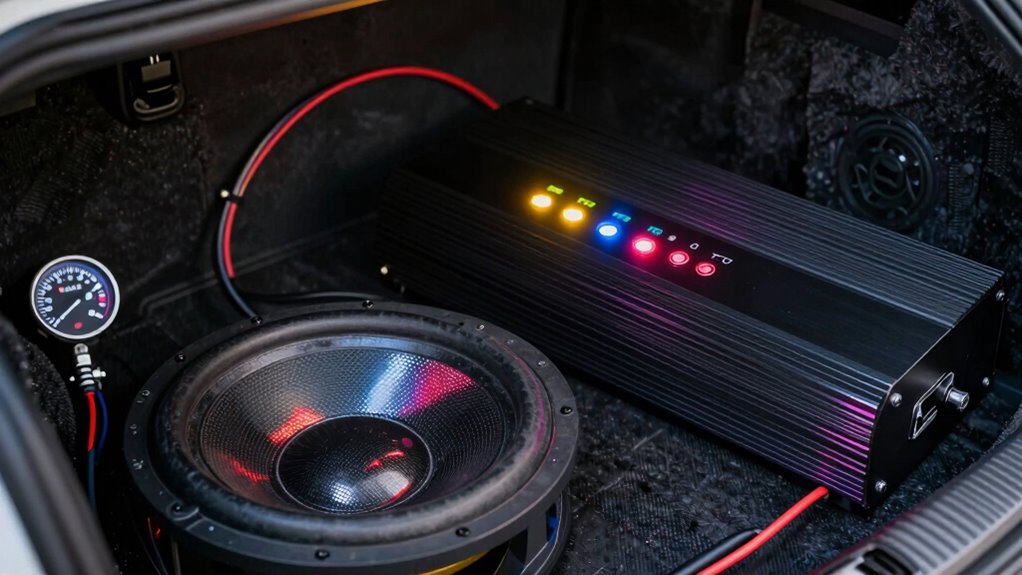

When choosing subwoofers and amplifiers for your car, it’s essential to understand the difference between RMS and peak power. RMS shows the continuous, real-world power your components can handle without damage, ensuring reliable sound quality, while peak indicates the maximum burst of power they can briefly handle. Matching RMS ratings between your system parts creates balanced, clearer sound and longevity. Keep exploring to master how these ratings impact your perfect car audio setup.
Key Takeaways
- RMS power reflects the continuous, real-world performance of subwoofers, crucial for reliable audio quality.
- Peak power indicates short-term maximum capacity but doesn’t represent typical operation or longevity.
- Matching RMS ratings between amp and subwoofer ensures balanced, distortion-free sound and prevents damage.
- Relying solely on peak power can lead to over- or under-powering, risking subwoofer damage or poor performance.
- Understanding both ratings helps you choose components that deliver consistent sound and extend your system’s lifespan.
What Is RMS Power and Why It Matters in Car Audio
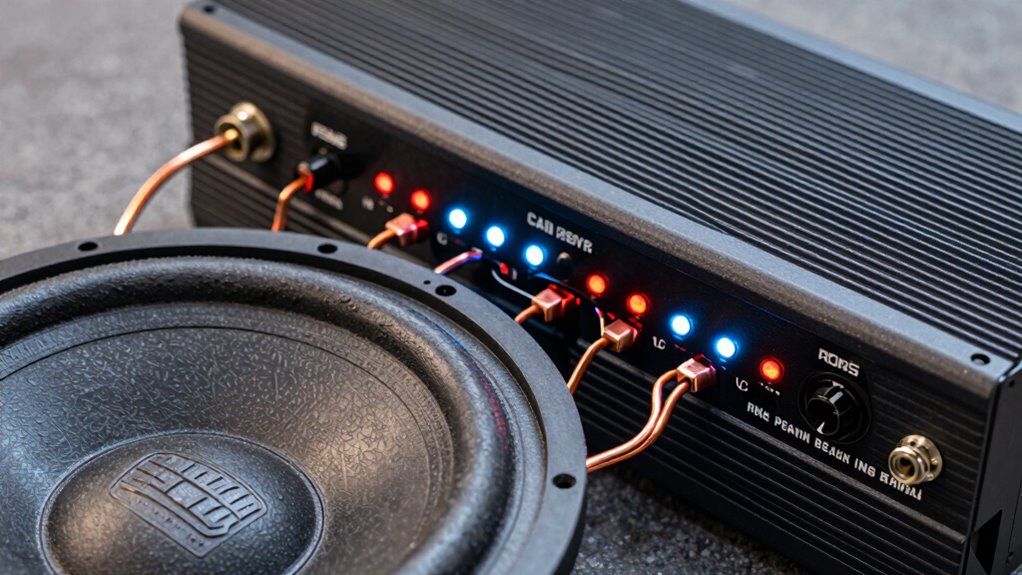
Understanding RMS power is essential because it indicates how much continuous power an amplifier or speaker can handle safely without distortion or damage. RMS power measures real-world performance, ensuring you get consistent sound quality over time. When selecting components, consider speaker sensitivity, which affects how efficiently a speaker converts power into sound; higher sensitivity means louder output at lower power. Additionally, amplifier damping plays a role in controlling speaker movement, preventing distortion and improving sound clarity. Proper matching of RMS power with speaker sensitivity and damping capabilities ensures your car audio system delivers smooth, reliable performance without risking damage. Recognizing power handling capacity is crucial for ensuring durability and longevity of your audio components. Moreover, understanding how RMS power relates to audio system efficiency can help optimize overall sound performance and prevent overloads.
Furthermore, taking into account component compatibility ensures that all parts work harmoniously to maximize system performance and prevent potential issues. A good understanding of audio component specifications can also help you select the right equipment for your needs.
How Peak Power Differs From RMS and When to Consider It
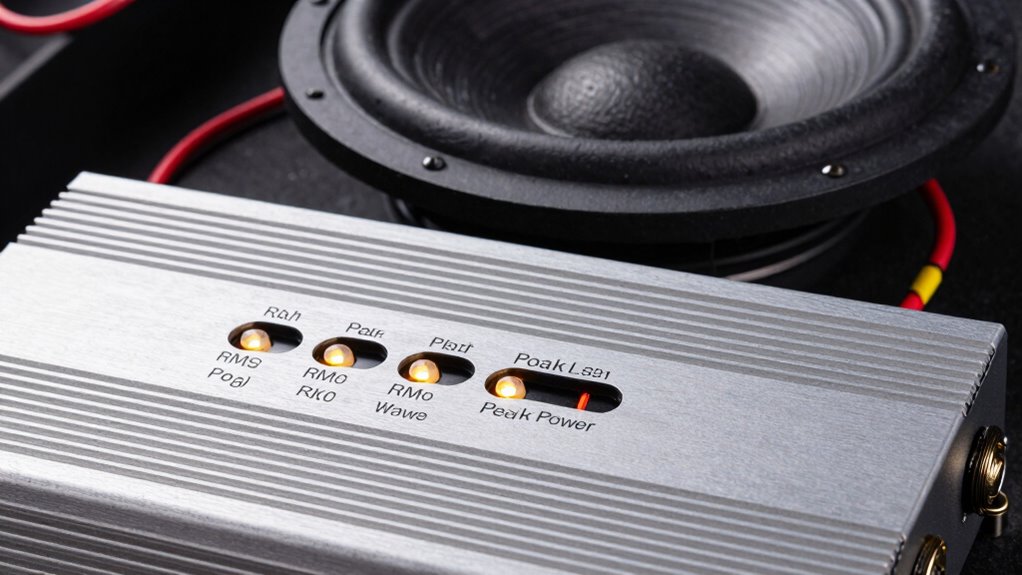
While peak power might seem impressive at first glance, it doesn’t accurately reflect a speaker or amplifier’s real-world performance. Peak power indicates the maximum burst a subwoofer or amp can handle briefly, but it doesn’t show how they perform during extended use. When contemplating subwoofer mounting and sound quality, RMS power gives a better idea of consistent, reliable output. Use this table to understand the differences:
| Power Type | Description | When to Consider |
|---|---|---|
| Peak Power | Max short-term power handling | For visual specs, not real-world use |
| RMS Power | Continuous, realistic power output | For actual sound quality and long-term use |
Additionally, understanding your battery capacity helps ensure your system can sustain the desired power output over time. It’s also important to consider amplifier efficiency to maximize performance and avoid unnecessary strain on your electrical system. Focus on RMS for sound quality and proper subwoofer mounting to avoid distortion or damage.
How to Read Car Audio Specs: Understanding RMS and Peak Ratings
Learning to read car audio specs is essential for choosing the right components and ensuring they perform well together. Understand that speaker impedance, measured in ohms, indicates how much resistance a speaker offers to the amplifier. Lower impedance (e.g., 2 ohms) draws more power but can cause power compression, where increased heat reduces speaker efficiency. RMS ratings show the continuous power a speaker can handle without damage, reflecting real-world performance. Peak power indicates the maximum power a speaker can handle in short bursts, but it’s less indicative of daily use. When comparing specs, focus on RMS ratings for a clearer picture of consistent performance. Recognizing how impedance impacts power flow and how power compression affects speaker longevity helps you make smarter, safer choices.
Why Matching RMS Ratings Between Components Creates Better Sound
Have you ever noticed how mismatched RMS ratings can lead to uneven sound quality or speaker damage? When your amplifier’s RMS output doesn’t match your subwoofer’s RMS rating, it can cause distortion or even blow your speakers. Matching RMS ratings guarantees your system delivers consistent, clean sound without stressing components. Additionally, choosing the right speaker enclosure helps optimize the subwoofer’s performance, ensuring it handles power efficiently. Proper wiring gauge is also vital; thicker wires reduce resistance and prevent power loss, allowing your components to work together seamlessly. Understanding power handling capacity and how it relates to RMS ratings is crucial for building a reliable system. When RMS ratings align, your setup operates more reliably, producing clear, balanced sound. Maintaining appropriate power levels is essential to prevent damage and ensure longevity of your system components. This harmony between components prevents damage, improves sound quality, and extends the lifespan of your car audio system.
Common Mistakes When Buying Subwoofers and Amplifiers Based on Power Ratings
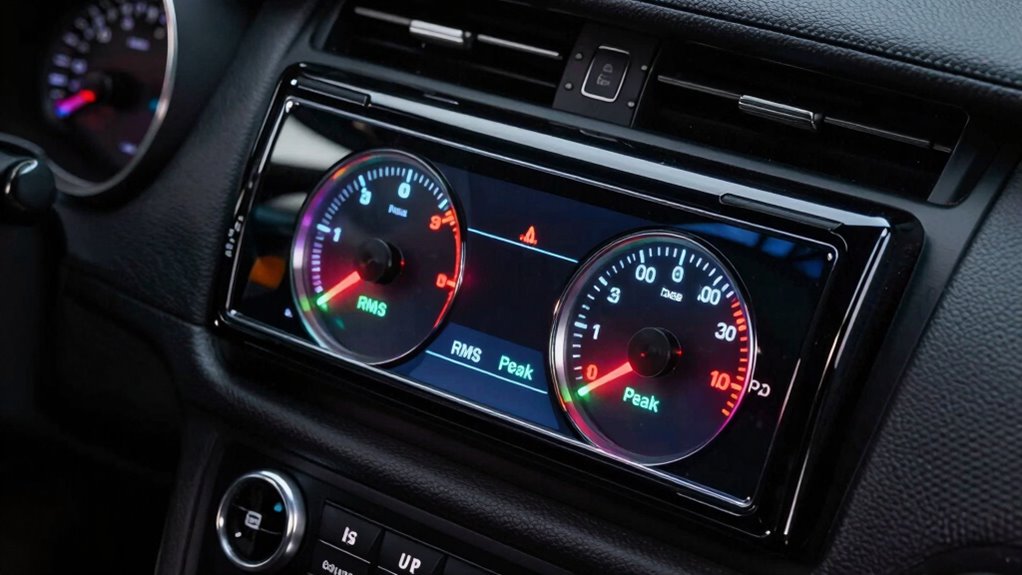
Choosing the right subwoofer and amplifier involves more than just matching their power ratings; many buyers make common mistakes that can compromise sound quality and damage equipment. One mistake is ignoring proper woofer placement, which affects sound clarity and bass response. Placing a subwoofer in the wrong spot can cause uneven sound or unwanted vibrations. Additionally, selecting the wrong enclosure type—such as sealed or ported—without considering the subwoofer’s power ratings can lead to poor performance or damage. Overspending on a high-power amplifier when the sub isn’t rated for it can cause distortion or blowouts. Conversely, underpowering can strain your setup and reduce output. Always consider enclosure types and placement to optimize your system’s power handling and guarantee longevity. Understanding the importance of matching specifications and how different enclosure types influence performance helps prevent damage and ensures optimal sound performance. Proper woofer placement also plays a critical role in achieving balanced sound and avoiding unwanted vibrations, making it essential to plan your setup carefully. Additionally, paying attention to power ratings such as RMS versus peak power can help you select components that work well together and last longer. Furthermore, being aware of system compatibility ensures all components operate safely and efficiently over time.
Frequently Asked Questions
How Does Room Size Affect Car Audio Power Requirements?
Room size substantially impacts your car audio power needs. Larger spaces require more power to fill with sound, so you might need a higher RMS rating for clear audio. To optimize your setup, consider soundproofing techniques and vehicle insulation, which reduce external noise and improve sound quality. This way, you can enjoy balanced, powerful sound without wasting energy or risking distortion, regardless of your vehicle’s interior size.
Can Multiple Amplifiers Be Used With One Subwoofer?
Yes, you can use multiple amplifiers with one subwoofer by carefully planning your subwoofer wiring. You’ll need to connect the amplifiers in a way that combines their power, like wiring in parallel or series, depending on your subwoofer’s impedance. Make sure the combined power matches your subwoofer’s RMS rating to avoid damage. Proper wiring and matching amplifier output ensure ideal sound quality and prevent overloading your sub.
What Role Does Speaker Impedance Play in Power Ratings?
Think of speaker impedance as the width of a pipe; if it’s too narrow, water (power) struggles to flow efficiently. Your speaker’s impedance impacts power ratings because it determines how much power the amp can deliver without distortion. Matching impedance guarantees ideal speaker efficiency, preventing damage and maximizing sound quality. Always match your amplifier’s output impedance to your speaker’s impedance to get the best performance and avoid blowing your gear.
Is Higher RMS Always Better for Sound Quality?
Higher RMS doesn’t always mean better sound quality. It can lead to increased audio distortion if your amp isn’t rated appropriately, causing the sound to become muddy or harsh. Instead, focus on power efficiency—getting the right RMS for your setup ensures clean, clear sound without stressing your components. Proper matching minimizes distortion and maximizes audio clarity, giving you better overall sound quality without risking damage.
How Do Temperature and Environment Impact Amplifier Performance?
Temperature and environmental factors substantially impact amplifier performance through thermal effects. When it’s hot, your amp can overheat, leading to reduced power output or shutdowns to prevent damage. Cold temperatures usually don’t harm, but extreme cold might affect components. Humidity and dust can also cause thermal buildup or short circuits. To guarantee peak performance, keep your amplifier in a well-ventilated, climate-controlled environment, and avoid extreme temperature fluctuations.
Conclusion
Understanding RMS and peak power isn’t just technical trivia—it’s the key to revealing your perfect car audio experience. When you match components wisely, you might find yourself unexpectedly blown away by the clarity and punch. Don’t let misconceptions hold you back; a simple grasp of these ratings can transform your system. The next time you upgrade, remember: sometimes, the most important detail is the one you almost overlooked.