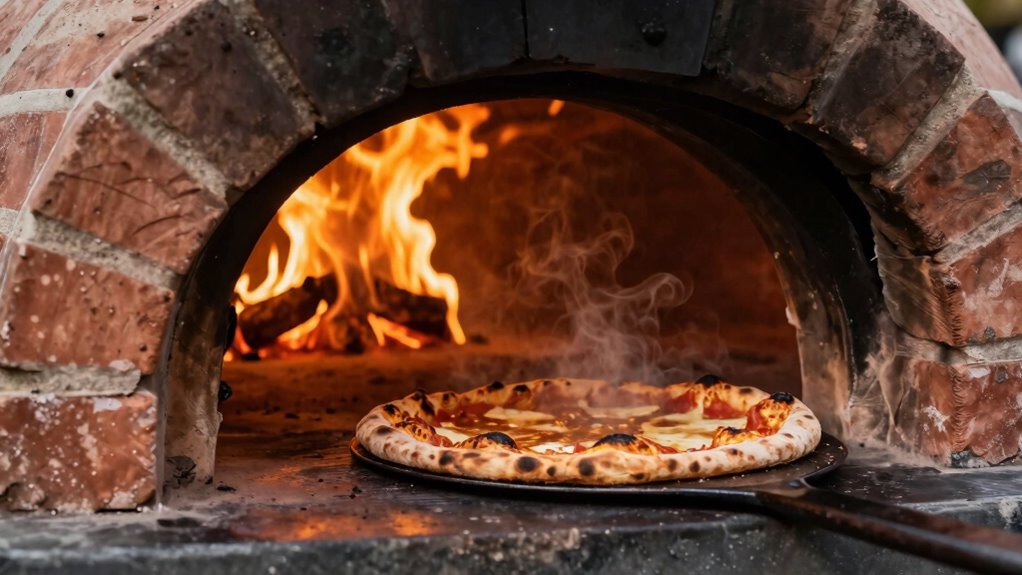

To achieve restaurant-style crusts, you need high oven temperatures, ideally between 700°F and 900°F, which traditional pizza ovens can reach. Home ovens can mimic this by preheating a pizza stone or steel for at least 45 minutes and keeping toppings dry. Avoid common mistakes like overcrowding and using cold ingredients. If you want to unseal all the tips and tricks for perfect crusts, there’s much more to explore.
Key Takeaways
- High oven temperatures (800°F or more) create authentic restaurant-style crusts with perfect crispness and airy texture.
- Wood-fired and pellet ovens achieve higher, consistent heat levels essential for restaurant-quality pizza.
- Preheating ovens with a pizza stone or steel ensures even heat transfer for a crispy, golden crust.
- Accurate temperature monitoring and calibration prevent heat loss, maintaining the high temperatures needed for ideal crust development.
- Proper dough hydration, minimal moisture, and pre-cooked toppings help leverage high oven temps for superior crunch and flavor.
Why High Oven Temperatures Are Crucial for Perfect Pizza Crusts
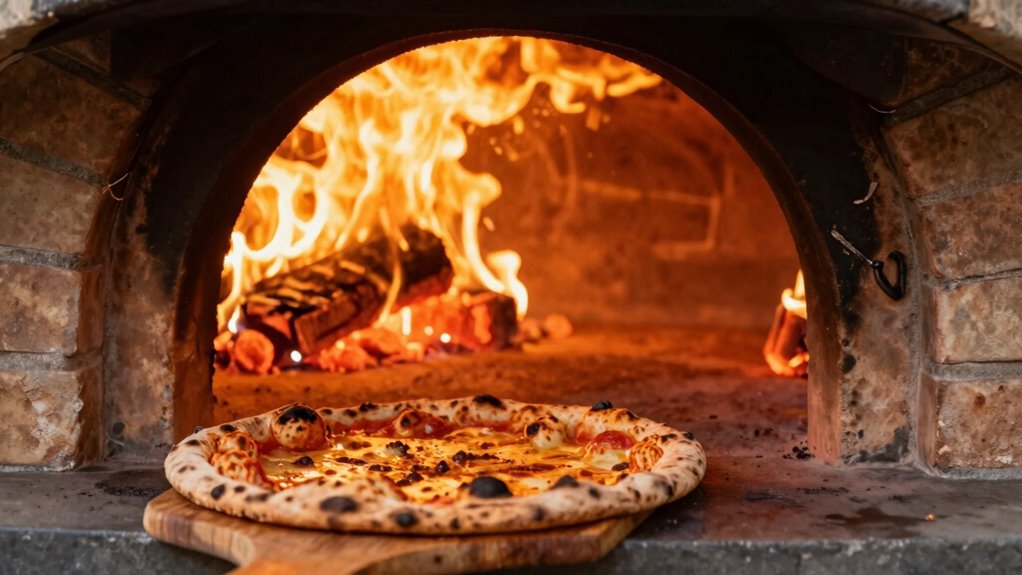
High oven temperatures are crucial because they directly influence the texture and flavor of your pizza crust. When you crank up the heat, the dough hydration level plays a key role in achieving a crisp, airy crust. Proper hydration ensures the dough develops enough elasticity to withstand intense heat without burning. High temperatures also promote even cheese melting, creating a gooey, flavorful topping that complements the crust. If the oven isn’t hot enough, the crust remains pale and dense, and the cheese won’t melt properly. By baking at high heat, you allow the dough to quickly develop a golden-brown exterior while keeping the interior tender. This balance results in a restaurant-quality pizza with the perfect crust, enhanced by well-melted cheese and essential dough hydration. Additionally, a high oven temperature increases the contrast ratio, which enhances the visual appeal of the finished pizza by creating a more vibrant and appetizing appearance.
What Types of Pizza Ovens Can Reach the Right Temperatures?
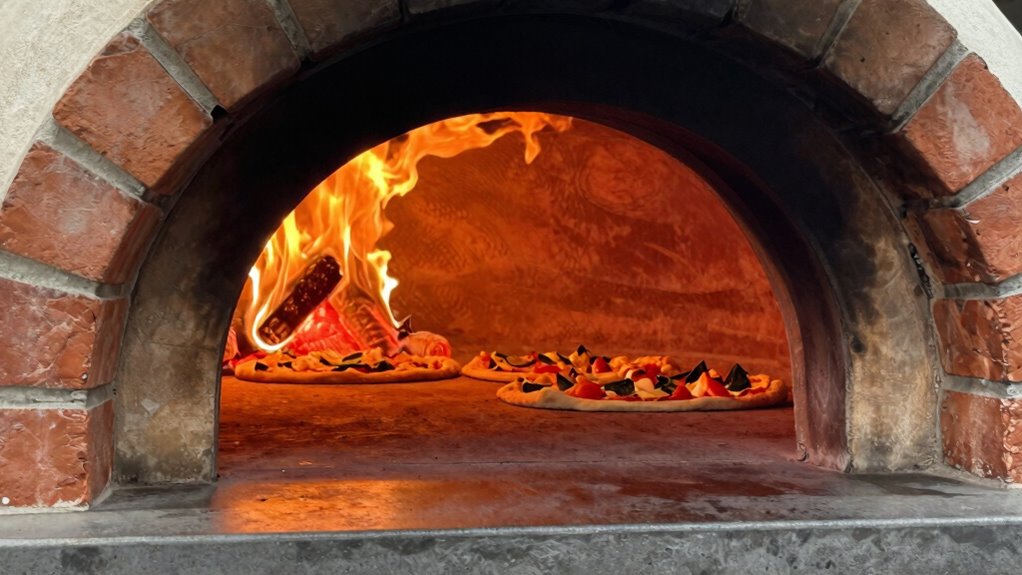
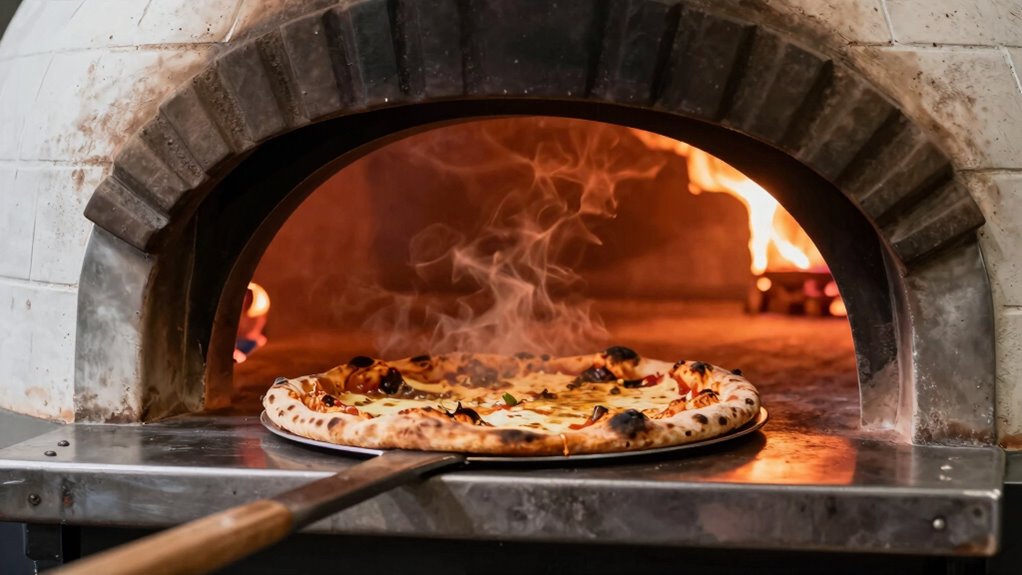
To reach the high temperatures needed for perfect pizza crusts, you need an oven designed for such intense heat. Wood-fired ovens are excellent choices because they can easily reach 800°F or higher, mimicking traditional restaurant setups. These ovens use burning wood to generate consistent, high heat and impart a smoky flavor. Conveyor belt ovens are another option, especially in commercial settings, as they can maintain precise, high temperatures for continuous cooking. They’re ideal for baking large quantities of pizza efficiently. Environmental impact of tissue paper is an interesting aspect to consider when choosing eco-friendly craft supplies, even in culinary settings. Both wood-fired and conveyor belt ovens are built to handle the extreme heat required for restaurant-style crusts, ensuring your pizza achieves that perfect combination of crispy exterior and chewy interior. High-heat cooking methods are essential for achieving authentic, restaurant-quality pizza crusts at home. Additionally, using wood pellet-fired ovens can provide a sustainable and efficient way to reach those high temperatures while adding a unique flavor profile to your pizza. Incorporating advanced insulation techniques in your oven setup can also help maintain consistent high temperatures and improve energy efficiency.
How to Achieve High Heat in Your Home Oven for Better Pizza
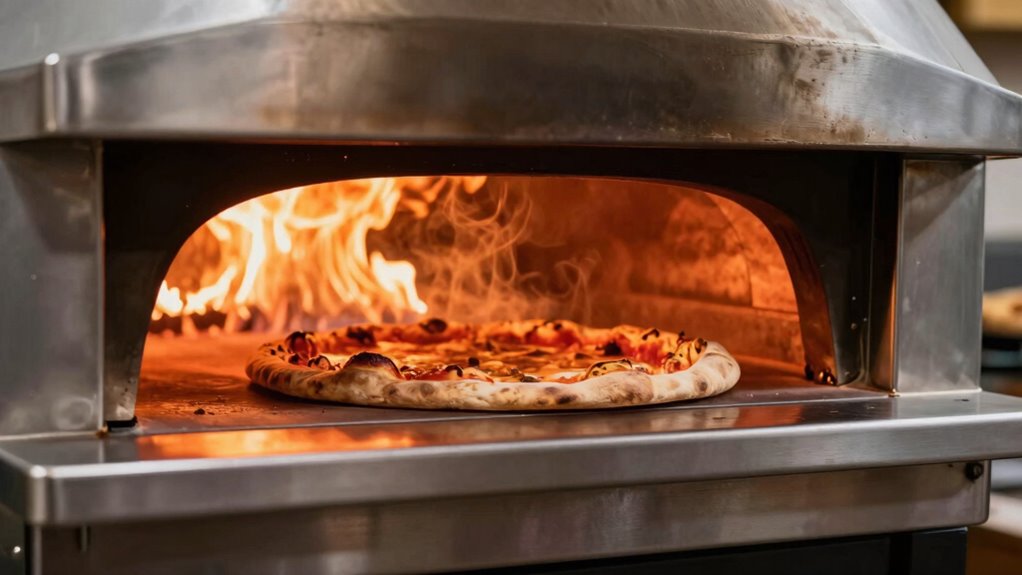
If you want to improve your home pizza game, focusing on reaching higher oven temperatures is essential. First, increase dough hydration; wetter dough tends to develop a crisper crust when baked at high heat. Use less flour during shaping to prevent a tough crust and allow better heat transfer. Keep toppings dry or lightly pre-cooked to reduce topping moisture, which can hinder browning and cause sogginess. Preheat your oven thoroughly—at least 45 minutes—ideally with a pizza stone or steel inside, to simulate a high-temperature environment. Avoid opening the oven frequently, as it cools the heat. By managing dough hydration and topping moisture, and maximizing oven heat, you’ll achieve that restaurant-style crust with a perfect balance of crispy exterior and chewy interior. Incorporating proper heat distribution techniques with high-quality gear can further optimize your pizza baking results.
Tips for Monitoring and Maintaining the Right Oven Temperature

Maintaining a consistent oven temperature is key to achieving perfect pizza crusts. To do this, regularly check your oven’s accuracy through oven calibration. Many home ovens have temperature inaccuracies, so calibration guarantees your readings are precise. Use reliable temperature probes to monitor the oven’s internal heat accurately. Place probes near the pizza zone to get real-time readings, and compare these with the oven’s display. If discrepancies exist, adjust your oven settings accordingly or consider professional calibration. Keep a log of temperature readings over time to identify patterns or fluctuations. This proactive approach helps you maintain a stable environment, preventing uneven cooking or undercooked crusts. Regular monitoring and calibration are essential for consistent, restaurant-quality pizza results at home. Additionally, understanding how to straining paint can help you make modifications or repairs to your oven if needed for optimal performance. Being aware of body jewelry measurements and materials can also be useful if you plan to upgrade or replace oven accessories or components for better durability. Ensuring proper oven insulation can further improve temperature consistency and energy efficiency.
Common Mistakes That Keep Your Pizza From Getting Crispy
One common mistake that prevents your pizza from becoming crispy is using too much moisture in the dough or toppings. Overcrowding toppings traps steam, making the crust soggy instead of crisp. Be mindful not to pile on too many ingredients, especially wet ones like tomatoes or fresh mozzarella, which release moisture during baking. Also, avoid using cold ingredients straight from the fridge; they cool the oven and slow down browning. Instead, let toppings reach room temperature before adding them to your pizza. Additionally, guarantee your oven is preheated properly and avoid stacking multiple toppings that can hinder heat circulation. Proper temperature control is essential for achieving that perfect crispy crust, so ensure your oven is sufficiently hot before baking. Using a baking stone or steel can help distribute heat evenly, promoting crispiness. By managing moisture levels and topping distribution, you’ll help your crust achieve that perfect crispiness you’re aiming for. Remember, an evenly heated oven and careful ingredient preparation are key to replicating restaurant-quality results at home.
Frequently Asked Questions
What Is the Ideal Temperature Range for Authentic Restaurant-Style Pizza Crusts?
You should aim for a temperature range of 450-500°F for authentic restaurant-style pizza crusts. This high heat helps achieve perfect dough fermentation and creates a crisp, airy crust. Maintain consistent oven temperature to prevent over or under-cooking. When placing toppings, do so carefully to avoid sogginess. This temperature range allows your crust to develop the ideal texture and flavor, mimicking what you’d find in a professional pizzeria.
How Does Oven Temperature Influence the Dough’s Moisture and Texture?
Like a time traveler, you see that higher oven temperatures rapidly cook the dough, locking in moisture and enhancing dough hydration. This results in a crust with a crisp exterior and tender interior. Conversely, lower temps may cause excess moisture loss, leading to a dry, dense texture. So, by controlling oven heat, you influence moisture retention and texture, ensuring your pizza has that perfect, restaurant-quality bite.
Can Different Pizza Styles Require Different Oven Temperature Settings?
Yes, different pizza styles often need unique oven temperature settings. For example, Neapolitan pizza benefits from high heat on a pizza stone, creating a crispy crust, while thicker, Chicago-style pies may require lower, longer baking. Using convection baking helps distribute heat evenly. Adjust your oven temperature based on the style, ensuring the pizza stone heats properly for the desired crust texture and color.
Are There Specific Materials That Help Ovens Retain High Heat Better?
Did you know that insulation materials can boost your oven’s heat retention by up to 30%? Using heat-retaining bricks, in particular, helps maintain consistent high temperatures essential for that perfect restaurant-style crust. These materials minimize heat loss, ensuring your oven stays hot longer. Incorporate high-quality insulation and bricks into your setup, and you’ll enjoy more even cooking and better crusts every time you bake.
How Often Should I Calibrate My Oven to Ensure Accurate Temperature Readings?
You should calibrate your oven at least once a year to maintain accurate temperature readings, but more frequent calibration may be needed if you notice uneven cooking or temperature inconsistencies. Regular oven maintenance and calibration frequency are essential for consistent results, especially when aiming for restaurant-style crusts. Always follow your oven manufacturer’s guidelines and consider professional calibration to ensure precision and ideal performance.
Conclusion
Did you know that traditional pizza ovens can reach temperatures of 900°F, creating that perfect crispy crust? Achieving high heat is key to restaurant-quality pizza at home. By choosing the right oven, monitoring temps carefully, and avoiding common mistakes, you’re well on your way. Remember, nearly 70% of home cooks struggle to reach ideal pizza temperatures—so don’t give up. With a few simple adjustments, you’ll be crafting restaurant-style pies in no time!