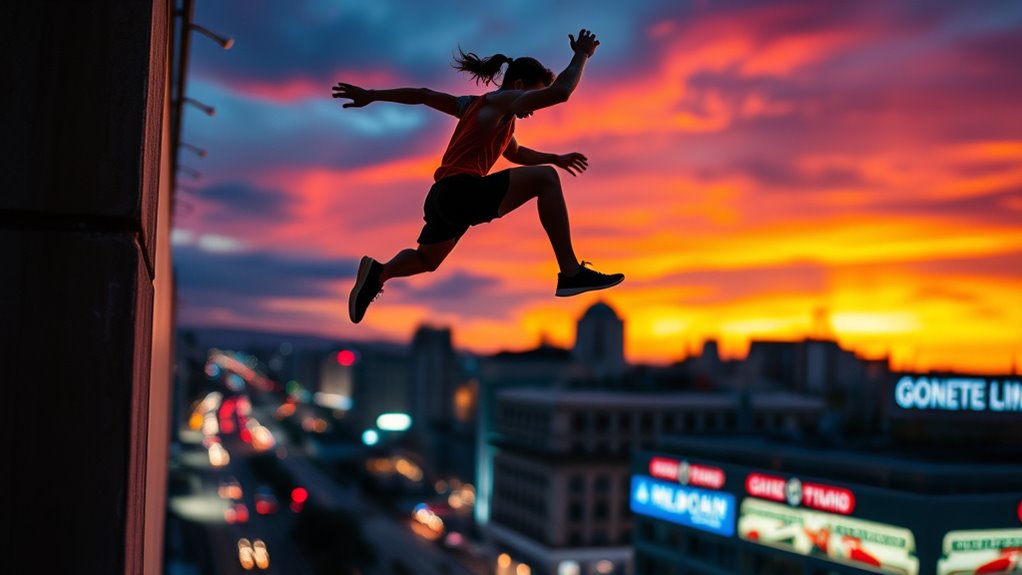

Parkour is more than just a movement practice; it’s a way of seeing the world. You transform urban landscapes into playgrounds, viewing obstacles like walls and benches as tools for creative expression. It encourages efficient movement and problem-solving while pushing your physical and mental limits. With each leap and climb, you build confidence and resilience. Want to uncover the deeper insights and benefits of this art form? You’re just getting started.
Key Takeaways
- Parkour is the art of navigating urban spaces by transforming obstacles into opportunities for movement and expression.
- It emphasizes movement efficiency, focusing on seamless flow and minimizing wasted energy during navigation.
- Practitioners view the cityscape as a canvas, creatively interacting with walls, railings, and benches.
- Parkour fosters mental growth, building confidence and resilience by encouraging individuals to face fears and push limits.
- The skills acquired in parkour enhance problem-solving, agility, and creativity, benefiting everyday life beyond physical training.
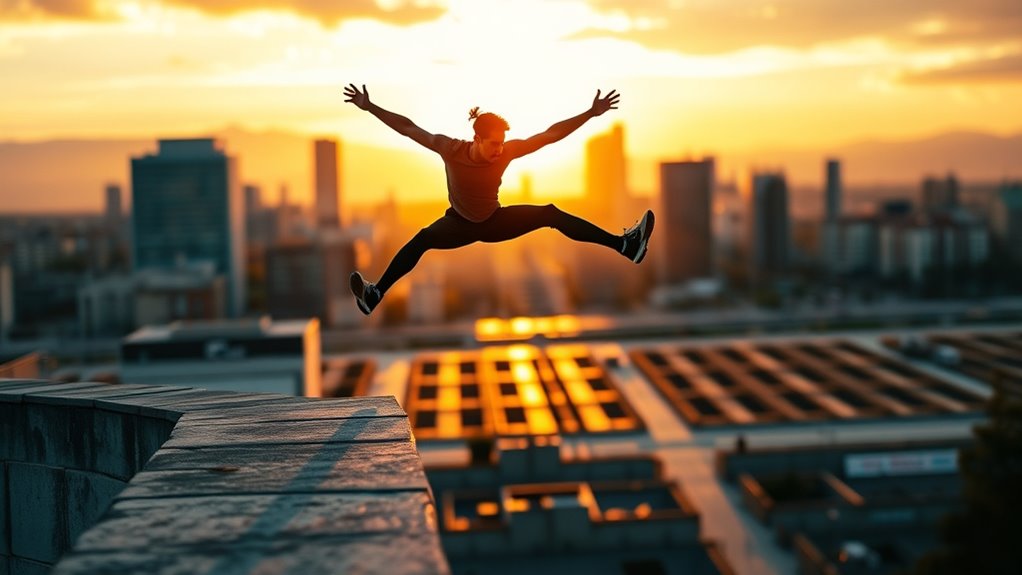
Parkour is more than just a physical activity; it’s a philosophy that transforms urban environments into playgrounds. When you step into the world of parkour, you begin to see your surroundings differently. Those once daunting urban obstacles—like walls, railings, and benches—become opportunities for expression and movement. You’re not just traversing through your environment; you’re engaging with it in a way that challenges your body and mind.
Parkour transforms urban obstacles into creative opportunities, inviting you to engage and explore your surroundings in new ways.
In parkour, movement efficiency is key. You learn to flow seamlessly from one obstacle to another, minimizing wasted energy and maximizing your speed. It’s all about finding the most effective route, whether you’re vaulting over a low wall or climbing up a set of stairs. This efficiency doesn’t just come naturally; it’s a skill you develop through practice and repetition. As you train, you start to understand the mechanics of your body and how it interacts with different surfaces. Each jump, each roll, becomes a calculated decision, enhancing your overall performance.
Imagine running through your city, spotting a wall ahead. Instead of hesitating, your instincts kick in. You approach with confidence, plant your foot, and propel yourself upward, using your hands to push off and clear the obstacle. It’s a moment of pure freedom, where your body moves in harmony with your environment. You begin to appreciate the beauty of your surroundings, seeing them not as barriers but as a canvas for your creativity.
As you explore more deeply into parkour, you’ll discover that it isn’t just about physical prowess; it’s also a mental journey. You’ll face fears, push your limits, and learn to trust in your abilities. Each successful move builds your confidence, helping you tackle both physical and mental challenges outside of parkour. You’ll find that the skills you acquire translate into various aspects of your life, from problem-solving to resilience. Additionally, parkour can benefit from high refresh rates in video games, as they can enhance your reaction times and improve your overall agility.
Parkour encourages you to embrace the world around you, transforming your perception of urban landscapes. You’ll start to view every street corner, every alleyway, as a potential area for exploration. With each training session, you cultivate a sense of autonomy, creativity, and strength, redefining what it means to traverse your environment. So, take a leap and start your parkour journey; you’ll find that the world is a playground waiting to be explored.
Frequently Asked Questions
Is Parkour Safe for Beginners?
Parkour can be safe for beginners if you take the right precautions. Start with a thorough risk assessment of your environment, and practice in safe, controlled areas. Using safety gear like knee pads and wrist guards can protect you from injuries as you learn. It’s important to progress gradually, focusing on mastering basic moves before attempting more complex ones. With patience and proper preparation, you can enjoy parkour safely while building confidence.
What Equipment Do I Need for Parkour?
You don’t need much to get started with parkour. Basic parkour gear includes comfortable athletic clothing and a good pair of training shoes with grip and support. As a beginner, you might also want to think about gloves for better grip and some knee pads for protection. Focus on practicing in safe environments to build your confidence and skills. It’s all about finding what works best for you while keeping safety in mind.
Can Parkour Be Practiced Indoors?
Yes, you can practice parkour indoors! Imagine maneuvering through a room, jumping over furniture and climbing walls. Indoor training offers a controlled environment, allowing you to refine your skills safely. Just remember to take safety precautions, like clearing obstacles and using mats to cushion falls. You can set up a mini parkour course using couches, tables, and even stairs. With creativity and caution, your indoor sessions can be both fun and effective!
How Long Does It Take to Learn Parkour?
It typically takes several months to a few years to learn parkour, depending on your training duration and commitment. You’ll notice skill progression as you practice regularly, mastering basic movements before tackling more complex ones. Consistency is key; the more you train, the faster you’ll improve. Each person’s journey is unique, so focus on your growth and enjoy the process, rather than rushing to reach expert levels. Stay patient and keep pushing your limits!
Are There Age Restrictions for Parkour Practice?
There aren’t strict age limitations for parkour practice, but it’s important to take into account your physical development. Many youth programs cater to younger practitioners, helping them build strength and confidence safely. Starting early can be beneficial, but be sure you’re in a supportive environment with qualified instructors. As long as you’re motivated and careful, you can enjoy parkour regardless of age. Just listen to your body and progress at your own pace.
Conclusion
In summary, parkour isn’t just about flashy moves or extreme stunts; it’s about efficiency, creativity, and overcoming obstacles in your path. You might think it’s too risky or only for the young and fit, but anyone can practice parkour at their own level. It’s about adapting your environment to your abilities, building confidence, and fostering a sense of freedom. So, why not give it a try? You might discover a new way to express yourself and find joy in movement.