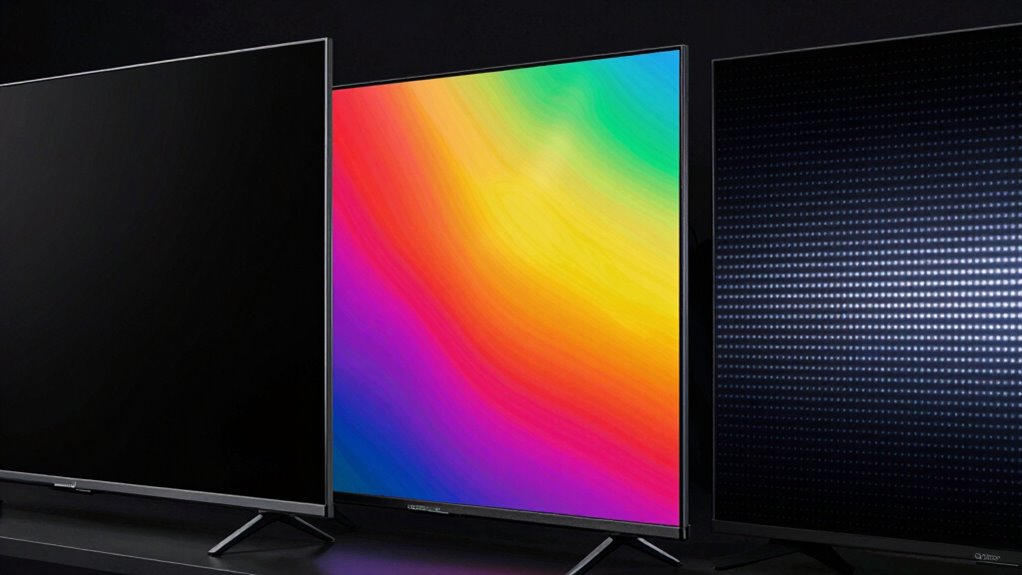

OLED, QLED, and Mini‑LED TVs use different display technologies to deliver quality images. OLED screens have organic pixels that turn on and off independently, giving you deep blacks and excellent contrast. QLEDs use quantum dots to produce brighter images with vibrant colors, while Mini‑LEDs improve contrast and brightness control with smaller backlights. If you want to understand which option suits your viewing style and budget best, exploring these differences can help you make the right choice.
Key Takeaways
- OLED TVs emit their own light for perfect blacks and contrast but may suffer from burn-in issues.
- QLED TVs use quantum dots to produce brighter images with vivid colors and higher overall brightness.
- Mini‑LEDs enhance contrast and brightness control with numerous tiny backlights, improving picture quality over standard LED TVs.
- OLEDs excel in dark rooms with deep blacks, while QLEDs and Mini‑LEDs are better for bright rooms due to higher brightness.
- OLED offers superior contrast and color accuracy but shorter lifespan, whereas QLED and Mini‑LED are more durable and energy-efficient.
What Are OLED, QLED, and Mini‑LED TVs?
When choosing a new TV, understanding the differences between OLED, QLED, and Mini‑LED models can help you make an informed decision. OLED TVs have organic pixels that emit their own light, offering excellent contrast and deep blacks, but their display lifespan can be shorter due to potential burn-in. QLED TVs use quantum dots to enhance brightness and color, typically providing longer durability and good energy efficiency. Mini‑LED models feature smaller backlights, which improve contrast and uniformity, often resulting in better energy efficiency compared to traditional LCDs. Each type varies in lifespan and energy use, so consider how long you want your TV to last and how much energy it consumes. Knowing these factors helps you pick a model that suits your viewing habits and environmental preferences. Additionally, display lifespan can vary significantly among these technologies, influencing your long-term satisfaction with your TV. Furthermore, understanding the technology differences can help you prioritize features like brightness, contrast, or longevity based on your specific needs. It’s also important to consider the cost differences, as these can vary widely depending on the technology and features offered. Also, energy efficiency is a key factor that can impact your overall operating costs and environmental footprint. For example, energy consumption may be higher for some models, affecting your monthly electricity bills and environmental impact.
How Do OLED, QLED, and Mini‑LED TVs Achieve Great Picture Quality?
OLED, QLED, and Mini‑LED TVs achieve great picture quality through different technologies that enhance contrast, brightness, and color accuracy. OLED screens use organic compounds that emit light individually, providing perfect screen uniformity and deep blacks. QLED TVs utilize quantum dots to boost brightness and color, making images vivid, though they may have slight uniformity issues. Mini‑LEDs pack thousands of tiny LEDs behind the screen, delivering excellent contrast and brightness control. These technologies also influence energy efficiency: OLEDs are generally more efficient in dark scenes, while QLED and Mini‑LEDs can consume more power during bright scenes. Additionally, advancements in backlight technology help improve overall image quality. The manufacturing process of each technology also impacts cost and durability, influencing consumer choices. Understanding light management techniques is crucial for appreciating how each display type enhances picture quality. Moreover, ongoing research into display longevity aims to improve the lifespan and reliability of these screens, further benefiting consumers. Overall, each technology improves picture quality by optimizing light management and color reproduction, ensuring a more immersive viewing experience.
Which TV Technology Offers the Best Colors, Contrast, and Brightness?
Different TV technologies excel in delivering vibrant colors, impressive contrast, and high brightness levels. OLEDs are known for their exceptional color accuracy and deep blacks, providing rich, true-to-life pictures. QLEDs also produce bright images with excellent color volume, making them ideal for vibrant displays in well-lit rooms. Mini-LEDs combine the best of both worlds, offering high contrast with precise local dimming and strong brightness levels. When it comes to energy efficiency, OLEDs tend to use less power when displaying darker images because their pixels turn off completely for true blacks. QLEDs and Mini-LEDs, while brighter, may consume more energy, especially at higher brightness levels. Additionally, sustainable fabric care practices are increasingly integrated into manufacturing processes to reduce environmental impact. The choice of display technology can also influence the longevity and environmental footprint of your TV. For environmentally-conscious consumers, understanding the energy consumption differences among these technologies can help in making a more sustainable choice. Moreover, advancements in manufacturing sustainability are helping to reduce the overall environmental impact of TV production. Incorporating recyclable materials into manufacturing is also a growing trend, aiming to lessen waste and promote eco-friendly disposal. Ultimately, your choice depends on whether you prioritize color precision, contrast, or energy savings.
How to Choose the Best TV for Your Viewing Style and Budget?
Choosing the right TV depends on your viewing habits and budget, so it’s important to prioritize what matters most to you. Start by considering your budget considerations—decide how much you’re willing to spend and look for options within that range. Your viewing environment also plays a key role; for example, a bright room may benefit from a TV with higher brightness, like QLED or Mini-LED, while a dark room might be better suited for OLED’s contrast. Think about how often you watch, what content you prefer, and whether features like HDR or gaming capabilities are important. Balancing these factors will help you find a TV that fits your lifestyle, enhances your viewing experience, and stays within your financial limits. Additionally, understanding display technology differences can guide you toward a choice that best aligns with your viewing preferences. Considering long-term durability may also be beneficial, especially when investing in higher-end models. Being aware of technology lifespan can help you choose a model that remains reliable over time, and researching manufacturing quality can ensure your investment lasts longer.
Pros and Cons of OLED, QLED, and Mini‑LED TVs: Which One Is Right for You?

When selecting a premium TV technology, understanding the strengths and weaknesses of OLED, QLED, and Mini-LED options can help you make an informed decision. OLED offers superb contrast and deep blacks, but it’s prone to screen burn-in if static images remain for long periods. QLED TVs shine with high brightness and vibrant colors, making them great for bright rooms, though they can consume more power and might not match OLED’s black levels. Mini-LED technology combines many LEDs for better local dimming, improving contrast without burn-in risk. However, it still uses more power than OLED. Your choice depends on your viewing habits: if you prioritize picture quality and are cautious about burn-in, OLED might suit you best. If brightness and durability matter more, QLED or Mini-LED could be better options. Understanding display technology can help you choose the most suitable TV based on your specific needs. Additionally, considering display technology advantages can provide further insight into how each option performs in various viewing scenarios.
Frequently Asked Questions
How Long Do OLED, QLED, and Mini‑Led TVS Typically Last?
You can expect OLED, QLED, and Mini‑LED TVs to last around 7 to 10 years with proper care. OLED panels might have slightly shorter durability due to potential burn-in, but many come with a warranty covering panel issues. QLED and Mini‑LED TVs generally enjoy longer panel durability, often matching or exceeding 10 years, especially when you follow the manufacturer’s warranty coverage and avoid static images that could cause burn-in or image retention.
Are There Any Health Concerns With OLED, QLED, or Mini‑Led Screens?
You might worry about health concerns with OLED, QLED, or Mini‑LED screens, but generally, they’re safe. However, prolonged viewing can cause eye strain and blue light effects, which may lead to discomfort or disrupted sleep. To reduce risks, take regular breaks, limit screen time before bed, and use blue light filters or glasses. Staying mindful of your viewing habits helps protect your eyes while enjoying your TV.
Can I Upgrade My Tv’s Display Technology Easily Later?
While a complete modular upgrade isn’t common, you can improve your TV’s display technology over time by choosing models with good technology compatibility. Many modern TVs support external components like soundbars or streaming devices that enhance your viewing experience. However, upgrading the core display panel usually requires replacing the entire TV. To future-proof, select a model with flexible inputs and features that support upcoming tech advancements.
How Do These TV Types Perform in Bright or Outdoor Environments?
In bright outdoor environments, QLED and Mini-LED TVs perform better for outdoor visibility because they produce higher brightness levels, helping counter sunlight glare. OLED TVs struggle with glare and may appear washed out under direct sunlight. If you often watch outside, opt for a QLED or Mini-LED TV to enjoy clearer images and less glare, ensuring you get a better viewing experience even in strong daylight.
What Maintenance or Care Do OLED, QLED, and Mini‑Led TVS Require?
You should regularly clean your OLED, QLED, or Mini-LED TV screen with a soft, dry cloth to prevent dust buildup. Avoid harsh chemicals and abrasive materials. Keep an eye on power management settings to prevent screen burn-in on OLEDs, and use automatic brightness adjustments to reduce wear. Proper care prolongs your TV’s lifespan and maintains picture quality, ensuring you enjoy vibrant visuals for years to come.
Conclusion
Choosing between OLED, QLED, and Mini-LED TVs can feel overwhelming, but remember—this decision could totally transform your viewing experience. Imagine watching your favorite movies with colors so vivid they jump off the screen or experiencing contrast so deep it feels like you’re there. Pick the right tech, and your TV won’t just be a screen—it’ll be your personal portal to a universe of stunning visuals. Get ready to be blown away every time you turn it on!