
📊 Full opportunity report: Monitoring The Driver: Why Every New EU Car Must Include A Camera on IdeaNavigator AI — validation score, market gap, and execution plan.

Get business pricing on monitors, keyboards and dev gear
- Business-only prices and quantity discounts
- Tax-exempt purchasing
- Multiple users, one account, clear invoices
TL;DR
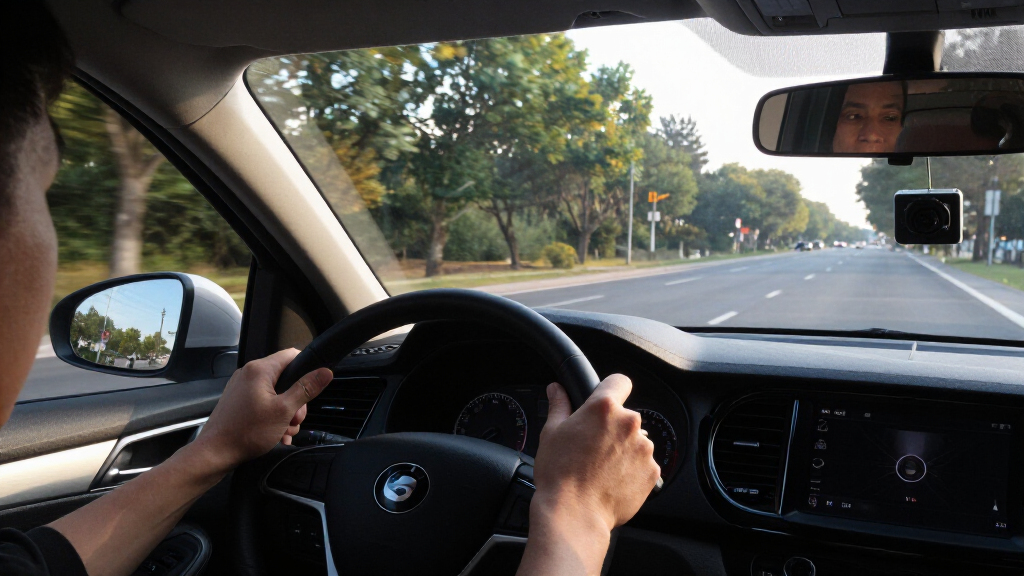
An IdeaNavigator AI brief says every new car sold in the EU must include a driver-monitoring camera. It provides no regulation, date, or official confirmation, so the scope and legal status of that claim remain unverified.
IdeaNavigator AI has flagged a claim that every new car sold in the European Union must include a driver-monitoring camera, a potential vehicle-equipment requirement with implications for drivers and automakers. The brief does not cite an EU law, identify an effective date, or provide an official statement, so the claim cannot be confirmed from the information provided.
The item appears in an IdeaNavigator AI brief proposing a monitoring service for professionals who need to follow developments in the automotive sector. It describes the camera requirement as a development surfaced on Hacker News and assigns it a signal score of 88 out of 100. The brief does not explain how that score was calculated or link to the discussion or reporting behind the claim.
No regulation number, EU institution, national authority, automaker, or vehicle category is identified. The brief also gives no adoption date, implementation schedule, technical specification, or explanation of what it means by a driver-monitoring camera. Those omissions leave the central assertion—that the equipment is required in every new car sold in the bloc—unverified.
The document’s stated proposal is to test a focused feed-monitoring service that turns relevant developments into short decision briefs. It suggests delivering this item alongside two others to five people working in the field and measuring whether recipients change a decision or pass a brief to a colleague. That is a proposed validation exercise, not evidence that the camera requirement has been enacted.
A Rule That Could Affect New Cars
If confirmed, a requirement applying to all new cars sold in the EU could matter to vehicle buyers, manufacturers and suppliers. It could affect the equipment manufacturers install, the way new vehicles are designed and assessed, and the information buyers receive about monitoring systems. The precise consequences depend on the regulation’s scope and specifications, which are absent from the brief.
The camera wording also leaves an important practical question: what technology, if any, would satisfy the stated requirement? A camera may be one way to monitor a driver, but the brief does not establish that EU rules specifically require a camera rather than a broader driver-monitoring function or another approach. Readers should not infer from this item alone that every new vehicle will record or store video.
For people tracking automotive policy, the episode illustrates why a fast alert needs a link to primary evidence. A high signal score may help identify a topic to investigate, but it does not establish that a law exists. The relevant next step is to locate the underlying EU measure and check its text, scope and dates.
The Alert’s Limited Evidence
The brief frames the camera claim as an example of a fast-moving development that an industry operator might want to catch early. It says that news, forums and filings are scattered, and proposes monitoring Hacker News and similar feeds to filter items by professional relevance. Its focus is therefore both a possible automotive policy claim and a proposed information-monitoring workflow.
That distinction matters: the document provides details about how the monitoring service might be tested, but little information about the alleged vehicle rule itself. It names no law or regulator and supplies no reporting trail for the claim. The score of 88/100 is presented as a platform signal, with no stated baseline, measurement window or methodology, so it should be treated as a score attached to the alert rather than a measure of the rule’s likelihood or impact.
The Rule’s Status and Scope
Whether the requirement exists remains unconfirmed by the information in the brief. It does not say whether the alleged measure is an adopted regulation, a proposal, a summary of an existing safety requirement, or a claim repeated in an online discussion.
It is also unclear which vehicles or sales the claim covers, when any requirement would take effect, and whether the specified equipment must be a camera. The brief does not address how driver-monitoring data would be handled or whether systems would record, retain or transmit images. These details require a cited legal text or statement from an authoritative EU body; none is supplied.
Find the Underlying EU Measure
The immediate next step is to trace the alert to an official EU regulation, proposal or institutional notice. That document would establish whether a binding requirement has been adopted, which vehicles it covers, its implementation dates and the technology it specifies. Until such evidence is identified, the claim should be treated as an unverified alert.
Separately, IdeaNavigator AI proposes testing its monitoring concept by hand-delivering this brief and two other developments to five people in the intended professional audience. The planned measures are whether a recipient changes a decision or forwards an item to a colleague. The brief does not report that the test has taken place or provide results.
Key Questions
Is a driver-monitoring camera confirmed as mandatory in every new EU car?
Not by the information provided. The brief makes that claim but cites no law or official confirmation.
When would the alleged requirement take effect?
The brief gives no effective date, adoption schedule or implementation timeline.
Does the claim mean new cars will record drivers?
That cannot be determined from the brief. It does not define the camera system or say whether images would be recorded, stored or transmitted.
What does the 88/100 signal score mean?
The brief does not explain its method, comparison baseline or time window. The score is not confirmation of the claim’s legal status.
Source: IdeaNavigator AI
Halloween Picks
halloween
As an affiliate, we earn on qualifying purchases.


![Rails World 2026 Opening Keynote [Video]](https://featurebuddies.com/wp-content/uploads/2026/09/rails-world-2026-opening-keynote-video-featured-560x300.jpg)