When choosing between a hardwired or plug-in EV charger, consider your installation environment, charging speed needs, and flexibility. Hardwired units offer faster charging and better security but require professional wiring and higher upfront costs. Plug-in chargers are easier to install, portable, and suited for flexible setups, though they may have slower charging rates. Understanding the differences helps you pick the right option for your vehicle and lifestyle, and exploring further guarantees you make the best choice.
Key Takeaways
- Hardwired chargers offer higher power and faster charging but require professional installation and electrical upgrades.
- Plug-in chargers are easier to install, portable, and suitable for renters or flexible setups.
- Hardwired units tend to be more permanent and integrated, while plug-in models provide convenience and adaptability.
- Installation costs are higher for hardwired chargers due to complexity; plug-in options are more cost-effective initially.
- Choose based on your power needs, installation environment, future expansion plans, and whether portability or performance is prioritized.
Main Differences Between Hardwired and Plug-In EV Chargers
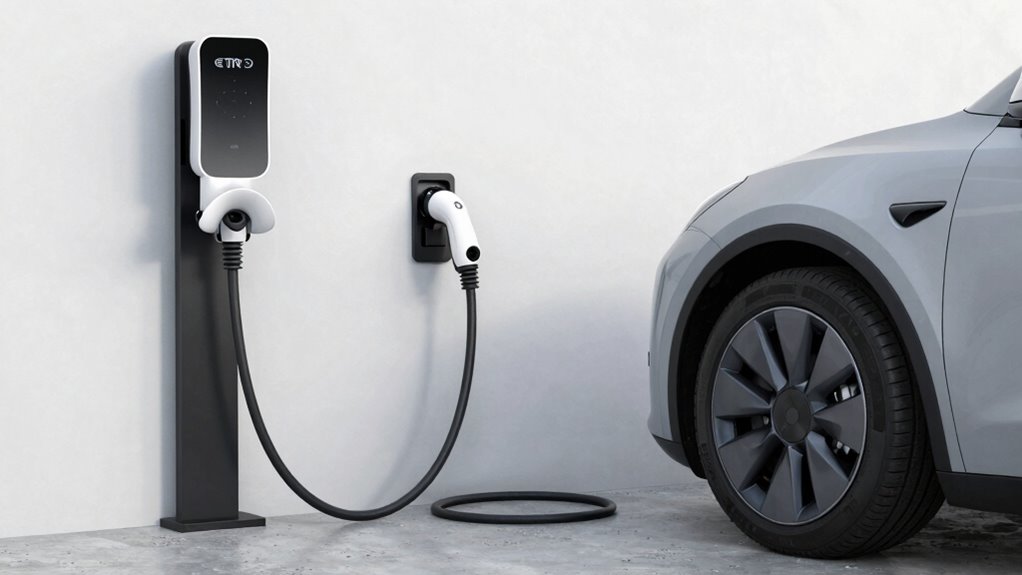
When choosing an EV charger, understanding the main differences between hardwired and plug-in models is vital. Hardwired chargers are permanently connected to your electrical system, offering a seamless connection that often supports higher power output, which can charge your vehicle faster. In contrast, plug-in chargers connect via a standard outlet, providing greater flexibility and ease of use, but they may have limitations in power output depending on the outlet’s capacity. Charger compatibility also varies; hardwired units typically match specific electrical setups, while plug-in chargers are compatible with standard outlets but might require adapters for higher power levels. Your choice impacts installation complexity, charging speed, and convenience, making it important to consider these factors when selecting the right EV charger for your needs. Additionally, understanding power capacity helps determine which type will best suit your charging requirements. Knowing the installation process is also crucial, as it can influence your overall setup and costs. Properly evaluating electrical wiring needs can ensure safe and efficient operation of your chosen charger. It’s also helpful to assess cost considerations, as initial installation expenses may vary significantly between the two options. Moreover, considering future expansion possibilities can help you select a charger that remains suitable as your needs evolve.
Installation and Convenience of Hardwired vs Plug-In Chargers
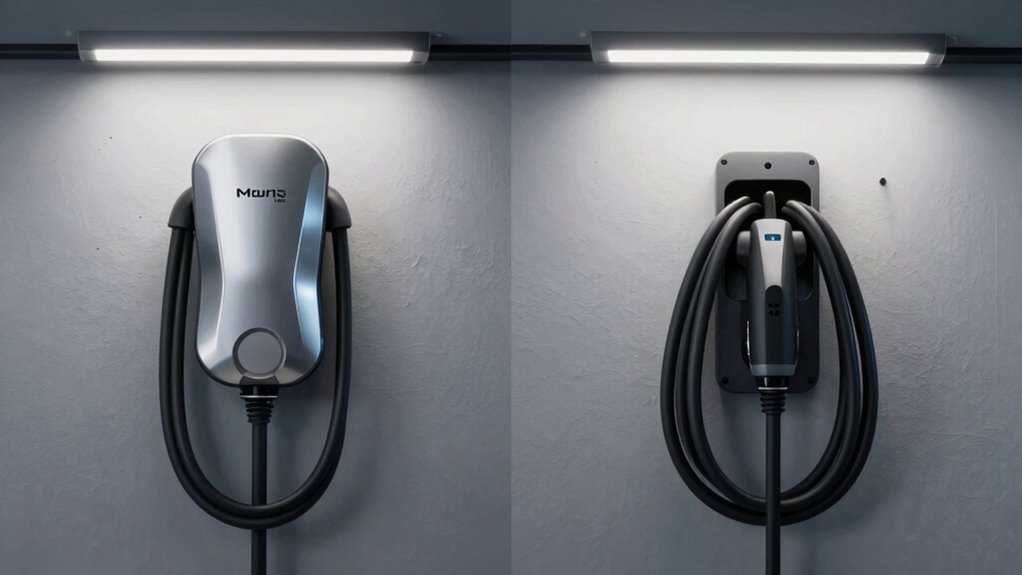
Installing a hardwired charger typically involves a more complex process, often requiring a professional electrician to run dedicated wiring directly to your electrical panel. Once installed, it offers a sleek, integrated look that enhances your space’s aesthetic design. While the setup may take longer initially, it provides a seamless connection, free from the hassle of unplugging. Additionally, the power supply stability of hardwired chargers can be more reliable, reducing the risk of interruptions. Conversely, plug-in chargers excel in convenience—they’re easy to install and relocate. With wireless connectivity features, you can monitor and control your charger remotely, adding to the ease of use. Consider these aspects:
- Hardwired chargers eliminate clutter, creating a clean, modern appearance
- Plug-in chargers offer flexibility and quick setup
- Wireless connectivity enhances remote management
- Ease of installation makes plug-ins more accessible for most users
- Electrical safety considerations are important when installing any type of charger to ensure proper and secure setup. Additionally, understanding charger compatibility with your electrical system can prevent potential issues down the line. Ensuring proper electrical wiring can also help maintain the longevity and safety of your charging equipment. Proper installation procedures are essential for safe and efficient operation.
Which EV Charger Is Safer and Performs Better?
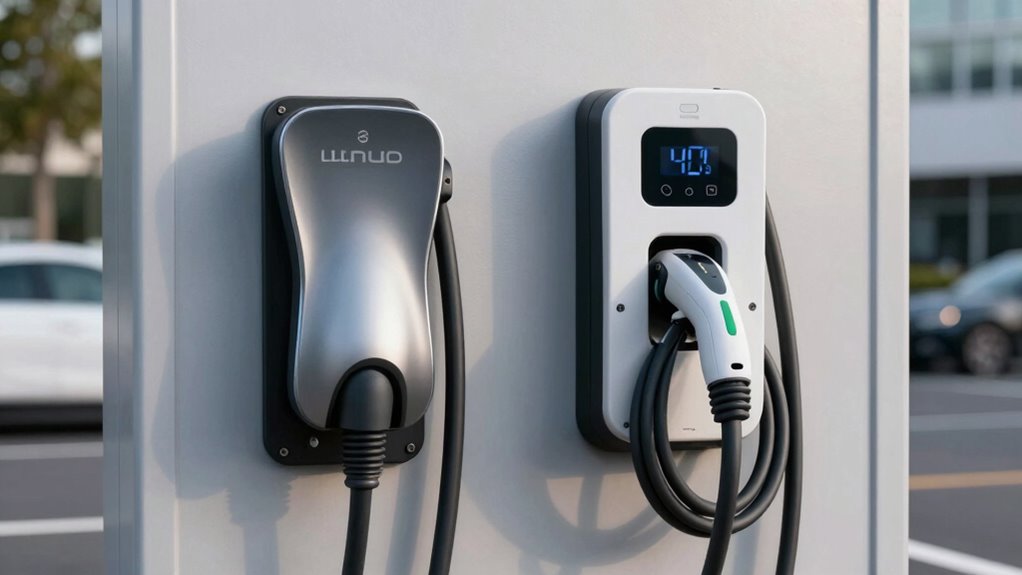
Choosing the right EV charger involves considering safety and performance to guarantee reliable, secure charging. Charger safety is vital because a well-designed unit minimizes risks like electrical shorts or fire hazards. When comparing performance, both hardwired and plug-in chargers can deliver fast, consistent charging if they meet proper standards. Generally, hardwired chargers tend to offer better charger safety due to secure connections and reduced accidental disconnection. However, plug-in chargers are often safer for everyday use because they’re easier to inspect and disconnect if needed. In a performance comparison, both types can perform equally well when properly installed and maintained. Additionally, understanding electrical safety standards can help you choose a charger that meets industry requirements for safe operation. Ensuring your charger complies with industry safety standards can significantly reduce potential hazards. Ultimately, selecting a charger with certified safety features and reliable performance ensures safe, efficient charging tailored to your needs. Additionally, understanding dark psychology tactics can help you recognize and prevent potential manipulation or coercion related to purchasing decisions or safety concerns.
Cost Breakdown: Buying, Installing, and Maintaining Your EV Charger
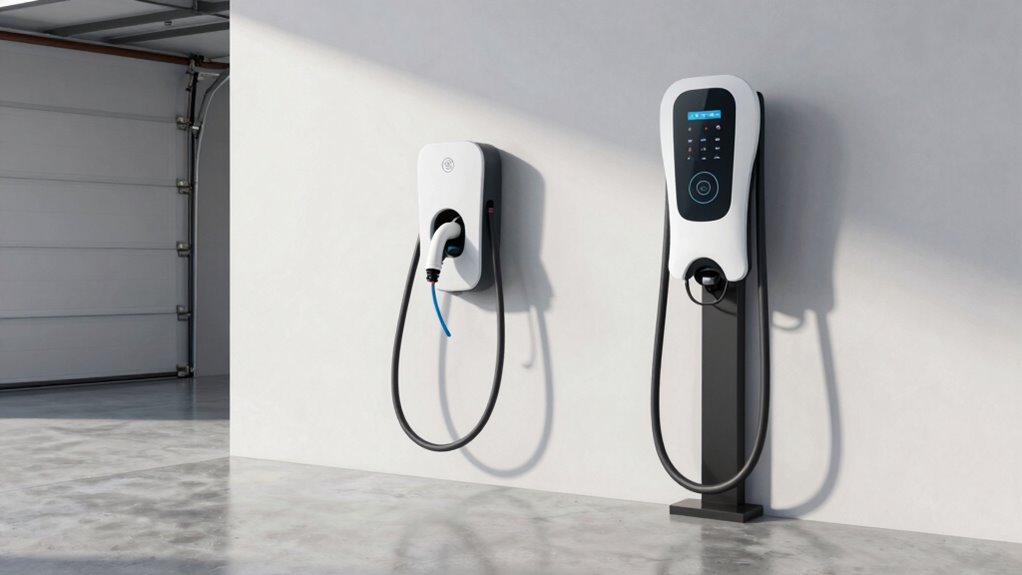
Understanding the costs involved helps you plan your EV charger investment wisely. You’ll need to take into account installation expenses and any specific requirements for your home, as well as ongoing maintenance costs. You should also consider affiliate disclosure to understand how product recommendations might be influenced by partnerships. Being aware of these factors guarantees you’re prepared for both the upfront and long-term expenses. Additionally, considering proper installation techniques can ensure optimal performance and safety of your charger over time. Incorporating home energy management strategies can also help you optimize your energy use and reduce long-term operating costs. Recognizing cost-effective solutions can further enhance your investment by balancing affordability with quality. Moreover, understanding metabolic health can inform your overall approach to wellness, contributing to sustained energy efficiency in your daily routines.
Installation Costs and Requirements
Have you considered how much installing and maintaining your EV charger will cost beyond the initial purchase? Installation costs vary based on installation complexity and permit requirements, which can influence the overall expense. If your home needs a dedicated circuit or upgraded wiring, expect higher costs. Permits may be necessary, adding time and fees to the process. Be prepared for potential surprises, such as unexpected electrical work or code compliance issues. Additionally, understanding the installation process can help anticipate evolving requirements and stay informed about new standards or technologies that may impact installation. Moreover, some narratives about the Tooth Fairy reveal dark elements that can influence children’s perceptions of magical traditions. It’s also essential to ensure your electrical system adheres to extension cord standards to prevent safety hazards during installation or maintenance.
Long-Term Maintenance Expenses
Long-term maintenance costs for your EV charger include more than just occasional repairs; they also encompass ongoing expenses like electricity, inspections, and potential upgrades. Over time, factors such as battery longevity in your vehicle and charger components can influence repair costs. Regular inspections help catch issues early, reducing expensive repairs later. If your charger is hardwired, maintenance might involve more complex repairs, which can be costlier, while plug-in models usually have simpler replacement options. Additionally, as technology advances, you might need upgrades to keep your charger compatible with newer vehicles or enhanced safety features. Monitoring electricity consumption ensures efficient operation and prevents unexpected bills. Considering the regional climate can also impact maintenance needs, especially in areas with extreme temperatures. Being proactive with maintenance will help extend your charger’s lifespan and minimize long-term expenses.
How to Choose the Best EV Charger for Your Vehicle and Lifestyle

Choosing the right EV charger depends on your vehicle’s specifications and how you plan to use it daily. Consider your desired charging speed—faster chargers get you back on the road quicker, while slower ones may suit overnight charging needs. Port versatility also matters; a charger with multiple ports can serve multiple vehicles or adapt to future upgrades. Think about your lifestyle and driveway setup to find the perfect fit. Ask yourself:
- Do I need rapid charging for quick top-ups?
- Will I charge multiple vehicles regularly?
- Is a compact charger essential for limited space?
- Do I want a flexible, future-proof solution?
Matching these factors ensures you select a charger that complements your vehicle and lifestyle perfectly, making charging convenient and efficient every day.
Pros and Cons of Hardwired vs Plug-In Chargers
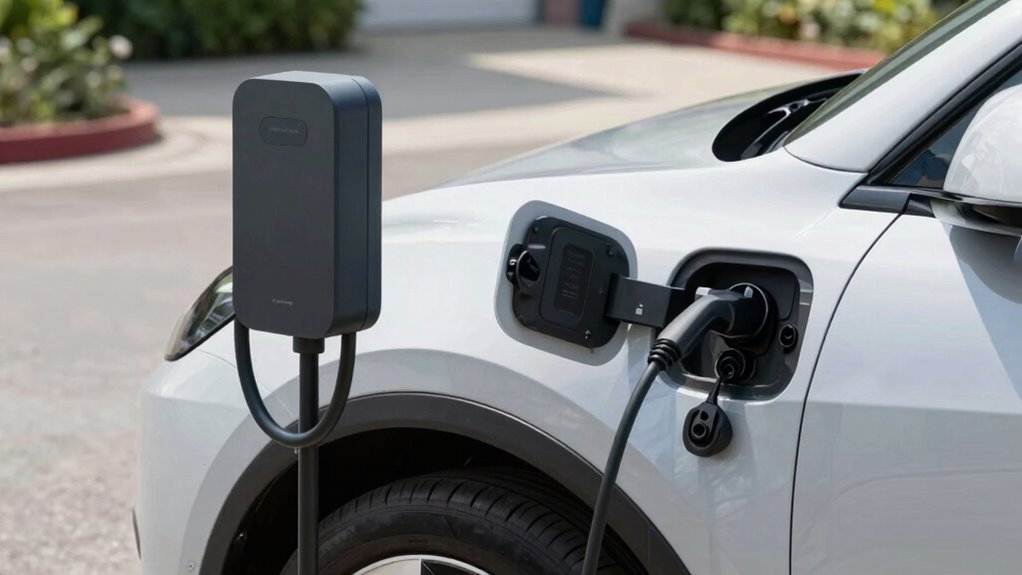
When deciding between hardwired and plug-in EV chargers, understanding their respective advantages and drawbacks can help you make an informed choice. Hardwired chargers typically offer faster charging speeds and are more secure, but installation can be more complex and costly. Plug-in chargers provide flexibility and easier setup, making them ideal for renters or those who may relocate. However, they might have limited compatibility options and slightly slower charging speeds. Consider this comparison:
| Feature | Hardwired Charger | Plug-In Charger |
|---|---|---|
| Charging Speed | Usually faster | Slightly slower |
| Compatibility Options | Less flexible, fixed installation | More adaptable, portable |
| Ease of Installation | More complex, professional needed | Easy, DIY-friendly |
Choosing depends on your priorities: speed and security or convenience and flexibility.
Frequently Asked Questions
Can I Upgrade From a Plug-In to a Hardwired Charger Later?
Yes, you can upgrade from a plug-in to a hardwired charger later. Just make certain charger compatibility with your vehicle and electrical system. The upgrade feasibility depends on your home’s wiring and electrical capacity. You might need professional help to install a dedicated circuit and guarantee safety. Check with a qualified electrician to evaluate your setup and confirm a smooth transition without major modifications.
Do Hardwired Chargers Require Professional Inspection After Installation?
Yes, hardwired chargers generally require a professional inspection after installation. This guarantees they meet inspection requirements and certification standards for safety and performance. You should have a licensed electrician verify that everything’s installed correctly, complies with local codes, and passes necessary inspections. This step guarantees your charger operates safely and reliably, giving you peace of mind and ensuring legal compliance.
Are There Compatibility Issues With Certain EV Models and Charger Types?
You might find that some EV models have charger compatibility issues or limitations with specific charger types. While most chargers work seamlessly, certain models may require adapters or specific connectors, especially with older or less common EVs. Always double-check your EV’s specifications and the charger’s compatibility details before purchasing, ensuring your vehicle’s limitations won’t hinder charging performance or safety. This proactive step saves you from future inconveniences.
What Are the Warranty Differences Between Hardwired and Plug-In Chargers?
You’ll generally find that warranty coverage for hardwired chargers tends to be longer and more extensive, reflecting their durable build and professional installation. Manufacturer policies often specify different coverage periods and conditions for plug-in chargers, which may include more flexible or limited warranties due to their ease of replacement. Always check the specific warranty details from the manufacturer, as coverage can vary considerably based on the product and installation type.
How Do Voltage and Amperage Affect Charging Speed and Safety?
Did you know that higher amperage capacity can charge your EV up to 60% faster? Voltage and amperage directly impact charging speed and safety—if voltage isn’t stable, it risks damaging your vehicle, while insufficient amperage limits charging speed. To stay safe and efficient, choose a charger with appropriate voltage stability and sufficient amperage capacity for your vehicle’s needs, ensuring faster, safer charging sessions every time.
Conclusion
Choosing between a hardwired and plug-in EV charger might feel overwhelming, but remember, this decision shapes your entire charging experience. Whether you prioritize convenience or performance, understanding their differences guarantees you get the perfect fit. Don’t settle for a charger that’s just okay—think of it as fueling your journey with the power of a supercharged rocket. Make an informed choice today, and watch your EV adventures soar to new heights!