
TL;DR

Get business pricing on monitors, keyboards and dev gear
- Business-only prices and quantity discounts
- Tax-exempt purchasing
- Multiple users, one account, clear invoices
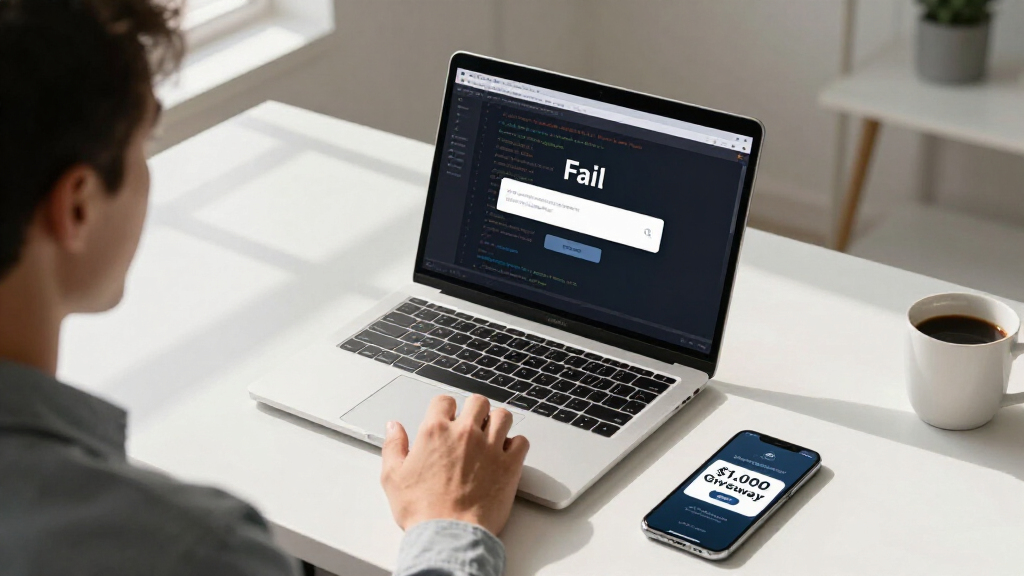
A business founder has announced a commitment to give away $1,000 if their product fails. This move aims to reassure customers and build trust. The initiative is still in the early stages, with details yet to be fully clarified.
An entrepreneur has announced a pledge to give away $1,000 if their product fails, marking a bold move to demonstrate confidence and build trust with potential customers. The initiative, announced publicly this week, is designed to differentiate the product in a competitive market and reassure buyers of its quality.
The entrepreneur, whose identity is not fully disclosed, stated that they will personally pay $1,000 if their product does not meet expectations or fails to perform as promised. This commitment was shared via social media and a company press release, aiming to attract attention and demonstrate transparency.
While the pledge has garnered media coverage and some customer interest, it remains unclear how the guarantee will be implemented, whether there are conditions or limitations, and how the entrepreneur plans to handle potential claims. The offer is currently valid for a limited time, but specifics about the duration have not been disclosed.
Potential Impact on Customer Trust and Market Differentiation
This initiative could influence how startups and small businesses approach customer guarantees, potentially setting a new standard for confidence-building measures. If successful, it may encourage other entrepreneurs to adopt similar risk-reversal strategies, impacting marketing and consumer perceptions.
However, the actual effectiveness depends on the implementation details and whether customers see the guarantee as credible. The move also raises questions about the financial sustainability of such offers if many claims are made.
As an affiliate, we earn on qualifying purchases.
Background of Confidence Guarantees in Business
Offering money-back guarantees or risk-free trials has become a common marketing tactic to reduce customer hesitation. This particular pledge, however, is more explicit — promising a direct cash payout if the product fails, rather than a refund or replacement. Similar approaches have been used in niche markets or by individual entrepreneurs seeking to differentiate themselves.
Historically, such guarantees have helped build trust but also posed risks for businesses if claims are frequent or difficult to verify. The current move appears to be a strategic effort to stand out amid increasing competition and skepticism among consumers.
“I believe in my product so much that I’m willing to put my money where my mouth is. If it fails, I’ll give away $1,000 to prove my confidence.”
— the entrepreneur
As an affiliate, we earn on qualifying purchases.
Details of the Guarantee’s Terms and Enforcement Are Unclear
It is not yet confirmed how the guarantee will be enforced, what specific conditions apply, or how claims will be verified. The duration of the offer and whether there are limits on the number of claims remain unknown. Additionally, the entrepreneur has not disclosed how they will fund the payouts if multiple claims are made.
As an affiliate, we earn on qualifying purchases.
Clarification of Terms and Monitoring of Customer Claims
The entrepreneur is expected to release more detailed terms of the guarantee soon. Observers will monitor customer claims and the company’s response to assess the credibility and impact of the initiative. The success of the guarantee may influence future marketing strategies across the industry.
Further developments could include official guidelines, testimonials, or case studies demonstrating the guarantee’s operation.
As an affiliate, we earn on qualifying purchases.
Key Questions
How does the $1,000 guarantee work?
The entrepreneur has announced they will pay $1,000 if the product fails, but detailed terms and conditions are not yet publicly available.
Is this guarantee available for all customers?
It is unclear whether the guarantee applies universally or only to specific purchase conditions or timeframes.
What are the potential risks for the entrepreneur?
If many claims are made, the entrepreneur could face significant financial payouts, which might impact the business’s sustainability.
Has this approach been tried before?
While money-back guarantees are common, a direct promise to pay $1,000 if the product fails is unusual and largely untested at this scale.
Source: rss
Halloween Picks
halloween
As an affiliate, we earn on qualifying purchases.