
TL;DR

Get business pricing on monitors, keyboards and dev gear
- Business-only prices and quantity discounts
- Tax-exempt purchasing
- Multiple users, one account, clear invoices
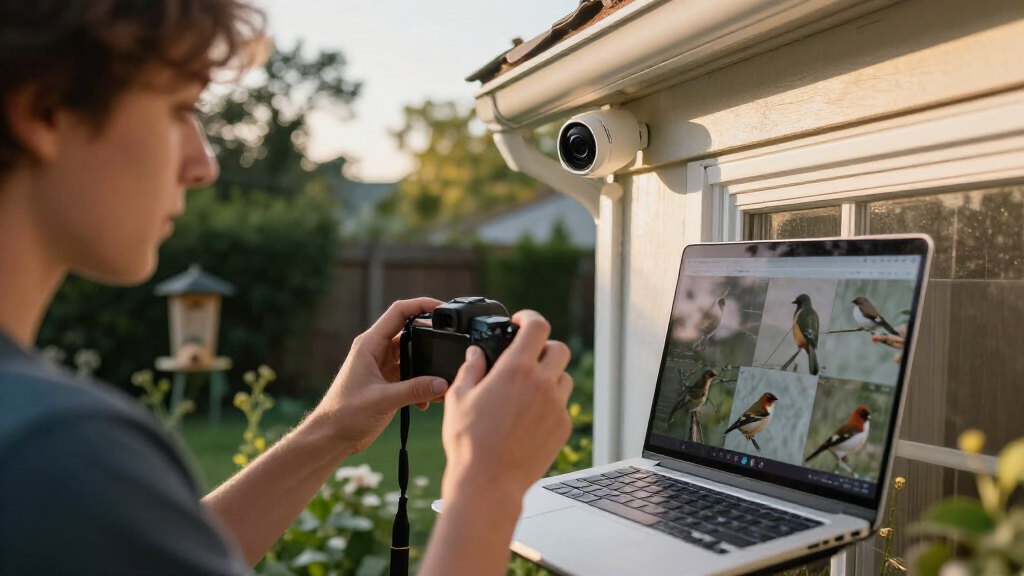
A person has modified their security cameras to automatically identify bird species. This development combines existing camera technology with AI for wildlife monitoring, attracting growing attention. Details about the system’s accuracy and broader adoption remain unclear.
A hobbyist has successfully transformed their home security cameras into an automated system for identifying bird species, showcasing a novel application of existing surveillance technology. This development highlights the potential for integrating AI-driven wildlife monitoring into everyday devices, attracting increased interest from birdwatchers and tech enthusiasts alike.
The individual, whose identity has not been disclosed, modified standard security cameras with open-source machine learning models to recognize and classify bird calls and appearances. According to preliminary reports, the system can distinguish among several common bird species with a high degree of accuracy, though the exact performance metrics are not yet publicly verified.
Experts familiar with the project say that the modification involves installing a lightweight AI model on a small computing device connected to the camera feed. The AI processes real-time video and audio to identify bird species, sending alerts or logging sightings automatically. The project reportedly took several weeks of trial and error to refine the system’s accuracy and reduce false positives.
While this is a DIY project shared on social media platforms, the concept has sparked broader interest in the potential for consumer-grade surveillance devices to serve environmental monitoring roles, especially in urban or suburban settings where dedicated wildlife cameras are less common.
Potential Impact on Wildlife Monitoring and Birdwatching
This development demonstrates how existing home security infrastructure can be repurposed for ecological and conservation efforts, making wildlife monitoring more accessible and affordable. If scalable, such systems could enable citizen scientists and birdwatchers to gather large datasets on bird populations with minimal additional investment, contributing valuable data for ecological research.
Moreover, the integration of AI with everyday devices could lead to more widespread awareness and engagement with local biodiversity, fostering community involvement in conservation efforts. However, questions about system reliability, privacy concerns, and data management remain to be addressed before broader adoption can occur.
home security camera with bird identification
As an affiliate, we earn on qualifying purchases.
As an affiliate, we earn on qualifying purchases.
Growing Interest in DIY Wildlife Monitoring Technologies
Over recent years, interest in DIY environmental monitoring has surged, driven by advancements in affordable AI and open-source platforms. Enthusiasts have previously adapted drones, smartphones, and Raspberry Pi devices for bird counting and habitat monitoring. The current trend reflects a broader push toward democratizing ecological data collection, especially in urban areas where traditional research tools are less accessible.
The specific use of home security cameras for bird identification appears to be a recent innovation, likely inspired by the increasing availability of lightweight AI models and the popularity of birdwatching as a hobby. While there are no confirmed commercial products yet, social media reports and online forums suggest that this is a growing DIY movement among tech-savvy bird enthusiasts.
Search interest for terms like “DIY bird identification” and “home security bird camera” has spiked in recent weeks, though it is not yet clear whether this is driven by individual experimentation or a broader trend in environmental tech innovation.
As an affiliate, we earn on qualifying purchases.
Unverified Claims and System Performance Details
Details about the system’s accuracy, reliability, and scalability remain unconfirmed. It is unclear whether the project has been tested extensively or if it is limited to a single prototype. There is also no verified data on false positive rates or species recognition limits. Privacy considerations related to continuous video and audio recording are still unaddressed, and broader adoption depends on resolving these issues.
As an affiliate, we earn on qualifying purchases.
Potential for Broader Adoption and Technical Refinements
Further testing and validation are expected to determine the system’s effectiveness and limitations. Enthusiasts and researchers may develop more refined versions, possibly leading to small-scale commercial products or open-source kits for DIY wildlife monitoring. Monitoring social media and online forums will provide insights into how widely this concept spreads and evolves.
Researchers and developers might also explore integrating such systems with existing conservation databases or citizen science platforms, enhancing their utility and impact.
As an affiliate, we earn on qualifying purchases.
Key Questions
Can this system accurately identify all bird species?
It is not yet confirmed whether the current DIY system can reliably identify all bird species. Initial reports suggest it performs well with common species but may have limitations with rarer or similar-looking birds.
Is this technology available for others to try at home?
While the project appears to be a DIY initiative shared online, there are no commercial products yet. Interested individuals can attempt similar modifications using open-source AI models and their own security cameras.
Does this raise privacy concerns?
Yes, continuous video and audio recording in private or public spaces can raise privacy issues. Proper data management and adherence to local laws are important considerations for anyone attempting to implement such systems.
Could this technology be used for other wildlife monitoring?
Potentially, yes. With appropriate training data and modifications, similar systems could be adapted to identify other animals or monitor environmental conditions, expanding their utility beyond bird identification.
Source: hn
Halloween Picks
halloween
As an affiliate, we earn on qualifying purchases.