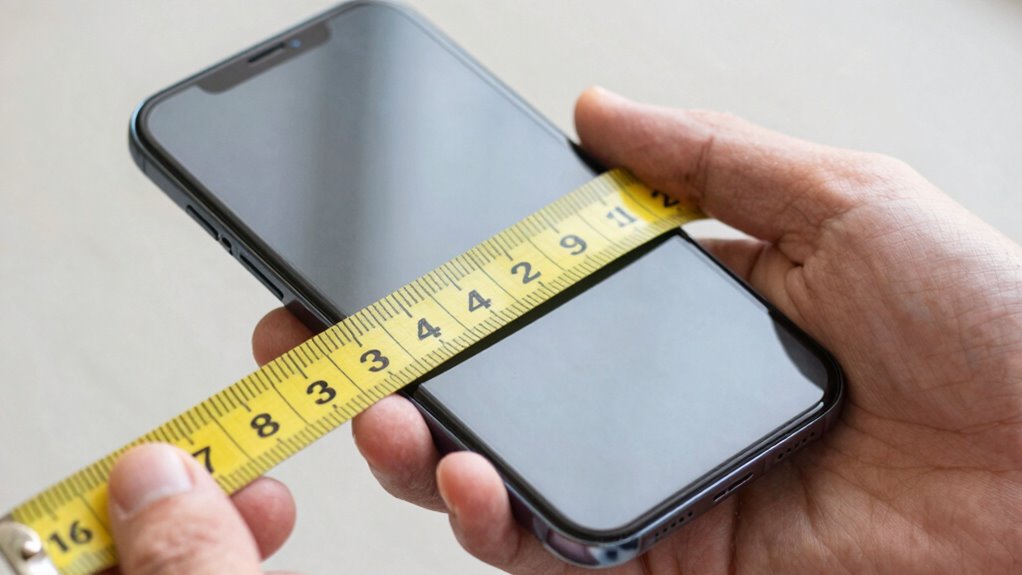

To prevent buyer’s remorse, always double-check your measurements with precise tools like tape or laser measures. Take multiple readings and record each one to guarantee accuracy before making a purchase. Cross-reference your measurements with size charts or product specs to confirm a perfect fit. Small errors can lead to costly returns or unhappy surprises. Keep these tips in mind, and you’ll discover more secrets to effortless shopping success as you continue.
Key Takeaways
- Always measure multiple points on the item and compare results for accuracy.
- Use a flexible tape measure for precise measurements of curves and contours.
- Double-check measurements against size charts or product specifications before buying.
- Record measurements immediately and re-measure to confirm consistency.
- Include all relevant dimensions, such as protrusions or clearance space, to ensure a perfect fit.
Why Getting Your Measurements Right Saves You From Buyer’s Remorse
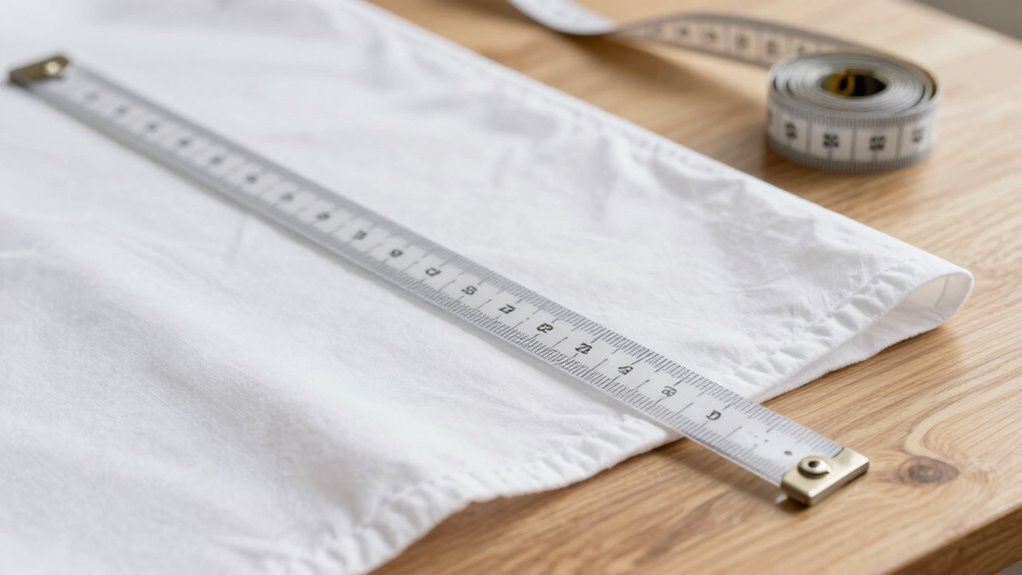
Getting your measurements right is crucial because it guarantees the items you buy will fit perfectly the first time. Accurate measurements help you avoid costly returns and frustration. When planning your space, use decorating tips to visualize how furniture placement impacts the room’s flow. Knowing exact dimensions ensures pieces won’t overcrowd the area or block pathways. Proper measurements also help you select the right-sized furniture that complements your space without overwhelming it. By being precise, you prevent buyer’s remorse caused by mismatched or ill-fitting items. This confidence allows you to make smarter choices, saving time and money. Additionally, applying personal finance planning strategies can help you budget effectively for your decorating needs. Understanding measurement accuracy and the significance of size considerations is essential in preventing costly mistakes and ensuring your investments align with your space. Being aware of space planning principles can further enhance your confidence in making well-informed purchases. Practicing spatial awareness can help you better visualize how your furniture will fit in the actual room. Ultimately, taking the time to measure correctly leads to a well-organized, harmonious room where everything fits just right—making your decorating project a success.
How to Measure Your Space and Items Step-by-Step
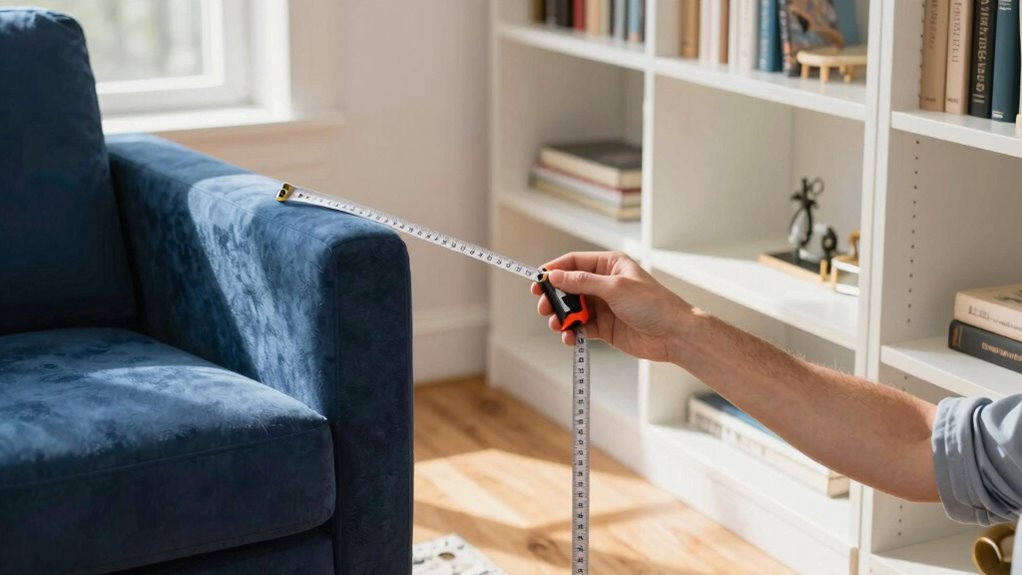
To guarantee your furniture fits perfectly, you need to measure your space and items accurately. Start by planning your layout with effective space planning, which helps you visualize how everything fits. Use reliable measurement tools like a tape measure or laser measure for precision. Follow these steps:
- Measure the length, width, and height of your space, noting down each dimension carefully.
- Measure your furniture or items, including any protruding parts like armrests or handles.
- Double-check your measurements to avoid errors, ensuring you have the right dimensions before purchasing.
Common Measuring Mistakes to Avoid for Furniture, Appliances, & Clothing
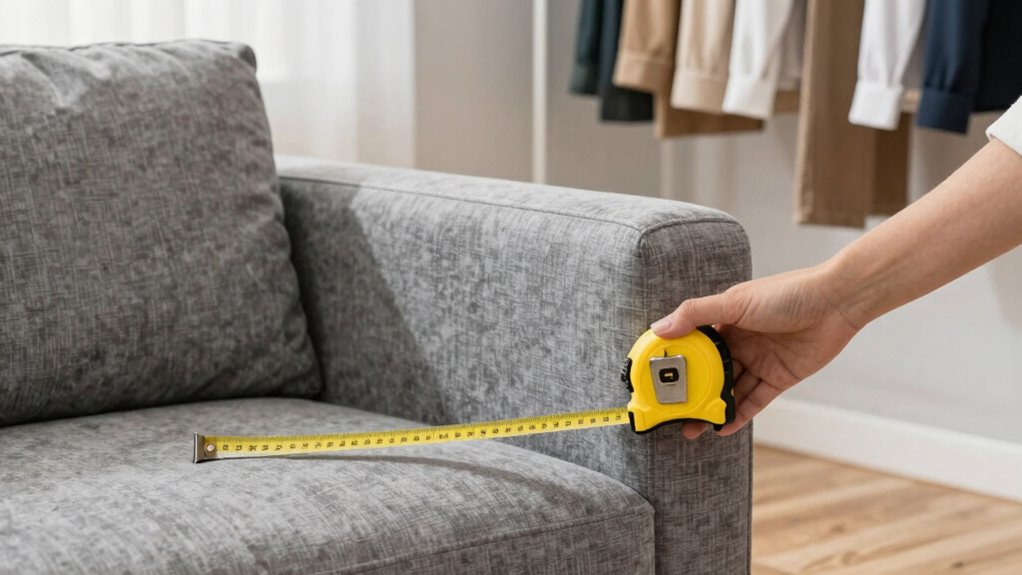
Even with careful measurements, common mistakes can lead to purchasing furniture, appliances, or clothing that doesn’t fit as expected. Measurement pitfalls often stem from rushing or misreading instructions, which fuel sizing misconceptions. For example, assuming your measurements apply universally to all brands or styles can cause surprises. Avoid using only one measurement source or ignoring the importance of measuring in multiple places, especially with furniture that needs to fit specific spaces. Additionally, don’t forget to account for clearance, movement, or layering when measuring for clothing or appliances. These errors can result in buying items that are too big or small, leading to buyer’s remorse. Being aware of these measurement pitfalls helps you make smarter choices and guarantees everything fits perfectly the first time. Moreover, understanding how to measure contrast ratio accurately can prevent mismatched setups in home theater projects, ensuring optimal image quality and viewer satisfaction. Incorporating sound measurement principles can also enhance your understanding of precise sizing, especially in technical or specialized contexts. Remember that using appropriate measurement tools and techniques is crucial for obtaining reliable results and avoiding costly mistakes. To further improve accuracy, familiarize yourself with common measurement units and conversion methods to avoid discrepancies during the measuring process. Incorporating sound measurement principles can also enhance your understanding of precise sizing, especially in technical or specialized contexts.
Using Your Measurements to Find the Perfect Fit Every Time
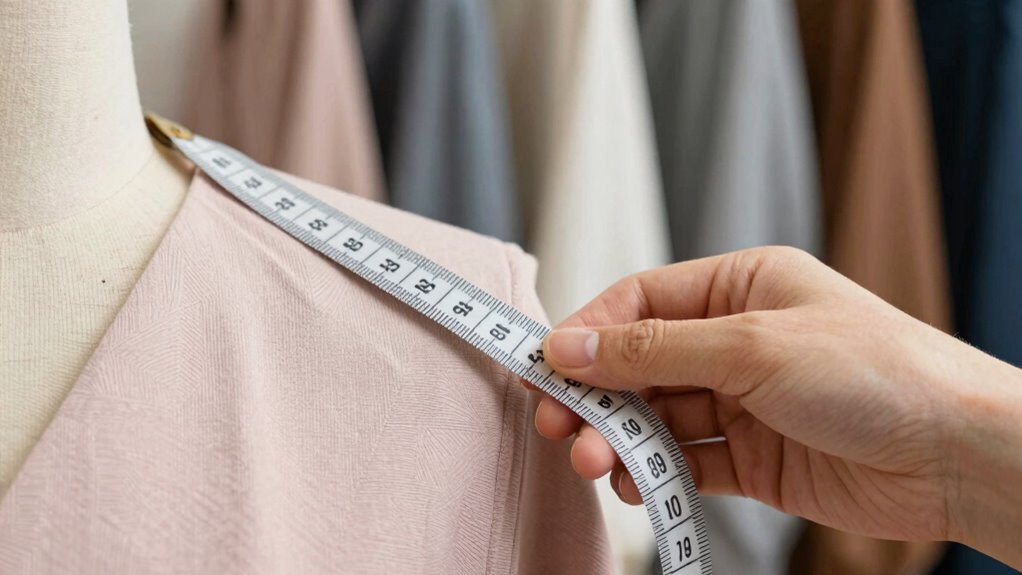
Once you have accurate measurements, the key to finding the perfect fit is understanding how to apply them effectively. Start by consulting the sizing charts provided by brands or retailers, as they translate your measurements into specific sizes. Use precise measuring tools—like a flexible tape measure—to guarantee accuracy. To optimize your fitting process, consider these steps:
- Cross-reference your measurements with the sizing charts to identify your best size.
- Focus on key measurements relevant to the item, such as waist, inseam, or chest.
- Always verify measurements against the retailer’s recommended fit, adjusting for personal comfort preferences.
- Be aware of common passive voice usage that can cloud clarity and ensure your descriptions remain clear and direct.
- Recognizing measurement accuracy as a critical factor can help prevent sizing mistakes and ensure satisfaction.
- Understanding topical authority in your clothing choices can boost confidence in selecting items that truly suit your style and needs.
- Incorporating knowledge of water-related measurements, such as fabric weight and stretch, can further refine your selections for a perfect fit.
- Additionally, understanding fitting techniques can help you select garments that complement your body shape and enhance your overall look.
How to Double-Check Your Measurements Before Buying
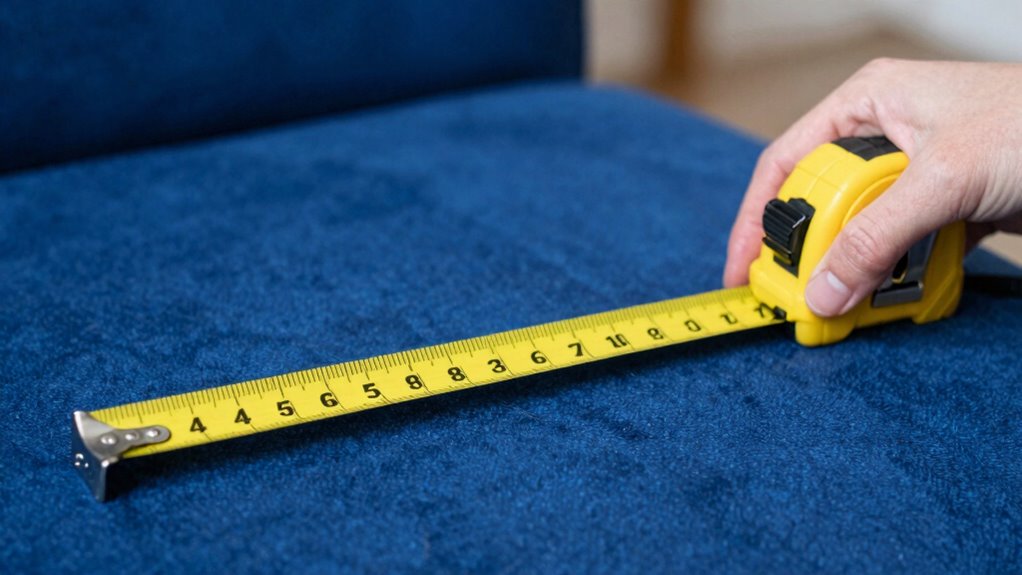
Before making a purchase, it’s essential to double-check your measurements to guarantee they’re accurate and reliable. Use precision tools like a tape measure or ruler, and take measurements multiple times. This ensures measurement accuracy and reduces errors. To verify, compare your measurements with a trusted size chart or the item’s specifications. Remember, small discrepancies can lead to buyer’s remorse, so precision matters.
| Step | Tip |
|---|---|
| Measure again | Always double-check with the same tools. |
| Use precision tools | Rely on accurate tools for consistent results. |
| Record measurements | Write down each measurement immediately. |
| Compare with standards | Cross-reference with size charts or product specs. |
Double-checking guarantees your measurements are precise, helping you avoid costly mistakes.
Frequently Asked Questions
How Often Should I Re-Measure My Space for Accuracy?
You should re-measure your space whenever you’re planning a major change, like new furniture or redecorating. Regularly updating your measurements guarantees accurate space optimization and helps avoid surprises. Decorating tips suggest measuring at different times of day to account for natural light and shifting furniture. This way, you stay confident your new pieces will fit perfectly, preventing buyer’s remorse and making your space both functional and stylish.
What Tools Are Best for Taking Precise Measurements?
To avoid measuring pitfalls, you’ll want to choose reliable tools like a tape measure, laser distance meter, or a ruler, depending on your needs. Tape measures are versatile and easy to use, while laser meters offer precision for larger spaces. Comparing these tools helps you find the best fit, ensuring accurate measurements. Remember, investing in quality tools minimizes errors and makes your measuring process smoother and more enjoyable.
Can Measurements Vary Between Different Measuring Devices?
Measurements can vary between different measuring devices due to differences in measuring accuracy and device calibration. You might notice slight discrepancies if your tools aren’t properly calibrated or if they’re designed differently. To minimize errors, always make sure your devices are calibrated regularly and use the same device for consistent results. This way, you’ll get more reliable measurements and prevent buyer’s remorse caused by inaccurate sizing.
How Do I Measure Irregularly Shaped Furniture or Spaces?
To measure irregularly shaped furniture or spaces, use measuring tips like a flexible tape measure or string. Wrap the string around curves or edges, then lay it flat against a ruler to get accurate furniture dimensions. For spaces, measure at multiple points to capture the true size. Always double-check your measurements, and record each dimension carefully. This guarantees you get precise measurements, preventing surprises when your furniture arrives.
What’s the Best Way to Record and Store My Measurements?
Did you know that 60% of buyers regret furniture purchases due to measurement errors? To guarantee measurement accuracy and consistency, use a dedicated measuring app or a digital note, and write clear labels for each measurement. Record your measurements immediately after measuring, double-check for accuracy, and store them in an organized digital folder. This way, you avoid confusion and make confident, well-informed buying decisions every time.
Conclusion
Getting your measurements right is the secret weapon to avoiding buyer’s remorse—you’re practically guaranteeing a perfect fit every time. When you measure carefully, you’ll save yourself from the chaos of returns and the nightmare of mismatched furniture or clothes that don’t fit. Think of your measurements as the magic key that opens flawless shopping experiences. So, double-check, measure twice, and shop confidently—because nothing beats the satisfaction of knowing you’ve nailed it, every single time.