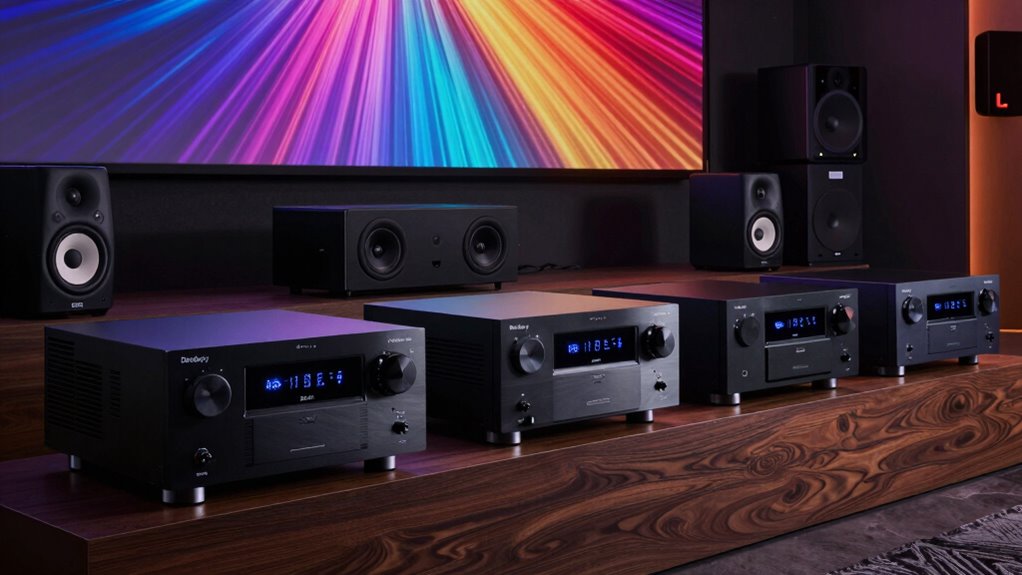

When choosing an AV receiver for Dolby Atmos, the key decision revolves around balancing sound quality, compatibility, and user features. The Yamaha RX-A8A stands out as the overall best for its immersive audio and extensive channel support, while the Denon AVR-X3900H offers superb performance with multi-room streaming at a slightly higher price point. For those prioritizing simplicity and ease of setup, the Sony STR-AN1000 delivers reliable Atmos support without overwhelming features. Tradeoffs in this category often involve choosing between raw power, advanced features, and user-friendliness. Continue reading for a detailed breakdown of the best options for your home theater setup.

Get business pricing on monitors, keyboards and dev gear
- Business-only prices and quantity discounts
- Tax-exempt purchasing
- Multiple users, one account, clear invoices
Key Takeaways
- The most capable models support 11.2 channels and 8K/4K passthrough, future-proofing your setup.
- Balance between power output and ease of use varies; premium models often require more setup knowledge.
- Multi-room and streaming features are common in mid-to-high-end options, but may add complexity.
- THX certification and Dolby Atmos support are consistent indicators of immersive sound quality.
- Lower-cost models still deliver Atmos support but may lack advanced calibration and multi-channel expansion.
| TX-NR7100 9.2-Channel THX Certified AV Receiver |  | Best Overall for Advanced Home Theater and Multi-Room Integration | Channels: 9.2 | THX Certified: Yes | HDMI Out: 3 | VIEW ON AMAZON | See Our Full Breakdown |
| Denon AVR-X3900H 9.4 Channel AV Receiver with HEOS Multiroom Audio Streaming |  | Best for High-Power, Versatile Home Theater Setups | Channels: 9.4 | Power per channel: 105W | Supports: Dolby Atmos, DTS:X, AURO-3D, IMAX Enhanced | VIEW ON AMAZON | See Our Full Breakdown |
| Yamaha RX500A 7.2-Channel Home Theater AV Receiver with Dolby Atmos, 4K120/8K HDMI, Wi-Fi and Streaming |  | Best for Easy Setup and Solid Performance in Mid-Size Rooms | Channels: 7.2 | Power: 70W per channel | HDMI: 4K120/8K60 support | VIEW ON AMAZON | See Our Full Breakdown |
| Denon AVR-X1800H 7.2 Channel AV Stereo Receiver (80W x 7), WiFi, Bluetooth |  | Best for Compact, High-Performance Home Theater | Channels: 7.2 | Power Output: 80W per channel | HDMI Inputs: 3 dedicated 8K inputs | VIEW ON AMAZON | See Our Full Breakdown |
| Yamaha RX300A 5.2-Channel Home Theater AV Receiver with Dolby Atmos, 4K120/8K HDMI, Bluetooth |  | Best for Compact, Easy-to-Use Home Theater Setups | Channels: 5.2 | Power: 70W | HDMI Support: 4K120/8K60 | VIEW ON AMAZON | See Our Full Breakdown |
| Yamaha RX-A2A AVENTAGE 7.2-Channel AV Receiver | 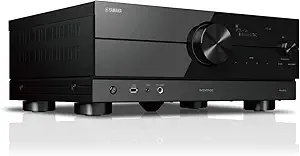 | Best Overall for Versatile Home Theater Integration | Channels: 7.2 | HDMI Inputs: 7-in/1-out | Supports 8K: Yes | VIEW ON AMAZON | See Our Full Breakdown |
| Yamaha RX-A8A AVENTAGE 11.2-Channel AV Receiver with 8K/4K Support, Dolby Atmos, DTS:X, Auro-3D, Wi-Fi, Bluetooth, MusicCast |  | Best for High-End Immersive Sound with Multi-Dimensional Audio | Channels: 11.2 | HDMI Inputs: 7-in/3-out | Supports: 8K60, 4K120, HDCP 2.3, eARC | VIEW ON AMAZON | See Our Full Breakdown |
| Sony STR-DH790 7.2-ch Surround Sound Home Theater AV Receiver |  | Best Budget-Friendly for Dolby Atmos Support | Number of Channels: 7.2 | HDMI Ports: 5 | Supports 4K HDR: Yes | VIEW ON AMAZON | See Our Full Breakdown |
| Onkyo TX–NR5100 7.2-Channel 8K Smart AV Receiver – Black |  | Best for Gaming and Future-Ready 8K Video | Channels: 7.2 | Video Resolution: 8K | Connectivity: HDMI 2.1 | VIEW ON AMAZON | See Our Full Breakdown |
| Onkyo TX-NR6100 7.2 Channel THX Certified Network AV Receiver – Black |  | Best for Power and Certification in Home Theater | Power: 210 W/Ch | Channels: 7.2 | Certification: THX Certified | VIEW ON AMAZON | See Our Full Breakdown |
| Yamaha RX-V6A 7.2-Channel AV Receiver with MusicCast |  | Best Overall for Versatile Home Theater and Music Integration | Channels: 7.2 | HDMI: 7 in / 1 out with HDMI 2.1 | Video Support: 4K60, 4K120AB, 8K60B, Dolby Vision | VIEW ON AMAZON | See Our Full Breakdown |
| Denon AVR-X1700H 7.2 Channel AV Receiver – 80W/Channel, Built-in HEOS |  | Best Value for 8K Support with Multi-Format Compatibility | Channels: 7.2 | Power per Channel: 80W | HDMI Inputs: 3 dedicated 8K inputs | VIEW ON AMAZON | See Our Full Breakdown |
| Denon AVR-S970H 7.2 Channel 8K UHD AV Receiver (90W x 7), Wi-Fi, Bluetooth |  | Best for Power and Comprehensive 8K Video Support | Channels: 7.2 | Power Output: 90W x 7 | HDMI Ports: 8 (6 In / 2 Out) | VIEW ON AMAZON | See Our Full Breakdown |
| Sony STR-AN1000 7.2ch Home Theater 8K A/V Bluetooth Receiver |  | Best for Built-in Streaming and Multi-Zone Capabilities | Channels: 7.2 | Output Power: 165 watts | HDMI Ports: 6 | VIEW ON AMAZON | See Our Full Breakdown |
More Details on Our Top Picks
TX-NR7100 9.2-Channel THX Certified AV Receiver
The TX-NR7100 stands out for its support of 8K/4K HDMI 2.1, making it ideal for gamers and high-end video enthusiasts. Its Dirac Live room correction and THX certification set it apart from models like the Yamaha RX500A, which lacks THX certification and advanced room calibration. While its setup can be complex and may require technical skills, the comprehensive features justify the premium price. This receiver is best suited for dedicated home theater enthusiasts who want top-tier sound, video, and multi-room capabilities integrated seamlessly.
Pros:- Supports 8K/4K HDMI 2.1 for cutting-edge video and gaming
- Immersive Dolby Atmos and DTS:X sound for realistic surround effects
- Compatible with Sonos and DTS Play-Fi for multi-room streaming
- Advanced room correction with Dirac Live
Cons:- Setup complexity may intimidate less tech-savvy users
- Requires additional microphones for optimal room calibration
- Premium price may be a barrier for some
Best for: Homeowners seeking a highly capable, future-proof AV solution with multi-room audio and advanced calibration.
Not ideal for: Casual users or those with limited technical experience who prefer plug-and-play simplicity.
- Channels:9.2
- THX Certified:Yes
- HDMI Out:3
- HDMI Version:2.1
- Supports 8K/4K:Yes
- Room Correction:Dirac Live
Our verdict“This receiver is best for dedicated home theater fans who want top-tier features and don’t mind a complex setup.”
Denon AVR-X3900H 9.4 Channel AV Receiver with HEOS Multiroom Audio Streaming
The Denon AVR-X3900H offers robust 105W per channel and supports up to 9.4 channels, making it a solid choice for larger rooms or systems needing extra power. Its support for Dolby Atmos, DTS:X, and 8K video positions it alongside the TX-NR7100 but with a focus on multi-zone audio and flexible connectivity. Compared to Yamaha RX500A’s 7.2 channels, this model provides more expansion options but may be less straightforward to set up for beginners. It’s ideal for users who want a powerful, versatile receiver capable of multi-room audio and high-quality video at a slightly higher price point.
Pros:- Powerful 105W per channel for loud, dynamic sound
- Supports 8K/60Hz and Dolby Vision for future-proof video
- Built-in HEOS for multi-room streaming
- Supports a wide range of immersive audio formats
Cons:- Complex setup can challenge less experienced users
- Higher price point for advanced features
- Requires compatible components for full surround experience
Best for: Homeowners with large spaces or multi-zone needs seeking power and flexibility.
Not ideal for: Casual viewers or small apartments where high power and multi-zone features are unnecessary.
- Channels:9.4
- Power per channel:105W
- Supports:Dolby Atmos, DTS:X, AURO-3D, IMAX Enhanced
- Video resolution:Supports 8K
- Room calibration:Audyssey MultEQ XT32
- Connectivity:Wi-Fi, Bluetooth, AirPlay 2, HEOS
Our verdict“Best suited for users needing high power, multi-zone flexibility, and future-proof video and audio support.”
Yamaha RX500A 7.2-Channel Home Theater AV Receiver with Dolby Atmos, 4K120/8K HDMI, Wi-Fi and Streaming
The Yamaha RX500A delivers Dolby Atmos and DTS:X support in a 7.2-channel setup, making it a practical choice for users seeking immersive sound without overextending their setup. Its support for 4K/120Hz and 8K/60Hz video, combined with simple on-screen setup and room calibration, makes it accessible for less experienced users. Compared with the more advanced TX-NR7100, it has fewer channels and lacks THX certification, which might matter for audiophiles or those with larger spaces. Still, it strikes a good balance between performance and ease of use for typical home theater setups.
Pros:- Supports Dolby Atmos and DTS:X for immersive sound
- Supports 4K/120Hz and 8K/60Hz video for high-quality visuals
- Easy setup with on-screen menus and room calibration
- Multiple streaming options including Spotify and AirPlay 2
Cons:- Limited to 7.2 channels, less expansion for large systems
- Power output may be insufficient for demanding or very large rooms
- No THX certification
Best for: Users wanting a reliable, straightforward AV receiver with excellent video and sound quality for medium-sized rooms.
Not ideal for: Power users or those with larger, more complex systems requiring more channels or advanced calibration.
- Channels:7.2
- Power:70W per channel
- HDMI:4K120/8K60 support
- Supported formats:Dolby Atmos, DTS:X
- Room correction:Yes
- Streaming Services:Spotify, TIDAL, Qobuz, AirPlay
Our verdict“Ideal for users seeking a straightforward, high-quality Atmos experience in medium-sized rooms without the complexity of larger systems.”
Denon AVR-X1800H 7.2 Channel AV Stereo Receiver (80W x 7), WiFi, Bluetooth
The Denon AVR-X1800H offers a balanced 7.2-channel setup with support for 8K video and Dolby Atmos, making it suitable for smaller spaces or secondary rooms. While it shares many features with the AVR-X3900H, its slightly lower power output and fewer channels make it less ideal for large, demanding systems. Its support for multiple HDR formats and wireless streaming via HEOS makes setup straightforward for users who want solid performance without the bulk of larger units. Compared to the Yamaha RX300A, it provides more HDMI inputs and higher power, but at a higher price point.
Pros:- Supports 8K/60Hz and 3D audio formats like Dolby Atmos
- Multiple HDMI inputs with high bandwidth pass-through
- Wireless streaming and multi-room via HEOS
- Supports various HDR formats for vibrant video
Cons:- Limited to 7.2 channels, reducing flexibility for larger setups
- Setup may be challenging for newcomers
- Price could be high for its channel count
Best for: Small to medium rooms requiring robust 8K support and immersive audio without the need for extensive channels.
Not ideal for: Large, open-plan rooms or systems requiring more than 7.2 channels or maximum power.
- Channels:7.2
- Power Output:80W per channel
- HDMI Inputs:3 dedicated 8K inputs
- Supports:8K/60Hz, Dolby Atmos, DTS:X
- Wireless Streaming:Wi-Fi, Bluetooth, HEOS
- Video formats:HDR10+, Dolby Vision
Our verdict“Best suited for small to medium rooms needing reliable 8K video and immersive sound with straightforward setup.”
Yamaha RX300A 5.2-Channel Home Theater AV Receiver with Dolby Atmos, 4K120/8K HDMI, Bluetooth
The Yamaha RX300A offers a 5.2-channel configuration with Dolby Atmos and DTS:X support, making it suitable for smaller rooms or less complex systems. Its support for 4K/120Hz and 8K/60Hz video ensures compatibility with the latest high-refresh-rate displays. While less powerful than 7.2 or 9.2 models like the TX-NR7100 or Denon X3900H, its simple setup, room calibration, and Bluetooth Multipoint make it accessible for users who prioritize ease of use over maximum expansion. Compared with the RX500A, it’s more compact but with fewer channels, limiting future upgrades.
Pros:- Supports Dolby Atmos and DTS:X for immersive sound
- Supports high-quality video with 4K/120Hz and 8K/60Hz
- Easy on-screen setup and room calibration
- Multiple streaming options including Bluetooth and AirPlay 2
Cons:- Limited to 5.2 channels, restricting expansion
- Lower power output may not drive demanding speakers
- No THX certification
Best for: Users with small to medium rooms who want a straightforward Atmos experience and easy setup.
Not ideal for: Large or demanding audio environments where more channels or power are needed.
- Channels:5.2
- Power:70W
- HDMI Support:4K120/8K60
- Supported Formats:Dolby Atmos, DTS:X
- Room Correction:Yes
- Streaming:Bluetooth, AirPlay 2
Our verdict“Ideal for users seeking a simple, effective Atmos setup in small to medium spaces without advanced features.”
Yamaha RX-A2A AVENTAGE 7.2-Channel AV Receiver
The Yamaha RX-A2A AVENTAGE stands out for its support of both 8K and 4K/120 HDMI, making it highly suitable for future-proofing your home theater setup. Unlike the smaller RX-V6A, it offers more advanced calibration with YPAO R.S.C., ensuring immersive sound tailored to your space. While its extensive streaming options—including Wi-Fi, Bluetooth, and MusicCast—offer flexibility, the complexity of setup may challenge less tech-savvy users. Its premium price reflects its high-end features, but this investment pays off for those seeking a comprehensive, immersive experience. Compared to the Sony STR-DH790, it provides better video support and more streaming options, though at a higher cost and with a more involved installation process.
Pros:- Supports 8K and 4K/120 HDMI for cutting-edge video quality
- Immersive Dolby Atmos and DTS:X surround sound
- Multiple streaming options including Wi-Fi, Bluetooth, and MusicCast
- Voice control compatibility with popular assistants
Cons:- Setup can be complex, requiring technical knowledge
- Premium price point may be prohibitive for some users
- Requires additional components for full surround sound integration
Best for: Homeowners with a dedicated theater room seeking a flexible, future-ready receiver with extensive streaming and calibration features
Not ideal for: Casual viewers or those on a tight budget who prefer simple plug-and-play options
- Channels:7.2
- HDMI Inputs:7-in/1-out
- Supports 8K:Yes
- Supports 4K/120:Yes
- Dolby Atmos:Yes
- Wi-Fi:Yes
Our verdict“This receiver makes the most sense for those who want a high-end, customizable home theater experience with future-proofing in mind.”
Yamaha RX-A8A AVENTAGE 11.2-Channel AV Receiver with 8K/4K Support, Dolby Atmos, DTS:X, Auro-3D, Wi-Fi, Bluetooth, MusicCast
The Yamaha RX-A8A offers a significant step up with 11.2 channels and support for Dolby Atmos, DTS:X, and Auro-3D, making it ideal for those seeking truly enveloping sound. Unlike the 7.2-channel RX-A2A, this model provides additional channels for more precise and layered audio, especially when paired with multiple speakers. Its support for the latest 8K and 4K/120 standards ensures longevity, while advanced room calibration with YPAO R.S.C. and multipoint measurement maximizes sound quality. The abundance of smart connectivity options—including Wi-Fi, Bluetooth, AirPlay 2, and MusicCast—makes streaming effortless. However, its size and complexity may be overwhelming for beginners or smaller spaces. Compared with the Onkyo TX–NR5100, it excels in audio processing and calibration but involves a steeper setup learning curve.
Pros:- Supports Dolby Atmos, DTS:X, and Auro-3D for immersive, layered sound
- Supports 8K and 4K/120 standards for future-proofing
- Advanced room calibration with multipoint measurement
- Multiple smart connectivity options including Wi-Fi, Bluetooth, and MusicCast
Cons:- Large size requires ample installation space
- Higher cost may be prohibitive for casual users
- Setup can be complex for those unfamiliar with advanced calibration
Best for: Audiophiles and home theater enthusiasts who prioritize multi-dimensional sound and advanced calibration in a large dedicated space
Not ideal for: Users with limited room space or those seeking a straightforward, budget-friendly receiver
- Channels:11.2
- HDMI Inputs:7-in/3-out
- Supports:8K60, 4K120, HDCP 2.3, eARC
- Audio Formats:Dolby Atmos, DTS:X, Auro-3D
- Room Calibration:YPAO R.S.C. with 3D, multipoint measurement
- Connectivity:Wi-Fi, Bluetooth, AirPlay 2, MusicCast
Our verdict“This receiver is best suited for those who want the most immersive, multi-layered audio experience with extensive customization options.”
Sony STR-DH790 7.2-ch Surround Sound Home Theater AV Receiver
The Sony STR-DH790 offers a straightforward 7.2-channel setup with support for Dolby Atmos and DTS:X, making it a solid choice for those entering immersive audio. Unlike the Yamaha RX-A2A, it lacks Wi-Fi but compensates with multiple HDMI inputs and 4K HDR pass-through, ensuring good video quality. Its auto calibration, D.C.A.C., helps optimize sound without extensive manual work, ideal for less experienced users. While it does not include Wi-Fi for streaming, Bluetooth connectivity adds some flexibility. This makes it a sensible option for budget-conscious buyers who want Atmos support without the complexity or cost of high-end models. Compared with the Onkyo TX-NR6100, it provides a simpler, more affordable package, but at the expense of future-proofing features.
Pros:- Supports Dolby Atmos and DTS:X for immersive sound
- 4K HDR pass-through for high-quality video
- Auto calibration simplifies setup
- Multiple HDMI inputs for versatile connectivity
Cons:- No built-in Wi-Fi for streaming services
- Limited to 5 HDMI ports, potentially restrictive
- Lacks advanced multi-dimensional audio formats like Auro-3D
Best for: Budget-conscious consumers seeking Atmos support and a straightforward setup for smaller or casual home theaters
Not ideal for: Enthusiasts wanting advanced calibration or multiple streaming options in a larger, dedicated theater
- Number of Channels:7.2
- HDMI Ports:5
- Supports 4K HDR:Yes
- Supports Dolby Atmos:Yes
- Supports DTS:X:Yes
- Dimensions:5 1/4″ tall
Our verdict“This receiver makes sense for those who want Atmos at a lower price with simple, reliable performance.”
Onkyo TX–NR5100 7.2-Channel 8K Smart AV Receiver – Black
The Onkyo TX–NR5100 stands out for its support of 8K video and gaming-enhanced features like HDMI 2.1’s VRR and ALLM, making it ideal for users who prioritize next-gen gaming alongside immersive sound. Unlike the simpler Sony STR-DH790, it offers advanced connectivity options, including eARC for high-bitrate audio, and is built for seamless integration with modern gaming consoles. Its support for Dolby Atmos and DTS:X ensures high-quality surround sound, but its setup might be complex for those unfamiliar with advanced HDMI configurations. This receiver caters to gamers and home theater fans who want future-proof video and audio, at a potentially higher price point and setup effort. Compared to the Onkyo TX-NR6100, it emphasizes gaming features over THX certification but offers similar 8K support.
Pros:- Supports 8K video and HDMI 2.1 for future-proofing
- Gaming features like VRR and ALLM improve gameplay experience
- Immersive sound with Dolby Atmos and DTS:X
- eARC for high-bitrate audio formats
Cons:- Setup can be complex, especially for HDMI configurations
- Higher price point may deter casual users
- Primarily designed for gamers and tech-heavy environments
Best for: Gamers and tech enthusiasts seeking a future-proof AV receiver with excellent gaming and Atmos capabilities
Not ideal for: Casual viewers or those preferring a simple, plug-and-play setup without gaming features
- Channels:7.2
- Video Resolution:8K
- Connectivity:HDMI 2.1
- Audio Support:Dolby Atmos, DTS:X
- Features:VRR, ALLM, eARC
- Dimensions:Standard
Our verdict“This receiver is ideal for those combining gaming with home theater, willing to handle a more complex setup for future-ready features.”
Onkyo TX-NR6100 7.2 Channel THX Certified Network AV Receiver – Black
The Onkyo TX-NR6100 combines a robust 210W per channel with THX Certification, appealing to those who want high power and proven audio quality. Its support for Dolby Atmos and DTS:X guarantees immersive surround sound, while 8K HDMI 2.1 ensures compatibility with the latest video standards. Unlike the Onkyo TX–NR5100, it offers more power and a certified audio experience, making it suitable for larger rooms. The setup may require some technical skill due to its advanced features and configuration options, but the result is a reliable, high-performance system. This receiver makes sense for those who value certified high-fidelity sound and ample power over integrated streaming features. It’s less suited for casual users or smaller spaces where power isn’t a priority.
Pros:- High power output with 210W per channel
- Supports Dolby Atmos and DTS:X for immersive surround
- 8K HDMI 2.1 for current and future video standards
- THX Certification guarantees high-fidelity audio
Cons:- Setup complexity due to advanced features and configuration
- Lack of integrated streaming services may require external devices
- Potentially higher cost for high-power performance
Best for: Home theater enthusiasts who prioritize raw power, high-quality audio, and THX certification
Not ideal for: Casual viewers or users seeking a simple, all-in-one streaming solution without high power requirements
- Power:210 W/Ch
- Channels:7.2
- Certification:THX Certified
- HDMI:8K with HDMI 2.1
- Audio Formats:Dolby Atmos, DTS:X
- Zones:Discrete Zone 2
Our verdict“This receiver is best suited for those who want a combination of high power, certified audio quality, and future-proof video support in a larger space.”
Yamaha RX-V6A 7.2-Channel AV Receiver with MusicCast
The Yamaha RX-V6A stands out for blending advanced video support with immersive audio, making it a well-rounded choice for those who want both high-quality movies and music. Its HDMI 2.1 ports support 4K/8K, comparable to the Denon AVR-X1700H, but with Yamaha’s MusicCast multi-room system, it offers superior multi-room flexibility. The extensive connectivity options, including Wi-Fi, Bluetooth, and AirPlay 2, make it easy to integrate into a smart home environment. However, its feature-rich design can be overwhelming for beginners, and setup may require patience. Unlike the Denon AVR-S970H, which emphasizes raw power and straightforward 8K support, the Yamaha prioritizes versatility and user experience, albeit with more complexity.
Pros:- Supports HDMI 2.1 for future-proof 8K and 4K gaming/video
- Multi-room MusicCast system enhances whole-home audio
- Supports Dolby Atmos and DTS:X for immersive sound
Cons:- Complex setup might be overwhelming for first-time users
- Lack of clear pricing info makes budgeting difficult
Best for: Tech-savvy home theater enthusiasts who want a flexible, feature-rich receiver capable of handling both audio and video with multi-room capabilities.
Not ideal for: Beginners or users seeking a simple, plug-and-play solution without the need for extensive setup or learning curve.
- Channels:7.2
- HDMI:7 in / 1 out with HDMI 2.1
- Video Support:4K60, 4K120AB, 8K60B, Dolby Vision
- Connectivity:Wi-Fi, Bluetooth, AirPlay 2, Voice Control
- Audio Formats:Dolby Atmos, DTS:X
- Features:MusicCast multi-room, YPAO-R.S.C.
Our verdict“This receiver is best for users who value flexibility and advanced features over simplicity and quick setup.”
Denon AVR-X1700H 7.2 Channel AV Receiver – 80W/Channel, Built-in HEOS
The Denon AVR-X1700H offers a compelling combination of 8K HDMI pass-through and multi-room streaming, making it ideal for users wanting high future-proofing at a reasonable price. Compared to the Sony STR-AN1000, which emphasizes power and streaming options, the Denon leans toward versatility and ease of setup, thanks to its guided on-screen configuration. Its 80W per channel is sufficient for most home setups, and its support for Dolby Atmos and DTS:X ensures immersive sound. However, the multi-feature setup can be intimidating for less tech-savvy users, and it lacks 4K upscaling, which limits non-8K source quality. Overall, this model strikes a balance between advanced video features and audio immersion, especially compared to the more premium Yamaha RX-A2A, which offers additional channels and features.
Pros:- Supports 8K/60Hz pass-through for future-proofing
- Multiple HDMI inputs including 6 with 8K support
- Built-in HEOS allows multi-room streaming
Cons:- Setup complexity may challenge beginners
- No 4K upscaling for non-8K sources
Best for: Home theater users seeking a future-proof receiver with solid multi-format support and straightforward multi-room streaming.
Not ideal for: Beginners or users who only need basic audio-video capabilities without the latest 8K HDMI features.
- Channels:7.2
- Power per Channel:80W
- HDMI Inputs:3 dedicated 8K inputs
- Video Support:8K/60Hz, HDR10, Dolby Vision
- Audio Formats:Dolby Atmos, DTS:X, DTS Virtual:X
- Connectivity:Wi-Fi, AirPlay 2, Bluetooth
Our verdict“This receiver is best for those who want a high-performance, future-ready model with multi-room streaming and Dolby Atmos support.”
Denon AVR-S970H 7.2 Channel 8K UHD AV Receiver (90W x 7), Wi-Fi, Bluetooth
The Denon AVR-S970H emphasizes power and extensive HDMI connectivity, supporting 8K/60Hz as well as Dolby Atmos and DTS:X, making it suitable for larger rooms and demanding setups. Compared with the Sony STR-AN1000, which offers more streaming options, the S970H shines in raw output and connectivity, with 8 HDMI ports, including 6 supporting 8K, ideal for users with multiple devices. Its 90W per channel provides ample volume, and support for modern gaming features like VRR and ALLM enhances its appeal for gamers as well. The main drawback lies in its complex setup process, which may challenge beginners, and its large footprint requires ample space. For those prioritizing raw power and extensive HDMI options, this model makes a strong case over more modest options like the Yamaha RX-V6A.
Pros:- Supports 8K/60Hz video pass-through
- Multiple HDMI inputs with 6 supporting 8K
- High power output of 90W per channel
Cons:- Complex setup may deter novices
- Size may require significant space
Best for: Large rooms or gaming setups needing high power output and extensive HDMI connectivity with future-proof 8K support.
Not ideal for: Small spaces or users seeking simple, straightforward installation without extensive HDMI port requirements.
- Channels:7.2
- Power Output:90W x 7
- HDMI Ports:8 (6 In / 2 Out)
- Video Resolution Support:8K/60Hz
- Audio Formats:Dolby Atmos, DTS:X
- Wireless Connectivity:Wi-Fi, Bluetooth
Our verdict“This receiver suits users who need robust power, multiple HDMI inputs, and future-proof 8K video support in larger rooms.”
Sony STR-AN1000 7.2ch Home Theater 8K A/V Bluetooth Receiver
The Sony STR-AN1000 offers a balanced mix of 8K HDMI support and comprehensive streaming options, including Chromecast, AirPlay, and Spotify Connect, making it a versatile choice for multi-zone home theater setups. Its 165W power per channel surpasses many competitors, making it suitable for larger spaces or those needing more volume. Compared to the Yamaha RX-V6A, which emphasizes multi-room audio and immersive formats, the Sony focuses on powerful output and ease of streaming. Setup can be somewhat complex, especially for less experienced users, and its high power consumption adds to its cost of operation. For users who prioritize high watts and flexible streaming, this model delivers a compelling package, especially for multi-zone configurations.
Pros:- Supports 8K/60Hz and 4K/120Hz HDMI
- Multiple streaming options including Bluetooth, Wi-Fi, Chromecast, AirPlay
- High output power of 165 watts
Cons:- Setup may be complicated for some users
- High power consumption at 240W
Best for: Power users and multi-zone enthusiasts who want high wattage, multiple streaming options, and 8K HDMI support.
Not ideal for: Beginners or those with limited space, as its size and power requirements may be challenging.
- Channels:7.2
- Output Power:165 watts
- HDMI Ports:6
- Video Support:8K/60Hz, 4K/120Hz
- Audio Formats:Dolby Atmos, DTS:X
- Wireless Technology:Bluetooth, Wi-Fi
Our verdict“This receiver is best suited for power users seeking multi-zone flexibility, high wattage, and extensive streaming capabilities.”

How We Picked
The products in this roundup were selected based on their ability to deliver true Dolby Atmos experiences while balancing performance, ease of use, build quality, and value. We prioritized models with at least 7 channels, support for latest HDMI standards (8K/4K), and robust audio processing features. Compatibility with popular streaming services and ease of setup also influenced rankings, ensuring options suit both seasoned audiophiles and newcomers. Our evaluation aimed to highlight a range of price points and feature sets, helping buyers find the best fit for their specific needs. The ranking reflects a combination of these factors, emphasizing immersive audio quality and future-proofing.Factors to Consider When Choosing Av Receiver For Dolby Atmos
Selecting the right AV receiver for Dolby Atmos involves understanding several key factors that affect both performance and compatibility. Beyond specs, how the receiver integrates with your existing equipment, future upgrades, and your personal listening preferences matter just as much. Here are the main considerations to guide your choice, helping you avoid common pitfalls and ensuring your investment pays off.Channel Count and Power Output
Determining how many channels your AV receiver needs is fundamental—most Dolby Atmos setups require at least 7 channels, but 9.2 or 11.2 configurations offer more immersive sound. Higher channel counts mean more speakers for surround and overhead effects, but also usually come with increased cost and complexity. Power output per channel affects how loud and dynamic your system can get; ensure your speakers are matched to avoid distortion or underperformance. Balancing channel count and power is key to achieving the immersive Atmos experience without overspending or overloading your room.
HDMI Standards and Future-Proofing
Modern AV receivers should support the latest HDMI standards—namely HDMI 2.1—to handle 8K video and higher frame rates with minimal latency. This is especially important as content providers increasingly adopt higher resolutions and refresh rates. Future-proofing your setup by choosing a receiver with these features ensures compatibility with upcoming media and gaming technologies. Overlooking HDMI standards can result in bottlenecks or the need for an upgrade sooner than expected, so prioritize models that support the latest specs.
Ease of Setup and User Interface
An intuitive setup process can save hours of frustration, especially for those new to home theater systems. Features like automatic room calibration, clear on-screen guides, and simple app controls make a significant difference. Some high-end models offer advanced calibration that adapts sound precisely to your room’s acoustics, but these can be complex for beginners. Consider your comfort with technical setup and whether the receiver’s interface matches your skill level—an easier setup often means more enjoyment from your system sooner.
Streaming and Multi-Room Capabilities
Many modern AV receivers include built-in Wi-Fi, Bluetooth, and support for streaming services like Spotify, Apple Music, or Amazon Music. Multi-room audio features, such as HEOS or MusicCast, let you distribute sound across different zones, adding versatility but also complexity. If seamless streaming and multi-room setup are priorities, look for models with robust app support and easy integration. Conversely, if you prefer a straightforward home theater experience, you might opt for a simpler receiver with fewer smart features.
Build Quality and Longevity
Investing in a well-built receiver ensures it remains reliable over years of use. Features like solid heatsinks, quality capacitors, and durable chassis materials contribute to longevity and stable performance. Cheaper models may skimp on these elements, leading to overheating or component failure over time. Consider the manufacturer’s reputation and warranty coverage, especially if you plan a multi-year setup. A durable build can justify a higher initial cost by reducing maintenance and replacement needs down the line.
Frequently Asked Questions
Can I upgrade my existing speakers to support Dolby Atmos?
Yes, in many cases you can upgrade your existing speaker setup by adding height or upward-firing speakers that are compatible with Dolby Atmos. These speakers are designed to reflect sound off the ceiling for overhead effects, without needing entirely new speaker wiring or placement. However, it’s important to ensure your current speakers can handle the additional load or match the new speakers’ specifications. Upgrading can significantly enhance your home theater experience without a full overhaul, but compatibility and proper placement are key to achieving the best results.
Is it better to buy a more powerful receiver or one with more channels?
Both factors matter, but the choice depends on your specific setup. A receiver with more channels offers greater flexibility for larger or more complex speaker arrangements, especially with overhead Dolby Atmos speakers. Power output is equally important—more power can improve sound clarity and volume, especially in larger rooms. If your room is small or your speakers are highly sensitive, a less powerful but well-matched 7.2 receiver might suffice. For larger spaces or more immersive setups, prioritizing higher channel counts with adequate power ensures a richer Atmos experience.
Do I need a 4K or 8K receiver if I only watch HD content?
While you can get by with a 4K receiver for HD content, investing in an 8K-capable model offers greater flexibility for future upgrades. Even if your current content is HD or 4K, having an 8K receiver ensures compatibility with upcoming media, higher resolutions, and newer gaming consoles. It also often includes improved HDMI features like enhanced audio return channel (eARC) and higher bandwidth, which can improve overall performance. Choosing an 8K-ready receiver can be a wise move to future-proof your home theater setup, especially if you plan to upgrade down the line.
How important is Dolby Atmos certification for my receiver?
Dolby Atmos certification guarantees that the receiver can properly decode and support Atmos audio formats, which are essential for an immersive sound experience. Certified models have passed rigorous testing to ensure compatibility with Atmos-enabled content and speakers. While non-certified receivers may still support Atmos through firmware updates or basic decoding, certification provides peace of mind that the receiver meets industry standards. For those prioritizing truly immersive sound, choosing a Dolby Atmos certified receiver is a reliable way to ensure high-quality Atmos playback.
Should I prioritize a receiver with built-in streaming services or a separate streamer?
Many modern AV receivers come with integrated streaming services, making setup simpler and reducing clutter. If streaming is a priority, opting for a receiver with built-in apps like Spotify, Tidal, or Apple Music can be very convenient. However, dedicated streamers often offer better audio quality, more frequent updates, and wider compatibility. If you already have a streaming device or prefer a dedicated system, a receiver without built-in streaming can be paired with a separate streamer for greater flexibility. Consider your existing setup and how much you value seamless integration versus upgradeability.
Conclusion
For most users seeking a comprehensive home theater experience, the Yamaha RX-A8A offers exceptional Atmos support and future-proofing, making it the best overall choice. Those on a budget who still want Atmos capabilities should consider the Denon AVR-X1800H for its balanced features and affordability. Beginners or those upgrading existing setups will find the Sony STR-AN1000 straightforward and reliable. If you prioritize ultimate sound immersion and multi-zone capabilities, the Yamaha RX-A2A or Denon AVR-X3900H are excellent premium options. Ultimately, your selection should align with your room size, desired features, and future expansion plans.
Fall Picks
fall essentials
As an affiliate, we earn on qualifying purchases.