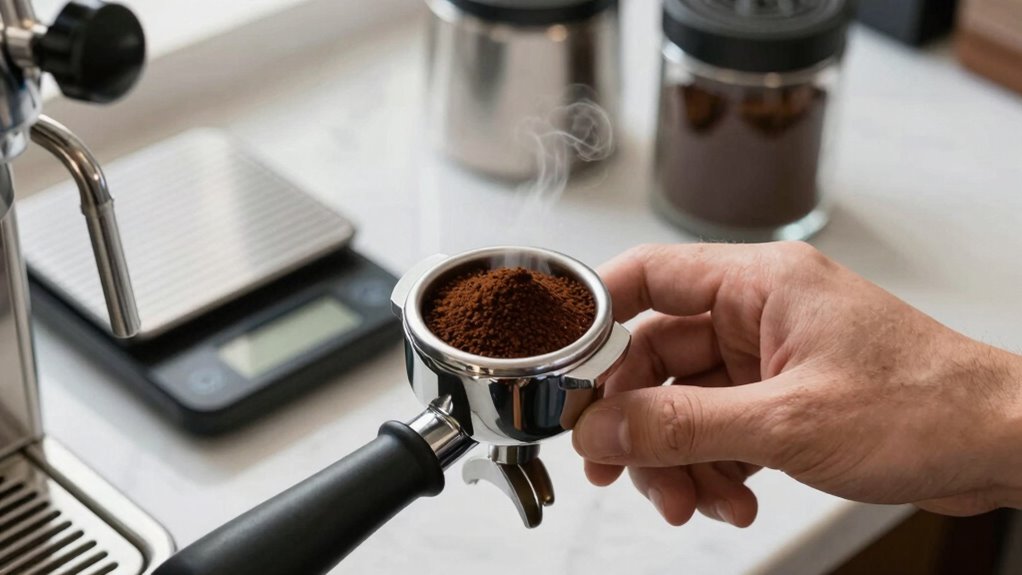

To dial in espresso at home without wasting beans, start by choosing a consistent grind size based on your machine—finer for faster shots, coarser for longer ones. Tamp evenly with about 30 pounds of pressure to guarantee uniform extraction. Keep your brew time around 25-30 seconds, and watch for visual cues like rich crema and proper puck texture. Fine-tuning these variables while practicing will help you perfect your shot efficiently—there’s more to master for ideal results.
Key Takeaways
- Start with a consistent grind size based on your machine, then adjust in small increments to refine extraction.
- Use a scale to measure dose and shot yield, tracking changes to avoid wasting beans.
- Tamp with steady, even pressure (~30 pounds) to ensure uniform extraction and reproducibility.
- Monitor shot time (aim for 25-30 seconds) and observe crema and flow; adjust grind or dose accordingly.
- Keep detailed records of each shot’s parameters and results to systematically dial in flavor without wasting beans.
What Is Espresso Extraction and Why Does It Matter?
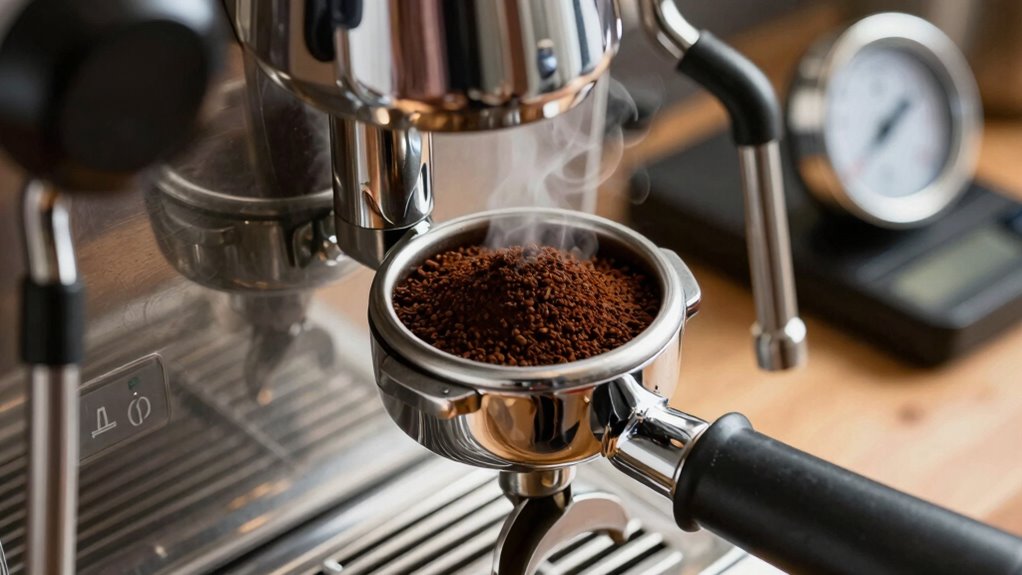
Have you ever wondered what makes a perfect shot of espresso? It all comes down to extraction—the process of dissolving flavors from coffee grounds into water. Proper extraction guarantees a balanced coffee acidity and a harmonious flavor profile. If extraction is too short, your espresso may taste sour, highlighting acidity without depth. If it’s too long, it can become bitter and over-extracted. The goal is to hit that sweet spot where the water evenly interacts with the coffee, pulling out the right compounds. This balance enhances the espresso’s overall flavor, aroma, and body. Understanding extraction helps you control these factors, so your brew isn’t just strong but also flavorful and well-rounded. Additionally, using the right contrast ratio in your equipment can improve visual cues during brewing, ensuring consistent extraction. Paying attention to extraction timing can make a significant difference in your results. Mastering this step is essential for dialing in great espresso at home, and a proper brew ratio can help you fine-tune your process for optimal flavor. Being aware of extraction consistency ensures each shot meets your desired quality standards.
How to Choose the Right Grind Size for Your Espresso Machine
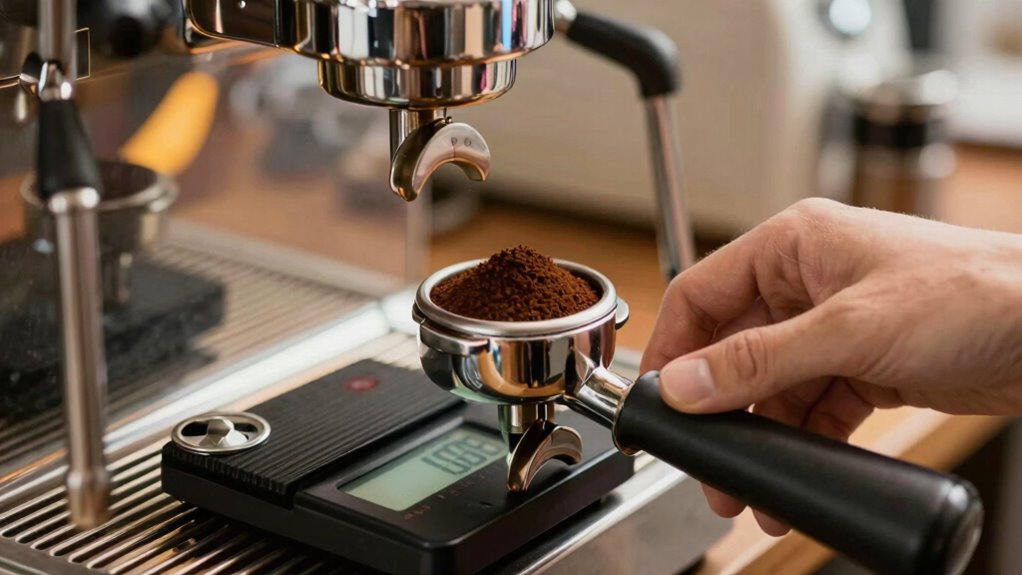
Choosing the right grind size is key to achieving ideal extraction and flavor in your espresso. The grind size directly affects how water flows through the coffee, influencing extraction time and taste. Too fine, and water struggles to pass, resulting in over-extraction and bitterness; too coarse, and water flows too quickly, leading to under-extraction and sour notes. To get consistent results, focus on maintaining a uniform grind size, as inconsistency can cause uneven extraction. Use your grinder’s settings as a starting point, then adjust based on your machine’s performance and taste preferences. Remember, small tweaks can make a big difference. grind size consistency is crucial for producing a balanced extraction and better flavor profile. Keeping your grinder properly calibrated and clean also helps maintain grind uniformity, ensuring reliable results every time.
How to Tamp Consistently and Apply the Right Pressure

Achieving a consistent espresso shot depends heavily on how you tamp the coffee grounds. You want to apply even tamping pressure to ensure uniform extraction. Using consistent technique means pressing down with steady, moderate force—usually around 30 pounds of tamping pressure. Avoid tamping too hard, which can cause over-extraction, or too lightly, leading to under-extraction. Hold the tamper flat and level to distribute pressure evenly across the puck. Practice makes perfect; develop a feel for the right amount of pressure and stick with it. Consistency in tamping is key to dialing in your espresso. Once you’ve mastered applying the right tamping pressure, you’ll notice more reliable shots with balanced flavor and better crema every time.
How Long Should You Brew Your Espresso? Adjusting Time for Flavor
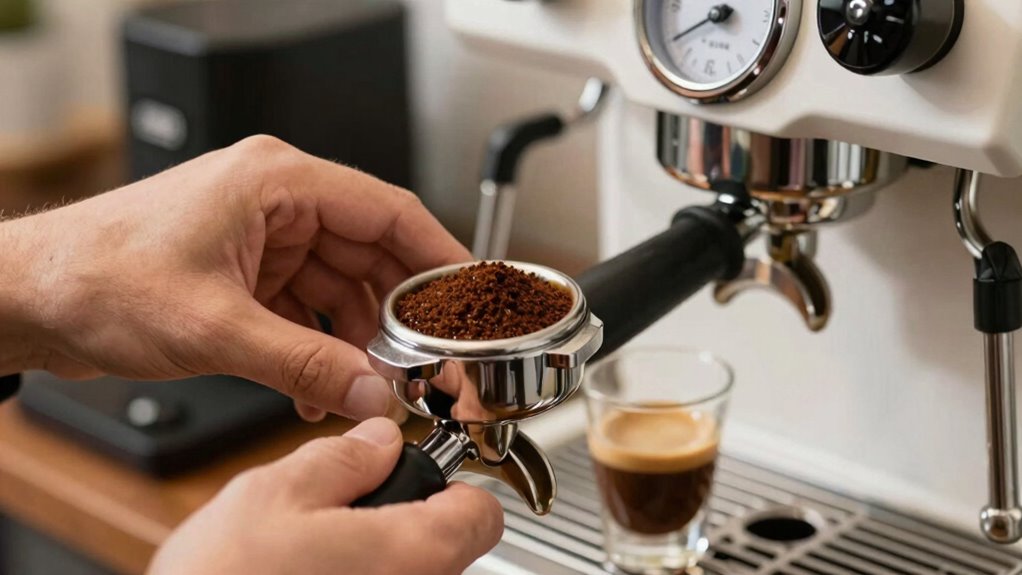
The duration of your espresso brew markedly impacts its flavor and strength. If you brew too short, your shot may taste sour, under-extracted, and weak. Conversely, brewing too long can lead to bitterness and over-extraction. The ideal brew time typically ranges between 25 to 30 seconds, but it can vary based on grind size and machine. Adjusting the brew time helps you achieve the perfect flavor balance—highlighting sweetness, acidity, and body. Keep in mind, small changes in time can considerably influence taste. Experiment within this window to find what best suits your beans and preferences. Remember, consistent extraction is key; once you dial in the right brew time, you’ll consistently produce balanced, flavorful espresso shots. Additionally, understanding how free floating elements can influence your brewing environment may help you optimize overall shot quality. For example, ensuring your equipment is free of air pockets can prevent disruptions during extraction and improve consistency. Being aware of pressure stability also plays a crucial role in obtaining a uniform extraction process, and paying attention to temperature fluctuations can further refine your results.
How to Use Visual and Tactile Cues to Perfect Your Shot

Once you’ve set your brew time, paying attention to visual and tactile cues can help you fine-tune your espresso shot for ideal flavor. Visual cues include the crema’s color, thickness, and consistency—aim for a rich, caramel-brown crema that’s even and persistent. Tactile feedback involves feeling the coffee puck after extraction; it should be firm but not overly dry or crumbly. To improve, watch for these cues: – Crema that’s glossy and golden, indicating proper extraction – A puck that’s moist but cohesive, not overly wet or dry – Consistent pressure on the coffee bed when tamping, ensuring even extraction. Additionally, understanding how to assess your equipment and workspace can prevent unnecessary waste and improve your overall brewing experience for consistent results. Paying close attention to the visual and tactile cues can help you develop a more intuitive sense of when your espresso shot is just right. Recognizing how equipment condition impacts extraction can also lead to more precise adjustments and better flavor.
Common Espresso Problems and How to Fix Them (And Save Your Beans)
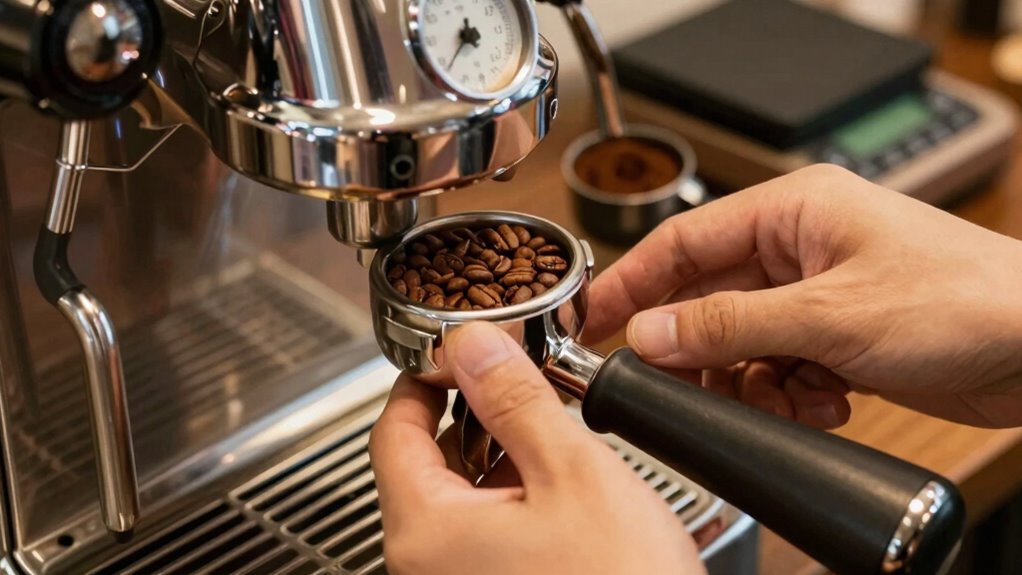
Uneven grind consistency can cause weak or bitter shots, so make certain your grinder produces uniform grounds. Applying the right tamping pressure ensures proper extraction and prevents channeling. Mastering these techniques helps you fix common problems and preserve your beans’ flavor. Additionally, paying attention to grind uniformity can significantly improve your espresso quality and consistency. Ensuring your grinder is properly calibrated and maintaining sharp burrs is essential for consistent particle size, which directly affects extraction quality. Regularly checking and adjusting your grinder settings can help maintain accurate grind settings over time. Proper calibration and burr maintenance are key to achieving a uniform grind that enhances your espresso’s flavor and strength.
Grind Consistency Matters
Maintaining consistent grind size is essential because even slight variations can considerably impact your espresso’s flavor and extraction. Poor grind uniformity can lead to under- or over-extracted shots, wasting beans and ruining taste. To improve, focus on regular consistency calibration of your grinder. This ensures each grind remains precise, helping you dial in the perfect shot every time.
- Use a scale to measure beans consistently for each grind
- Regularly clean your grinder to prevent clogs and uneven grinding
- Adjust grind size gradually, noting changes for future calibration
Tamping Pressure Techniques
Tamping pressure plays a essential role in ensuring even extraction and a balanced espresso shot. Applying the right tamping pressure creates consistent resistance, helping water flow evenly through the coffee. Too little pressure results in a weak, under-extracted shot, while too much can cause over-extraction and bitterness. To perfect your tamping technique, use a firm, steady press—about 30 pounds of force is ideal. Keep your tamping hand stable and level to avoid uneven grounds. Practice applying consistent pressure each time to improve shot quality and save your beans. Remember, the key is uniformity; a consistent tamping pressure helps you dial in the perfect extraction and get the most flavor from your beans.
Practice, Record, and Refine Your Technique for Consistently Great Espresso

To consistently produce great espresso, you need to practice intentionally, record your results, and make adjustments based on what you observe. Focus on key aspects like brewing temperature and water quality, which directly impact flavor and extraction. Keep track of your grind size, shot time, and flavor notes to identify patterns and improvements. Regularly refining these variables helps you develop a consistent routine and better understanding of your machine’s behavior. Incorporating appropriate grind settings is essential for achieving optimal extraction and flavor balance.
- Use a thermometer to monitor your brewing temperature and adjust your machine if needed
- Test different water sources or filters to improve water quality
- Record each shot’s details to compare and refine your technique over time
- Pay attention to water quality and its influence on extraction and flavor consistency
- Experiment with dose calibration to find the perfect coffee-to-water ratio for your taste preferences
Frequently Asked Questions
How Can I Tell if My Espresso Shot Is Over-Extracted or Under-Extracted?
You can tell if your espresso is over- or under-extracted by tasting and observing the brew ratio and extraction time. An over-extracted shot usually tastes bitter, harsh, and has a dark, overly dry puck, with a longer extraction time. Under-extraction tastes sour, weak, and watery, with a shorter extraction time. Adjust your grind size, dose, and tamp pressure to balance the brew ratio and timing, achieving a smooth, well-rounded shot.
What Are the Best Storage Methods to Keep Beans Fresh Longer?
Imagine you buy a bag of coffee beans, and you want to keep it fresh for weeks. The best storage method is using airtight storage containers, which help maintain coffee freshness by protecting beans from air and moisture. Store the container in a cool, dark place away from sunlight. This way, your beans stay flavorful longer, ensuring each shot of espresso tastes just as good as the first.
How Does Water Temperature Affect Espresso Quality?
Water temperature directly impacts your espresso’s flavor and extraction quality. If the water’s too hot or fluctuates in temperature stability, it can cause over or under-extraction, leading to bitter or sour tastes. Maintaining ideal water chemistry and consistent temperature ensures your espresso pulls are balanced and flavorful. Use a reliable thermometer and temperature control device to keep your water steady, helping you dial in the perfect shot every time.
Can I Use Pre-Ground Coffee for Espresso Without Sacrificing Flavor?
You can use pre-ground coffee for espresso, but be aware of pre-ground limitations like uneven grind size and freshness loss, which can impact flavor preservation. To get the best shot, choose a fine grind specifically for espresso and use it quickly after opening. While it may not be as versatile as freshly ground beans, proper storage and selecting quality pre-ground coffee help maintain ideal flavor.
What Equipment Adjustments Can Improve Shot Consistency Over Time?
Think of your espresso shot as a symphony—every detail matters. To improve consistency, regularly adjust your grind size and tamp pressure, like fine-tuning instruments. Slight changes help maintain ideal extraction, ensuring each shot is just right. Keep a habit of measuring and recording your settings, so you can troubleshoot and refine over time. This keeps your espresso tasting great, shot after shot, like a well-conducted performance.
Conclusion
Mastering espresso at home can save you up to 70% compared to cafe prices, and with consistent practice, you’ll brew perfect shots every time. Remember, even small adjustments in grind or tamp pressure can markedly improve your results. By understanding the process and refining your technique, you’ll not only save beans but also enjoy richer, more satisfying espresso daily. Keep experimenting—your perfect shot is just a few tweaks away.