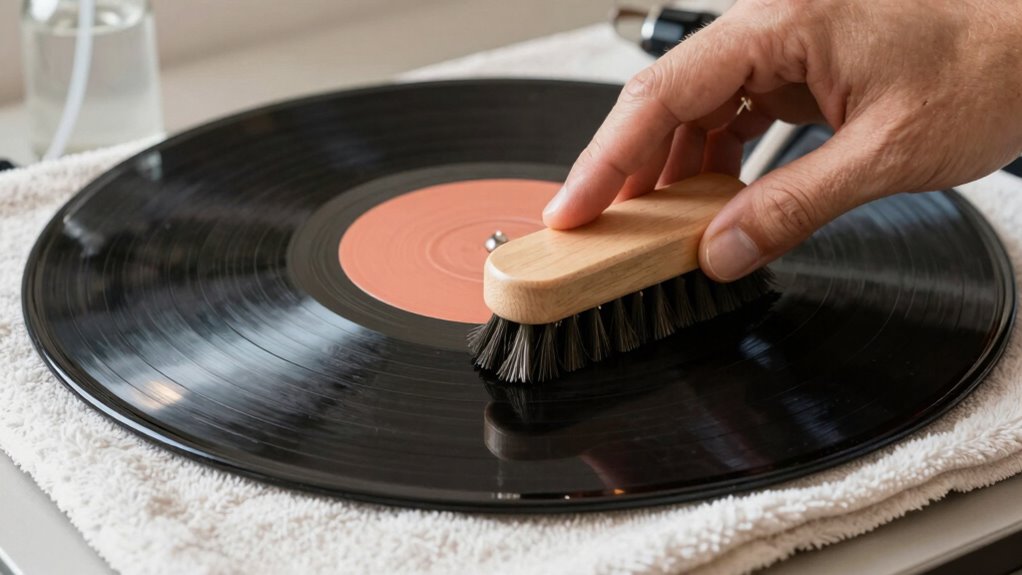

To clean your vinyl records without damage, use gentle, record-specific solutions and soft microfiber cloths to carefully remove dust and dirt. Avoid harsh chemicals or excessive pressure that can scratch or warp your records. Store them upright in a cool, dry place and handle them gently. For stubborn grime, consider using a record cleaning machine or seeking professional restoration if needed. Keep these tips in mind to protect your collection and enjoy their best sound.
Key Takeaways
- Use gentle, record-specific cleaning solutions and soft microfiber cloths to prevent damage.
- Remove dust with anti-static brushes before wiping to avoid scratches.
- Avoid harsh chemicals like bleach or household cleaners that can harm vinyl surfaces.
- Store records upright in a cool, dry environment with acid-free sleeves to preserve condition.
- Use professional cleaning or restoration services for deep scratches, warping, or persistent grime.
Why Proper Vinyl Record Cleaning Matters for Sound Quality

Even if your vinyl records look clean on the surface, dirt, dust, and fingerprints can still hide in the grooves, causing distortion and reducing sound quality. Over time, this buildup leads to record surface deterioration, making your listening experience less enjoyable. Proper cleaning helps maintain the integrity of your records and prevents long-term damage. Additionally, regular maintenance aids in vinyl mold prevention, which can occur when moisture and dirt combine, fostering mold growth. Keeping your records clean and free from contaminants ensures that the sound remains clear and true to the original recording. Neglecting this step can accelerate wear and diminish the lifespan of your collection. Taking these precautions not only enhances sound quality but also protects your investment in vinyl records. Regular cleaning also preserves the contrast ratio and overall image quality of your home cinema setup. Using appropriate cleaning solutions and techniques can further enhance the measurement accuracy of your cleaning process, ensuring that no residue is left behind. Incorporating proper handling techniques can also reduce the risk of accidental damage during cleaning. Furthermore, understanding the traditional techniques and materials used in Indonesian masks can inspire innovative ways to care for and display your own cultural artifacts.
How to Choose Safe Products and Materials for Your Records

Selecting safe products and materials for your records is essential to prevent damage and preserve sound quality. When choosing cleaning supplies, opt for gentle, record-specific solutions rather than harsh chemicals. Many recording studios use specialized cleaners that are safe for vinyl and won’t leave residues or cause warping. Understanding how vinyl is manufactured also helps; using abrasive or alcohol-based products can harm the delicate surface during cleaning. Always verify labels and avoid household cleaners like bleach or ammonia. Consider using soft, lint-free cloths or microfiber pads designed for record cleaning. By selecting products designed specifically for vinyl, you protect your collection and ensure it sounds its best for years to come. Proper materials matter in maintaining the integrity of your records. Being aware of vinyl manufacturing methods can further guide you in choosing appropriate cleaning techniques and materials. Additionally, knowing how different cleaning solutions interact with vinyl can help prevent accidental damage during maintenance. Familiarity with vinyl surface properties can also inform your cleaning approach to avoid unnecessary wear. Researching safe cleaning products ensures you are using the best options for your records.
Step-by-Step Guide to Hand Cleaning Vinyl Records
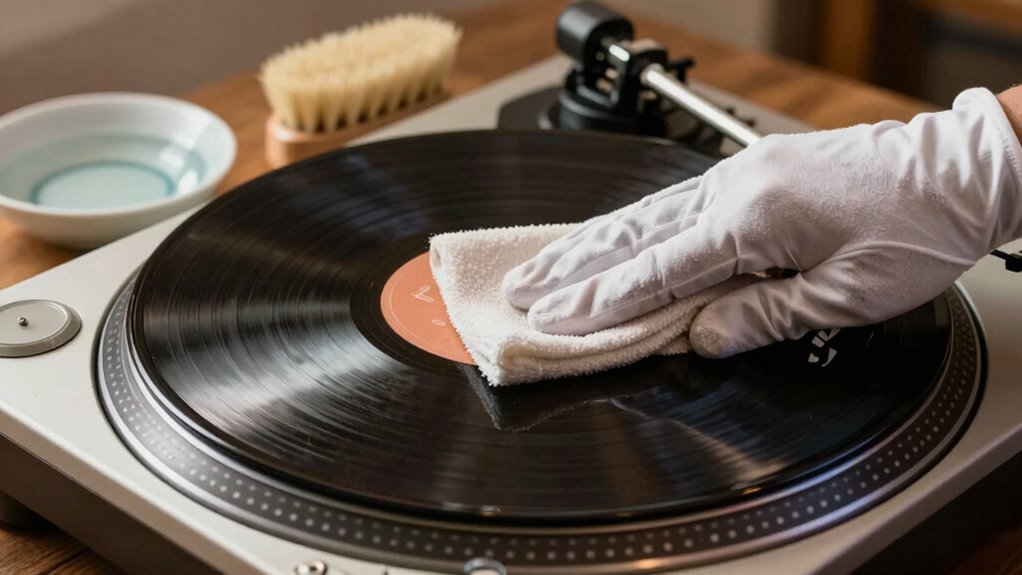
Have you ever wondered how to clean your vinyl records effectively by hand? A proper record cleaning routine is essential for maintaining sound quality and longevity. Start by gently removing surface dust with an anti-static brush. Next, prepare a cleaning solution using distilled water and a small amount of mild record cleaning fluid. Dampen a microfiber cloth or a soft, lint-free cloth with the solution—never soak the record. Carefully wipe the vinyl following the grooves, avoiding circular motions that can cause scratches. Rinsing with another damp cloth helps remove residual dirt effectively and prevents buildup. Rinse with another damp cloth to remove residue. Finally, let the record air dry completely or use a clean, dry microfiber cloth. Regular maintenance helps prevent dirt buildup and preserves audio fidelity. Using proper cleaning techniques is crucial for avoiding damage and ensuring your records stay in pristine condition. Incorporating gentle cleaning methods can further protect your records from unnecessary wear and tear. These vinyl preservation tips help you keep your records in top condition, ensuring they sound great for years to come.
How to Use a Record Cleaning Machine Effectively

Using a record cleaning machine effectively begins with preparing your vinyl and the machine itself. Start by ensuring your turntable is properly calibrated; accurate tonearm height and tracking force prevent damage. Before cleaning, inspect the grooves for any debris or damage. Proper groove inspection helps you identify areas needing extra attention and ensures the cleaning process is thorough. When setting up the machine, follow the manufacturer’s instructions carefully. Use the right cleaning solutions and avoid over-wetting the record. As you operate the machine, keep a steady hand and maintain consistent pressure. Regularly check the cleaning pads or brushes for dirt buildup, replacing them when necessary. This careful approach helps preserve your vinyl’s quality while achieving a spotless, scratch-free surface. Additionally, understanding the importance of proper maintenance can extend the lifespan of your cleaning equipment and records. Cleaning technique is also crucial for avoiding damage and ensuring the best results. Incorporating appropriate storage solutions also plays a key role in maintaining your records in pristine condition over time. Being mindful of vetted water-resistant materials can further protect your records from moisture damage during cleaning.
Tips for Safely Removing Stubborn Dust and Dirt

To remove stubborn dust and dirt safely, start with gentle dusting techniques that won’t damage your records. Use a soft brush or microfiber cloth to loosen debris without applying too much pressure. Once loosened, you can carefully remove the dirt with slightly dampened tools designed for record cleaning. If you want to ensure thorough cleaning while protecting your vinyl, consider using specialized vacuums with HEPA filters to trap fine particles effectively. Additionally, employing natural pools in your backyard can create a serene environment for relaxing after cleaning sessions. Incorporating support breakfast options into your routine can also help keep you energized and focused during your cleaning process. Understanding proper record care methods is essential for maintaining sound quality and extending the lifespan of your vinyl.
Gentle Dusting Techniques
When tackling stubborn dust and dirt, gentle dusting techniques are essential to avoid damaging delicate surfaces. Use a microfiber cloth to gently wipe the vinyl, applying light pressure to lift dust without scratching. Microfiber’s fine fibers trap particles effectively, reducing the risk of abrasion. For stubborn spots or hard-to-reach areas, opt for soft brushes, such as a paintbrush or a dedicated record cleaning brush, to loosen debris carefully. Always work in a gentle, circular motion to prevent scratching or gouging the surface. Avoid using excessive force or harsh materials that could harm the vinyl’s finish. Regular maintenance with gentle cleaning techniques helps prevent buildup and keeps your records in pristine condition, ensuring they last longer. Consistent, gentle dusting helps preserve your records’ quality and ensures they stay clean without risking damage.
Effective Dirt Removal
Ever wonder how to safely remove stubborn dust and dirt from your records without causing damage? Proper record player maintenance is key. Start by removing your vinyl from its storage, ensuring it’s free of loose debris. Use a high-quality, anti-static brush designed for vinyl to gently lift dirt without scratching the surface. For stubborn grime, dampen a microfiber cloth with a mixture of distilled water and a few drops of isopropyl alcohol, then carefully wipe the record in a circular motion. Avoid harsh chemicals or excessive moisture, which can harm the vinyl. Regular cleaning and proper storage prevent dirt buildup, making each listen smoother. Remember, gentle handling and the right tools are essential to keep your records pristine and your sound quality exceptional.
Common Mistakes to Avoid When Cleaning Your Vinyl Records
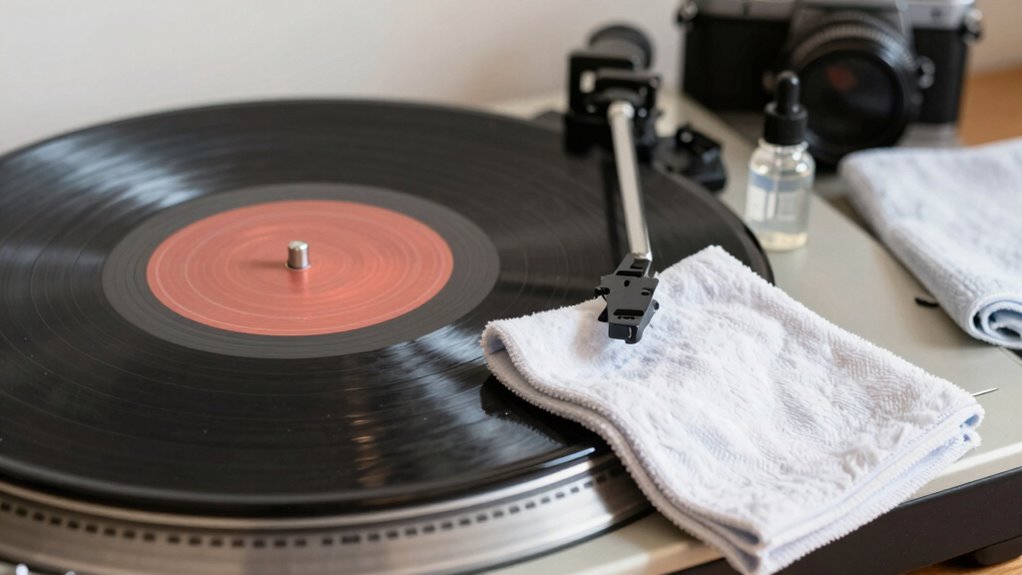
Cleaning your records the right way is essential, so avoid using harsh cleaners that can damage the vinyl. Don’t skip drying thoroughly, as leftover moisture can lead to warping or mold. Also, resist applying too much pressure, which can cause scratches and permanent damage to your records. Be mindful of record care practices to ensure longevity and sound quality. Proper form during cleaning can help prevent unnecessary wear and tear, maintaining your records in top condition.
Using Harsh Cleaners
Using harsh cleaners on your vinyl records can cause irreparable damage, so it’s essential to steer clear of them. Harsh chemicals and abrasive cleaners may seem effective but often do more harm than good. These products can strip away the record’s protective layer, leading to scratches and warping. Instead, stick to gentle, vinyl-safe solutions like a mild soap or specialized record cleaner. Always avoid using household cleaners, alcohol, or solvents, as they can dissolve the vinyl or leave residues that impact sound quality. Remember, your goal is to clean without damaging, so choose cleaning agents carefully. Using the wrong products can ruin your records permanently, so when in doubt, opt for products explicitly designed for vinyl care.
Skipping Proper Drying
Skipping proper drying after cleaning can lead to stubborn water spots and moisture trapped beneath the surface, which may cause mold or mildew growth over time. To avoid this, use effective drying techniques like gently patting your record with a microfiber cloth or air drying in a dust-free environment. Confirm the record is completely dry before storing it to prevent moisture buildup. Proper drying not only preserves the vinyl’s sound quality but also extends its lifespan. When storing records, choose storage solutions that keep them upright in a cool, dry place, away from humidity. Neglecting this step can compromise your record’s condition, so take the time to dry thoroughly and store correctly for ideal longevity.
Applying Excessive Pressure
Applying too much pressure when cleaning your records can easily damage the vinyl surface or push dirt deeper into the grooves. An incorrect technique often involves pressing too hard with a cloth or cleaning tool, which increases the risk of scratches or gouges. Excessive pressure can also distort the record’s delicate structure over time. Instead, use gentle, even strokes that follow the grooves’ direction. Let the cleaning solution and gravity do the work, rather than forcing dirt out. Remember, patience is key. Rushing or applying force can compromise the record’s integrity and sound quality. Proper technique involves minimal pressure, ensuring thorough cleaning without risking permanent damage. Avoid the mistake of over-scrubbing or pressing too firmly, and your records will stay pristine longer.
Best Practices for Storing and Maintaining Clean Records
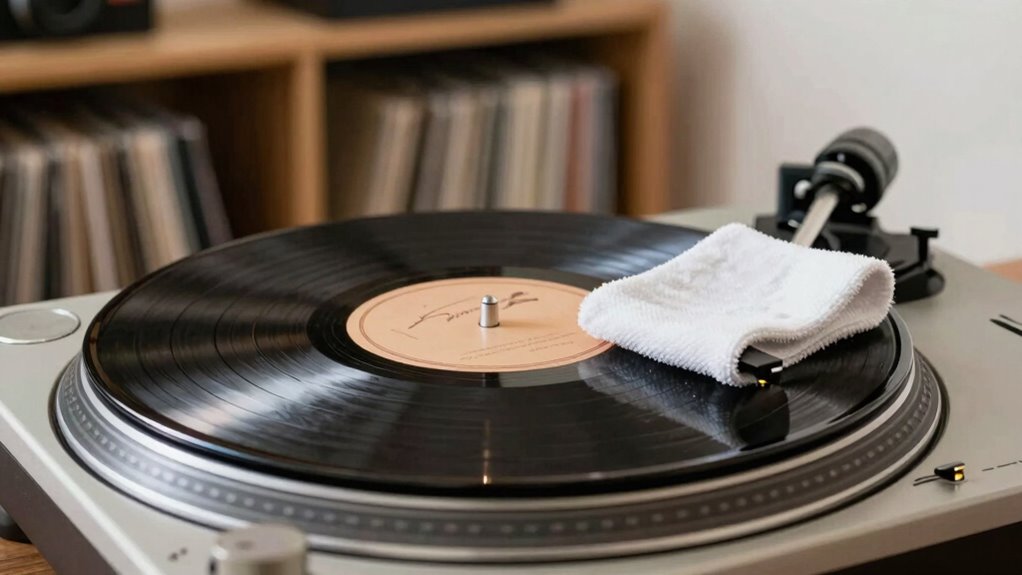
Maintaining clean records is essential for efficient record-keeping and quick retrieval of information. Proper record storage ensures your vinyl stays pristine and easy to access. Store your records upright in a cool, dry place, away from direct sunlight and heat sources. Use acid-free sleeves to protect the vinyl surface and prevent dust buildup. Regular vinyl maintenance involves gently cleaning each record with a soft, anti-static cloth before and after use. Avoid stacking records horizontally, which can cause warping. Keep a consistent environment to prevent warping or warping-related damage. Here’s a quick guide:
| Record Storage Tips | Cleaning Tips | Environment Conditions |
|---|---|---|
| Upright storage | Use soft cloths | Keep in stable temperature |
| Use acid-free sleeves | Avoid harsh chemicals | Humidity control |
| Keep away from sunlight | Clean before and after play | Ventilated space |
| Avoid stacking horizontally | Gentle brushing | Avoid temperature fluctuations |
| Regular dust removal | Use record-specific cleaning solutions | Minimize vibration |
When to Consider Professional Record Restoration Services

Knowing when to seek professional record restoration services can save your valuable vinyl from further damage and preserve its sound quality. If your record has severe record damage or stubborn dirt that cleaning can’t fix, professional restoration is the best choice. Consider expert help if your record exhibits deep scratches, warping, or visible cracks, as these can’t be repaired at home. Additionally, if you want aesthetic restoration to improve the record’s appearance and prevent further deterioration, professionals can carefully clean and repair surface issues. Restoration specialists use advanced techniques to remove deep grime or mold without risking more damage. When in doubt, consulting a professional ensures your vinyl’s longevity, sound clarity, and visual appeal are preserved for years to come.
Seek professional restoration for deep scratches, warping, or structural damage to ensure your vinyl’s longevity and sound quality.
- Deep scratches or warping
- Persistent mold or grime buildup
- Cracks or structural damage
- Faded or heavily scratched labels
Frequently Asked Questions
Can I Clean My Vinyl Records With Household Cleaning Products?
You shouldn’t use household chemicals for record cleaning because they can damage your vinyl. These products often contain harsh ingredients that can strip away the record’s protective layer or leave residues, harming sound quality. Instead, stick to specialized record cleaning solutions or a gentle mixture of distilled water and isopropyl alcohol. Proper record cleaning preserves your vinyl’s sound and extends its lifespan, ensuring you enjoy your music without risking damage.
How Often Should I Clean My Records to Maintain Sound Quality?
If you want pristine sound, clean your records every 3-6 months, depending on usage. Imagine a vinyl collector who plays her records weekly; she maintains a regular cleaning schedule to prevent dust buildup that can cause skips. For you, following a consistent cleaning frequency helps preserve sound quality and prevents damage. Regular maintenance guarantees your records stay in top shape without over-cleaning, which can also harm the vinyl.
Is It Safe to Use Water Directly on Vinyl Records?
Yes, you can use water directly on your vinyl record, but you must be gentle to avoid moisture damage. Lightly dampen a soft cloth or microfiber towel and carefully wipe the record surface, avoiding the label. Never submerge the record or let excess water seep into the edges. Properly drying the record afterward is vital to prevent moisture damage and preserve sound quality. Always use minimal water and gentle motions.
What Are the Signs That My Record Needs Professional Restoration?
Your vinyl record shows signs it needs professional restoration when surface scratches become deep enough to cause persistent pops or skips, like scars on skin. Warping indicators, such as distorted sound or edges that lift from the turntable, also signal it’s time for expert help. If these issues threaten your record’s integrity, don’t hesitate—restoration specialists can breathe new life into your treasured collection.
Can Improper Cleaning Damage the Record’s Grooves Permanently?
Improper cleaning can definitely cause groove damage, especially if you use harsh chemicals or scrub too aggressively. This can permanently harm your record’s grooves, affecting sound quality. To prevent this, avoid over-cleaning and stick to gentle cleaning frequency. Use soft brushes or microfiber cloths, and always follow recommended cleaning methods. Correct care ensures your vinyl stays in great shape without risking groove damage.
Conclusion
Think of your vinyl records as precious treasures—you wouldn’t let dirt and grime bury their true sound. When you clean them properly, it’s like giving your records a fresh start, revealing richer tones and clearer melodies. I once cleaned a vintage album, and the difference was like hearing a favorite song for the first time. With the right care, your records will continue to bring joy, sounding as vibrant as the day they were made.