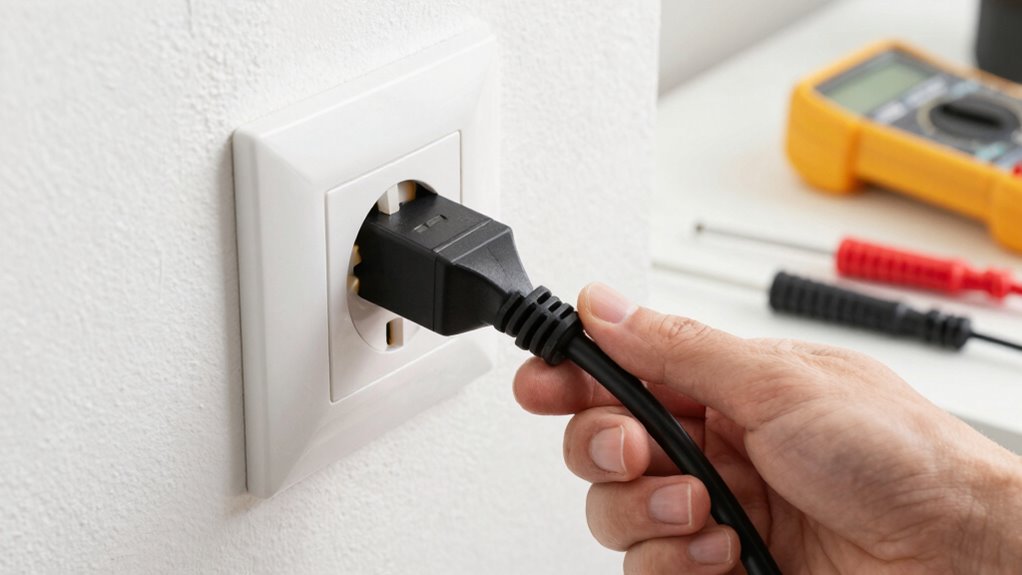

To plug in new gear safely, always check that outlets are properly grounded and free of damage. Use the right power cords and avoid overloading circuits with too many devices. Guarantee your hands are dry and plugs fit snugly into the socket. Inspect cords regularly for wear or fraying and unplug by pulling the plug, not the cord. Following these electrical safety basics helps prevent shocks and fires—keep exploring to learn how to set everything up securely.
Key Takeaways
- Always inspect cords and plugs for damage before connecting new equipment.
- Use grounded outlets and avoid overloading circuits to prevent electrical hazards.
- Keep hands dry and firmly insert plugs straight into compatible sockets.
- Verify that outlet wiring is properly grounded and matches device voltage requirements.
- Disconnect devices by pulling the plug, not the cord, to prevent damage or accidents.
What Are the Electrical Safety Basics You Need to Know Before Plugging In?
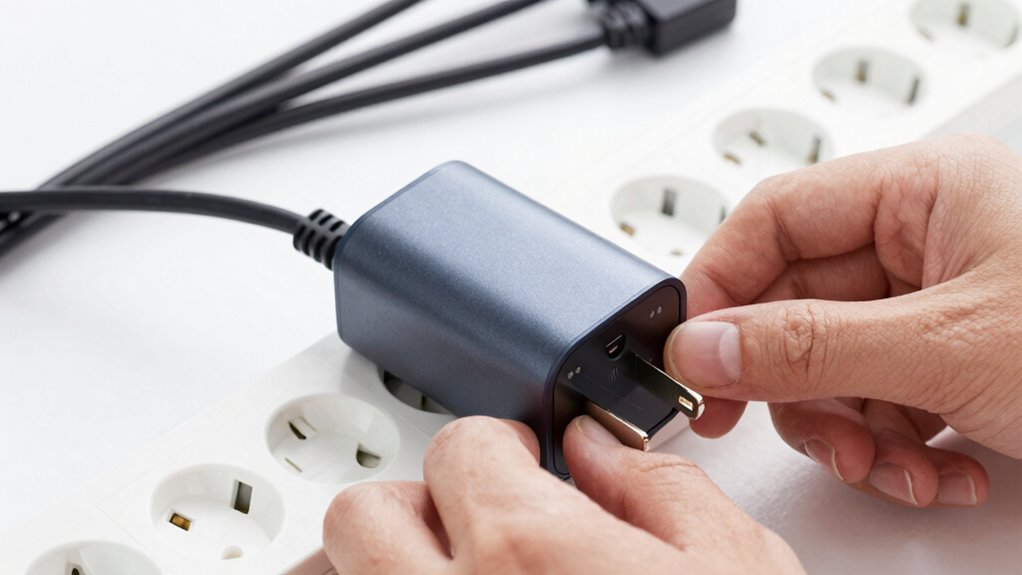
Have you ever wondered what safety steps you should take before plugging in an electrical device? First, verify proper grounding safety by checking that your outlet is grounded correctly. This prevents electrical shocks and keeps you safe if a fault occurs. Next, consider surge protection—using a surge protector can shield your gear from power spikes caused by storms or electrical faults. Always inspect your cords for damage or fraying before connecting devices. Avoid overloading outlets, which can cause overheating or fires. Make sure your hands are dry, and don’t force plugs into incompatible sockets. Additionally, understanding electrical safety protocols can further reduce risks when setting up new equipment. Recognizing free floating electrical components can help you identify potential hazards early. Incorporating proper electrical grounding can further protect your devices from electrical faults. Being aware of electrical hazards is essential for safe and efficient operation of your new gear. Learning about circuit protection devices can also enhance safety during setup. These simple precautions help prevent accidents and damage, ensuring your gear operates safely and efficiently. Taking these basic steps is essential before connecting any new equipment.
How to Check if Your Outlets and Power Sources Are Safe and Compatible
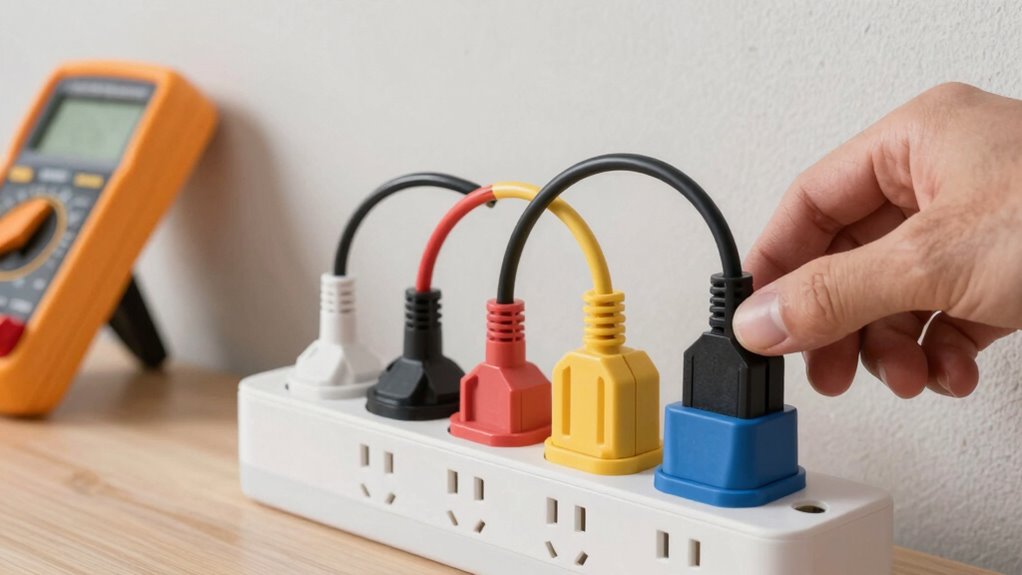
Before plugging in your devices, it’s essential to verify your outlets and power sources are safe and compatible. Start by inspecting the outlet’s grounding safety; a properly grounded outlet reduces shock risk and protects your equipment. Check for any damage, loose connections, or scorch marks, as these indicate potential hazards. Ensure the outlet matches the plug type and voltage requirements of your device, confirming outlet compatibility. Use a receptacle tester if needed to verify proper wiring and grounding. Avoid using adapters or extension cords that don’t meet safety standards. If your outlet isn’t grounded or shows signs of damage, consult a qualified electrician. Additionally, understanding the electrical basics can help you recognize common issues and prevent hazards. Regularly inspecting your electrical system and staying informed about industry standards ensures ongoing safety. Being familiar with power rating requirements can also prevent overloading circuits and potential fires. Familiarity with grounding safety is crucial to protect yourself and your devices from electrical faults. Incorporating safety practices such as using surge protectors can further safeguard your equipment. Taking these steps helps prevent electrical shocks, equipment damage, and fire hazards, keeping your new gear safe during use.
How to Connect Power Cords and Adapters Safely and Correctly
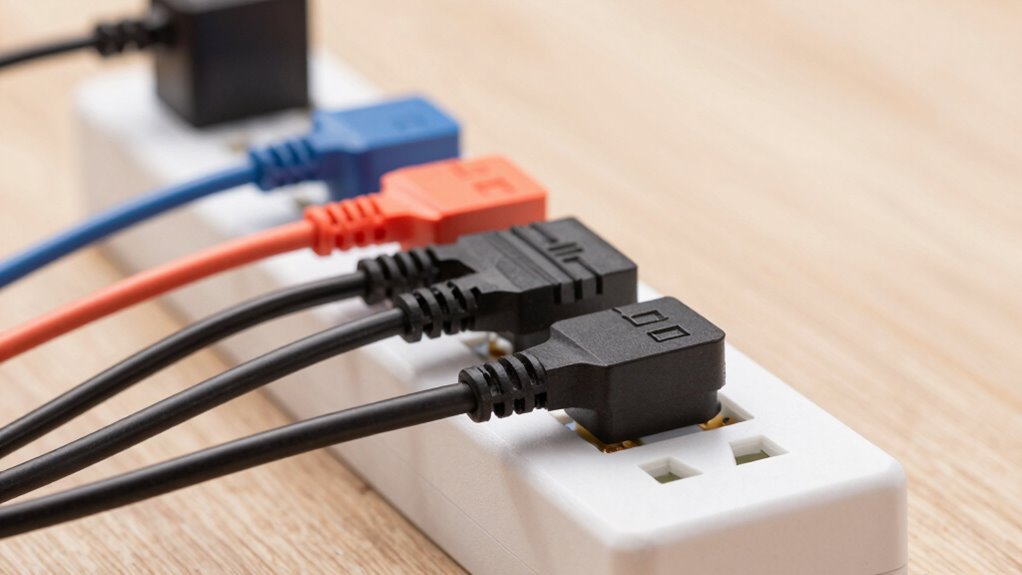
Connecting power cords and adapters correctly is crucial for your safety and your equipment’s longevity. Always use grounded outlets and grounding techniques to prevent electrical shocks and reduce interference. Make certain the power cord matches the device’s power requirements and is in good condition—no frays or damage. When plugging in, hold the plug firmly and insert it straight into the outlet; avoid forcing it. Use surge protection devices to guard against voltage spikes that can damage your gear. Keep cords organized and avoid pinching or twisting them, which can compromise insulation. When disconnecting, pull the plug, not the cord. Proper grounding and surge protection are essential steps to ensure safe operation and prolong your equipment’s life. Understanding electrical safety principles can help prevent accidents and extend the lifespan of your devices. Additionally, regularly inspecting your body jewelry ensures it remains safe and free from damage that could pose risks. Ensuring your cords are properly puppy-proofed can help prevent accidental damage or hazards caused by curious exploration.
Common Electrical Hazards to Watch Out for When Setting Up New Devices
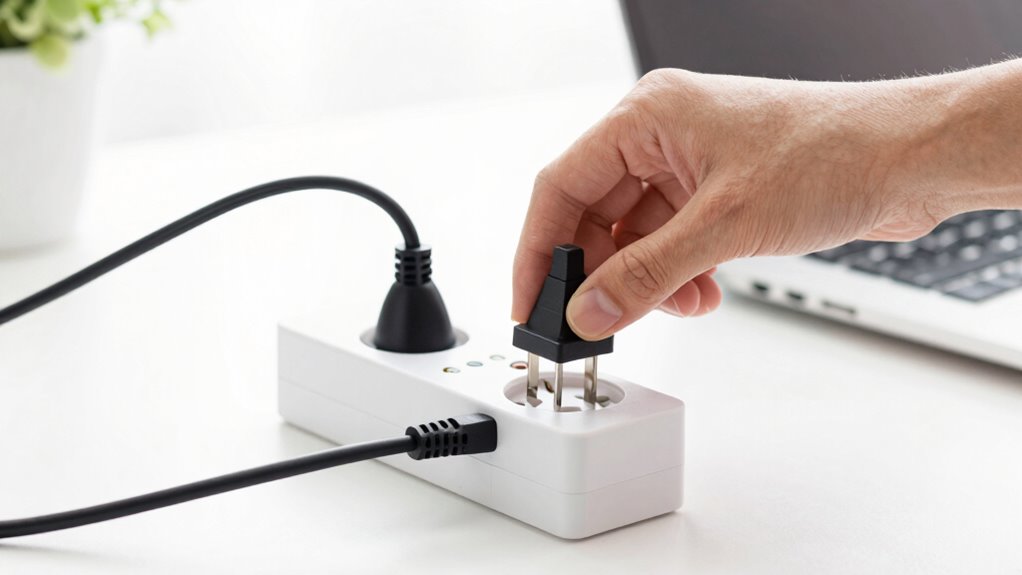
When setting up new devices, being aware of common electrical hazards can prevent accidents and equipment damage. Grounding issues are a top concern; improper grounding can cause electric shocks or damage to your device. Always verify your outlets and power strips are properly grounded and compatible with your equipment. Circuit overloads are another risk—plugging too many devices into a single outlet can trip breakers or cause overheating. Avoid daisy-chaining power strips or outlets, and check the power requirements of your devices. Overloading can lead to fires or equipment failure. Regularly inspect cords and plugs for damage, and never force connections that don’t fit. Staying alert to these hazards helps keep your setup safe, functional, and protected from electrical mishaps. Additionally, understanding electrical safety and proper handling of electrical components can further reduce the risk of accidents. Being familiar with Gold IRA markets and their investment options can also help you make informed decisions when diversifying your assets. Being aware of common electrical issues and their causes enables you to troubleshoot problems more effectively and maintain a safe environment. Moreover, incorporating sound design techniques when setting up audio equipment can help prevent equipment damage and ensure optimal performance. Paying attention to proper grounding techniques can further enhance electrical safety and equipment longevity.
Troubleshooting Power Problems and Ensuring Safe Operation of Your Devices
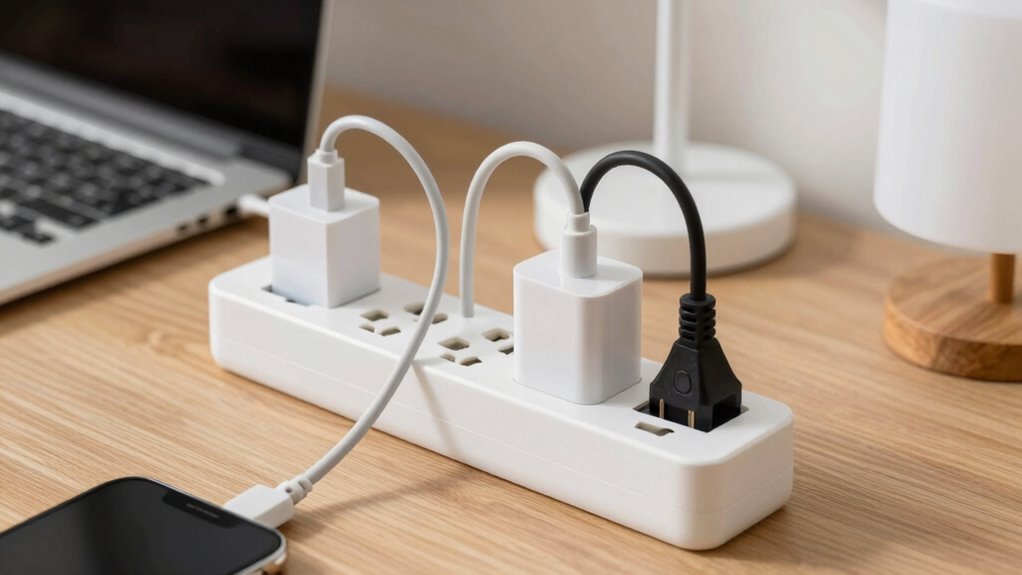
Power issues with your devices can disrupt your work or cause damage if not addressed promptly. First, check grounding safety; a proper ground prevents electrical shocks and protects your equipment. Ensure outlets are grounded correctly and avoid using damaged cords or plugs. If your device isn’t turning on or experiencing frequent outages, test the circuit with a different device. Using surge protection can shield your gear from voltage spikes, preventing damage during storms or power fluctuations. Regularly inspect cords and outlets for wear or damage. If problems persist, consider consulting an electrician. Remember, safe operation involves understanding your electrical system and using safeguards like grounding safety and surge protectors. Staying vigilant helps keep your devices running smoothly and your environment safe. Additionally, understanding bank swiftifs codes can help you ensure secure financial transactions when managing your electrical or business-related needs. It’s also beneficial to familiarize yourself with electrical safety principles to further protect yourself and your devices from potential hazards. Being aware of extension cord standards can also help you choose the safest and most reliable cords for your needs. Moreover, knowing proper electrical load capacities can prevent overloads and reduce fire risks. Ensuring correct oil types are used in your equipment can also improve longevity and performance, especially in devices like airless sprayers.
Frequently Asked Questions
How Often Should I Have My Home’s Electrical System Inspected?
You should have your home’s electrical system inspected every 3 to 5 years. During these inspections, focus on circuit breaker maintenance to prevent overloads and guarantee safety. While updating your system, consider surge protector selection to safeguard your devices. Regular inspections help catch issues early, reduce fire risks, and keep everything running smoothly. If you notice flickering lights or frequent breaker trips, schedule an inspection sooner.
Can I Use Extension Cords Long-Term for My Devices?
You shouldn’t use extension cords long-term for your devices. Extension cord safety is vital, but they’re designed for temporary use only. Prolonged usage can cause overheating, fire hazards, or damage to your devices. If you need a permanent solution, invest in proper outlets or consult an electrician. Always make sure extension cords are rated for your power needs and avoid daisy-chaining multiple cords to prevent overloads.
What Should I Do if a Fuse Keeps Blowing?
Imagine your fuse box as a gatekeeper, stopping overloads from causing chaos. If a fuse keeps blowing, don’t just replace it — check for circuit overloads or faulty wiring. You should perform a fuse replacement only after identifying the root cause. Otherwise, you risk damage or fire. If unsure, turn off power and call an electrician to inspect, ensuring your system remains safe and reliable.
How Do I Identify Faulty or Damaged Electrical Cords?
You can identify faulty or damaged electrical cords by inspecting the cord insulation for cracks, cuts, or burns. Check for exposed wires, which can be dangerous. If the insulation is frayed or if you notice any exposed wires, replace the cord immediately. Also, look for signs of overheating or burn marks. Always unplug the cord before inspecting and avoid using damaged cords to prevent electrical hazards.
Is It Safe to Plug Multiple Devices Into a Single Outlet?
It’s generally unsafe to plug multiple devices into a single outlet, as it can cause outlet overload and increase the risk of electrical fires. Use a power strip with built-in safety features like surge protection and avoid exceeding its maximum capacity. Always distribute your devices across multiple outlets when possible, and never force more plugs into one socket. Prioritize power strip safety to protect your home and electronics.
Conclusion
Remember, safely plugging in your devices is like tending a delicate garden—you must nurture it with care and attention. By understanding the basics, checking your outlets, and connecting everything properly, you protect your home and loved ones. Think of each safe connection as a sturdy bridge, guiding your gear smoothly and securely. With vigilance and knowledge, you create a safe space where your technology can thrive, just like a well-tended garden blossoming in harmony.