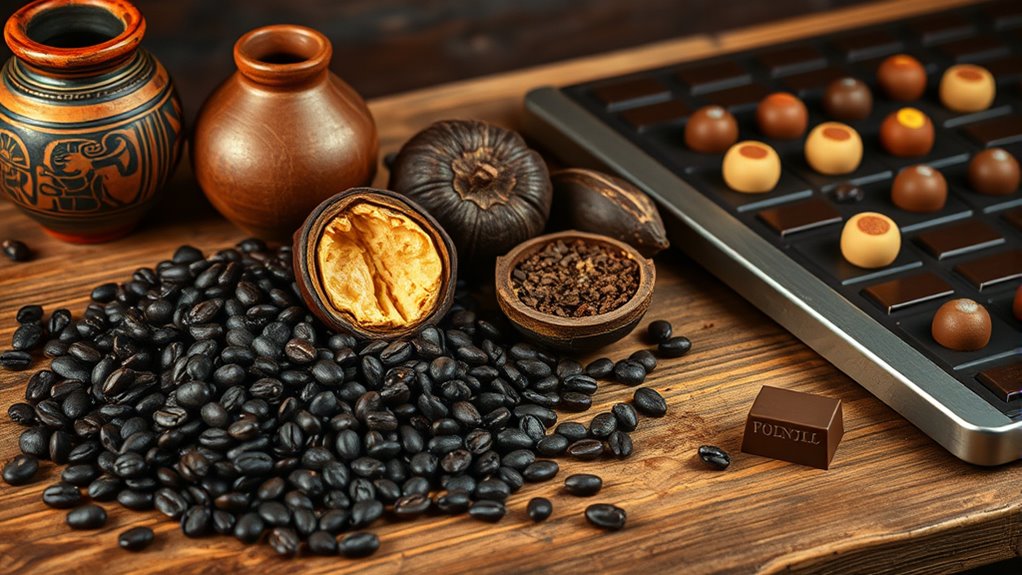

Chocolate’s journey began over 3,000 years ago with the Olmecs, who used cacao as a bitter beverage. The Mayans later transformed it into a sacred drink, symbolizing wealth and power. When Spanish explorers found it, they sweetened it for European tastes, launching a chocolate craze across the continent. Today, chocolate ranges from artisanal treats to mass-produced delights. Its evolution mirrors cultural shifts, and there’s much more to uncover about its fascinating past.
Key Takeaways
- Cacao cultivation began over 3,000 years ago with the Olmecs, primarily as a bitter beverage rather than a sweet treat.
- The Mayans revered cacao, transforming it into a sacred drink called “xocolatl,” symbolizing power and serving elite ceremonial functions.
- Spanish explorers introduced cacao to Europe, where it was sweetened and grew popular among the elite, leading to the rise of chocolate houses.
- The 17th century saw a booming chocolate trade, expanding cacao cultivation, often through exploitative practices in colonies, impacting the global economy.
- Today, chocolate’s evolution from ancient beverage to diverse modern confectionery reflects cultural significance and technological advancements over centuries.
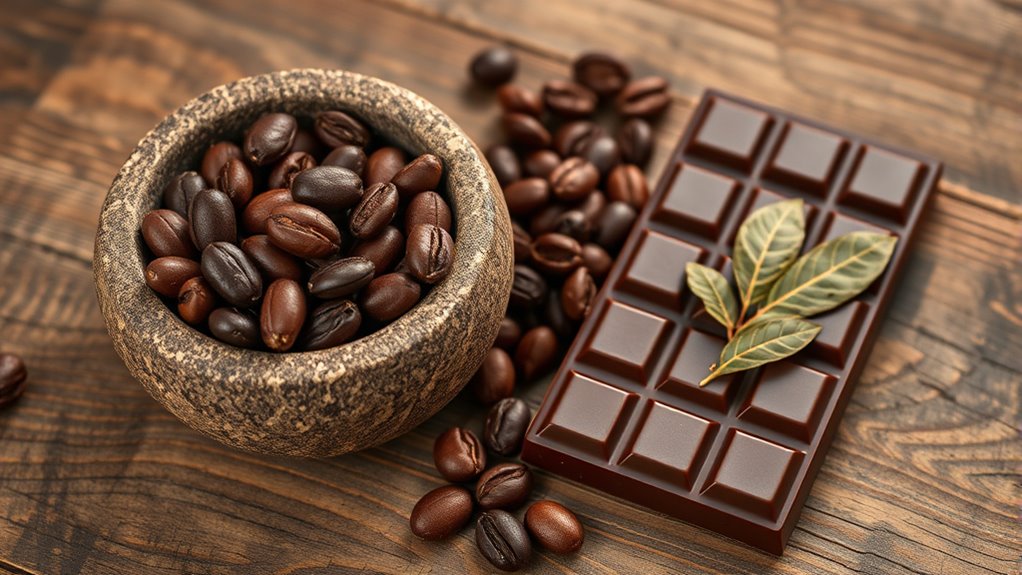
Although chocolate is often associated with indulgence today, its history traces back thousands of years to ancient Mesoamerica, where the Olmecs first cultivated cacao. You might be surprised to learn that this beloved treat started as a bitter beverage. The Olmecs, who lived around 1500 BC, were pioneers in cacao cultivation, and their innovations set the stage for the Mayans and later civilizations to elevate cacao’s status.
Chocolate’s journey began over 3,000 years ago with the Olmecs, who first cultivated cacao as a bitter beverage.
As the Mayans embraced cacao, they transformed it into a sacred drink known as “xocolatl.” This mixture often included spices and was reserved for the elite and during important ceremonies. Imagine sipping a rich, frothy beverage that held religious significance! For the Mayans, cacao wasn’t just food; it symbolized power and wealth. You could even say that cacao beans were so valuable they were used as currency. You’d be right to think that this early appreciation laid the groundwork for cacao’s influence throughout history.
When the Spanish arrived in the Americas, they discovered the Mayan cacao culture and quickly recognized its potential. They brought cacao back to Europe, where it underwent a remarkable transformation. The initial bitterness that the Mayans loved didn’t sit well with European palates, so sugar and milk were added. This sweeter version of chocolate became wildly popular among the European elite. You can picture the lavish chocolate houses springing up in cities like London and Paris, where the upper class gathered to enjoy this luxurious drink.
The European chocolate trade took off in the 17th century, creating a booming industry that would shape the global economy. As demand for chocolate grew, so did the cultivation of cacao, often leading to exploitative practices in the colonies where cacao was grown. You might feel a mix of excitement and concern when you realize that while chocolate became a symbol of luxury, its production often came at a high cost. Interestingly, similar to how certain fruit juices are rich in antioxidants, the cacao bean also contains beneficial compounds that can contribute to health.
Fast forward to today, and chocolate has evolved into a beloved treat enjoyed by people of all ages and backgrounds. From artisanal dark chocolate to mass-produced bars, its journey from ancient Mayan cacao to modern confectionery is nothing short of remarkable. So next time you savor a piece of chocolate, think about the rich history behind it, and appreciate the cultural significance it carries through the ages.
Frequently Asked Questions
What Are the Health Benefits of Eating Chocolate Today?
Eating chocolate today offers several health benefits. Its antioxidant properties help combat free radicals, promoting overall health. You’ll also find that chocolate can enhance your mood, thanks to compounds like phenylethylamine and serotonin, which may boost happiness and reduce stress. Just remember to enjoy it in moderation to reap the benefits without the extra sugar and calories. So, treat yourself to a small piece and savor both the taste and health perks!
How Is Chocolate Made From Cocoa Beans?
Picture the transformation of the humble cocoa bean into a rich, velvety delight. First, you let those beans undergo cocoa fermentation, where natural yeasts work their magic, intensifying the flavor. Next, you roast the beans, releasing an irresistible aroma that dances in the air. After that, you crack them open, separating the nibs, and finally, you grind those nibs into a luscious chocolate paste, ready to be crafted into your favorite treat.
What Are the Different Types of Chocolate Available?
You’ll find several types of chocolate categorized into classifications like dark, milk, and white chocolate. Dark chocolate, made from cocoa solids and cocoa butter, offers a rich flavor. Milk chocolate adds cream for sweetness, while white chocolate contains cocoa butter but no cocoa solids. Each type can vary based on cocoa varieties used, affecting the taste and texture. Explore these options to discover your favorite chocolate experience!
Can Chocolate Be Vegan or Dairy-Free?
Yes, chocolate can definitely be vegan or dairy-free! You’ll find a variety of vegan chocolate options made from cocoa solids and plant-based ingredients. Dairy-free chocolate substitutes, like almond milk or coconut cream, create delicious alternatives without sacrificing flavor. Whether you crave dark chocolate or creamy varieties, there’s something for everyone. So, indulge in the rich, decadent world of chocolate while sticking to your dietary choices—satisfy your sweet tooth guilt-free!
What Are Popular Chocolate Brands Around the World?
Some popular chocolate brands around the world include Lindt, Godiva, Cadbury, and Ghirardelli. Each brand has unique chocolate packaging that often attracts consumers’ attention. You’ll find that brand loyalty plays a big role in choosing your favorite chocolate. Whether you prefer dark, milk, or white chocolate, there’s something for everyone. Exploring these brands can lead you to discover new flavors and styles that might just become your new go-to treats!
Conclusion
From its ancient origins to today’s sweet indulgence, chocolate has traveled a long road, capturing hearts and taste buds alike. You’ve journeyed through its fascinating history, learning how this delightful treat evolved into the beloved dessert we know now. So next time you savor a piece of chocolate, remember that you’re enjoying a bite of history. It’s safe to say that chocolate has truly stood the test of time, melting away barriers and bringing people together.