
Understanding spices is vital for enhancing your cooking. They can transform ordinary meals into extraordinary ones by adding depth and flavor. Blends like garam masala and Italian seasoning simplify the cooking process while delivering rich profiles. Fresh herbs can infuse oils and broths, elevating even the simplest dishes. Plus, many spices offer health benefits, boosting nutritional value. By exploring and experimenting with different spices, you’ll open a world of culinary possibilities waiting for you to discover.
Key Takeaways
- Spice blends, like garam masala and Italian seasoning, enhance dishes by combining multiple spices for complex flavors and convenience.
- Herbal infusions using fresh or dried herbs can elevate simple meals, transforming oils and broths into flavorful bases.
- Many spices, such as turmeric and ginger, offer health benefits, including anti-inflammatory properties and enhanced nutritional value.
- Experimenting with spice blends and herbal infusions allows for personalized flavors, encouraging creative culinary exploration and customization.
- Understanding and creatively using spices can significantly improve cooking quality, turning ordinary meals into extraordinary culinary experiences.

Understanding Spices
Have you ever wondered how a pinch of spice can transform a bland dish into a culinary delight? The magic lies in understanding spices and their unique flavors, aromas, and culinary uses. When you sprinkle a bit of spice into your cooking, you’re not just adding flavor; you’re creating a sensory experience that can elevate your meals to new heights. With the right knowledge, you can harness the power of spice blends and herbal infusions to tantalize your taste buds.
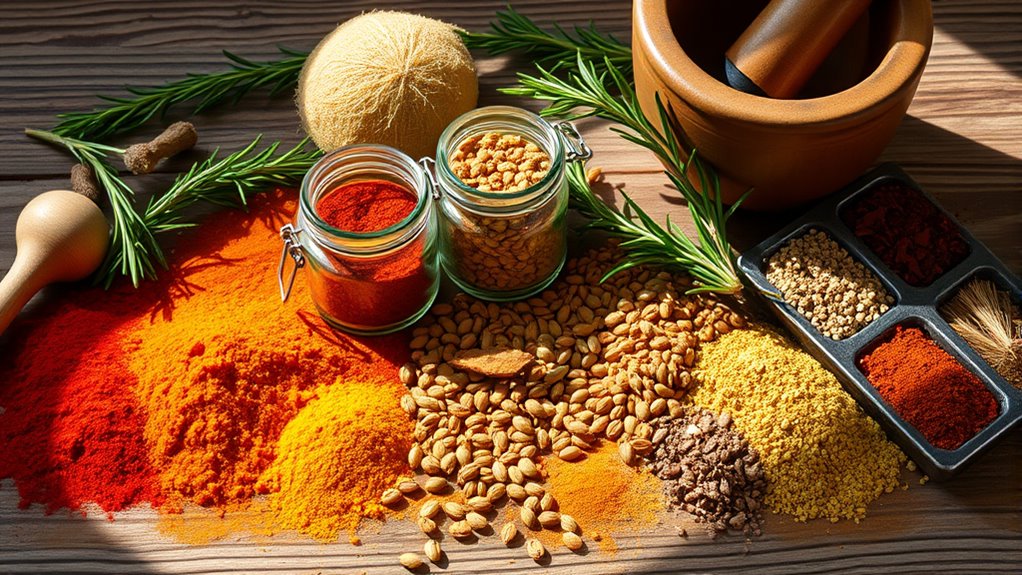
Spice blends are combinations of different spices that work harmoniously together. Think of classics like garam masala, which brings warmth and depth to Indian dishes, or Italian seasoning, perfect for enhancing your pasta sauces. When you use these blends, you often get a more complex flavor profile than if you used individual spices. They’re convenient, too. Just a teaspoon of a well-crafted blend can save you time and effort in the kitchen while still delivering a rich taste.
Spice blends bring harmony and complexity to your dishes, offering rich flavors with convenience and ease.
On the other hand, herbal infusions are another exciting avenue to explore. Fresh or dried herbs like basil, thyme, and rosemary can transform the simplest of dishes into something extraordinary. When you infuse oils or broths with these herbs, you create a base that’s bursting with flavor. Imagine drizzling infused olive oil over a salad or using herb-infused broth in your risotto. It’s a simple way to elevate your cooking without needing extensive culinary skills.
Understanding spices isn’t just about the flavors, though; it’s also about the health benefits they can offer. Many spices like turmeric and ginger are known for their anti-inflammatory properties. Incorporating these spices into your daily meals can enhance both the taste and nutritional value of your food. So, whether you’re brewing a warming cup of ginger tea or adding a dash of cinnamon to your oatmeal, you’re not just treating your palate; you’re nourishing your body. Additionally, research supports 16PF for predicting job performance, which highlights the importance of understanding personal traits, much like how we understand the nuances of spices.
Don’t shy away from experimenting! Mixing different spice blends and herbal infusions can lead you to discover unique flavor combinations that suit your palate perfectly. Start with small amounts, and adjust according to your preference. You might find that a little more cumin or a hint of rosemary can make all the difference.
In the end, understanding spices is about enhancing your culinary experience. With a pinch of creativity and an open mind, you can transform your cooking and enjoy a world of flavors. So, go ahead, release your inner chef, and let spices turn your meals into memorable feasts.
Frequently Asked Questions
How Should I Store Spices for Maximum Freshness?
To keep your spices fresh, store them in airtight storage containers to prevent moisture and air exposure. Organize your spice shelf by grouping similar spices together and labeling each container clearly. Avoid placing them near heat sources like stoves, as heat can diminish their flavor. Make sure to verify expiration dates regularly and replace any expired spices. Following these steps will ensure your spices stay vibrant and flavorful for your culinary adventures!
Can Spices Lose Potency Over Time?
Yes, spices can lose potency over time, much like a song that fades from memory. Most spices have a shelf life of about one to three years, depending on the type. After this period, you’ll notice flavor degradation, making your dishes less vibrant. To keep your spices fresh, store them in airtight containers away from light and heat, ensuring they hit all the right notes in your cooking for as long as possible.
What Is the Difference Between Whole and Ground Spices?
Whole spices are intact and usually last longer, maintaining their freshness and flavor until you grind them. Ground spices, on the other hand, are pre-ground and tend to lose their potency more quickly. If you’re after maximum flavor, opt for whole vs ground spices whenever possible. Grinding fresh spices just before use can elevate your dishes and guarantee you’re getting the most out of your spice freshness.
Are There Any Health Risks Associated With Consuming Spices?
Yes, there are health risks associated with consuming spices. Some people experience spice allergies, leading to reactions like itching or swelling. You might also face gastrointestinal reactions, such as bloating or discomfort, especially with certain spices like chili or garlic. It’s important to pay attention to how your body reacts when trying new spices. If you notice any adverse effects, it’s best to consult a healthcare professional for guidance.
How Can I Substitute Fresh Herbs for Dried Spices?
So, you’ve decided to go all gourmet and substitute fresh herbs for dried spices, huh? Well, it’s not rocket science! For every tablespoon of fresh herbs, use about one teaspoon of dried. Fresh to dried, it’s like switching from a vibrant Broadway show to a slightly faded DVD—still good, but not quite the same. Just remember, if you’re using herbs like basil or oregano, they’ll still bring the flavor, just with less pizzazz!
Conclusion
In conclusion, spices are more than just flavor enhancers; they’re integral to culinary traditions worldwide. Did you know that the global spice market was valued at over $15 billion in 2021? This statistic highlights not only the popularity but also the economic importance of spices. By understanding their diverse uses and health benefits, you can elevate your cooking and appreciate the rich history behind each sprinkle. So, get creative and start experimenting with spices in your kitchen!