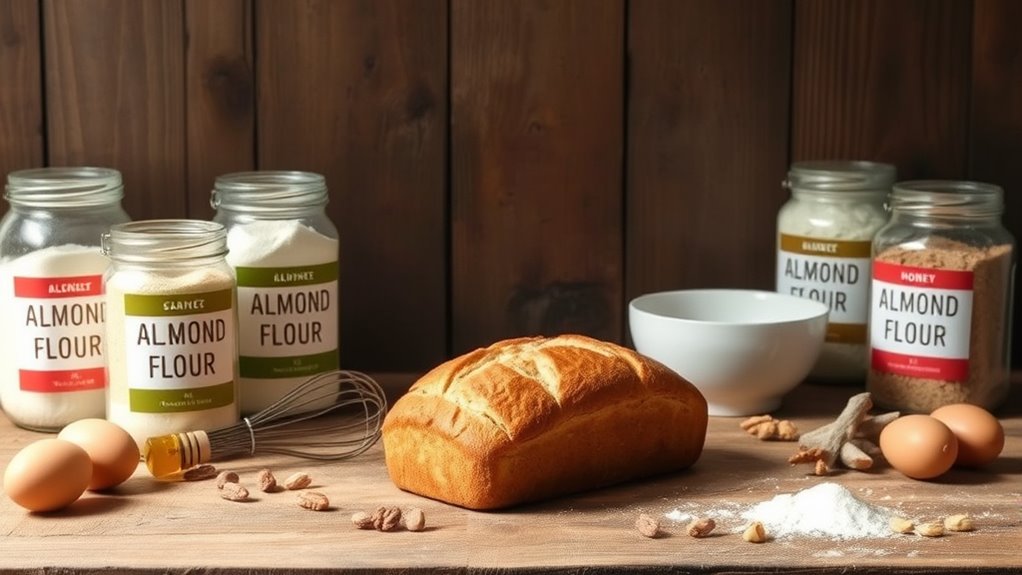

Gluten-free baking means using alternative flours like almond, coconut, or rice flour instead of wheat. Almond flour adds moisture, while coconut flour absorbs more liquid, so adjust your recipes accordingly. You’ll need binding agents like eggs or flaxseed to help maintain structure. Mixing different flours can mimic gluten’s properties and improve texture. Don’t forget to monitor your baking closely, as gluten-free items often cook faster. Discover more tips and techniques to enhance your gluten-free baking experience.
Key Takeaways
- Use gluten-free flours like almond, coconut, and rice flour, mixing them for better texture and flavor.
- Incorporate binding agents such as eggs, flaxseed meal, or chia seeds to provide structure and moisture.
- Adjust liquid ratios, especially with coconut flour, to ensure proper consistency in the batter.
- Allow the batter to rest for about 30 minutes to improve texture and absorption of moisture.
- Monitor baking time closely, as gluten-free items often bake faster and can dry out easily if overbaked.
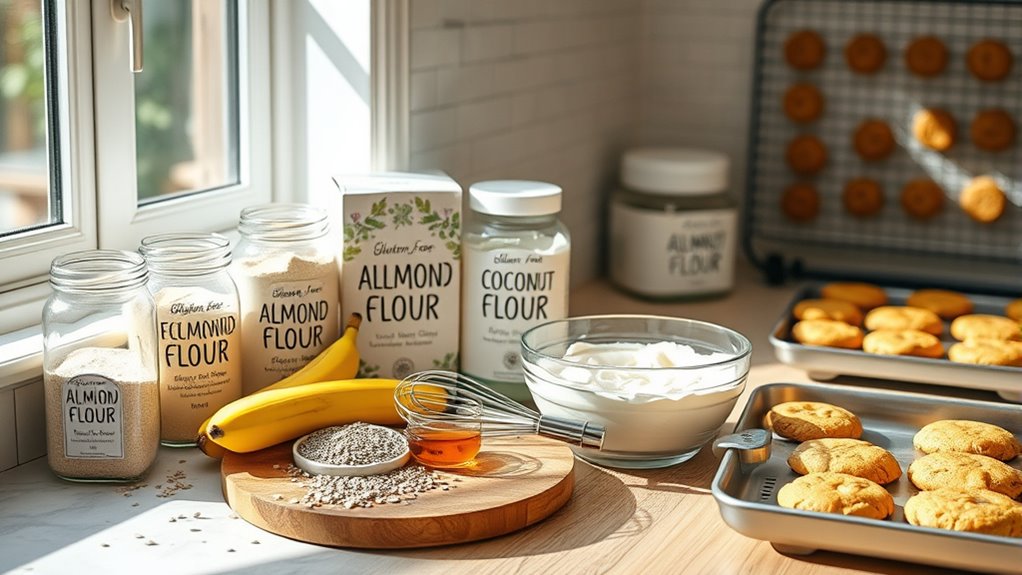
Have you ever wondered how to create delicious baked goods without gluten? It might seem daunting at first, but with the right gluten substitutes and some effective baking techniques, you can whip up mouthwatering treats that everyone will love. The key is to understand what gluten does in traditional baking and how to mimic that structure using alternative ingredients.
First off, let’s talk about gluten substitutes. You’ll find a variety of gluten-free flours available, such as almond flour, coconut flour, and rice flour. Each of these has unique properties that can impact your final product. For example, almond flour adds moisture and a slight sweetness, while coconut flour is highly absorbent and requires extra liquid in your recipes. Mixing these flours can help you achieve a balanced texture. You might also want to think about using gluten-free blends that combine several types of flour, often with added starches, to create a more versatile base for your baking.
Explore a variety of gluten-free flours like almond, coconut, and rice to create balanced, delicious baked goods.
When you’re baking gluten-free, you’ll need to adapt your techniques to accommodate the lack of gluten. One essential adjustment is to increase the binding agents in your recipes. Ingredients like eggs, flaxseed meal, or chia seeds can help provide structure and moisture. If you’re vegan or egg-free, flaxseed is a fantastic option; just mix one tablespoon of ground flaxseed with three tablespoons of water and let it sit until it thickens. This mixture acts as a binder, helping your baked goods hold together.
You should also pay attention to the mixing method. Gluten-free batters and doughs often require different handling than their gluten-filled counterparts. Overmixing can lead to dense, crumbly results, so mix just until combined. If you’re making something like cookies or muffins, consider letting the batter rest for about 30 minutes before baking. This can help the flours absorb moisture and improve the texture.
Don’t forget about baking time and temperature. Gluten-free goods may need slight adjustments; they often bake faster. Keep a close eye on them to avoid overbaking. A toothpick test is your best friend—insert it into the center, and if it comes out clean, you’re good to go.
With these gluten substitutes and baking techniques in your toolkit, you’re well on your way to creating delicious, gluten-free baked goods. Additionally, understanding the importance of binding agents can significantly enhance the outcome of your recipes. Don’t be afraid to experiment and find what works best for your taste buds! Enjoy the process, and happy baking!
Frequently Asked Questions
Can I Substitute Gluten-Free Flour for Regular Flour in Any Recipe?
Yes, you can substitute gluten-free flour for regular wheat flour in many recipes, but it might not always produce the same results. Different gluten-free flours offer unique flavors and textures, so it is crucial to experiment. You might need to adjust the liquid or add binding agents like xanthan gum for better consistency. Keep in mind that the gluten-free flavor can vary, so choose a blend that suits your taste preferences for the best outcome.
How Do Gluten-Free Flours Differ in Taste and Texture?
Gluten-free flours have distinct taste profiles and texture differences compared to regular flour. For instance, almond flour adds a nutty flavor, while coconut flour can introduce sweetness. You’ll notice that gluten-free baked goods might have a denser texture or crumblier feel, depending on the flour blend you choose. Experimenting with different textures can enhance your recipes, so don’t hesitate to mix flours for the best combination that suits your taste!
Are There Any Health Benefits to Gluten-Free Baking?
Yes, there are health benefits to gluten-free baking. By using gluten-free ingredients, you can improve gut health benefits, especially if you’re sensitive to gluten. It also helps with allergy management for those with celiac disease or wheat allergies. Many gluten-free flours are rich in nutrients, offering a variety of vitamins and minerals. Plus, experimenting with different flours can lead to discovering new flavors and textures, making your baking adventures even more enjoyable.
What Are the Best Storage Methods for Gluten-Free Baked Goods?
To store gluten-free baked goods, use airtight containers to keep them fresh and prevent moisture. If you won’t eat them within a few days, consider refrigeration options. Storing items like muffins or cookies in the fridge can extend their shelf life. For longer storage, freeze your baked goods in airtight containers or freezer bags. Just remember to label them with dates to guarantee you enjoy them at their best!
How Can I Improve the Rise in Gluten-Free Bread?
If you’re tired of flat gluten-free bread, think of your dough as a superhero in need of sidekicks! Try alternative leavening methods like baking soda or vinegar for a boost. Adding binders like xanthan gum or psyllium husk can also improve texture and rise. Don’t forget to let your dough rest; this helps the air pockets develop. With these tweaks, you’ll achieve that perfect, fluffy loaf you’ve been craving!
Conclusion
In the world of gluten-free baking, you’re not just swapping flours; you’re crafting a delicious adventure. By embracing alternative flours and experimenting with ingredients, you’ll discover that baking without wheat can be just as rewarding. So, don’t be afraid to get your hands a little messy—every flour-dusted countertop is a canvas for your creativity. With practice and a sprinkle of patience, you’ll whip up treats that even the gluten lovers will crave. Happy baking!