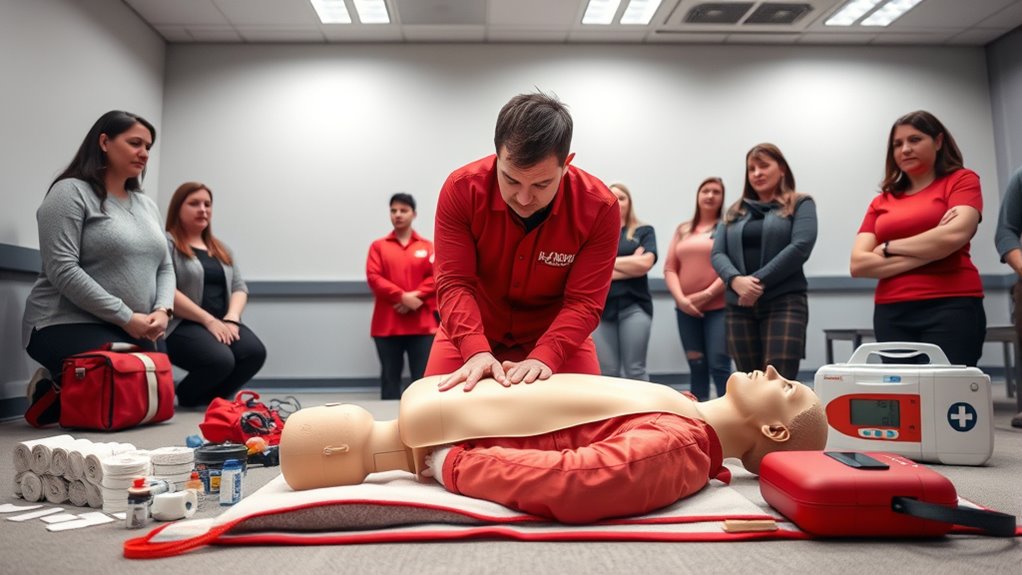

In common emergencies, stay calm and assess the situation. Guarantee your safety first, then check the victim’s responsiveness. For bleeding, apply direct pressure and elevate the wound if it continues. In cardiac emergencies, call for help and perform chest compressions at a rate of 100-120 per minute. Remember, if you’re trained, use rescue breaths too. Knowing these basics can save lives, and there’s more to discover about effective first aid techniques.
Key Takeaways
- Stay calm and assess the situation for personal safety before assisting anyone in need.
- For bleeding, apply direct pressure to the wound and elevate the area if possible.
- Check for responsiveness in unresponsive individuals; call emergency services if they do not respond.
- Perform CPR with chest compressions at a rate of 100-120 per minute if someone is unresponsive and not breathing.
- Always seek professional medical help for severe injuries or if bleeding does not stop.
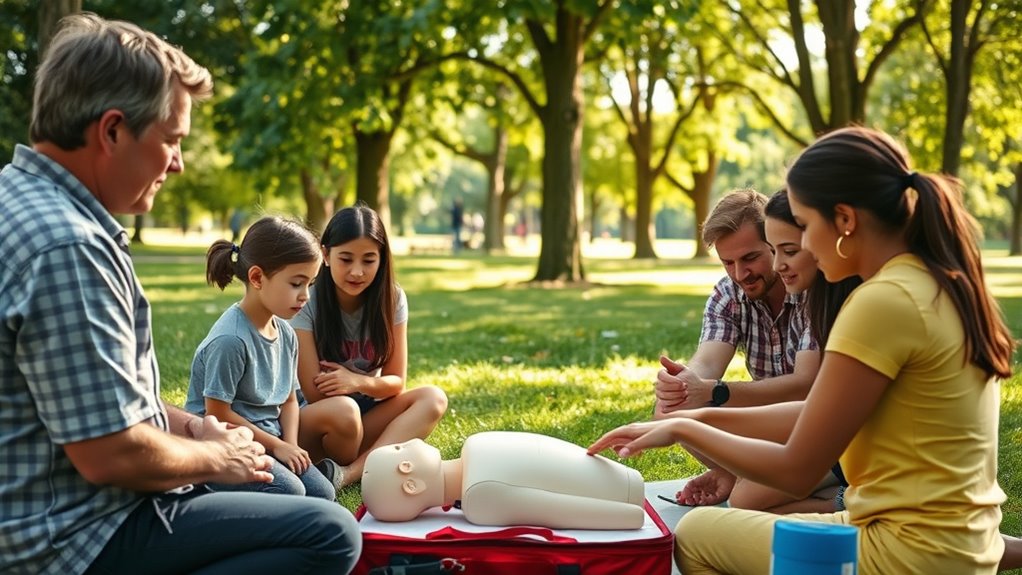
When emergencies strike, how prepared are you to handle them? Having a basic understanding of first aid can make a world of difference in critical situations. You never know when someone might need your help, and being equipped with the right skills guarantees you can act confidently and effectively. One of the most essential areas to focus on is managing severe injuries, particularly when it comes to bleeding control and CPR techniques.
Imagine you witness someone suffer a severe cut or a deep wound. Your immediate reaction should be to assess the situation calmly. First, you need to guarantee your safety and then the safety of the victim. If the bleeding is significant, applying direct pressure to the wound is indispensable. Use a clean cloth or your hands, if necessary, to stem the flow. If blood soaks through, don’t remove the initial cloth; instead, add more layers on top. This method helps maintain pressure and promotes clotting.
Assess the situation calmly, prioritize safety, and apply direct pressure to control severe bleeding effectively.
If the bleeding doesn’t stop after several minutes, you may need to elevate the injured area above the heart, if possible. This can help reduce blood flow to the injury. In cases of severe bleeding, you might also want to contemplate using a tourniquet, but only as a last resort. Always remember to call for professional medical assistance, as even with the best efforts, some injuries require expert attention. Additionally, knowing how to apply pressure to a wound can greatly enhance your effectiveness in controlling bleeding.
Now, let’s move on to a critical situation where someone collapses or stops breathing. This is where knowing CPR techniques can be a lifesaver. First, check for responsiveness by gently shaking the person and asking if they’re okay. If there’s no response, call emergency services immediately. Then, start CPR. Place your hands in the center of their chest and apply firm, quick compressions, aiming for a rate of 100 to 120 compressions per minute. If you’re trained in rescue breaths, after every 30 compressions, give two breaths. But if you’re untrained, just focus on hands-only CPR; it’s still effective.
Frequently Asked Questions
How Can I Prepare a First Aid Kit at Home?
To prepare a first aid kit at home, start by gathering essential emergency supplies like adhesive bandages, antiseptic wipes, gauze, adhesive tape, and pain relievers. Include a thermometer, scissors, and tweezers. Organize your kit in a sturdy, waterproof container, labeling sections for easy access. Don’t forget to verify expiration dates regularly and restock items as needed. This way, you’ll guarantee you’re always ready for any minor emergencies that might arise.
What Are the Legal Implications of Providing First Aid?
When you provide first aid, you need to be aware of legal responsibilities and potential liability concerns. If someone gets hurt while you’re helping, you might wonder if you’re protected. Generally, Good Samaritan laws shield you from legal repercussions if you act in good faith. But, if you’re reckless or exceed your training, that protection could vanish. So, always stay calm, act within your skills, and keep safety in mind.
How Often Should I Refresh My First Aid Knowledge?
You should update your first aid knowledge at least every two years. This ensures you stay updated on CPR techniques and bleeding control methods. Practices and guidelines can change, so regular training helps you maintain confidence and competence. If you frequently encounter emergencies or your skills feel rusty, consider renewing your training more often. Staying current can make a significant difference when you need to act quickly in a situation.
Can I Administer First Aid Without Formal Training?
Yes, you can administer first aid without formal training, but it’s risky. Imagine witnessing a friend collapse—your instinct might kick in to help. However, legal considerations vary by location. Without certification, you could face liability if something goes wrong. It’s vital to know your local laws and understand that training can empower you to act confidently and correctly. Always consider taking a course to make certain you’re prepared for emergencies.
What Should I Do if I’m Alone During an Emergency?
If you’re alone during a solo emergency, your first step is to guarantee your personal safety. Assess the situation quickly and determine if you need to call for help. Use your phone to dial emergency services if necessary. While waiting for assistance, stay calm and act within your capabilities. If it’s safe, provide basic aid to yourself or the affected person until help arrives. Remember, your safety comes first.
Conclusion
In emergencies, staying calm is your lifeline, and knowing these first aid basics can make all the difference. Whether it’s a burn or a fall, your quick actions can turn panic into peace. Remember, you’re not just a bystander; you’re a hero ready to step in when it counts. With these skills in your back pocket, you’ll be empowered to act swiftly and confidently, turning chaos into care when it matters most.