If your exercise bike seat height isn’t set correctly, it can cause knee pain and reduce your workout efficiency. A seat that’s too high or low forces your knees into awkward positions, leading to discomfort and potential injury. Adjusting your seat for a slight bend at the pedal’s bottom helps protect your knees and improves comfort. Keep exploring to learn step-by-step tips to find your perfect fit and keep your knees happy.
Key Takeaways
- An improperly adjusted seat height can cause knee pain, either from overextension or overbending during pedaling.
- Ensuring a slight knee bend at the pedal’s bottom minimizes strain and prevents knee injuries.
- A seat too high or too low leads to inefficient pedaling and increased knee stress.
- Regularly check and fine-tune your seat height for optimal knee alignment and comfort.
- Proper bike setup promotes healthy knee mechanics and reduces the risk of overuse injuries.
Why Seat Height Matters for Knee Health
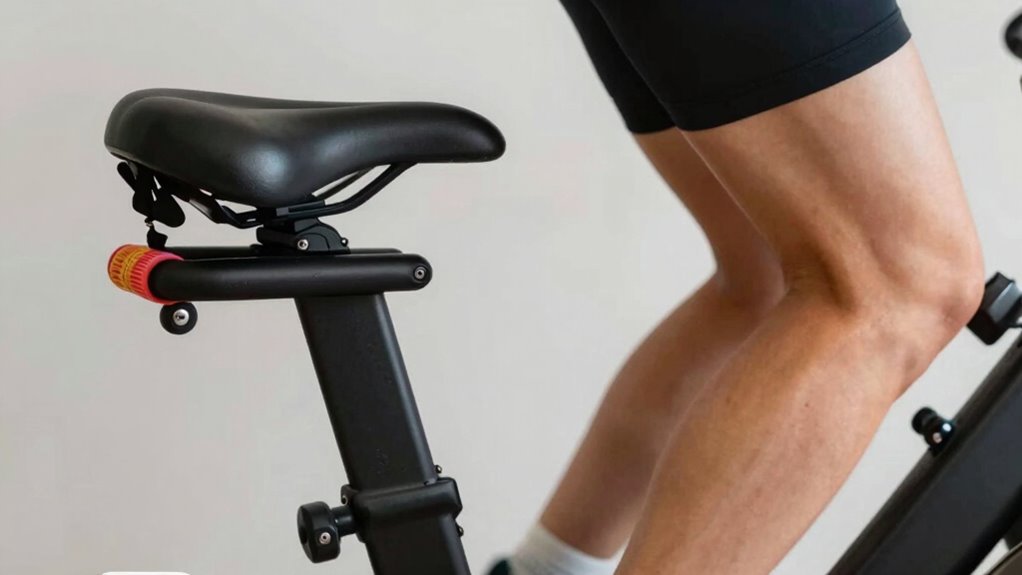
Proper seat height is crucial because it directly affects your knee health during cycling. When your seat isn’t adjusted correctly, it can lead to knee pain or strain, especially if it’s too high or too low. Correct seat ergonomics ensures your knee maintains a slight bend at the bottom of each pedal stroke, reducing stress on the joint. If the seat is too high, you might overextend your knee, causing discomfort and potential injury. Conversely, if it’s too low, you’ll have to work harder, which can also cause pain. Fine-tuning your seat height promotes efficient pedaling and minimizes unnecessary strain. Paying attention to seat ergonomics isn’t just about comfort; it’s essential for protecting your knees during every workout. Additionally, proper accessibility features can help ensure that cycling adjustments are easier to understand and implement for everyone. Recognizing the importance of ergonomic design can further enhance your cycling experience by promoting better joint health and overall comfort.
Signs Your Bike Seat Is Too High or Too Low
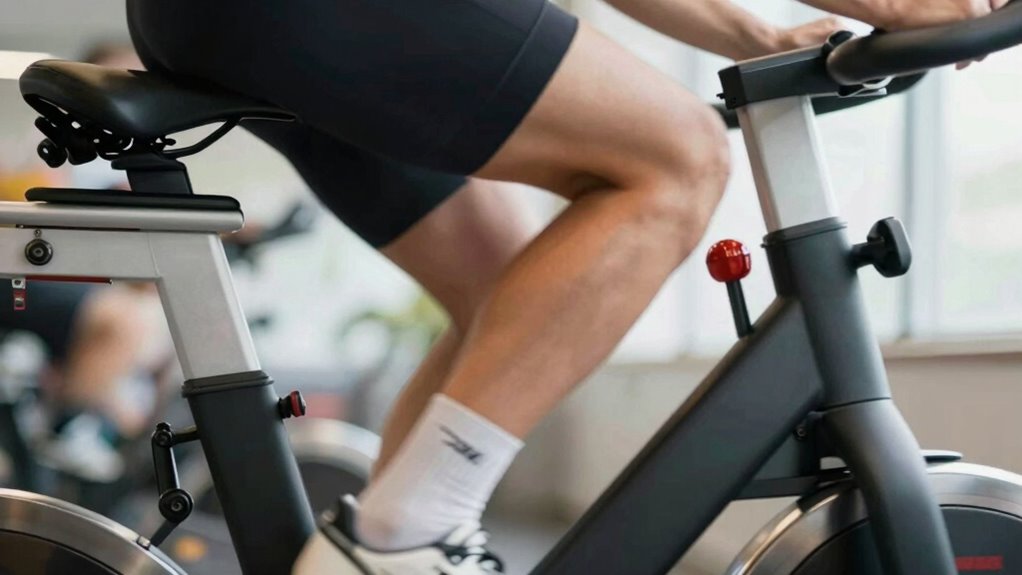
How can you tell if your bike seat is too high or too low? If your seat is too high, you might notice your hips rocking side to side or feeling excessive strain in your knees during pedaling. Conversely, a seat that’s too low can cause you to overuse your quadriceps and lead to discomfort or aching in your knees. Proper pedal alignment is key—your leg should be nearly straight at the bottom of each pedal stroke without locking your knee. An ergonomic posture depends on correct seat height, so if you find yourself overextending or feeling cramped, your seat’s likely off. Adjusting your seat to promote smooth, natural movement helps prevent strain and keeps your knees healthy during every ride.
How to Find the Correct Exercise Bike Seat Height for You

Finding the right seat height is essential for comfortable and effective workouts. You can use simple methods to set it correctly and recognize signs when it’s not fitting properly. Let’s explore how to adjust your seat for the best ride. Proper adjustment techniques ensure optimal performance and reduce the risk of injury during your exercise sessions. Additionally, understanding exercise bike ergonomics can help you make more informed adjustments and improve your overall comfort. When you understand proper bike fit principles, you can tailor your setup to better suit your body and riding style. Remember that an improperly fitted bike can lead to joint strain, so taking the time to find the correct fit benefits your long-term health and fitness goals. Paying attention to proper saddle height can significantly enhance your cycling experience and prevent discomfort.
Correct Seat Height Method
To make certain your exercise bike fits you perfectly, start by adjusting the seat height so that your leg is almost fully extended at the bottom of each pedal stroke. This position promotes an ergonomic posture, reducing knee strain. Ensure the saddle material provides enough cushioning without sacrificing stability. To fine-tune your seat height, use this method: sit on the bike, place your heel on the pedal, and pedal backward. Your leg should be straight with your hips level. When you switch to the ball of your foot, a slight bend in the knee is ideal. Use the table below to compare adjustments:
| Adjustment Step | Key Focus | Common Mistake |
|---|---|---|
| Initial seat height | Leg extension | Sitting too low or high |
| Pedal heel position | Ergonomic posture | Knee hyperextension |
| Fine-tuning pedal angle | Saddle material comfort | Ignoring saddle comfort |
| Final check | Overall comfort & fit | Overlooking knee alignment |
Being aware of knee alignment during adjustments can help prevent long-term joint issues. Additionally, regularly checking your bike fit can ensure continued comfort and safety during your workouts.
Signs of Improper Fit
When your exercise bike seat isn’t properly adjusted, you’ll notice discomfort and potential strain during your rides. Common signs include knee pain, aching hips, or feeling unstable on the saddle. If your knees are constantly aching or your hips feel tight, your seat might be too high or low. You may also experience excessive bouncing or slipping, which can compromise your exercise routines. Pay attention to how your body responds—if you’re adjusting bike accessories like seat cushions or handlebars doesn’t improve comfort, the seat height could be off. Proper fit ensures efficient pedaling and prevents injury. Regularly checking these signs helps you find the right seat height, making your workouts more enjoyable and effective. Additionally, ensuring your body jewelry measurements are correct can help prevent additional discomfort during activity. Understanding ergonomic bike setup can further optimize your comfort and performance, especially when combined with mindful posture alignment, proper bike fit techniques, and recognizing the importance of adjustable components for a personalized fit.
Step-by-Step Guide to Adjusting Your Bike Seat Properly
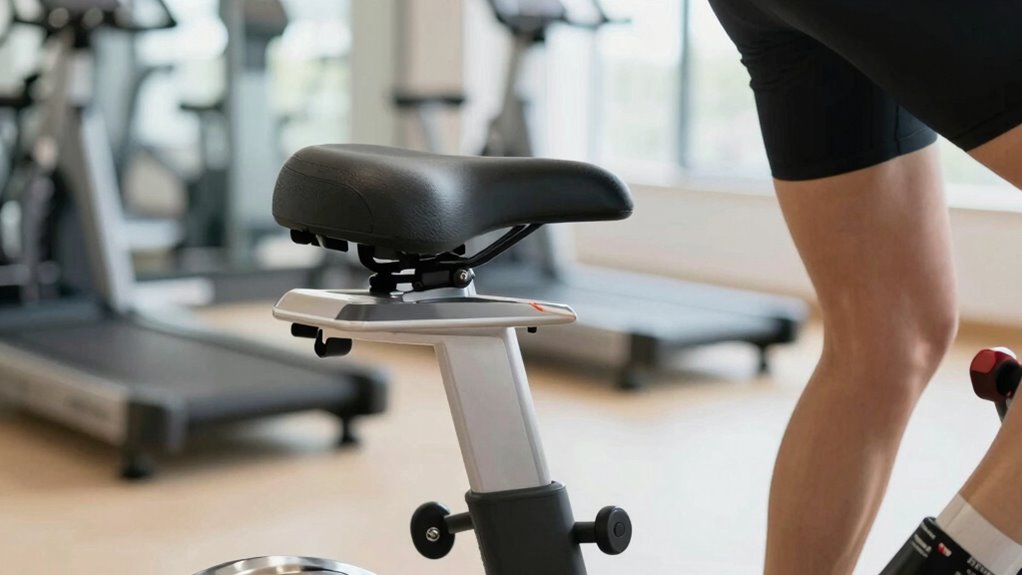
To adjust your bike seat properly, start by finding the right height that suits your body. Make sure your knee stays slightly bent when the pedal is at the bottom of the stroke, ensuring proper knee alignment. Finally, fine-tune the seat position until you feel comfortable and balanced during your ride.
Find Your Correct Height
Adjusting your bike seat to the correct height guarantees a comfortable and efficient workout. Start by sitting on the saddle and placing your heel on the pedal at the lowest point of the pedal stroke. Your leg should be fully extended with a slight bend in your knee when your foot is on the pedal. This position ensures proper bike ergonomics and ideal saddle comfort. If your knee is excessively bent or locked, adjust the seat height accordingly—raise it if your knee bends too much, lower it if your leg feels too straight. Make small adjustments and test ride after each change. The goal is to find a height that allows smooth pedaling without strain or discomfort, ensuring your knees stay protected during every session. Proper bike ergonomics can help prevent discomfort and injury during your workouts. Additionally, consulting professional bike fitting services can optimize your setup for long-term comfort and performance. Being aware of how regional geography and terrain influence your riding position can further enhance your comfort and efficiency.
Use Proper Knee Alignment
Proper knee alignment is vital for a safe and efficient workout on your exercise bike. To achieve this, focus on maintaining correct knee rotation and pedal alignment. When pedaling, your knees should track straight over your toes without wobbling side to side. Adjust your seat height if your knees cave inward or outward during each stroke. Make sure your foot is centered on the pedal to prevent misalignment. Here’s a quick visual guide:
| Knee Rotation | Pedal Alignment | Key Adjustment |
|---|---|---|
| Inward/Outward | Off-center | Adjust seat height/position |
| Straight | Proper over pedal | Check saddle tilt |
| Wobbling | Misaligned pedal | Re-align pedal and seat |
Aligning these elements helps prevent knee strain and improves your cycling efficiency. Ensuring your proper seat height is set correctly can significantly reduce the risk of injury and enhance comfort during your ride. Regularly checking your bike fit and making small adjustments can also make a notable difference in your overall comfort. Additionally, paying attention to proper pedal technique can further improve your riding experience. Incorporating correct posture during cycling can help maintain proper alignment and prevent unnecessary stress on your knees, especially when combined with proper knee tracking.
Fine-Tune for Comfort
Ensuring your bike seat is comfortable starts with fine-tuning it to fit your body perfectly. Adjust the height so your knee remains slightly bent at the bottom of each pedal stroke, promoting ergonomic posture and reducing strain. Check that the seat is level, neither tilted forward nor backward, to maintain proper alignment. When seated, your hips should stay stable, allowing your pelvis to stay level. This positioning enhances pedal efficiency and prevents discomfort. Use small adjustments, testing each change by riding briefly to gauge comfort and performance. Remember, a seat that fits well encourages better posture and distributes pressure evenly, helping to prevent knee pain and fatigue. Perfecting your seat height and angle makes your workout more effective and enjoyable.
Tips for Fine-Tuning Your Seat for Comfort and Performance
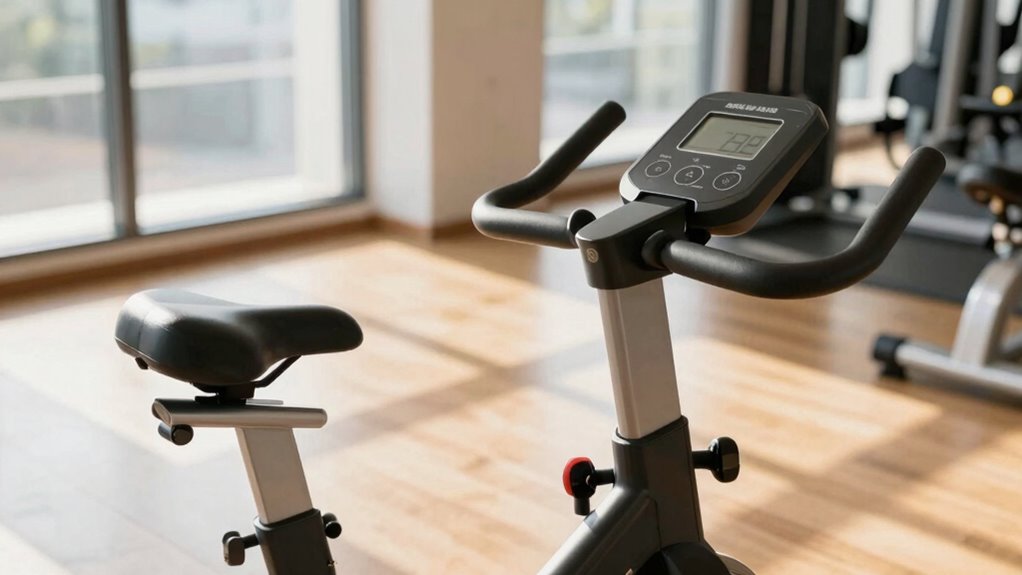
Fine-tuning your bike seat height can make a significant difference in both comfort and performance. To achieve ideal results, focus on maintaining an ergonomic posture that keeps your hips stable and your knees slightly bent at the bottom of each pedal stroke. Adjust the seat so that your leg is almost fully extended but not locked when the pedal is at its lowest point. This position enhances pedal efficiency by reducing unnecessary strain and preventing knee pain. Remember to test your setup by riding for a few minutes, paying attention to comfort and any discomfort. Small adjustments, like raising or lowering the seat by a millimeter or two, can dramatically improve your riding experience and help prevent injury.
Common Mistakes to Avoid When Setting Your Seat Height
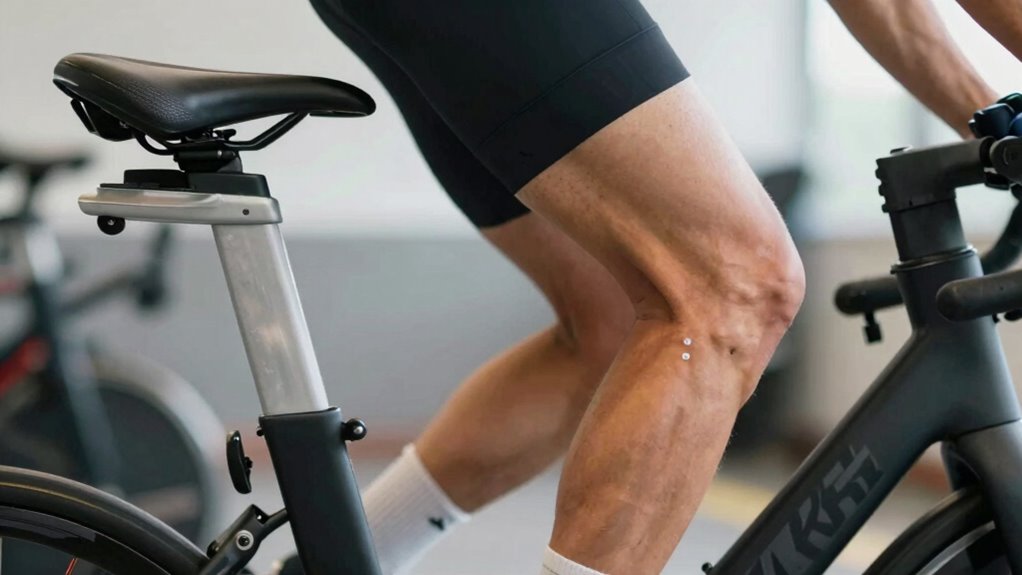
One common mistake is setting the seat height too high or too low, which can cause discomfort or injury. Don’t forget to also adjust the handlebars, as ignoring this step can lead to poor posture. Ensuring both seat and handlebar positions are correct helps you avoid unnecessary strain and maximize your workout.
Incorrect Seat Vertical Position
Setting your exercise bike seat too high or too low is a common mistake that can lead to discomfort and inefficient workouts. When the seat isn’t adjusted correctly, your seat height affects your bike posture, which in turn impacts your comfort and performance. If the seat is too high, you may hyperextend your knee at the top of the pedal stroke, causing strain. Conversely, if it’s too low, you’ll have to overreach, putting unnecessary stress on your knees and hips. Proper seat vertical position ensures your knee maintains a slight bend at the bottom of each pedal stroke, promoting better bike posture. Avoid rushing this adjustment — taking the time to get it right helps prevent injuries and improves your overall cycling experience.
Overlooking Handlebar Adjustment
While adjusting your seat height is essential, many overlook the importance of properly setting the handlebar position. Handlebar ergonomics play a vital role in comfort and injury prevention. If your handlebars are too high or too low, it can cause unnecessary strain on your neck, shoulders, and wrists. When choosing a bike frame size, ensure it allows you to comfortably reach the handlebars without overextending or feeling cramped. Proper handlebar adjustment ensures your upper body remains relaxed and aligned with your hips and knees. Failing to do so can lead to discomfort and hinder performance. Take time to fine-tune handlebar height and angle, matching your bike frame size and riding style. This small step makes a big difference in your overall exercise experience.
Troubleshooting Common Seat Height Problems

When your exercise bike seat height isn’t properly adjusted, it can lead to discomfort, inefficient workouts, or even injury. To troubleshoot common seat height issues, start by ensuring your leg has a slight bend at the bottom of each pedal stroke, promoting an ergonomic posture. If your knees lock or feel strained, the seat may be too high or too low. Check that your hips stay stable and don’t sway side to side, which indicates improper alignment. Adjust the seat gradually, testing pedal efficiency with each change. Proper height optimizes muscle engagement and reduces knee stress. Remember, a seat that’s too high or low not only hampers comfort but also diminishes workout effectiveness. Fine-tuning your seat height is key to safe, productive exercise sessions.
When to Seek Professional Bike Fitting Help

If adjusting your seat height doesn’t resolve persistent discomfort or alignment issues, it may be time to consult a professional bike fitter. They can assess your bike saddle position and verify your pedal alignment is correct. Improper saddle height or misaligned pedals can cause knee pain and inefficiency that simple tweaks won’t fix. A professional fitter will analyze your riding posture, check the saddle tilt, and make precise adjustments to optimize comfort and performance. They might also recommend specific equipment or modifications to prevent future issues. If you continue experiencing pain or instability despite your efforts, seeking expert advice ensures you’re riding safely and efficiently. Proper bike fitting can make a significant difference in comfort, preventing long-term injuries and improving your overall cycling experience.
Benefits of Proper Seat Height Beyond Preventing Knee Pain

Achieving the correct seat height offers benefits that extend well beyond preventing knee pain. Proper bike ergonomics improves your overall cycling posture, making rides more comfortable and efficient. When your seat height is ideal, you reduce strain on your hips, back, and shoulders, helping prevent fatigue. Better positioning also enhances power transfer, so you can pedal more effectively. Correct seat height encourages a natural, aligned posture, minimizing discomfort during long rides. To visualize these benefits, consider this table:
| Benefit | How It Helps | Effect on Cycling Experience |
|---|---|---|
| Improved ergonomics | Reduces strain on joints | Less fatigue, more comfort |
| Better posture | Aligns spine and pelvis | Increased efficiency, reduced injury risk |
| Increased power transfer | Proper leg extension | Enhanced performance |
| Reduced fatigue | Less muscle strain | Longer, more enjoyable rides |
How to Maintain Your Bike Fit for Ongoing Comfort
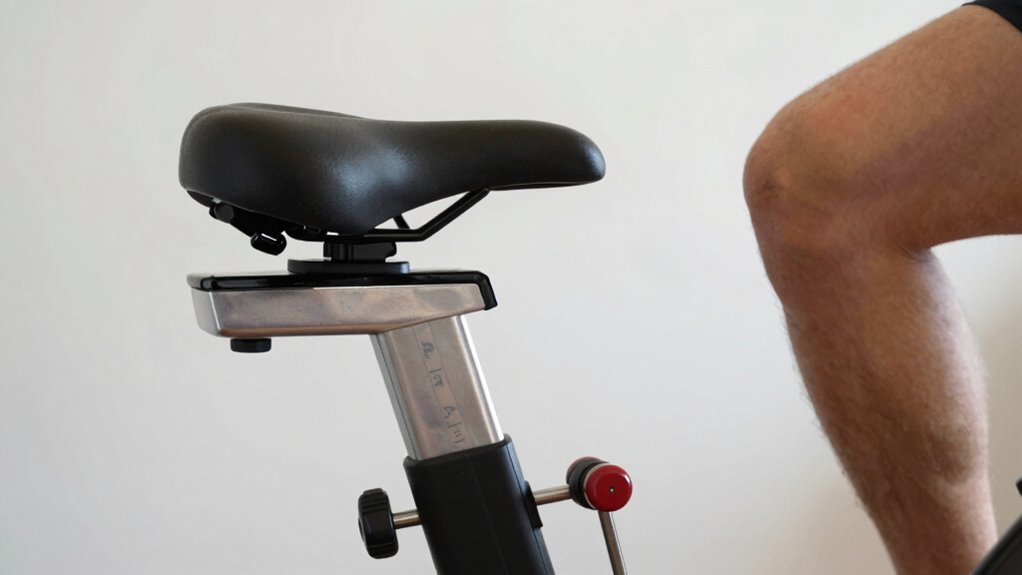
Maintaining your bike fit over time is essential to guarantee continued comfort and ideal performance. Regularly check your ergonomic posture to ensure your seat height, handlebar position, and alignment support proper body mechanics. Small adjustments can make a significant difference in preventing discomfort and improving pedal efficiency. Pay attention to how you feel during rides—if you notice persistent knee pain or fatigue, it’s time to re-evaluate your setup. Keep your bike clean and well-maintained, as loose components can shift and disrupt your fit. Stretching and strengthening exercises for your legs and core also help maintain optimal posture. By staying proactive, you’ll ensure your bike fit remains comfortable, enhances pedal efficiency, and prevents issues that could compromise your riding experience.
Frequently Asked Questions
Can Incorrect Seat Height Cause Long-Term Knee Damage?
Yes, incorrect seat height can cause long-term knee damage. When your seat is too high or low, it forces your knee joint into awkward angles, straining the ligaments and cartilage over time. Poor cycling posture due to improper seat height increases the risk of chronic pain and injury. Make sure your seat is adjusted so that your knee maintains a slight bend at the bottom of each pedal stroke to protect your knees.
How Often Should I Reassess My Bike Seat Position?
Think of your bike fit like tuning a musical instrument; it needs regular adjustments. You should reassess your seat position every 4 to 6 weeks, especially if you’re increasing your riding intensity or duration. This guarantees ideal ergonomics, prevents discomfort, and enhances comfort. Regular checks help you catch issues early, so you can keep riding comfortably and avoid long-term strain or injury.
Does Seat Height Affect Overall Cycling Performance?
Yes, seat height impacts your overall cycling performance. Proper ergonomics considerations guarantee you maximize power and efficiency, reducing fatigue and injury risk. A seat that’s too high or low can hinder your pedaling mechanics, while aesthetic preferences shouldn’t override functional fit. Adjust your seat to align your knee slightly bent at the bottom of each pedal stroke, boosting comfort and performance. Regular reassessment helps maintain ideal positioning as your fitness level evolves.
Are There Specific Seat Height Guidelines for Different Bike Types?
Yes, there are specific seat height standards for different bike types. For road bikes, you should align the saddle height so your leg is almost fully extended at the bottom of the pedal stroke. Mountain bikes often have slightly lower seats for better control, while spin bikes usually have a higher seat for a more aggressive position. Always adjust based on your bike type variations to improve comfort and performance.
Can Seat Height Adjustments Improve Cycling Endurance?
Think of your seat height as the engine that powers your ride; when it’s right, your endurance soars. Proper ergonomics optimization allows you to ride longer without fatigue, and it’s key to injury prevention strategies. When you adjust your seat correctly, you reduce strain on your knees, boost comfort, and enhance stamina. Yes, seat height tweaks can substantially improve your cycling endurance by making each pedal stroke more efficient and sustainable.
Conclusion
Getting your bike seat just right is like tuning a fine instrument—you’ll enjoy smoother rides and healthier knees. I once adjusted my seat and suddenly felt less knee pain after months of discomfort. Remember, small tweaks can make a big difference. Keep fine-tuning your setup, listen to your body, and don’t hesitate to seek help if needed. With the right fit, your workouts become more enjoyable and pain-free—so keep riding confidently!