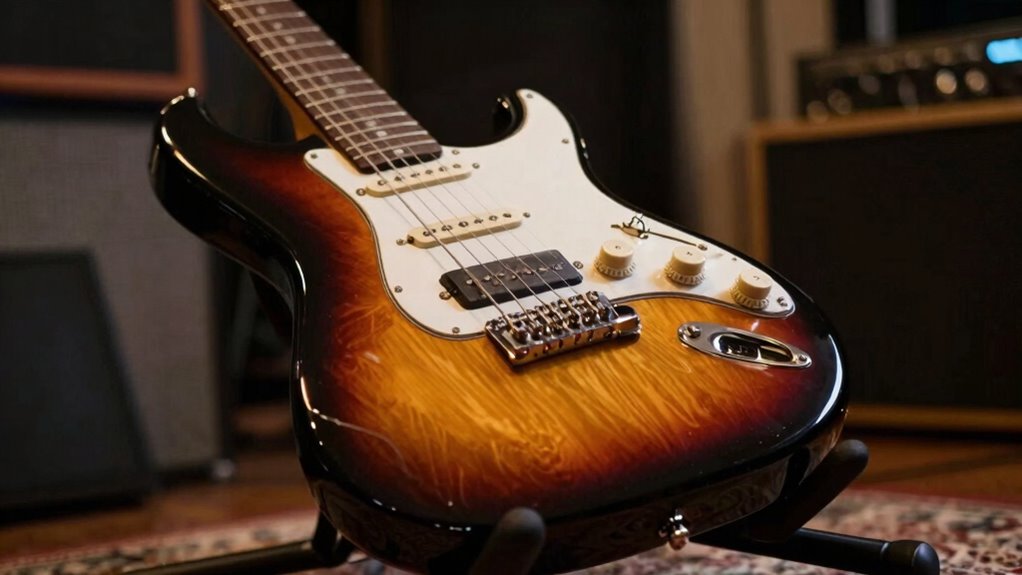

To instantly transform your electric guitar tone, start with your pickup selector—bridge for brightness or neck for warmth—and adjust your guitar’s volume for fullness. Tweak your amp’s gain and treble to switch from clean to heavy sounds, and use EQ to fine-tune specific frequencies. Adding effects or pedals in different positions also makes a big difference. Mastering these simple settings opens a lot of tonal potential—keep exploring to discover even more ways to shape your sound.
Key Takeaways
- Adjust pickup selector for brighter (bridge) or warmer (neck) tones to instantly change your sound character.
- Use guitar volume and tone knobs to soften or brighten your tone before amp adjustments.
- Tweak amp gain and EQ settings to switch between clean, crunchy, or heavy sounds effortlessly.
- Incorporate effects like overdrive, delay, or reverb at strategic points in the signal chain for unique textures.
- Save presets with preferred settings for quick access to different tones during performances or practice.
Learn the Basic Guitar and Amp Controls

To shape your electric guitar tone effectively, you need to understand the basic controls on your guitar and amplifier. The pickup selector switch lets you choose different pickups, which drastically change your sound. For brighter tones, select the bridge pickup; for warmer sounds, switch to the neck pickup. Your guitar volume knob controls how loud your signal is sent to the amplifier. Turning it up increases your overall output, making your sound fuller and more present. Lowering the volume reduces sustain and cleans up your tone. These controls give you immediate influence over your sound before even adjusting your amp. Mastering how pickup selector positions and guitar volume affect your tone lays a solid foundation for creating the desired sound. Understanding pickup positions helps you better grasp how different settings impact your tone, especially when considering guitar tone shaping techniques. Additionally, familiarizing yourself with amplifier controls allows for more precise tone adjustments, and experimenting with knob settings can reveal new sonic possibilities. Exploring basic controls on your gear is essential for developing your unique sound signature.
Adjust Your Amp Settings for Different Tones
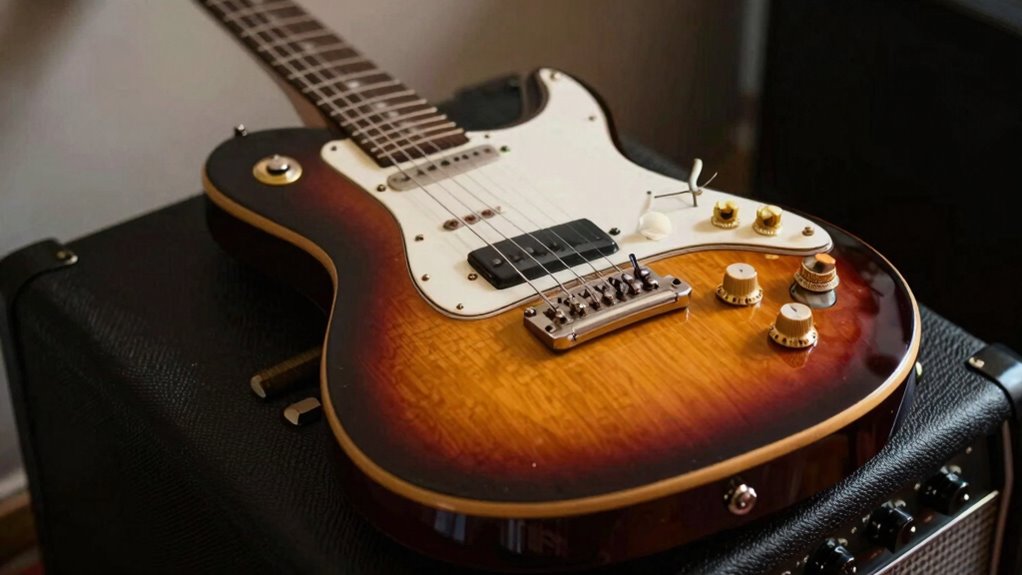
Adjusting your amp settings is essential for achieving a wide range of tones. Your guitar pick techniques influence how the amp responds, so tweak your controls to match your playing style. For a cleaner sound, lower the gain and increase the treble, while for a heavier tone, boost the gain and bass. Keep in mind that amplifier wattage impacts your tone’s headroom—higher wattage amps handle volume better and produce clearer sounds at loud levels. Experiment with your amp’s EQ and gain settings to find the perfect balance for different styles, whether you’re playing blues, rock, or metal. Additionally, understanding amplifier wattage can help you choose the right amp for your desired tone and volume needs. Adjusting these settings allows you to shape your sound dynamically and create a tone that complements your guitar and playing technique. Exploring amp settings can also help you more effectively tailor your overall sound to suit your musical preferences. Remember that amp responsiveness varies with different configurations, so taking time to explore these nuances can greatly enhance your tone. Recognizing how water pressure affects your gear can also help you optimize your setup for a more consistent sound. Moreover, being aware of the importance of proper maintenance can ensure your equipment performs at its best over time.
Fine-Tune Your Sound With EQ Settings

Once you’ve set your amp controls, fine-tuning your sound with EQ settings lets you sculpt your tone further. Start by adjusting the tone knob on your guitar; rolling it back can soften your sound, while turning it up emphasizes brightness. Your guitar pickup choice also impacts EQ; for example, bridge pickups produce sharper highs, while neck pickups deliver warmer lows. Use your amp’s EQ controls to boost or cut specific frequencies—boosting mids can add punch, while cutting treble smooths harshness. Small tweaks can make a big difference, helping your tone sit better in a mix or stand out more. Remember, subtle adjustments often yield the best results, so experiment with your pickup settings and EQ to find your unique sound. Additionally, understanding how metabolic health influences your overall well-being can help you maintain the energy and focus needed for consistent practice and performance. Being mindful of your tone shaping techniques allows you to develop a signature sound that truly stands out. Exploring the science behind sound vibrations can also provide deeper insights into how your adjustments impact your tone.
Use Effects and Pedals to Shape Your Tone
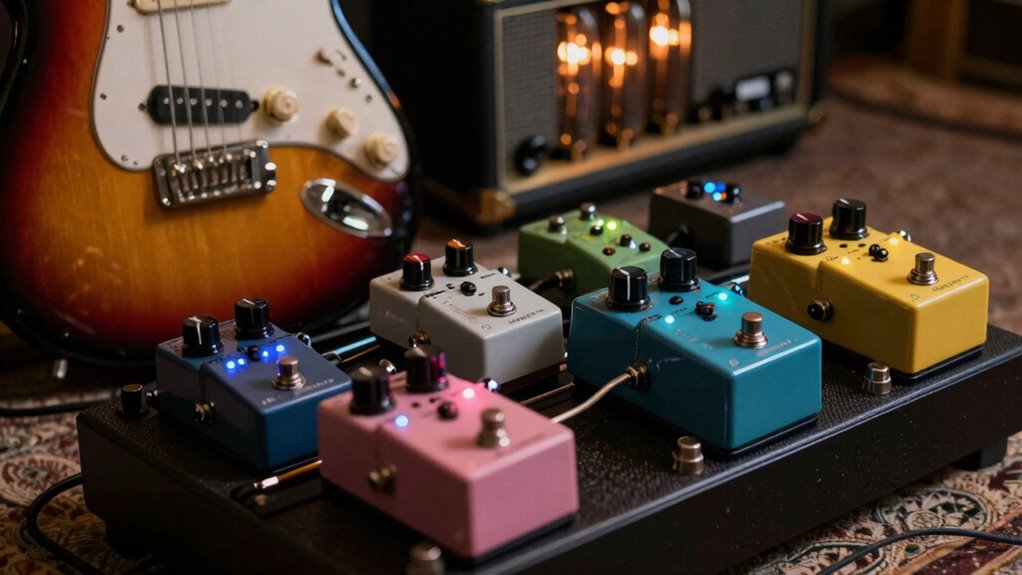
Effects and pedals are powerful tools that allow you to craft your guitar tone in unique ways. Where you place pedals in your signal chain—pedal placement—can dramatically influence your sound. For example, placing distortion before modulation effects creates a different texture than the reverse. Experiment with effect combinations to find your signature tone; stacking a delay with reverb, or adding a compressor before overdrive, can produce rich, complex sounds. Keep in mind that each pedal interacts with others, so subtle adjustments can lead to big changes. Don’t be afraid to experiment with different pedal orders and effect pairings until you discover what resonates with your style. Understanding effect interaction can help you better predict how your pedals will influence your tone, enabling more intentional sound shaping. Being aware of signal chain order is essential for achieving the desired tonal outcomes and optimizing your setup for your playing style. Additionally, exploring guitar tone settings can further refine your overall sound. Familiarizing yourself with pedal effects and their specific applications can also help you unlock new sonic possibilities, giving you even greater control over your tone. This approach helps you shape a tone that’s truly your own.
Save and Recall Your Favorite Settings
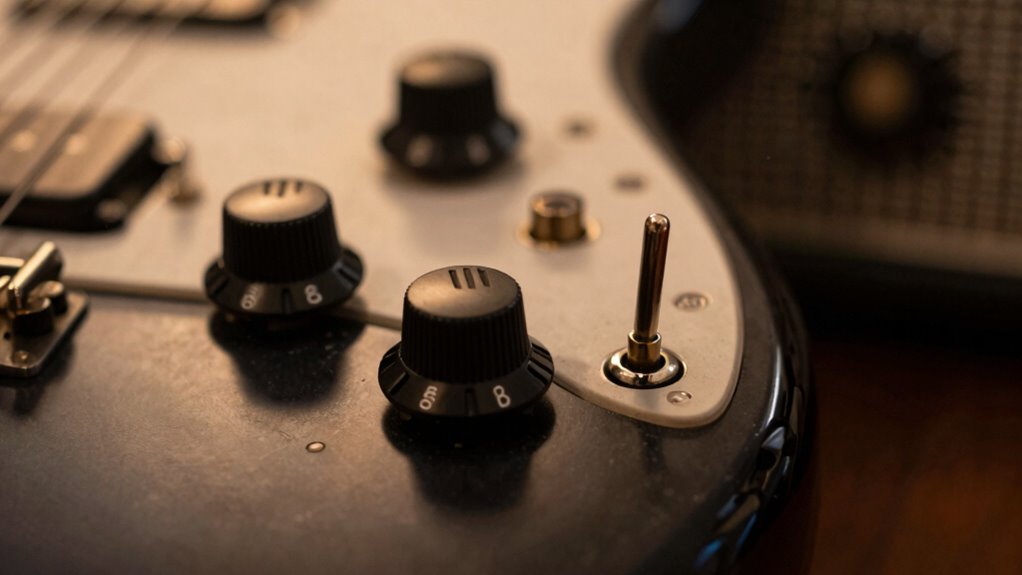
Saving and recalling your favorite settings is essential for maintaining consistency during performances and practice. With effective preset management, you can quickly switch between different tone snapshots tailored for various styles. Most multi-effects units or amplifiers allow you to save these settings as presets, making your setup seamless. Use the following table to organize your tone snapshots:
| Preset Name | Settings Description | Ideal Use Case |
|---|---|---|
| Clean | Bright, clear tone | Rhythm playing |
| Crunch | Slight overdrive | Lead sections |
| Solo | High gain, boost | Solos |
| Vintage | Warm, classic tone | Classic rock |
| Modern | Sharp, aggressive | Modern genres |
Managing presets guarantees quick recall and consistent sound quality, making your performances more professional.
Frequently Asked Questions
How Do Pickup Positions Influence Guitar Tone?
The pickup selector’s position impact is huge on your guitar tone. When you switch between pickup positions, you change which pickups are active, altering the sound. For example, the bridge position gives a brighter, sharper tone, while the neck offers warmer, fuller sound. Experiment with different positions to find your ideal tone. Your choice of pickup position directly influences the character and mood of your playing.
What Role Does Guitar Wood Type Play in Sound?
Think of your guitar’s wood as its voice—guitar wood type plays a vital role in shaping sound. Wood resonance and tonewood effects influence sustain, warmth, and brightness, making each instrument unique. Softer woods like mahogany deliver rich, full tones, while harder woods like maple produce brighter, sharper sounds. By choosing the right tonewood, you control your guitar’s character, turning simple plucks into expressive melodies that resonate deeply with your audience.
How Can I Reduce Unwanted Noise or Hum?
To reduce unwanted noise or hum, start by using high-quality cables, which minimize interference. Check your amplifier settings—lower the gain and adjust the EQ to reduce hiss. Make sure your guitar is properly grounded and avoid running cables near electrical devices. Using noise gates or pedals can also help cut out hum. Regularly clean your equipment and keep cables untangled to maintain a clean, noise-free sound.
What’s the Best Way to Practice Tone Adjustments?
Imagine turning a dial on your amp or pedal effects like revealing a new color in your palette. Start by experimenting with amp settings—adjust gain, treble, and bass—listening for clarity and warmth. Incorporate pedal effects gradually, noticing how they shape your sound. Practice by playing familiar riffs, tweaking settings each time, and trusting your ears. Over time, you’ll develop an instinct for the perfect tone, like a painter mastering their brush.
How Do Different Playing Techniques Affect Tone?
Your playing techniques, like finger positioning and pick attack, directly impact your tone. Placing your fingers closer to the fret, for example, produces a warmer sound, while pressing harder or softer with your pick changes attack dynamics, affecting brightness and attack. Experiment with different finger placements and pick pressure to find the tone that best expresses your style. Small adjustments can make a big difference in your overall sound quality.
Conclusion
Mastering these simple settings can unexpectedly transform your tone, turning a basic guitar into a signature sound. As you experiment with amp controls, EQ, and effects, you might stumble upon a tone that feels just right—like a lucky coincidence. Keep exploring, save those settings, and you’ll find your unique voice. Sometimes, the smallest tweaks lead to the biggest breakthroughs, reminding you that great tone is just a few adjustments away.