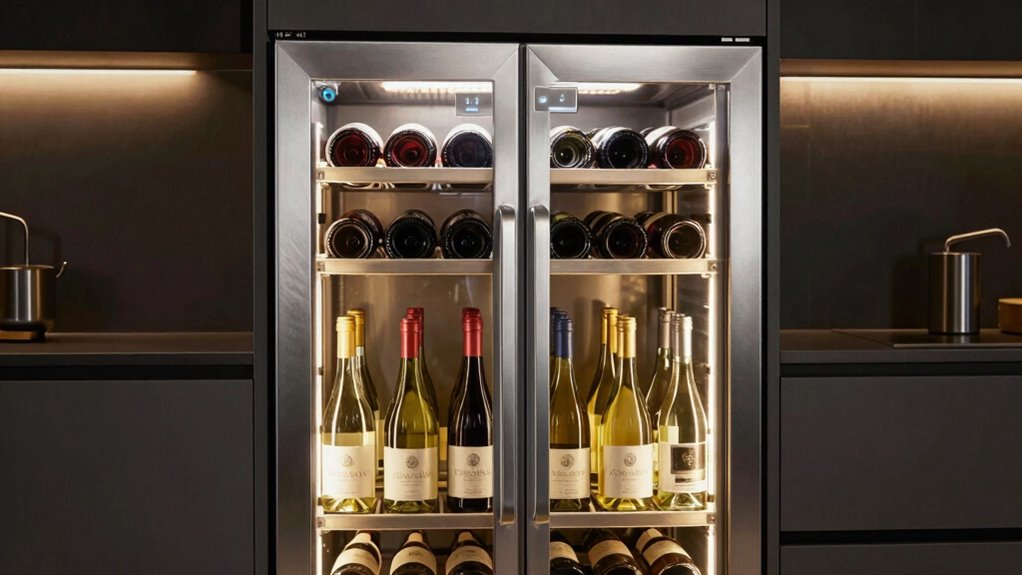

Dual-zone wine fridges are often misunderstood as providing perfectly stable temperatures, but in reality, they have inherent limitations due to compressor capacity and external factors like room temperature and frequent door openings. These influences cause fluctuations that make perfect temperature control impossible. Instead of expecting flawless conditions, focus on proper calibration and maintenance. If you want to learn how to optimize your wine storage despite these limits, there’s more you should know.
Key Takeaways
- Dual-zone wine fridges cannot guarantee perfect, stable temperatures due to compressor and environmental limitations.
- Temperature fluctuations are normal; consistent calibration and proper handling are more important than relying solely on zones.
- External factors like ambient temperature and door openings cause fluctuations, making “perfect” dual-zone control a myth.
- Proper storage depends on more than temperature; humidity, light, and handling also impact wine quality.
- Set realistic expectations and focus on regular calibration and best practices rather than assuming dual zones are foolproof.
What Is a Dual-Zone Wine Fridge and How Does It Work?

Ever wondered how wine enthusiasts keep different types of wine at their perfect temperatures in one fridge? That’s where a dual-zone wine fridge comes in. It’s designed for wine preservation by allowing you to set two separate temperature zones, ensuring each wine type stays ideal—red at one temperature, white at another. This setup relies heavily on precise temperature calibration to prevent spoilage and maintain quality. The fridge uses independent cooling systems or a shared system with adjustable temperature controls to achieve this. Proper temperature calibration is essential for maintaining wine quality and avoiding spoilage over time. Accurate temperature control not only preserves the wine’s flavor but also enhances the overall aging process by maintaining consistent conditions. Additionally, implementing proper calibration techniques helps prevent temperature fluctuations that can damage wine over extended periods. Achieving reliable temperature stability is crucial for long-term wine storage. By controlling each zone’s temperature separately, you can store your wines optimally, avoiding the risk of over or under-chilling. Additionally, accurate temperature control helps to optimize the aging process and preserve the wine’s intended taste profile. Proper calibration can also extend the lifespan of your wine collection by protecting it from temperature fluctuations. This dual-zone feature simplifies wine storage, making it easier to preserve wine flavor and aroma over time.
Common Myths About Dual Zones and Temperature Perfectness

Many believe that dual-zone wine fridges keep wine at perfect temperatures, but that’s not always the case. Temperature control isn’t flawless, and dual zones can be overhyped for casual wine enthusiasts. Remember, wine quality depends on more than just temperature; factors like storage conditions and handling matter too. Additionally, understanding the concept of Free Floating temperature zones can help set realistic expectations for your wine storage needs. Being aware of DIY tools and safety tips can also help you maintain your wine storage setup effectively and safely. Proper storage conditions are crucial for preserving wine quality over time. For example, monitoring your environment with thermometers can help you achieve more consistent storage results.
Temperature Control Is Not Perfect
While dual-zone wine fridges are marketed as providing perfect temperature separation, the reality is more complex. Achieving consistent temperature control depends heavily on proper fridge calibration and temperature accuracy. Even minor fluctuations can impact wine quality, especially if the fridge isn’t regularly calibrated. Factors like ambient temperature, door openings, and internal load can cause deviations from your set points. Here’s a quick look at what influences temperature control:
| Factor | Effect | Solution |
|---|---|---|
| Fridge calibration | Inaccurate temps | Regular calibration |
| Ambient temperature | Fluctuations in internal | Keep in a stable environment |
| Door openings | Temp swings | Minimize door opening |
| Internal load | Affects airflow | Avoid overfilling |
| Temperature accuracy | Consistency issues | Use a reliable thermometer |
Proper calibration is essential for maintaining stable internal temperatures and ensuring your wine ages gracefully. Additionally, understanding how dual zones are meant to function can help set realistic expectations about their capabilities. It’s also important to recognize that temperature fluctuations can occur even in well-calibrated units due to external factors, making perfect control challenging. Regular monitoring with a reliable thermometer can help detect these fluctuations early and maintain optimal conditions. Being aware of external influences like ambient temperature changes can further improve your ability to maintain consistent temperatures.
Dual Zones Are Overhyped
Dual-zone wine fridges are often promoted as the ultimate solution for storing different types of wine at their ideal temperatures, but this reputation can be misleading. Many believe these units guarantee perfect temperature accuracy across both zones, fueling storage myths about their effectiveness. In reality, achieving precise temperatures in dual zones isn’t always possible due to compressor limitations and environmental factors. You might think you’re optimizing storage, but temperature fluctuations can still occur, impacting wine quality over time. The hype around dual zones often oversimplifies the complexities of wine storage. Instead of relying solely on the number of zones, focus on high-quality insulation and consistent temperature control. Proper temperature management is essential to ensure your wines stay better preserved, regardless of whether your fridge has one or multiple zones. Additionally, understanding the limitations of compressor technology can help set realistic expectations for temperature stability in dual-zone units. Recognizing the importance of cultural artifacts in Indonesian decor can also inspire you to choose storage solutions that blend aesthetics with functionality, enhancing your overall space. Good insulation and environmental factors also play a crucial role in maintaining stable temperatures in wine storage units. Moreover, incorporating advanced cooling systems can further improve temperature consistency and protect your collection.
Wine Quality Doesn’t Depend Solely on Temp
Contrary to popular belief, wine quality isn’t determined solely by maintaining a perfect temperature. While temperature control influences wine aging and flavor preservation, other factors matter too. Proper storage, humidity, light exposure, and bottle handling play vital roles in keeping wine at its best. Focusing only on temperature can lead you to overlook these aspects. Here’s a quick overview:
| Factor | Impact | Importance |
|---|---|---|
| Wine aging | Affects taste over time | Proper aging enhances flavor |
| Temperature | Preserves freshness | Prevents spoilage |
| Humidity | Maintains cork integrity | Avoids evaporation |
Additionally, humidity levels within your storage area are crucial for preventing corks from drying out or becoming moldy, which can compromise your wine. Ensuring optimal outdoor living conditions can also contribute to a better wine storage environment, especially if you have an outdoor wine cellar or patio space. Proper storage environment and how it interacts with temperature can help you create a more effective wine preservation system. Incorporating a flat iron bike or similar equipment in your setup can assist with maintaining stable conditions in larger storage areas.
How to Properly Set Temperatures for Reds and Whites?
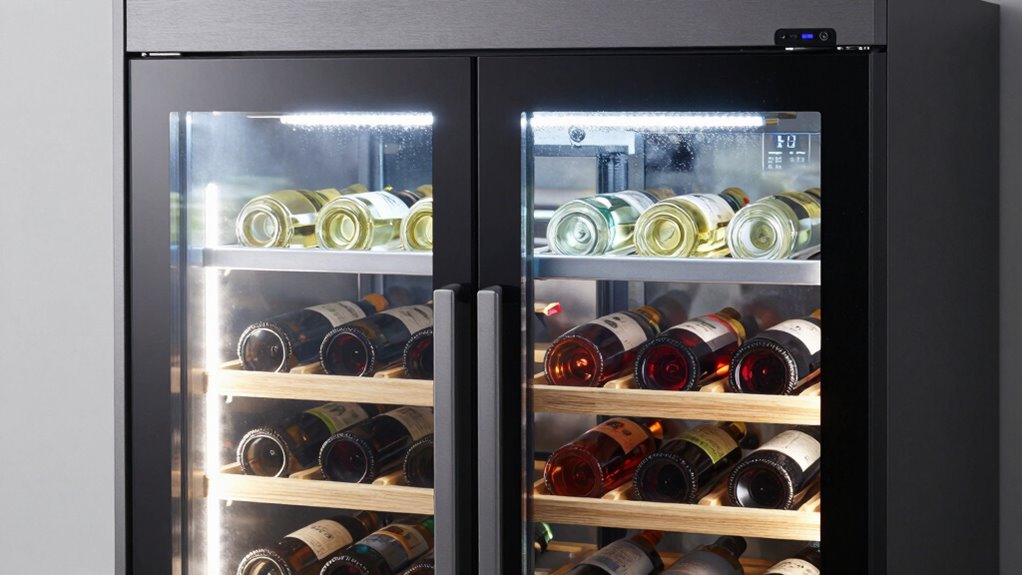
Setting the right temperatures for reds and whites makes certain you enjoy each wine at its best. You’ll want to take into account ideal serving temperatures, but also adjust based on your personal taste. Keeping a consistent temperature and monitoring your fridge helps you maintain the perfect environment over time.
Ideal Serving Temperatures
To enjoy your wines at their best, it’s important to serve reds and whites at their ideal temperatures. Properly set temperatures enhance wine pairing and optimize glass temperature, making each sip more enjoyable. For reds, aim for about 60-65°F, which unblocks rich aromas and balanced tannins. Whites should be served cooler, around 45-50°F, preserving crispness and freshness. Visualize:
- A glass of Pinot Noir, slightly warmed, revealing its complex layers
- A chilled Sauvignon Blanc, refreshing and zesty
- A robust Cabernet Sauvignon, perfectly balanced at the right temperature
Maintaining these temperatures guarantees your wines taste as intended, elevating your overall experience. Avoid serving reds too cold or whites too warm, as this can dull flavors and obscure nuances. Proper temperature settings maximize your wine’s potential and enhance every glass.
Adjusting for Personal Preference
While standard serving temperatures provide a great starting point, adjusting them to suit your personal taste can greatly enhance your wine experience. Don’t be afraid to tweak the settings slightly; your preference for slightly warmer or cooler reds and whites can make a difference. Keep in mind that frequent temperature fluctuations can affect your wine’s aging process, so make small adjustments gradually. Humidity control is also essential—maintaining proper humidity levels helps prevent corks from drying out, which could compromise your wine’s quality. When customizing your fridge, aim for a balance that preserves the wine’s integrity while aligning with your personal flavor preferences. Regularly monitor your settings to avoid sudden changes that could impact your wine’s taste and longevity.
Consistency and Monitoring
Maintaining consistent temperatures in your wine fridge is essential for preserving the quality and aging potential of your wines. Fluctuations can hinder wine aging and damage delicate whites and reds. To ensure stability, monitor your fridge regularly with a reliable thermometer and avoid frequent door openings. Consider the glass insulation of your fridge, which helps uphold a steady temperature by reducing external temperature swings. Visualize your wine storage as a protected environment:
- The interior remains cool and steady, like a serene cave
- The glass insulation minimizes external temperature influences
- Proper monitoring prevents sudden shifts that can spoil your wine’s aging process
Tips for Fine-Tuning Your Wine Fridge’s Temperature Settings

Fine-tuning your wine fridge’s temperature settings is essential for preserving the quality and flavor of your wines. Proper wine storage depends on accurate temperature calibration to prevent fluctuations that can harm your collection. Start by setting the fridge to the recommended range for your wine type—usually around 45-55°F. Use a reliable thermometer to verify the internal temperature, as built-in gauges can be inaccurate. Adjust the thermostat gradually, giving the fridge time to stabilize after each change. Avoid frequent temperature shifts, which can disturb wine aging. Keep the door closed as much as possible to maintain consistent conditions. Regularly check your calibration and make minor adjustments as needed, ensuring your wine storage environment remains ideal for preserving flavor and aroma.
Monitoring and Maintaining Consistent Wine Storage Conditions
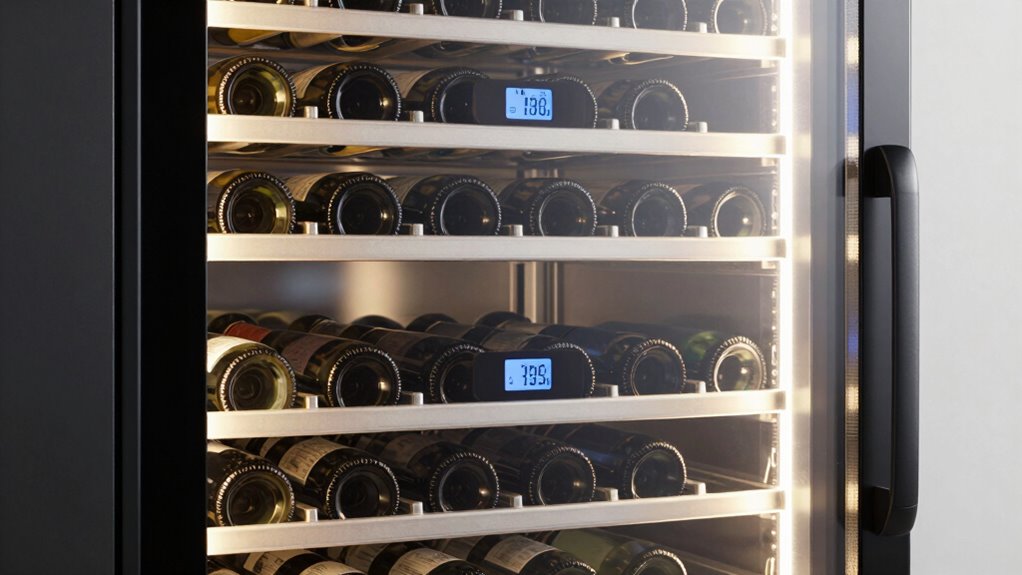
Once you’ve set your wine fridge’s temperature correctly, the next step is to regularly monitor the storage conditions to guarantee they stay stable over time. Consistent conditions prevent unwanted temperature fluctuation, which can harm your wine’s quality. Use a reliable thermometer to check readings daily. Keep an eye on the environment around your wine cellar or fridge, as external factors can influence internal temperatures. Visualize your storage space with:
- A steady hum of the compressor, indicating consistent cooling
- Shelves that remain dry and free of moisture buildup
- No sudden changes in ambient room temperature affecting the fridge
Mistakes to Avoid When Using a Dual-Zone Wine Fridge

Using a dual-zone wine fridge can optimize storage, but many users make simple mistakes that compromise their wines’ quality. One common error is ignoring wine bottle labels, which helps you keep track of each wine’s ideal storage zone. Placing reds and whites in the wrong sections can lead to temperature fluctuations, affecting cork preservation and risking spoilage. Avoid overfilling the fridge, as limited airflow can cause uneven temperatures that harm your wines. Additionally, don’t forget that different wines require specific conditions; mixing them improperly can degrade flavor. Finally, neglecting to check seals and door gaskets can lead to temperature inconsistencies. Being mindful of these mistakes ensures your wines stay at their best, preserving both cork integrity and overall quality.
Practical Steps to Ensure Your Wine Stays at the Ideal Temperature
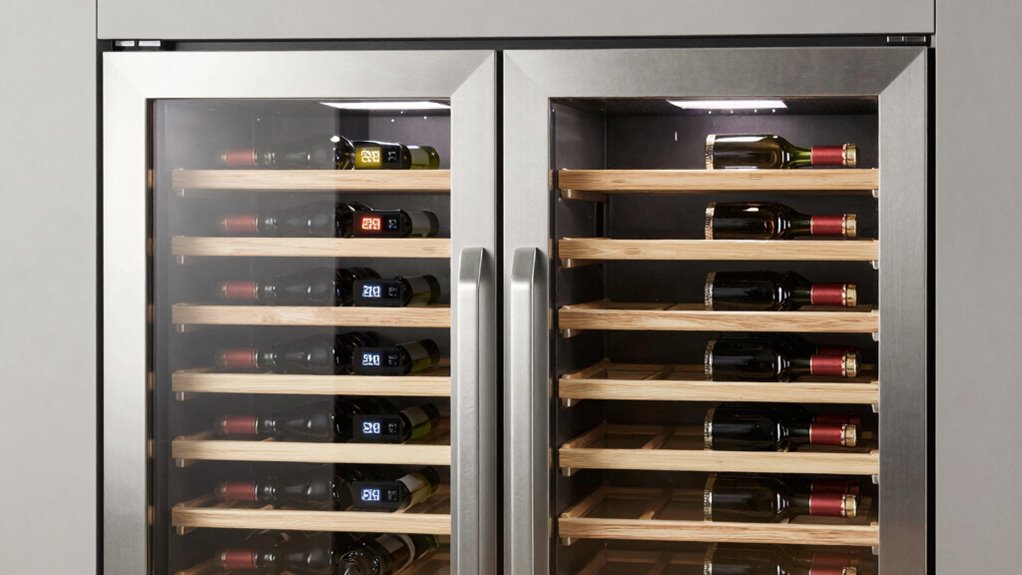
Keeping your wine at the perfect temperature requires consistent effort and attention to detail. To achieve this, consider your cellar design carefully—place your fridge in a cool, stable environment away from heat sources. Regularly monitor the temperature with a reliable thermometer, adjusting settings as needed. When planning wine pairing, remember that serving temperature enhances flavor; reds are best slightly below room temperature, whites chilled but not ice-cold. To keep things consistent, avoid frequent door openings and ensure your fridge’s seals are tight. Visualize your wine storage as a sanctuary—imagine:
Maintain a cool, stable environment, minimize disturbances, and ensure proper placement for optimal wine temperature.
- A climate-controlled room that maintains steady warmth
- A well-organized space with minimal disturbance
- Proper placement away from direct sunlight and heat sources
These steps help your wine stay at the ideal temperature, preserving its quality and taste.
Frequently Asked Questions
Can Dual-Zone Wine Fridges Be Used for Temperature-Sensitive Foods?
Yes, you can use dual-zone wine fridges for temperature-sensitive foods, but it’s not ideal for food safety. These fridges aren’t designed for consistent temperature stability needed for perishables, so they might fluctuate and risk spoilage. If you want to keep food safe and fresh, it’s better to use a dedicated refrigerator. Dual-zone wine fridges excel at maintaining precise temperatures for wine, not for ensuring food safety.
How Often Should I Calibrate My Wine Fridge’s Thermometer?
To keep your wine fridge’s thermometer accurate, calibrate it at least once a year. Regular calibration ensures thermometer accuracy, preventing temperature mishaps that could spoil your wine. If your fridge experiences frequent temperature swings or you notice inconsistent readings, calibrate it more often—every six months. Consistent calibration maintains precise temperature control, so your wine stays perfect. Don’t delay, and keep your fridge functioning flawlessly with routine calibration checks.
Do Dual Zones Consume More Energy Than Single-Zone Units?
Dual zone wine fridges typically consume more energy than single-zone units because they need to maintain two separate temperatures, which can impact energy efficiency. However, they often provide better temperature stability across both zones, ensuring your wines are stored perfectly. If energy efficiency is your priority, a well-calibrated single-zone fridge might be better, but if you want flexibility, dual zones are worth the extra energy use.
What Is the Lifespan of a Typical Dual-Zone Wine Fridge?
A typical dual-zone wine fridge lasts around 10 to 15 years with proper wine maintenance. Your fridge’s durability depends on regular cleaning, keeping it in a stable environment, and avoiding overloading. To extend its lifespan, guarantee you maintain proper temperature settings and check seals and components periodically. With good care, your dual-zone fridge can provide years of reliable wine storage, making it a worthwhile investment.
Are There Specific Brands Known for More Accurate Dual-Zone Temperature Control?
You’ll find that brands like Wine Enthusiast, Kalamera, and Avanti are known for their strong reputation and reliable temperature accuracy. These brands invest in advanced cooling technology, ensuring precise control across both zones. When shopping, look for models with good reviews highlighting consistent temperature performance. By choosing a reputable brand, you’re more likely to enjoy a dual-zone wine fridge that maintains ideal conditions for your wines.
Conclusion
Think of your wine fridge as a carefully tuned orchestra, with each zone playing its perfect note. When you set the right temperatures, your wines age gracefully, like a symphony reaching its crescendo. Avoiding common myths and fine-tuning your settings guarantees every bottle hits its peak. Just like a master conductor, you control the harmony—keeping your wines tasting their best, no matter the occasion. Cheers to perfectly stored wines every time!