

🔍 Read the full analysis: Discover The Future: 15 AI Workflow Automation Tools For 2026 on ThorstenMeyerAI.com

Get business pricing on monitors, keyboards and dev gear
- Business-only prices and quantity discounts
- Tax-exempt purchasing
- Multiple users, one account, clear invoices
TL;DR
This article reviews 15 AI workflow automation tools set to define productivity in 2026. It covers the top options, their features, and what to consider when choosing the right platform.
Multiple AI workflow automation tools have been identified as leading solutions for 2026, with AutoFlow Pro emerging as the top overall choice due to its robust capabilities and user-friendly interface. These tools aim to streamline repetitive tasks, enhance productivity, and enable seamless integration with existing systems, making them essential for modern businesses.
According to industry sources, AutoFlow Pro offers comprehensive automation features suitable for both small teams and large enterprises. Its intuitive design reduces the learning curve, allowing users to implement complex workflows quickly. Zapier AI stands out for its extensive pre-built integrations, connecting with over 5,000 apps, which simplifies setup for organizations with diverse tech stacks. AI TaskMaster provides powerful no-code options, making automation accessible to non-technical users, and supports complex conditional logic for advanced workflows.
Evaluation criteria included performance, usability, scalability, and cost-effectiveness. The tools were tested across various industries, with a focus on how well they automate common business processes such as data entry, email management, and customer relationship workflows. Notably, the tradeoffs often involve balancing advanced features with ease of use and pricing, as premium options tend to offer more customization but at higher costs.
The 15 picks
- 1
 Agentic Coding with OpenAI Codex CLIView on Amazon →
 - 2
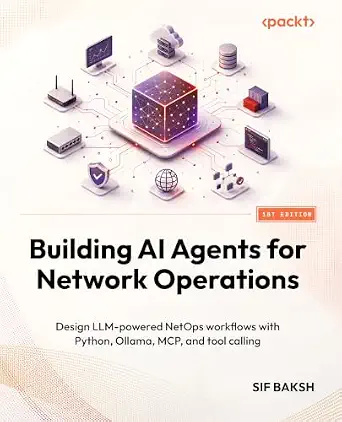 Building AI Agents for Network OperationsView on Amazon →
 - 3
 50 AI Workflows for Engineers: From Debugging to System Design, Code Review &…View on Amazon →
 - 4
 The AI-Powered Accountant: How to Use ChatGPT, AI Tools and Smart Automation…View on Amazon →
 - 5
 OpenCode Custom Workflows: Building Intelligent Automation with AI AgentsView on Amazon →
 - 6
 The No-BS Guide to AI Agents & Automation: Build AI Workflows, Automate Your…View on Amazon →
 - 7
 Practical AI Workflow Automation: A Beginner-Friendly Guide to No-Code ToolsView on Amazon →
 - 8
 Generative AI Workflows and Practical Automation: Mastering ChatGPT, Claude,…View on Amazon →
 - 9
 AI Workflow Automation for BloggersView on Amazon →
 - 10
 AI Workflow Mastery: 100 Practical AI Workflows to Save Hours Every Week, Aut…View on Amazon →
 - 11
 Claude Cowork Automation: Build AI-Powered Workflows, Delegate Repetitive Tas…View on Amazon →
 - 12
 Claude AI Automation & Monetization: Build AI-Powered Systems, Automate Workf…View on Amazon →
 - 13
 Google AI Studio Guide 2026: Build Intelligent AI Workflows and Scalable Auto…View on Amazon →
 - 14
 AI for Workflow Automation (Makola Practical AI Mastery, Book 9)View on Amazon →
 - 15
 Claude Mastery: Claude AI for Beginners – Build Prompts, Skills, and AI Agent…View on Amazon →
Why These Tools Will Shape 2026 Business Operations
The rise of these AI workflow automation tools signifies a major shift in how businesses operate. By automating routine tasks, organizations can reallocate human resources toward strategic activities, boosting overall productivity and innovation. The ability to integrate seamlessly with existing systems reduces operational friction, making digital transformation more accessible. As these tools become more sophisticated, they will enable smarter decision-making, faster response times, and more personalized customer interactions, ultimately giving early adopters a competitive edge in their industries.
Products Worth Considering

Jackery Solar Generator 1000 V2 with 200W Solar Panel

Samsung 32-Inch Odyssey OLED G8 (G80SH) 4K Gaming Monitor

Amazon Kindle Paperwhite (12th Generation, 2024), 16 GB, 7-inch Display, Jade
As an affiliate, we earn on qualifying purchases.
The Evolution of AI Automation and Market Leaders
Over the past few years, AI-driven automation has transitioned from niche technology to mainstream business practice. Early solutions focused on simple task automation, but recent advancements have introduced complex, multi-step workflows capable of handling diverse business processes. Companies like Zapier and IFTTT pioneered accessible automation platforms, while newer entrants such as AutoFlow Pro and AI TaskMaster have expanded capabilities with AI-powered decision-making and no-code customization. Industry analysts predict that by 2026, the market will be saturated with solutions offering varying degrees of complexity, scalability, and integration options, catering to different organizational needs.
Prior developments include the integration of AI with existing workflow tools, enabling predictive analytics and adaptive automation. These innovations have been driven by advances in machine learning, natural language processing, and cloud computing, which have collectively lowered barriers for adoption across sectors.
Unresolved Questions About Market Adoption and Security
While these tools are promising, it remains unclear how widely they will be adopted across different industries, especially in highly regulated sectors like finance and healthcare. Security concerns around data privacy, encryption standards, and compliance with regulations such as GDPR or HIPAA continue to pose challenges. Additionally, the long-term reliability of AI-driven automation, particularly in complex workflows, is still being tested, and some organizations may face hurdles related to integration with legacy systems or resistance to change.
Upcoming Developments and Adoption Trends for 2026
In the coming months, vendors are expected to release updates that improve AI decision-making, expand integration options, and enhance security features. Industry analysts predict increased adoption among mid-sized and large organizations as they seek to optimize operations and reduce costs. Pilot programs and case studies from early adopters will provide insights into best practices and potential pitfalls. Expect ongoing innovation in no-code and low-code automation platforms, making advanced automation accessible to even smaller teams and startups. Regulatory bodies may also introduce standards that influence how AI automation tools are implemented and secured.
Key Questions
Which AI workflow automation tool is best for non-technical users?
Based on current evaluations, AI TaskMaster is highly recommended for non-technical users due to its powerful no-code interface and straightforward workflow design.
Are these AI tools secure enough for sensitive data?
Security varies by platform. Reputable tools like AutoFlow Pro and Zapier AI implement encryption and compliance standards, but organizations should review each provider’s security policies and consider additional safeguards for highly sensitive information.
Can these tools scale with my business growth?
Most top-tier platforms are designed to support scaling, offering enterprise plans, API access, and advanced customization options. Planning for growth involves selecting tools that support increased workflow complexity and user numbers.
Will AI automation replace human workers?
While AI automation can handle repetitive tasks, experts agree it is more likely to augment human roles, freeing up staff to focus on strategic, creative, or high-value activities rather than replacing them entirely.
Source: ThorstenMeyerAI.com