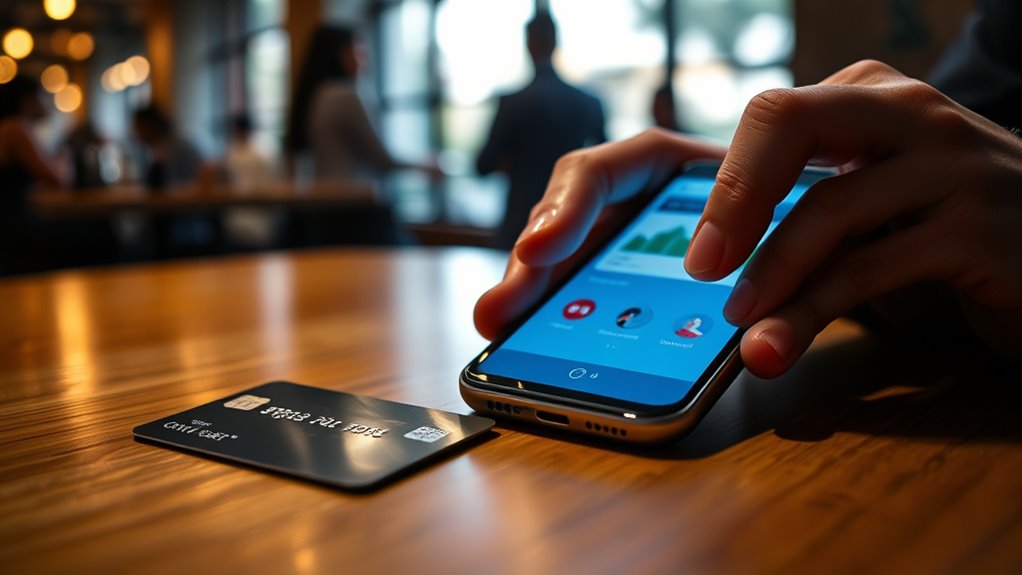

Digital payments work by streamlining how you handle transactions, moving from cash to credit cards and mobile wallets. When you pay, your device sends encrypted information securely to the merchant’s system. This guarantees your financial data stays protected from fraud. Payment processors verify that you have sufficient funds, completing transactions in seconds. Mobile wallets enhance this process with unique codes, adding an extra layer of security. Want to know more about how this all fits together?
Key Takeaways
- Digital payments have evolved from cash to methods like credit cards and mobile wallets, enhancing convenience and security for users globally.
- Payment information is encrypted during transactions, ensuring data is secure and unreadable to protect against fraud.
- The payment processing workflow involves the device sending information to the merchant’s system, which verifies funds and completes transactions in seconds.
- Mobile wallet transactions streamline the process, using unique, encrypted codes to enhance security without exposing card details.
- AI technologies improve fraud detection and transaction security, continuously adapting to identify suspicious activities in real-time.
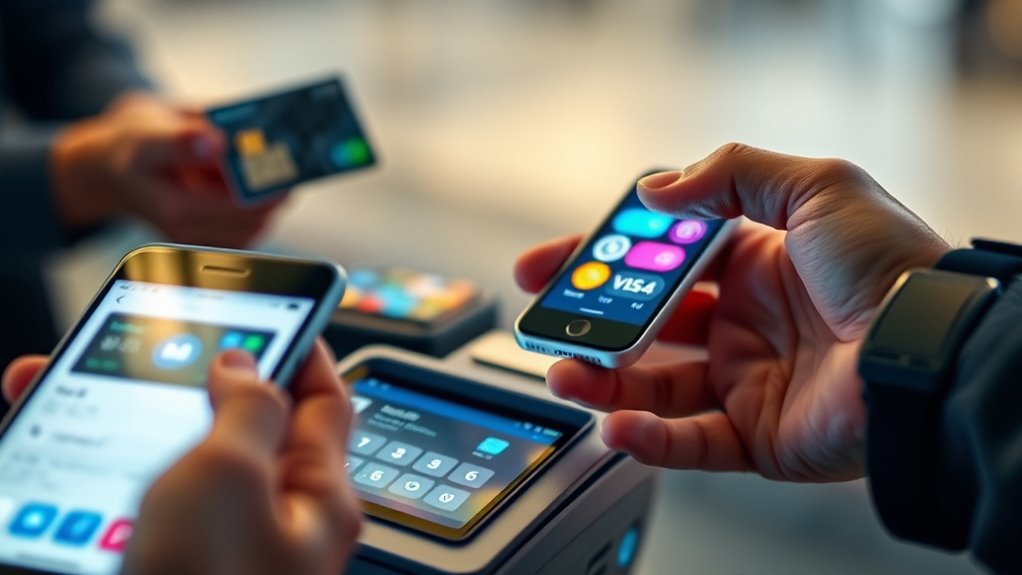
Have you ever wondered how digital payments have transformed the way we handle money? The rise of credit cards, mobile wallets, and other digital payment methods has made transactions faster and more convenient, reshaping our everyday financial interactions. You’re no longer limited to cash or physical checks; instead, you can make purchases with just a tap or a click. This shift isn’t just about convenience; it’s also about security, thanks to innovations like cryptography security and sophisticated transaction processing systems.
When you make a payment using a credit card or a mobile wallet, a complex process kicks in behind the scenes. First, your device sends your payment information to the merchant’s point-of-sale system. This data includes your card number and other essential details, and it’s here that cryptography security steps in. Your information is encrypted, meaning it’s turned into a secure code that makes it nearly impossible for anyone to read or misuse it. This level of security gives you peace of mind, knowing that your financial data is protected from potential fraud.
When you pay with a card or mobile wallet, your information is securely encrypted, protecting you from fraud and ensuring a smooth transaction.
After your information is encrypted, it’s sent to the payment processor, which verifies that you have sufficient funds or credit to complete the transaction. This is where transaction processing comes into play. It involves a series of checks and balances, ensuring that everything is legitimate. The processor communicates with your bank or card issuer to confirm that the funds are available. This entire process happens in seconds, allowing you to complete your purchase without a hitch.
If you’re using a mobile wallet, the process is similar but even more streamlined. When you tap your phone at a checkout terminal, the wallet app quickly generates a unique transaction code. This code is encrypted and sent to the merchant’s system, further enhancing security. Not only does this keep your card details safe, but it also speeds up the entire transaction process, making it more efficient than ever. Moreover, the integration of AI security technologies into payment systems helps to continually improve fraud detection and enhance user protection.
Frequently Asked Questions
What Are the Security Risks Associated With Digital Payments?
When you use digital payments, you’re exposed to security risks like fraud and data breaches. To protect yourself, you should always check for fraud prevention measures in place. Confirm the platform uses data encryption to secure your information during transactions. Be cautious of public Wi-Fi and only make purchases on secure networks. Staying informed and vigilant will help reduce the risks associated with digital payments and keep your financial information safe.
How Do Digital Payments Impact Small Businesses?
Digital payments are like a gust of fresh air for small businesses, giving them the agility to thrive. With mobile integration, you can streamline transactions, making it easier for customers to pay on-the-go. This convenience boosts sales and keeps customers coming back. Plus, by harnessing customer data from these transactions, you can tailor your marketing efforts, providing personalized experiences that resonate. Overall, digital payments can transform your business into a vibrant hub of activity.
Can Digital Payments Be Used Internationally?
Yes, you can use digital payments internationally. When you make a purchase abroad, be aware of cross border fees that might apply. These fees can vary depending on your payment provider. You’ll also need to take into account currency conversion rates, as they can affect the final amount you pay. Always check with your provider for the best rates and fees to ensure a smooth transaction while traveling or shopping online from another country.
What Technologies Enable Contactless Payments?
Contactless payments are like waving a magic wand—quick and seamless! NFC technology enables this convenience by allowing devices to communicate wirelessly when they’re close together. You’ll find it in smartphones and payment terminals, making transactions effortless. Additionally, tokenization methods keep your information protected by replacing sensitive data with unique identifiers. This combination ensures that your payments are not only fast but also safe, giving you peace of mind while you shop.
How Do Rewards Programs Work With Digital Payment Methods?
Rewards programs with digital payment methods let you earn reward points for every transaction you make. When you use your credit card or mobile wallet, those points accumulate, often tied to loyalty programs from retailers or service providers. You can redeem these points for discounts, freebies, or special offers. By choosing specific payment methods, you maximize your rewards and enhance your shopping experience, making every purchase more rewarding.
Conclusion
In today’s fast-paced world, digital payments have become the lifeblood of commerce, much like a river flowing through a bustling city. Just as that river connects various neighborhoods, credit cards and mobile wallets bridge the gap between buyers and sellers, making transactions seamless and efficient. With over 2.1 billion digital wallet users globally, it’s clear this shift isn’t just a trend—it’s a revolution. Embrace this change, and watch how your financial landscape transforms for the better.