Understanding the importance of riser cables in your building is essential. These cables facilitate seamless communication between floors and are necessary for maintaining fire safety standards. Riser cables, also known as CMR cables, are designed with fire-resistant materials to enhance safety. Proper installation is key for fire resistance and low smoke toxicity. They come in shielded and unshielded variants, with shielded types like F/UTP or FTP protecting against electromagnetic interference. Selecting the right cable based on signal loss, data transmission quality, and specific applications is crucial. Learning more about riser cables will help you make informed decisions for your building's communication infrastructure.

Get business pricing on monitors, keyboards and dev gear
- Business-only prices and quantity discounts
- Tax-exempt purchasing
- Multiple users, one account, clear invoices
Key Takeaways
- Essential for seamless communication between building floors.
- Designed with fire-resistant materials for safety.
- Proper installation crucial for fire resistance.
- Selection based on signal loss and data quality.
- Crucial for efficient network functioning.
Importance of Riser Cables
Riser cables are essential for facilitating seamless communication between different floors in buildings. These cables, also known as CMR cables, are important for transmitting data, audio, and video signals efficiently.
One key aspect of riser cables is their fire resistance. They're designed with fire-resistant materials to enhance safety in the event of a fire, ensuring minimal risk and damage. Proper installation of riser cables is essential as it not only promotes fire resistance but also maintains low smoke toxicity levels, critical for the safety of building occupants.
When considering riser cables, factors such as signal loss and data transmission quality must be taken into account. Opting for the right cable, whether it be Plenum cables or copper ethernet cables, based on specific applications and environmental conditions, is necessary for excellent performance.
Types of Riser Cables

Interested in learning about the diverse options available for enhancing communication networks within buildings?
Riser cables come in various types to cater to different speed and application needs. These cables can be shielded or unshielded, with shielded variants like F/UTP or FTP providing protection against electromagnetic interference.
CMR-rated riser cables are suitable for in-wall and riser installations, ensuring both performance and fire safety compliance. Commonly used in vertical installations between floors without plenum spaces, riser cables like Cat5e, Cat6, Cat6A, Cat7A, and Cat8 offer a range of choices.
It's important to select the right riser cable based on the environment, speed requirements, and compatibility with connectors such as RJ45 and keystone jacks. Understanding the differences between shielded and unshielded cables, as well as the advantages of CMR-rated cables, can help in making informed decisions for the best network performance within your building.
Fire Safety Considerations

When considering fire safety with riser cables, it's important to focus on the materials used and their fire-resistant properties. Materials like flame-resistant PVC and Polyolefin insulation play a key role in enhancing cable performance and fire resistance.
Proper installation of these cables is vital to guarantee they meet safety and performance standards, ultimately safeguarding building occupants and infrastructure.
Fire-Resistant Riser Materials
Enhancing fire safety in buildings involves selecting riser cables constructed with fire-resistant materials such as flame-retardant PVC and Polyolefin insulation. These materials play an essential role in preventing the spread of flames and enhancing cable performance during fire incidents.
Riser cables with a fire-retardant rating (CMR) are specifically designed for building installations, meeting safety regulations and ensuring compliance with standards. By using riser cables with fire-resistant properties, you can greatly reduce the risk of fire-related incidents in your building.
When considering fire safety, it's important to prioritize the use of riser cables with flame-retardant PVC and Polyolefin insulation. These materials not only improve the overall safety of the building but also provide peace of mind knowing that the cables are designed to withstand fire hazards effectively.
Proper Cable Installation
Properly installing riser cables is essential for maintaining fire safety standards in buildings. When it comes to cable installation, there are key considerations to guarantee safety:
- Adhering to Standards: Riser cables must be installed following specific guidelines to guarantee fire resistance and prevent potential hazards.
- Separate Closets: Telecommunication closets should be distinct from electrical closets to avoid interference and maintain the integrity of the cabling system.
- Elevated Connections: Riser cables are designed to pass through designated spaces using elevated connections, minimizing the risk of damage and enhancing safety measures.
Installation Guidelines

For successful installation of riser cables, prioritize placement in non-plenum areas between floors to guarantee peak performance. It's important to follow specific installation guidelines to ensure the best performance of the cables.
Telecommunication closets should be separate from electrical closets during installation to prevent interference. Proper identification of cables is vital to avoid confusion and potential errors.
According to standards, connections should be elevated above floor level in assigned closets for better accessibility and maintenance. These guidelines provide detailed instructions on how to install riser cables effectively.
By adhering to these recommendations, you can create a reliable network infrastructure within your building. Remember to plan the layout carefully, label cables accurately, and maintain a clear separation between telecommunication and electrical components.
Following these guidelines will help you achieve a seamless installation process and maximize the performance of your riser cables.
Benefits of Riser Cables

Riser cables play an essential role in facilitating vertical communication between different floors within a building. These cables aren't just wires; they're important components of the building infrastructure.
Here are some key benefits of riser cables:
- Ensuring Compliance: Riser cables are designed to meet fire safety regulations, preventing the spread of flames between floors and ensuring the safety of occupants.
- Maintaining Signal Strength: They help maintain signal strength over long distances, ensuring efficient data transmission throughout the building.
- Connecting Devices: Riser cables are essential for connecting various devices like computers, routers, and other equipment on different floors, enabling seamless communication and operation within the building.
Whether in data centers or commercial buildings, choosing the right riser cables is crucial for efficient transmission, safety, and proper functioning of the building's communication network.
Maintenance and Upkeep
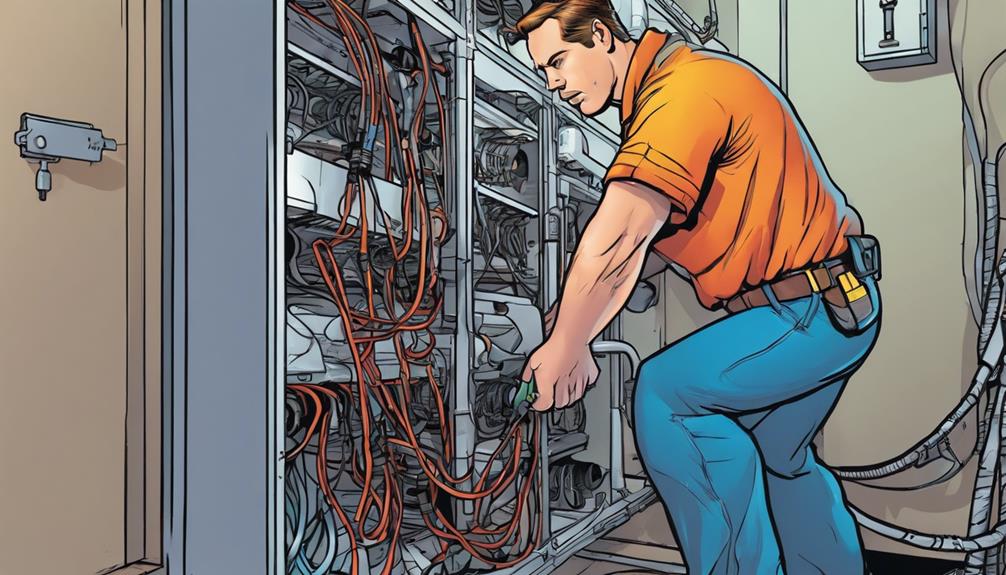
To guarantee the peak performance and longevity of your building's communication network, regular maintenance and upkeep of the riser cables are vital. Proper maintenance involves checking for wear and tear, confirming correct installation, and addressing any issues promptly. By conducting routine inspections and testing, you can identify potential problems early on, preventing signal loss, connectivity issues, and safety hazards. Timely repairs and upgrades are essential to avoid costly downtime and disruptions in communication. Below is a table summarizing the key points related to the maintenance and upkeep of riser cables:
| Maintenance and Upkeep of Riser Cables | |
|---|---|
| Check for wear and tear | Confirm proper installation |
| Address issues promptly | Prevent signal loss |
| Conduct routine inspections | Avoid connectivity issues |
| Identify problems early on | Mitigate safety hazards |
| Perform timely repairs and upgrades | Prevent costly downtime |
Future Trends in Riser Cables

Advancements in materials and technology are shaping the future trends of riser cables, offering improved fire resistance and performance capabilities. As the demand for higher data speeds and bandwidth increases, innovation in riser cable technology is on the rise.
Integration of smart building technologies is also influencing the design and capabilities of riser systems. Here are three key trends to look out for:
- Development of Shielded Riser Cables: Enhanced shielding technology will help minimize interference in communications riser installations.
- Focus on Fire Resistance: Manufacturers are working on new plenum-rated riser cables with advanced fire-resistant properties to enhance safety in buildings.
- Adaptation to Smart Building Technologies: Riser cables will need to support the increasing connectivity demands of smart building systems, driving the need for higher performance UTP cables.
Frequently Asked Questions
What Is the Purpose of a Riser Cable?
The purpose of a riser cable is to facilitate vertical communication between floors in a building. It enables the transmission of data, audio, and video signals, ensuring seamless connectivity and efficient operations within the structure.
What Is the Advantage of Riser?
Having riser cables in your building is a game-changer. They boost connectivity between floors, ensuring smooth data, audio, and video transmission. Plus, did you know that buildings with riser cables have seen a 20% increase in operational efficiency?
What Does Riser Rated Cable Mean?
Riser rated cable means cables designed for vertical applications within buildings. They transmit data, audio, and video signals between floors. Constructed with flame-retardant materials like PVC, they meet safety standards in areas without plenum spaces.
What Is Cat6 Riser Cable Used For?
In your building, Cat6 Riser Cable acts as the vertical lifeline for data, audio, and video signals between floors. It guarantees seamless connectivity, supporting telecommunication networks while prioritizing safety with fire-resistant materials.
Conclusion
In summary, recognizing the significance of riser cables in your building is vital for guaranteeing efficient communication and safety.
By selecting the right type of riser cable, following proper installation guidelines, and staying proactive with maintenance, you can enhance the functionality and longevity of your building's communication network.
Keep in mind the fire safety considerations and future trends in riser cables to stay ahead of potential issues and ensure a seamless operation for years to come.
Fall Picks
fall essentials
As an affiliate, we earn on qualifying purchases.