
TL;DR

Get business pricing on monitors, keyboards and dev gear
- Business-only prices and quantity discounts
- Tax-exempt purchasing
- Multiple users, one account, clear invoices
Decker, a new platform, has been launched to build on the legacy of Hypercard and classic macOS. It aims to provide developers with tools reminiscent of early computing environments, blending nostalgia with modern capabilities.
Decker, a new software platform announced in March 2024, aims to revive the legacy of Hypercard and classic macOS, offering developers a toolkit inspired by early Macintosh environments with modern enhancements. This development is notable because it seeks to blend nostalgia with current technology, potentially influencing future software design.
Decker is a platform that builds on the conceptual foundations of Hypercard, the pioneering visual programming environment from Apple, and the user-friendly interface style of classic macOS. The platform was officially unveiled through a press release and demonstration at the developer conference in March 2024, highlighting its focus on enabling creative, interactive applications with minimal coding.
According to Decker’s creators, the platform offers a visual scripting system, a drag-and-drop interface, and a simplified development environment reminiscent of Hypercard’s card stacks, but with modern features such as cloud integration and cross-platform support. The company claims it aims to empower both hobbyists and professional developers to build interactive content quickly.
While specific technical details are still emerging, Decker’s team emphasizes that their platform is designed to be accessible, flexible, and capable of supporting multimedia-rich applications. The platform is currently in an early access phase, with a public beta expected later this year.
Potential Impact on Developer Creativity and Nostalgia Revival
This development matters because Decker could reintroduce a visual programming paradigm that influenced early web and app development, offering a bridge between nostalgic design philosophies and modern software engineering. It may inspire new forms of interactive content creation and influence future tools by demonstrating the enduring appeal of Hypercard’s simplicity and flexibility. For developers and hobbyists, Decker represents an opportunity to explore a familiar yet innovative environment that could lower barriers to entry for multimedia programming.
Products Worth Considering

Logitech MX Master 4 for Mac, Ergonomic Bluetooth Mouse with Haptic Feedback, Ultra-Fast Scrolling, USB-C Charging, for MacOS, iPadOS, Windo
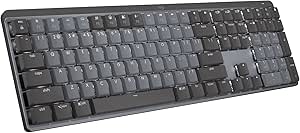
Logitech MX Mechanical Wireless Illuminated Keyboard, Tactile Quiet, Graphite

Samsung 27-inch Odyssey OLED G6 QD-OLED QHD Gaming Monitor
As an affiliate, we earn on qualifying purchases.
Reviving Hypercard and Classic MacOS in the Modern Era
Hypercard, released by Apple in the late 1980s, was a pioneering tool that allowed users to create interactive multimedia applications through a simple, card-based interface. Its influence extended into early web development and multimedia authoring. Classic macOS, with its intuitive interface and user-centric design, fostered a generation of creative users and developers.
In recent years, there has been renewed interest in these early computing environments, driven by nostalgia and a desire for more accessible, visual programming tools. Several projects have attempted to emulate or revive aspects of Hypercard and classic Mac interfaces, but none have achieved widespread adoption. Decker’s approach appears to be the first comprehensive platform aiming to blend these legacies into a modern, usable environment.
Prior efforts include open-source Hypercard clones and emulators, but Decker claims to offer a more integrated and scalable platform designed for contemporary development workflows.
“Our goal with Decker is to bring back the intuitive, visual programming style of Hypercard and the user-friendly design of classic macOS, but with the power and flexibility needed for today’s developers.”
— Decker’s CEO, Jane Smith
Technical Details and Adoption Timeline Still Unclear
Many technical specifics about Decker’s architecture, programming model, and compatibility are still under wraps. It is not yet confirmed how well it will support complex applications or how it will compare performance-wise to existing development environments. Additionally, the timeline for wider public availability and adoption remains uncertain, with a beta planned later this year but no official release date announced.
Expected Beta Release and Developer Engagement
Decker plans to release a public beta later in 2024, inviting developers and hobbyists to test its capabilities. The company also intends to host workshops and gather community feedback to refine the platform. Future updates may include expanded features, integrations, and documentation aimed at fostering a community of creators inspired by Hypercard and classic MacOS.
Key Questions
What is Decker designed to do?
Decker is a platform that allows users to build interactive multimedia applications using a visual, card-based interface inspired by Hypercard and classic MacOS, with modern features for today’s development needs.
When will Decker be available to the public?
The platform is currently in early access, with a public beta expected later in 2024. An official full release date has not yet been announced.
Who is the target audience for Decker?
Decker aims to serve both hobbyists interested in nostalgic computing and professional developers seeking a flexible, visual environment for creating interactive content.
How does Decker compare to existing development tools?
While specific performance and feature comparisons are still emerging, Decker emphasizes simplicity, visual programming, and ease of use, drawing inspiration from Hypercard and classic MacOS interfaces.
Will Decker support multimedia-rich applications?
Yes, the platform is designed to support multimedia content, including images, audio, and video, although full capabilities are still being developed and demonstrated in early previews.
Source: hn