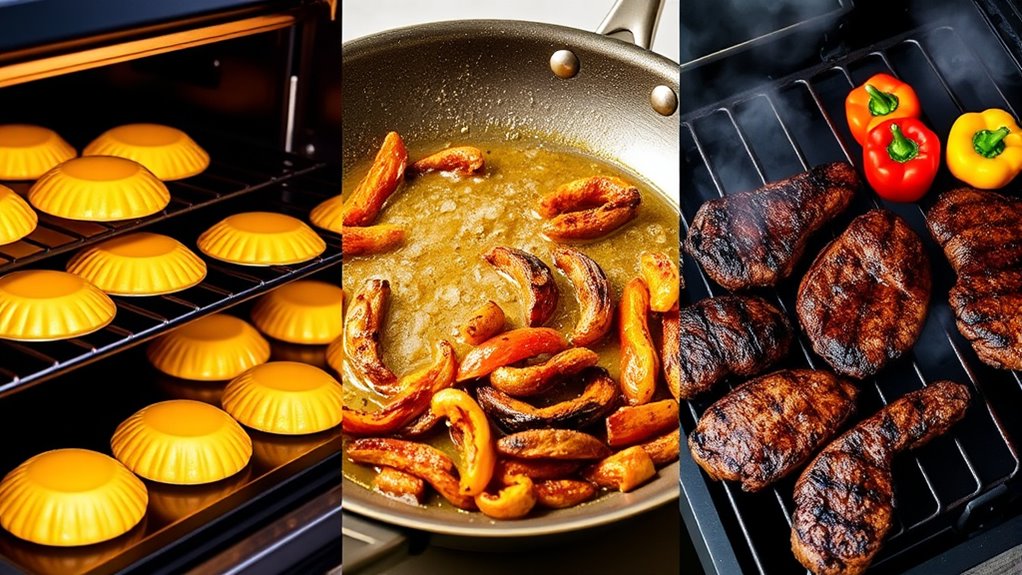
When you compare cooking methods, baking, frying, and grilling each bring something special to the table. Baking creates soft textures and retains more nutrients, while frying delivers crispy, juicy dishes but can be higher in fat. Grilling adds a smoky flavor and is perfect for summer meals. Each method has its unique strengths, so it’s worth exploring how they can enhance your cooking experience and elevate your dishes even more.
Key Takeaways
- Baking is versatile for both savory and sweet dishes, preserving nutrients and requiring minimal added fats.
- Frying enhances flavor with crispy textures but often results in higher fat content in meals.
- Grilling imparts a smoky flavor and encourages natural juiciness while allowing excess fat to drip away.
- Baking creates tender textures, while frying delivers crunchiness, and grilling offers a firm exterior with juicy interiors.
- Each method has unique health implications, with baking and grilling generally being healthier options compared to frying.
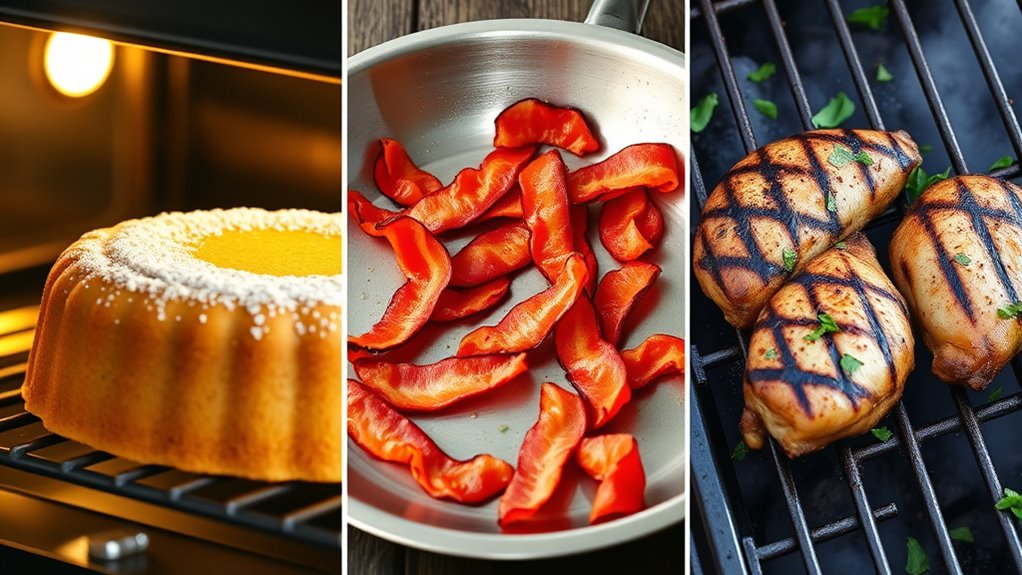
When you think about cooking methods, baking, frying, and grilling often come to mind as popular choices that can transform simple ingredients into delicious meals. Each method brings its own unique flavor profiles and health benefits, which can influence your decision depending on what you’re craving or how you want to maintain your health.
Baking is a versatile technique that allows you to create everything from savory dishes to sweet desserts. When you bake, you often use minimal oil or fat, which contributes to healthier meals. This method also preserves nutrients better than some others, making it a great choice for vegetables and lean proteins. Plus, the slow cooking process allows flavors to meld, giving you a rich and satisfying dish. You might find that baked foods have a comforting texture, whether it’s a soft bread or a tender piece of chicken.
Frying, on the other hand, is all about that crispy, golden texture that many of us love. While frying can enhance the flavor profiles of foods, it often comes with higher fat content, which can be a concern if you’re watching your diet. However, there’s a place for frying in moderation. The quick cooking time can lock in flavors, creating a delightful contrast between crunchy exteriors and juicy interiors. If you choose to deep fry, consider using oils with high smoke points and think about how you can balance it with healthier side dishes.
Grilling is a fantastic method that adds a smoky flavor to your foods, making it a favorite for summer barbecues. The high heat cooks food quickly, allowing the natural juices to seal in while fat drips away. This means you’re often left with a leaner dish, packed with flavor. Grilled vegetables are particularly vibrant, and the caramelization that occurs can elevate their taste remarkably. Plus, grilling encourages the use of herbs and spices, allowing you to experiment with different flavor profiles without adding extra calories.
Ultimately, your choice among baking, frying, and grilling will depend on your personal tastes and health goals. Each method has its own benefits, and understanding these can help you make informed decisions in the kitchen. Experimenting with all three can lead to a diverse and enjoyable culinary experience, keeping your meals exciting and nutritious.
Frequently Asked Questions
Which Method Is Best for Weight Loss and Healthier Eating?
If you’re aiming for weight loss and healthier eating, baking’s often your best bet. It promotes calorie control by using less oil compared to frying, helping with fat reduction. Grilling can also be a good option, as it allows excess fats to drip away from food. Both methods keep your meals flavorful without the added calories. So, when you’re choosing how to prepare your meals, think about baking or grilling for better health.
Can You Combine Cooking Methods for Better Flavor?
You can certainly combine cooking methods for better flavor! Mixing techniques is like hitting two birds with one stone. For instance, you could grill marinated chicken to lock in juices and then finish it in the oven for a tender result. This cooking fusion not only enhances flavor but also adds depth to your dishes. So, don’t hesitate to experiment; you’ll find that blending methods can lead to delicious surprises in your meals!
What Equipment Is Necessary for Each Cooking Method?
For baking, you’ll need an oven and baking sheets or pans. Frying requires a stovetop, a skillet or deep fryer, and sometimes a splatter guard. Grilling needs a grill—either gas or charcoal—and grilling utensils like tongs and a spatula. Each method has specific cookware requirements to achieve the best results, so make sure your kitchen appliances match the cooking technique you’re using to enhance flavor and efficiency.
How Do Cooking Methods Affect Nutrient Retention in Food?
Think of cooking as a delicate dance, where every step impacts your food’s nutrient preservation. When you choose a method, consider the cooking temperature—higher temps can break down vitamins quicker. Baking often retains nutrients well, while frying may leach them into oil. Grilling can balance flavor and retention, but keep an eye on the heat. By being mindful of your technique, you can savor both taste and nutrition in every bite.
Are There Specific Foods That Are Best Suited for Each Method?
Certain foods shine with specific cooking methods. For instance, you’ll find that vegetables often benefit from grilling, enhancing their natural flavors through char. Baking works wonders for bread and pastries, creating delightful textures. When frying, think of crispy potatoes or chicken, where the crunch adds flavor enhancement. Pairing foods with the right method not only improves taste but also maximizes nutrient retention, giving you the best culinary experience possible.
Conclusion
In the end, whether you’re savoring the golden crust of a freshly baked loaf, hearing the sizzle of veggies in hot oil, or enjoying the smoky char of grilled meats, each cooking method brings its own magic to the table. Imagine the aroma of spices wafting through your kitchen, enticing your senses. So, embrace the art of cooking, experiment with these methods, and let your culinary journey unfold, creating delicious memories with every bite.