To master coffee brewing, focus on three key elements: grind size, water temperature, and brewing method. For the French press, use a coarse grind and steep for about four minutes. In contrast, a fine grind is essential for espresso, where consistent tamping ensures even extraction. Keep your water between 195°F and 205°F to avoid scalding or bland flavor. With attention to detail, you can transform your brewing skills and savor each cup even more. Discover more techniques to enhance your experience!
Key Takeaways
- Select the appropriate grind size for your brewing method, as it significantly impacts flavor extraction and overall quality.
- Maintain water temperature between 195°F and 205°F to avoid scalding or under-extraction for optimal flavor.
- Master specific brewing techniques, such as blooming for pour-over and steeping for French press, to enhance coffee richness.
- Practice consistent tamping in espresso preparation for even extraction and a balanced taste profile.
- Continuously experiment with beans and adjustments to refine your skills and elevate your coffee experience.
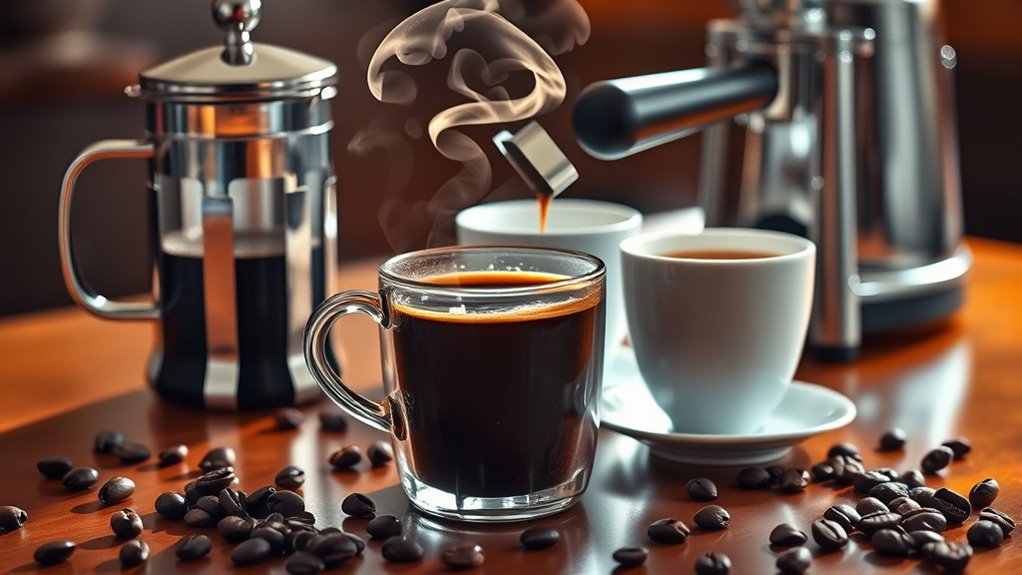
Whether you’re a casual coffee drinker or a dedicated aficionado, mastering coffee brewing can transform your daily ritual into an extraordinary experience. The magic lies in understanding the right balance between the coffee grind and water temperature. These two elements play a pivotal role in extracting the rich flavors and aromas from your beloved coffee beans.
First, let’s talk about coffee grind. The grind size affects how quickly the water extracts flavors from the coffee. If you’re using a French press, you’ll want a coarse grind to prevent over-extraction, which can lead to bitterness. On the other hand, if you’re pulling a shot of espresso, a fine grind is vital for that rich, full-bodied taste you crave. It’s vital to match your grind size with your brewing method, as each technique requires a different approach for ideal results.
Understanding the right grind size is essential for extracting the best flavors from your coffee, tailored to your brewing method.
Next up is water temperature. Ideally, your water should be between 195°F and 205°F when brewing. Too hot, and you risk scalding the coffee, resulting in a burnt taste. Too cold, and you won’t extract enough flavor, leaving your cup bland and uninspired. Use a thermometer or invest in a kettle with temperature control to guarantee you’re hitting that sweet spot. This attention to detail can greatly elevate your coffee experience.
Now that you’ve got the basics down, let’s explore different brewing methods. If you’re using a pour-over, take your time. Pour in a steady spiral, allowing the coffee to bloom first. This pre-wet stage releases carbon dioxide, enhancing flavor extraction. For a French press, let it steep for about four minutes before pressing down. This method produces a rich, full-bodied cup that highlights the coffee’s natural oils.
If you’re more into espresso, practice your tamping technique. Apply even pressure when pressing the grounds into the portafilter. A good tamp guarantees uniform extraction and a beautiful crema on top. Experiment with different beans and blends to find what resonates with your palate. Additionally, understanding the importance of grind size can significantly influence your brewing results.
Finally, don’t forget to taste as you go. Adjust your grind size and water temperature based on your preferences. Coffee brewing is as much an art as it is a science, so enjoy the process. Each cup is an opportunity to learn and refine your skills. With practice, you’ll soon master the nuances of brewing, turning your coffee ritual into a delightful daily experience.
Frequently Asked Questions
What Type of Coffee Beans Are Best for Brewing Methods?
For brewing methods, Arabica beans are often best due to their smooth flavor and complexity. If you prefer a bolder taste, Robusta beans might suit you better. Your grinding preferences also play a vital role; coarser grinds work well for methods like French press, while finer grinds are ideal for espresso. Experimenting with different coffee bean varieties and grind sizes will help you discover the perfect brew that matches your taste.
How Long Should I Let My Coffee Steep?
Steep speed’s super significant! You should let your coffee steep for about 4 to 5 minutes for a French press, depending on your grind size. Coarser grinds need a bit longer, while finer grinds might require less time. If you’re using other methods, adjust your steeping times accordingly. Remember, the perfect brew balances bold flavor and smoothness, so don’t rush it—experiment until you find your ideal steeping sweet spot!
Can I Reuse Coffee Grounds for Brewing?
Yes, you can reuse coffee grounds for brewing, but it may affect the flavor and strength of your coffee. For brewing efficiency, it’s best to use them once for a full-bodied cup, then consider a second brew for a milder taste. Keep in mind that the reused grounds will have less caffeine and flavor, so adjust your expectations. Experimenting with different brewing methods can help you find the right balance.
What Water Temperature Is Ideal for Brewing Coffee?
You’d think the perfect cup of coffee could only be brewed by wizards, but it’s really all about water temperature! Ideally, you want your water between 195°F and 205°F. This sweet spot helps extract the rich flavors while keeping the water chemistry just right. You can achieve temperature control by using a kettle with a thermometer or letting your boiling water sit for about 30 seconds. Enjoy your magical brew!
How Do I Clean My Coffee Brewing Equipment Properly?
To clean your coffee brewing equipment properly, start by establishing a regular cleaning routine. Rinse your carafe, filter basket, and any removable parts with warm water after each use. For deeper cleaning, mix equal parts water and vinegar, run it through your machine, then rinse thoroughly. Don’t forget to clean the grinder and other equipment regularly to guarantee peak performance. Consistent equipment maintenance keeps your coffee tasting fresh and your gear in top shape.
Conclusion
In mastering coffee brewing, you embrace both simplicity and sophistication, transforming everyday rituals into extraordinary experiences. Whether you’re savoring the rich, full-bodied essence of a French press or the bold intensity of an espresso shot, each method offers a unique flavor journey. So, as you experiment with grind sizes, water temperatures, and brewing times, remember: it’s in the delicate balance of art and science that your perfect cup awaits, inviting you to savor every sip.