
Before buying a chef knife, understand that steel type directly impacts performance and maintenance. High-carbon steels offer sharpness and edge retention but rust easily, while stainless steels resist corrosion with lower sharpening frequency. Forged steels are tough, stamped steels are lighter, and alloy elements like vanadium boost durability. Your choice should match your cooking style and upkeep preference. Keep an eye on signs of dullness or rust—if they appear, it might be time for an upgrade. More insights await if you continue exploring.

Get business pricing on monitors, keyboards and dev gear
- Business-only prices and quantity discounts
- Tax-exempt purchasing
- Multiple users, one account, clear invoices
Key Takeaways
- Understand the differences between high-carbon, stainless, forged, stamped, and Damascus steels to choose the right blade for your needs.
- Higher carbon content improves edge retention but increases rust risk; stainless steels resist corrosion with easier maintenance.
- Toughness and hardness are affected by steel composition and heat treatment, influencing durability and edge sharpness.
- Regular maintenance like cleaning, drying, and honing extends blade lifespan; signs of dullness or rust indicate it’s time to upgrade.
- Don’t assume harder steels stay sharper longer; select steels balanced for your cooking style and handle compatibility.
What Are the Main Types of Chef Knife Steel?

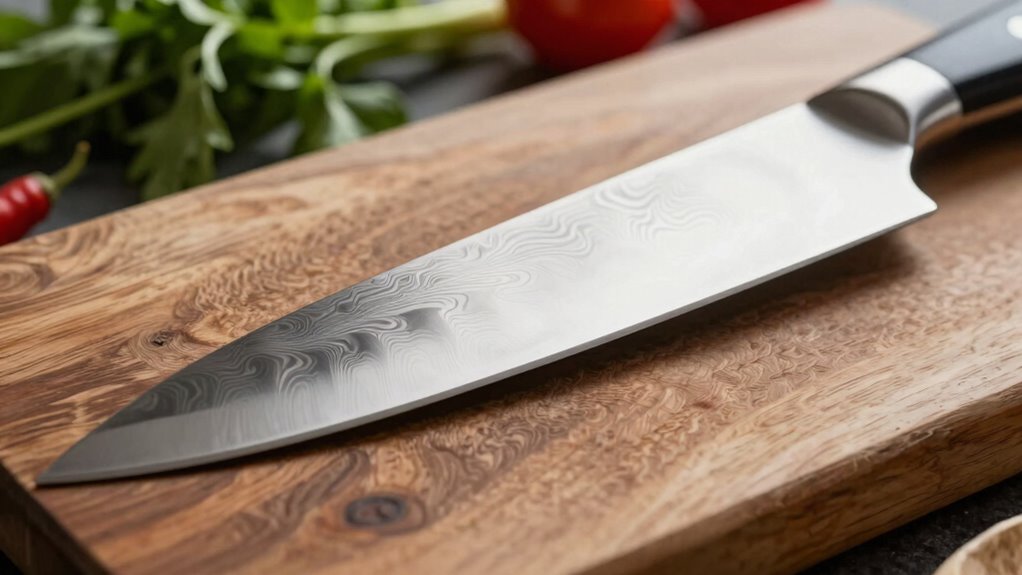
When it comes to choosing a chef knife, understanding the main types of steel can help you make an informed decision. Different steels influence not only performance but also blade aesthetics, which impacts the knife’s look. For example, high-carbon steels often feature sleek, polished finishes, giving a modern or traditional appearance. The manufacturing processes also vary; some steels are forged, creating dense, uniform blades, while others are stamped, resulting in thinner profiles. Stainless steels resist corrosion and maintain their shine, making them popular for everyday use. In contrast, carbon steels develop a patina over time, adding character. Knowing these main types and their manufacturing origins helps you select a knife that matches your style and cooking needs. Additionally, understanding the steel composition can provide insight into the knife’s durability and maintenance requirements, especially when considering the resistance to corrosion of different steel types. Being aware of the blade hardness can also guide you in choosing a knife that balances sharpness retention with ease of sharpening. Moreover, the manufacturing method can influence the overall quality and price of the knife, assisting you in making a more informed purchase decision. Recognizing the impact of alloy elements on steel properties can further help you understand how different steel types perform under various conditions.
How Does Steel Composition Impact Your Knife’s Performance and Durability?

The steel composition of your knife directly affects its toughness, hardness, and resistance to corrosion. Higher carbon content can improve edge retention but may make the blade more prone to rust. Understanding these factors helps you choose a steel that balances durability and performance for your needs. Additionally, knowing about alloying elements can give you deeper insight into how different steel types are engineered to enhance specific properties. Recognizing steel grades can further assist in selecting the optimal steel for various culinary tasks. Being aware of steel treatment processes can also influence your choice by indicating how manufacturing techniques improve blade performance and longevity. Moreover, considering microstructure can reveal how the internal crystal structure of steel impacts its overall strength and flexibility.
Steel Types and Toughness
Steel composition directly influences a knife’s toughness, affecting how well it withstands impacts and resists chipping during use. Different steel types, especially stainless alloys, are designed to balance strength and flexibility. Tougher steels can bend without breaking but may be more prone to dulling faster. Conversely, some steels prioritize corrosion resistance, making them ideal for kitchen environments. Here’s how different types compare:
| Steel Type | Toughness & Durability |
|---|---|
| High-carbon steel | Very tough but less corrosion-resistant |
| Stainless alloys | Good corrosion resistance, moderate toughness |
| Powder metallurgy steels | Excellent toughness, edge retention |
| Damascus steel | Unique strength, moderate toughness |
Choosing the right steel depends on your needs—toughness, ease of maintenance, or edge retention.
Hardness and Edge Retention
Steel composition plays a crucial role in determining how well your knife maintains its edge over time. Hardened steel, achieved through heat treatment, enhances hardness, making the edge more resistant to dulling. Different steel alloys contain varying amounts of carbon, chromium, and other elements, influencing hardness and wear resistance. High-carbon steels tend to be harder and offer better edge retention, but they might be more prone to chipping. On the other hand, alloy combinations can balance hardness with toughness, helping your knife stay sharp longer without breaking. Understanding how these steel alloys respond to heat treatment helps you select a blade that matches your cutting style, ensuring durability and consistent performance during daily use.
Corrosion Resistance Factors
Your choice of steel composition directly impacts how well your knife resists rust and corrosion. High chromium content enhances corrosion resistance by forming a protective oxide layer, reducing cutlery corrosion and steel oxidation. Stainless steels, with at least 13% chromium, resist rust better than carbon steels, which are more prone to oxidation. However, some steels include other elements like molybdenum or vanadium to improve corrosion resistance further. Keep in mind that even the best steel can corrode if not properly cared for; moisture and acids accelerate steel oxidation. Regular cleaning, drying, and occasional oiling help maintain your knife’s resistance to corrosion. Additionally, steel composition plays a crucial role in determining the overall durability and longevity of your knife. For instance, the inclusion of elements like molybdenum can further enhance resistance to corrosion, especially in harsher environments. Proper maintenance, including care practices, can significantly extend your knife’s lifespan regardless of its steel type. Understanding these factors and manufacturing processes can also influence how resilient your knife is against rust over time.
What Steel Grades Are Best for Home Cooks vs. Pros?
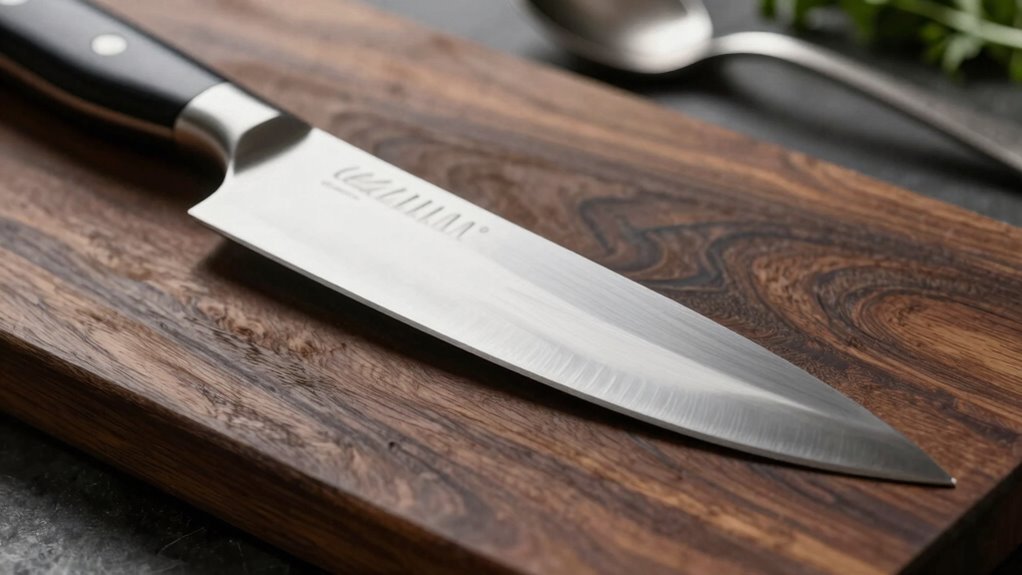
When choosing steel grades, consider how durability and maintenance fit your cooking style. Pros often prefer steels with excellent edge retention, even if they require more upkeep, while home cooks might prioritize easier care. Balancing sharpness and longevity helps you find the best steel for your needs. Additionally, understanding pet safety during storms can help protect your furry friends from anxiety and stress during adverse weather conditions. Being aware of battery inverter generator options can ensure you select a reliable power source for emergencies. Moreover, knowing the different steel grades used in chef knives can guide you toward a material that matches your cooking frequency and maintenance willingness. Recognizing steel grade classifications can further assist in making an informed choice tailored to your culinary habits, especially since steel composition impacts both performance and ease of maintenance.
Durability and Maintenance
Choosing the right steel grade for your chef’s knife depends largely on how much effort you’re willing to put into maintenance and how often you’ll use it. High-quality steels like VG-10 or CPM S35VN are more durable and resist corrosion, making them ideal for busy kitchens. These steels maintain their blade aesthetics longer and are often produced through advanced manufacturing processes, ensuring consistent quality. On the other hand, softer steels may require more frequent sharpening but are easier to repair if damaged. For home cooks, steels with lower maintenance needs can save time and frustration, while professional chefs might prefer steels that stand up to daily use despite requiring more upkeep. Ultimately, balancing durability with ease of maintenance helps you select the best steel for your needs. Additionally, steel composition plays a crucial role in determining how well the blade performs and how much effort is needed for upkeep. Proper steel treatment can enhance corrosion resistance and overall performance, making your investment last longer. Paying attention to carbon content can also influence both the sharpness and resilience of the blade, guiding your choice based on your specific needs.
Sharpness and Edge Retention
Steel grades like VG-10 and CPM S35VN are known for their excellent edge retention and ability to achieve a razor-sharp edge quickly, making them favorites among professional chefs. These steels maintain sharpness longer, reducing the frequency of sharpening needed during busy kitchen tasks. For home cooks, steels with good edge retention and blade flexibility offer durability without sacrificing maneuverability. When choosing a steel, consider handle compatibility—some high-performance steels require specific handle designs to optimize performance and comfort. A flexible blade can help with precise cuts, while a sturdy steel ensures the edge stays sharp through repeated use. Additionally, understanding air quality can be beneficial since ambient factors like dust and microplastics may impact the longevity of your knife’s edge, especially in environments with poor air filtration. Including proper storage practices can further protect your knives from corrosion and damage. Ultimately, the best steel balances edge retention, blade flexibility, and handle compatibility to suit your cooking style and skill level.
Common Myths About Chef Knife Steel Debunked

Many common beliefs about chef knife steel are simply misconceptions that can lead you astray when selecting or maintaining your knives. This is where myth busting becomes essential, helping you separate steel facts from fiction. For example, many think that higher carbon content always means a better, longer-lasting blade. In reality, it also means increased rust risk and harder maintenance. Others believe that all stainless steels are inferior to high-carbon steels, but advancements have made many stainless options just as durable and easy to care for. Some assume harder steels automatically stay sharper longer; however, they can become brittle and prone to chipping. By understanding these steel facts, you avoid falling for myths and make smarter decisions about your kitchen tools.
How to Choose the Right Steel for Your Cooking Style and Maintenance
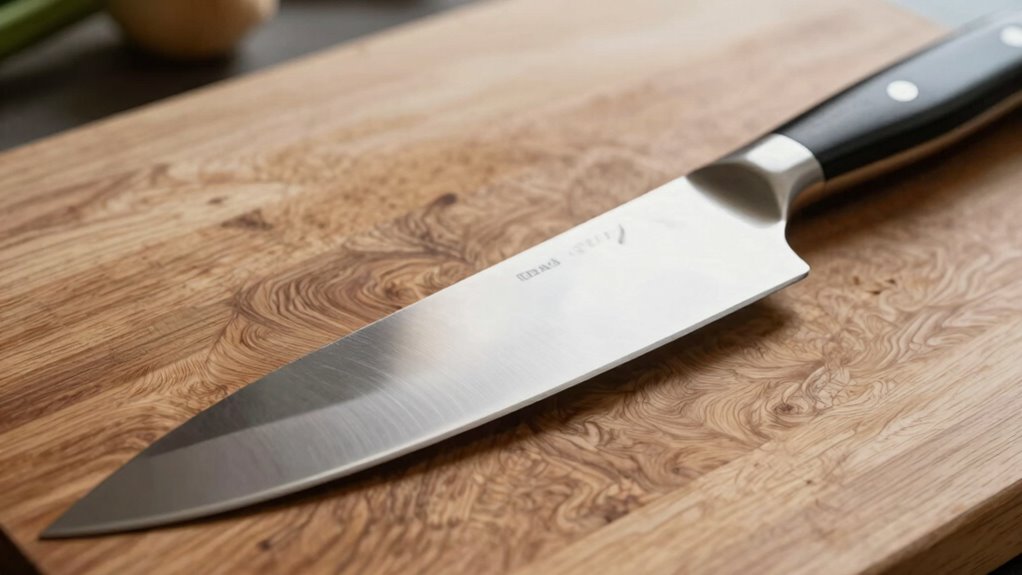
Understanding the myths around steel helps you make smarter choices tailored to your cooking habits. If you prefer quick, effortless knife sharpening, look for high-carbon stainless steels that hold an edge longer. For frequent use, a tougher steel reduces the risk of chipping, making maintenance easier. Think about your kitchen safety: a sturdy steel minimizes accidents by maintaining a sharp edge, reducing slips. If you often cook delicate ingredients, choose a softer steel for easier sharpening. Conversely, if you need a durable blade with minimal upkeep, opt for a high-performance steel designed for longevity. Your cooking style—whether precision slicing or heavy-duty chopping—dictates the steel type that best fits your needs. Keep in mind, regular knife sharpening is key to safe, effective kitchen work.
Is It Time to Upgrade Your Chef Knife Steel? Signs to Watch For
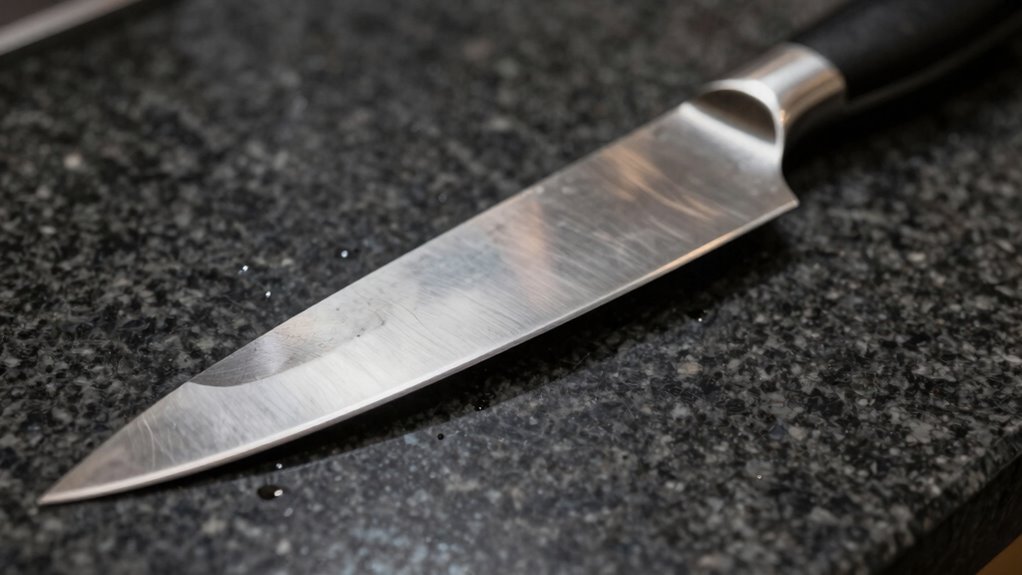
Knowing when to upgrade your chef knife steel can save you time and frustration in the kitchen. If your knife no longer holds an edge, it’s time to consider an upgrade. Watch for these signs:
- Dullness after minimal knife sharpening – your steel may have lost its edge-holding ability due to steel manufacturing flaws or wear.
- Rust or corrosion – indicates inferior steel or poor maintenance, affecting performance.
- Chips or cracks – a sign that your steel isn’t durable enough for regular use.
Upgrading steel can improve your cutting efficiency and reduce frequent sharpening. Better steel manufacturing results in knives that stay sharper longer and resist corrosion. Recognizing these signs helps you decide when it’s time to invest in a higher-quality chef knife.
Frequently Asked Questions
How Does Steel Hardness Affect Ease of Sharpening?
When steel hardness increases, sharpening becomes more challenging because a harder blade resists shaping, but it also offers better cutting edge durability. You’ll find that a hard steel maintains its edge longer, yet its reduced flexibility might make it prone to chipping. Softer steels sharpen more easily and offer greater blade flexibility, but they dull faster. So, balance steel hardness to match your needs for easy sharpening, blade flexibility, and cutting edge durability.
Can Steel Composition Influence Corrosion Resistance?
Yes, steel composition definitely influences corrosion resistance. Steels with stainless properties contain higher levels of chromium, forming a protective passive layer that prevents rust. Alloy variations, like adding nickel or molybdenum, further enhance this resistance. When choosing a knife, look for steels with these alloy elements, as they help your blade resist corrosion, making maintenance easier and ensuring your knife stays sharp and durable over time.
What Maintenance Practices Extend Steel Knife Lifespan?
To extend your steel knife’s lifespan, regularly sharpen it using proper sharpening techniques like honing and honing stones, which maintain the edge. Store your knife correctly in a knife block or on a magnetic strip to prevent damage and corrosion. Avoid dishwasher cleaning, and dry it thoroughly after use. Proper maintenance keeps your knife sharp, prevents rust, and guarantees it stays in top condition for years.
Are High-End Steels Worth Their Price for Amateurs?
High-end steels are like luxury cars for your kitchen—they can be worth the premium price if you’re passionate about cooking. As an amateur, you might not see the full value right away, but these steels offer better edge retention and easier maintenance. If you’re ready to invest in quality, they’re a worthwhile choice. Otherwise, solid mid-range options will still serve you well without breaking the bank.
How Does Heat Treatment Impact Steel Performance?
Heat treatment critically impacts steel performance by influencing temperature effects and microstructure changes. When you heat steel properly, it refines the grain structure and enhances hardness, which makes the blade sharper and more durable. Conversely, improper heat treatment can cause inconsistent microstructures, leading to brittleness or softness. So, understanding how heat treatment alters temperature effects and microstructure is essential for selecting a knife that maintains its edge and performs well over time.
Conclusion
Choosing the right chef knife steel is like tending a garden—you need the right soil, sunlight, and care to see it flourish. When you understand the steel’s composition and how it suits your cooking style, your knife becomes an extension of yourself, ready to cut through challenges with ease. Don’t settle for a blade that’s just okay—nurture your kitchen garden with the perfect steel, and watch your culinary skills blossom.
Columbus Day / Indigenous Peoples' Day Picks
long weekend sales
As an affiliate, we earn on qualifying purchases.