
📊 Full opportunity report: Can Group Support Initiatives Help Break Phone Overuse Habits? on IdeaNavigator AI — validation score, market gap, and execution plan.

Get business pricing on monitors, keyboards and dev gear
- Business-only prices and quantity discounts
- Tax-exempt purchasing
- Multiple users, one account, clear invoices
TL;DR
Researchers and startups are exploring structured, group-based recovery programs for adults with severe phone overuse who have not responded to app blockers. Initial plans include eight-week cohorts with peer accountability, aiming to measure effectiveness through screen-time reduction.
A new approach to addressing severe phone overuse among adults is emerging, focusing on structured, cohort-based recovery programs designed for those who have already failed traditional app blockers. These programs aim to leverage peer accountability and professional facilitation to reduce screen time, with initial pilots planned to test their effectiveness.
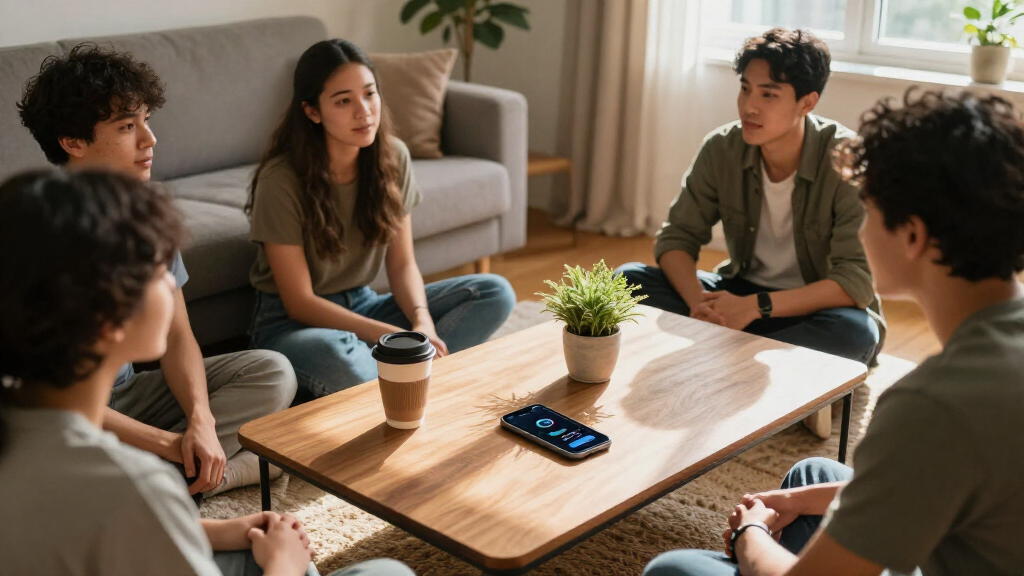
The concept targets adults with entrenched phone habits who have exhausted or bypassed existing solutions like simple app blockers, which typically fail within a week. The proposed program involves eight-week cohorts of ten adults, featuring weekly facilitated group sessions, daily check-ins, personalized trigger maps, and relapse prevention plans. Participants may also opt into in-group screen-time sharing, and successful completers could join ongoing alumni groups for continued support.
This initiative is motivated by the recent mainstream concern over phone overuse, which has gained clinical attention. The infrastructure for such programs—using existing digital wellness frameworks and screen-time APIs—makes it feasible to deliver these interventions at a scalable, economically viable level. The program plans to generate revenue through cohort fees and alumni memberships, with pilot cohorts set to cost around $400 per participant.
To validate the approach, organizers intend to run two paid pilot cohorts, measuring changes in screen time at the end of eight weeks and again at sixteen weeks. They also plan to track alumni engagement and ongoing screen-time behavior to assess long-term impact.
Potential Impact of Group Support on Phone Habits
If successful, these cohort-based recovery programs could provide an effective alternative for adults with severe phone addiction, a segment often underserved by existing solutions. Unlike simple blockers, which are frequently overridden or ignored, structured group interventions with peer accountability may foster lasting behavioral change. This approach could influence the digital wellness industry by establishing a new, scalable model for behavioral health interventions targeting screen overuse, with implications for mental health and productivity.
digital wellness app for screen time management
As an affiliate, we earn on qualifying purchases.
As an affiliate, we earn on qualifying purchases.
Growing Concern Over Phone Overuse Among Adults
Over the past few years, concern over excessive phone use has shifted from casual worry to a recognized mental health issue, with clinical discussions and research highlighting its impact on well-being. Current solutions largely fall into two categories: inexpensive app blockers, which are often bypassed within days, and expensive private coaching, accessible only to a small elite. The gap in effective, affordable, and scalable interventions for adults with hard-to-break habits has become increasingly apparent.
Recent developments include the integration of screen-time APIs into smartphones and digital platforms, enabling more precise tracking and intervention. The idea of group-based recovery programs draws from established models in addiction treatment and behavioral health, where peer support and professional facilitation have demonstrated efficacy. The concept is now gaining traction as a potential scalable solution for the digital age, with startups and researchers exploring pilot programs.
phone addiction recovery support group
As an affiliate, we earn on qualifying purchases.
As an affiliate, we earn on qualifying purchases.
Uncertainties Surrounding Program Effectiveness
It is not yet clear how effective these cohort-based recovery programs will be in reducing screen time among adults with entrenched habits. The success of pilot cohorts will depend on participant engagement, the quality of facilitation, and long-term adherence. Additionally, it remains uncertain whether these programs can scale sustainably and whether they will deliver measurable, lasting behavioral change.
behavioral health coaching for phone overuse
As an affiliate, we earn on qualifying purchases.
As an affiliate, we earn on qualifying purchases.
Next Steps for Pilot Testing and Validation
Organizers plan to launch two paid pilot cohorts at a cost of approximately $400 per participant, with initial results expected to be available after eight weeks. They will analyze changes in screen time, participant retention, and alumni engagement at sixteen weeks. Based on these findings, further iterations and larger-scale implementations will be considered, potentially establishing a new standard for adult digital wellness interventions.
screen time tracker with accountability features
As an affiliate, we earn on qualifying purchases.
As an affiliate, we earn on qualifying purchases.
Key Questions
How do cohort-based recovery programs differ from app blockers?
These programs focus on structured group support, peer accountability, and professional facilitation, aiming to create lasting behavioral change rather than relying solely on technology-based restrictions.
Who is the target audience for these recovery programs?
Adults with severe, entrenched phone habits who have already failed or bypassed traditional app blockers are the primary target, especially those seeking a more personalized, community-based approach.
What metrics will be used to measure success?
The primary metric will be reduction in screen time at the end of eight and sixteen weeks. Secondary metrics include participant retention, relapse rates, and ongoing alumni engagement.
When will the results of the pilot programs be available?
Initial results are expected approximately after eight weeks of the pilot cohorts, with further analysis at sixteen weeks to assess long-term impact.
Could this approach be scaled for broader use?
If pilot results are promising, there is potential for scaling through online platforms, with adaptations for different populations and severity levels of phone overuse.
Source: IdeaNavigator AI
Halloween Picks
halloween
As an affiliate, we earn on qualifying purchases.