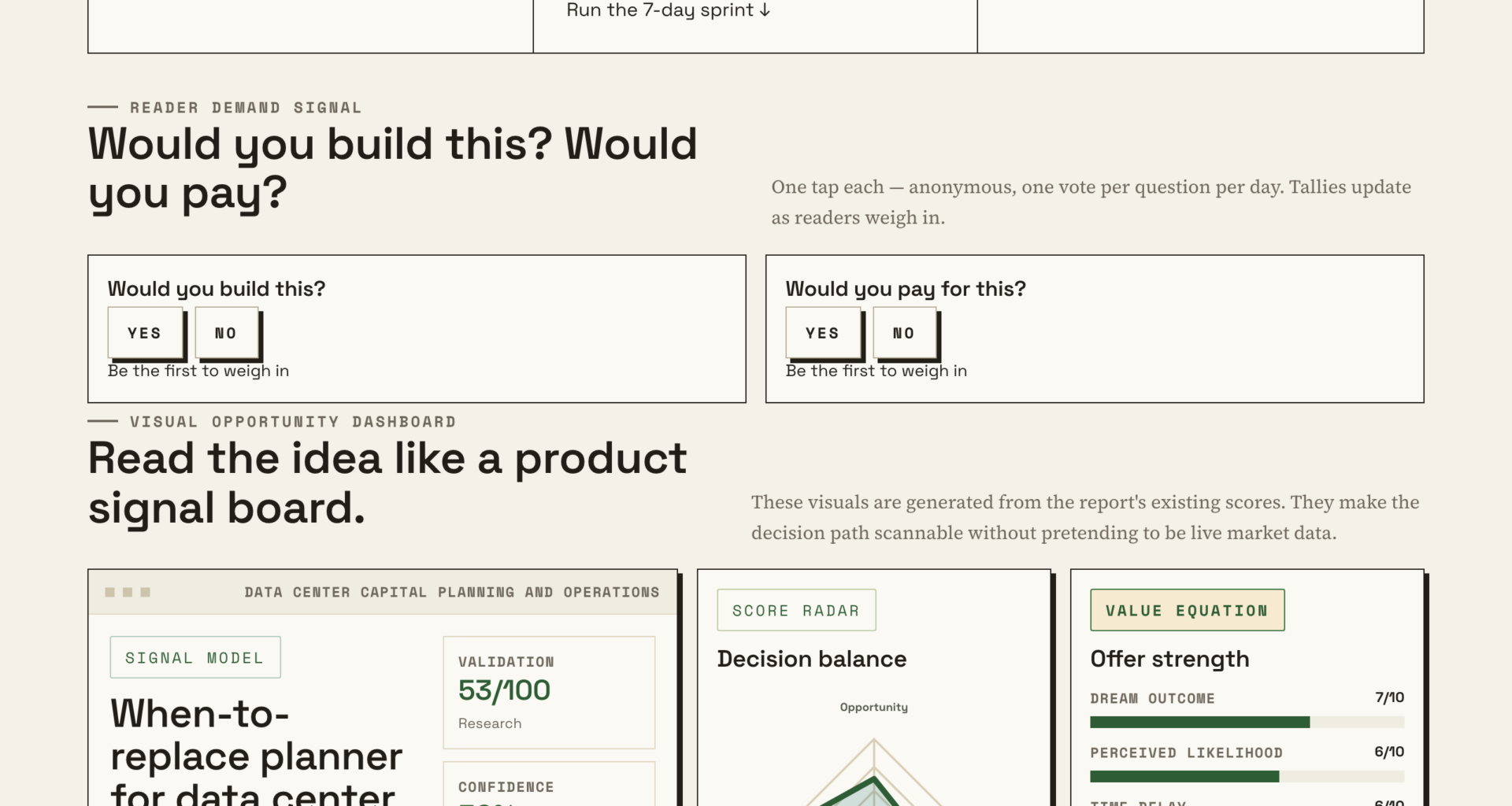

📊 Full opportunity report: Boost Data Center Efficiency With Timely Hardware Upgrades on IdeaNavigator AI — validation score, market gap, and execution plan.

Get monitors, keyboards and dev gear delivered free — and shop member deals
- Fast, free delivery on millions of items
- Access to Prime Big Deal Days deals on October 6–7
- Prime Video, Amazon Music and more included
TL;DR
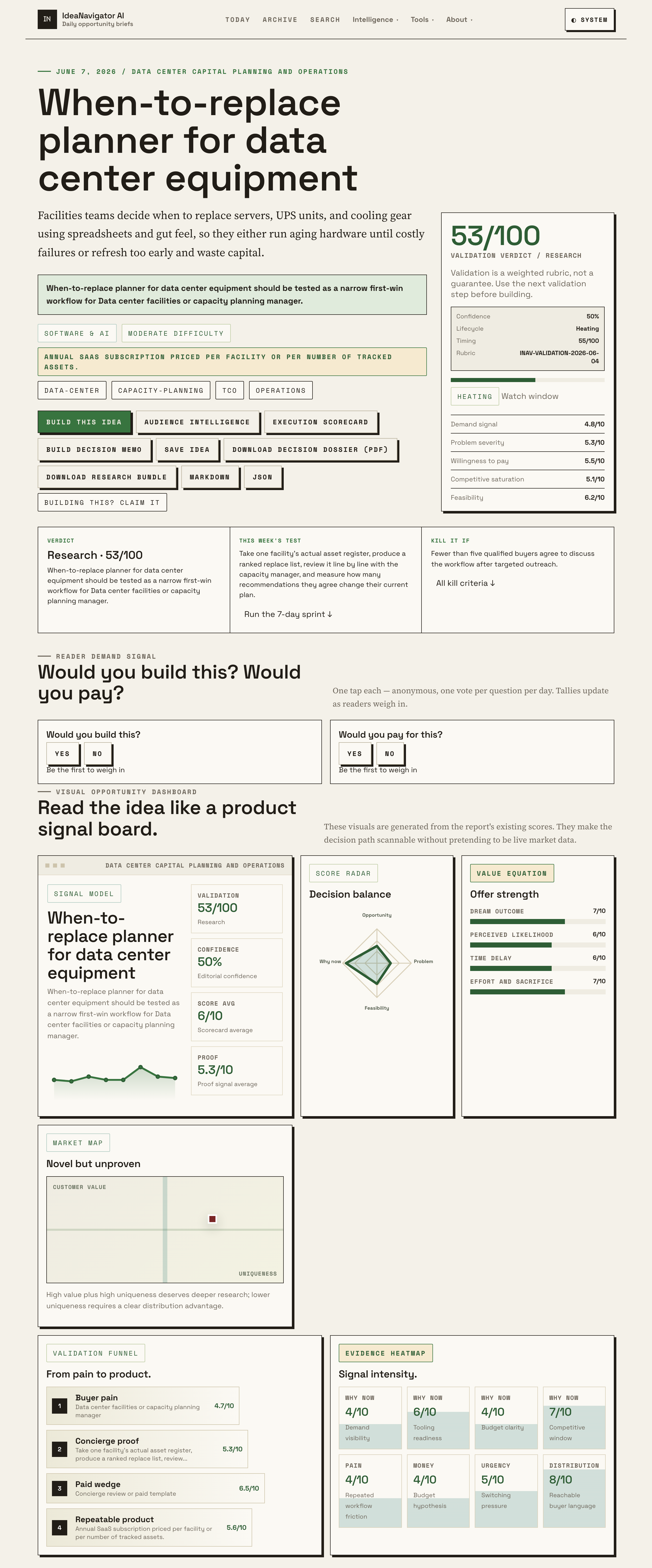
A new software tool for data center capacity managers is being tested to improve hardware replacement decisions. It aims to reduce costs and energy consumption by providing data-driven recommendations.
A new hardware replacement planning tool is being tested in data centers to optimize equipment upgrades based on asset age, energy costs, and failure risks. The tool aims to help facilities teams make data-driven decisions, reducing unnecessary capital expenditure and energy waste. This development is significant for data centers seeking to improve efficiency amid rising energy costs and increasing hardware density.
The new when-to-replace planner is designed to analyze a facility’s asset list, including age, power draw, and maintenance costs. It then provides a ranked list of equipment to replace now versus keep, based on rising energy expenses and failure risks versus the benefits of newer, more efficient hardware.
According to sources familiar with the project, the tool is currently undergoing pilot testing in a single data center facility. The validation process involves comparing the tool’s recommendations with the facility’s existing replacement plans, with a focus on measuring agreement and potential improvements.
This approach addresses a longstanding challenge in data center operations, where decisions are often made using spreadsheets or intuition, leading to premature replacements or costly failures. The new system aims to bring more precision to these decisions, potentially saving millions in capital and operational costs over time.
Implications for Data Center Capital and Energy Efficiency
This development matters because it offers a practical solution to a common problem faced by data center facilities: balancing hardware lifecycle costs with operational reliability and energy efficiency. By providing a data-driven, systematic approach, the tool could enable significant cost savings and energy reductions, aligning with industry goals for sustainability and operational excellence.
As energy costs continue to rise and hardware becomes more efficient, the ability to precisely time replacements will become increasingly valuable. Early adopters could gain competitive advantages through reduced downtime, lower energy bills, and optimized capital expenditure.
data center server replacement hardware
As an affiliate, we earn on qualifying purchases.
As an affiliate, we earn on qualifying purchases.
Growing Pressure to Optimize Hardware Lifecycle Decisions
Data centers are under mounting pressure to improve energy efficiency and reduce operational costs. Rising energy prices and increasing hardware density make replacement timing more critical than ever. Traditionally, facilities teams relied on spreadsheets and gut instinct to decide when to replace servers, UPS units, and cooling equipment, often leading to suboptimal outcomes.
Recent industry reports highlight that hardware aging can lead to costly failures and inefficiencies, while premature replacements waste capital. The introduction of a formalized, data-driven planning tool aims to address these challenges by offering objective, asset-specific recommendations. This initiative aligns with broader trends toward automation and AI-assisted decision-making in data center management.
“This new planning tool could revolutionize how data centers approach hardware lifecycle management, making decisions more precise and cost-effective.”
— an anonymous researcher
energy-efficient UPS units for data centers
As an affiliate, we earn on qualifying purchases.
As an affiliate, we earn on qualifying purchases.
Uncertainties in Implementation and Adoption
It remains unclear how widely the tool will be adopted across the industry, as it is currently in pilot testing. The effectiveness of the recommendations and their acceptance by facility managers are still being evaluated. Further, the long-term impact on operational costs and energy savings has yet to be demonstrated through comprehensive case studies.
data center cooling equipment upgrade
As an affiliate, we earn on qualifying purchases.
As an affiliate, we earn on qualifying purchases.
Next Steps for Validation and Industry Adoption
The next phase involves expanding pilot testing to additional facilities, collecting feedback from capacity managers, and refining the algorithm. If successful, the tool could be commercialized as a SaaS product, with plans for broader deployment in the coming year. Observers will watch for published case studies demonstrating tangible savings and efficiency gains.
server rack power management devices
As an affiliate, we earn on qualifying purchases.
As an affiliate, we earn on qualifying purchases.
Key Questions
How does the new planning tool determine which hardware to replace?
The tool analyzes asset data including age, power consumption, and maintenance costs, then ranks equipment based on a comparison of rising energy/failure risks against the efficiency gains of new hardware.
Is this tool available for general use now?
Currently, it is in pilot testing within select facilities. Wider availability will depend on validation results and industry feedback.
What are the main benefits of using this tool?
It aims to reduce unnecessary capital expenditure, lower energy costs, and improve operational reliability by providing data-driven replacement recommendations.
Will this replace existing asset management processes?
It is intended to supplement current practices, offering an objective, data-backed perspective to support decision-making rather than replacing human judgment entirely.
What challenges might hinder its adoption?
Challenges include integration with existing asset management systems, user acceptance, and validation of the tool’s recommendations across diverse data center environments.
Source: IdeaNavigator AI
Halloween Picks
halloween
As an affiliate, we earn on qualifying purchases.