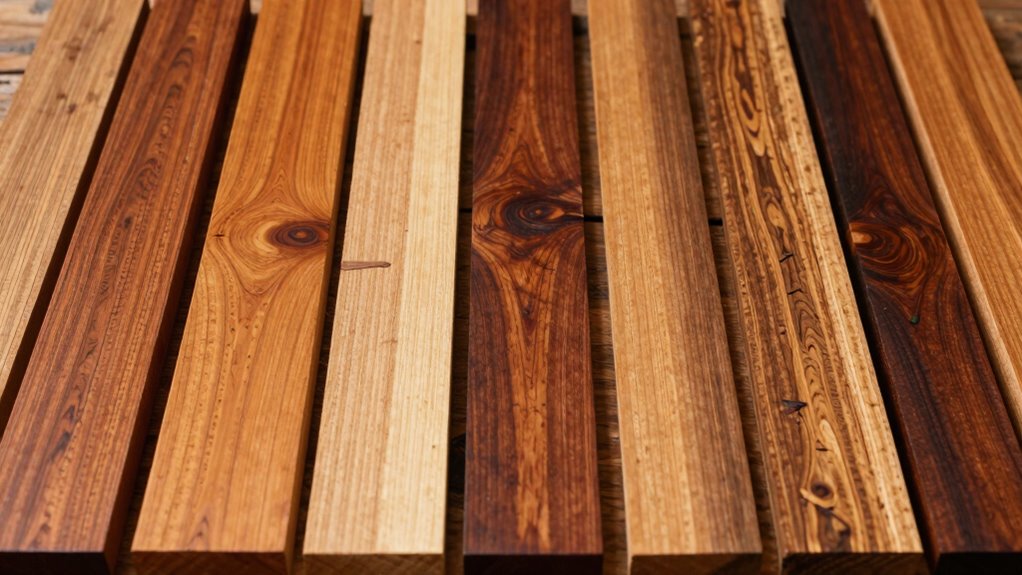

Choosing the right wood for your smoker is key to achieving the flavor you want. Hardwoods like hickory and mesquite give bold, smoky tastes, while fruit woods like apple and cherry add subtle sweetness. Aromatic woods such as pecan and alder offer gentle, nutty or delicate flavors. Avoid softwoods like pine, which can cause bitterness and health risks. To discover how different woods influence flavor and how to blend them, explore more options and tips here.
Key Takeaways
- Hardwoods like hickory and mesquite produce bold, smoky flavors ideal for beef and pork, while fruit woods add mild, sweet aromas suited for poultry and fish.
- Properly seasoned and stored wood burns cleaner, providing consistent flavor and preventing bitterness from resinous or moldy wood.
- Thinner wood chips burn faster and create stronger smoke, whereas larger chunks release milder, more prolonged smoke for balanced flavor.
- Mixing different wood types allows customization of flavor intensity, blending bold and mild woods for complex, tailored smoky profiles.
- Avoid softwoods like pine or cedar, as they release toxins, cause bitter tastes, and pose health risks when used for smoking.
Why Choosing the Right Smoking Wood Matters for Flavor

Choosing the right smoking wood is essential because it directly influences the flavor of your food. Proper wood conservation ensures your wood stays dry and free from mold or pests, which can spoil your smoke and alter flavors. Using good storage techniques, like keeping wood in a cool, dry place and stacking it properly, helps maintain its quality over time. When wood is stored correctly, it burns evenly and produces clean smoke, imparting the desired taste to your meat. Poor storage can lead to moisture retention, resulting in sour or bitter flavors and inefficient burning. By paying attention to wood preservation and storage, you guarantee consistent, high-quality smoke that enhances your dishes and makes your smoking experience more enjoyable.
What Are the Best Hardwood Woods for Smoking?
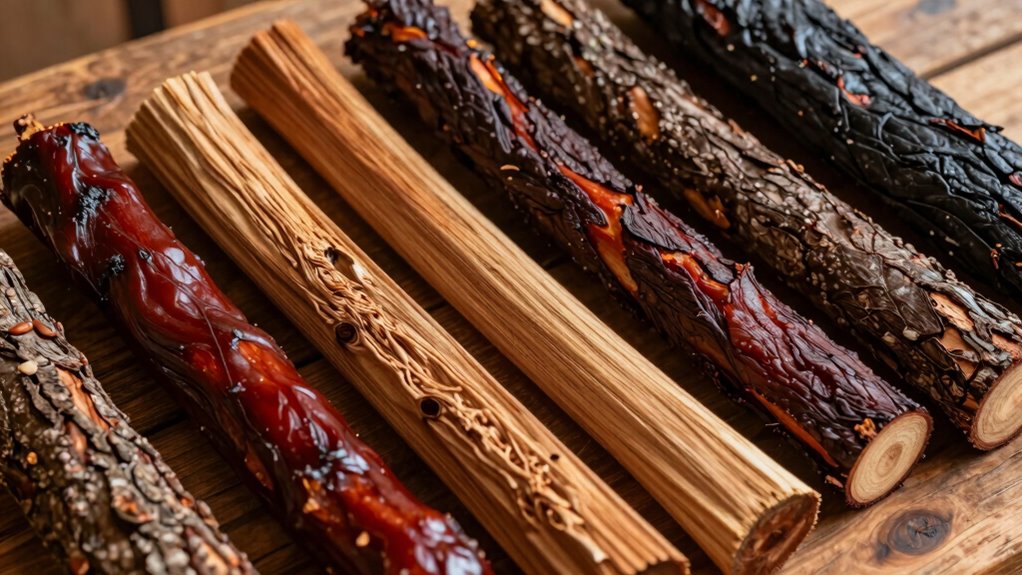
Hardwood woods are the best choice for smoking because they burn hotter and produce a cleaner, more flavorful smoke than softwoods. When selecting woods, consider maritime hardwoods like oak and hickory, known for their consistent heat and rich flavor. Exotic wood varieties, such as mesquite and cherry, add unique tastes to your meat. Here’s a quick guide:
| Wood Type | Flavor Profile | Best Use |
|---|---|---|
| Oak | Mild, versatile | Brisket, pork, poultry |
| Hickory | Strong, smoky | Ribs, beef, game meats |
| Mesquite | Intense, earthy | Beef, red meats |
| Cherry | Sweet, fruity | Poultry, pork, fish |
Choosing the right hardwood enhances flavor and guarantees a successful smoke. Additionally, selecting hardwood woods that burn cleaner can help reduce unwanted creosote buildup in your smoker. Using quality wood also ensures more efficient burning and better flavor transfer to your meat. Selecting properly seasoned wood is crucial for achieving optimal results because it burns more evenly and produces less smoke. Proper seasoning reduces moisture content, which improves combustion efficiency and flavor development.
How Fruit Woods Like Apple and Cherry Enhance Your Meat’s Flavor

Fruit woods like apple and cherry are popular choices because they add subtle, sweet flavors that complement a variety of meats. These fruit woods are known for their ability to provide a gentle flavor enhancement without overpowering the meat’s natural taste. When you use apple or cherry wood, you’ll notice a mild sweetness that pairs well with pork, poultry, and even some fish. The key is their ability to enhance the meat’s aroma and flavor without dominating it, making them versatile options for different recipes. They also burn cleanly and produce a pleasant smoke that infuses the meat evenly. If you want to add a touch of sweetness and brightness to your smoked dishes, fruit woods like apple and cherry are your go-to choices. Choosing the right wood can make a significant difference in your smoking experience. Additionally, understanding the different wood types can help you tailor your smoking results to your taste preferences. Selecting the appropriate wood burning properties can further optimize your smoking process for better flavor infusion. Using smoke flavor profiles can help you achieve consistent and desirable results every time.
What Are Aromatic Woods (Pecan, Alder, Olive), and How Do They Add Depth?
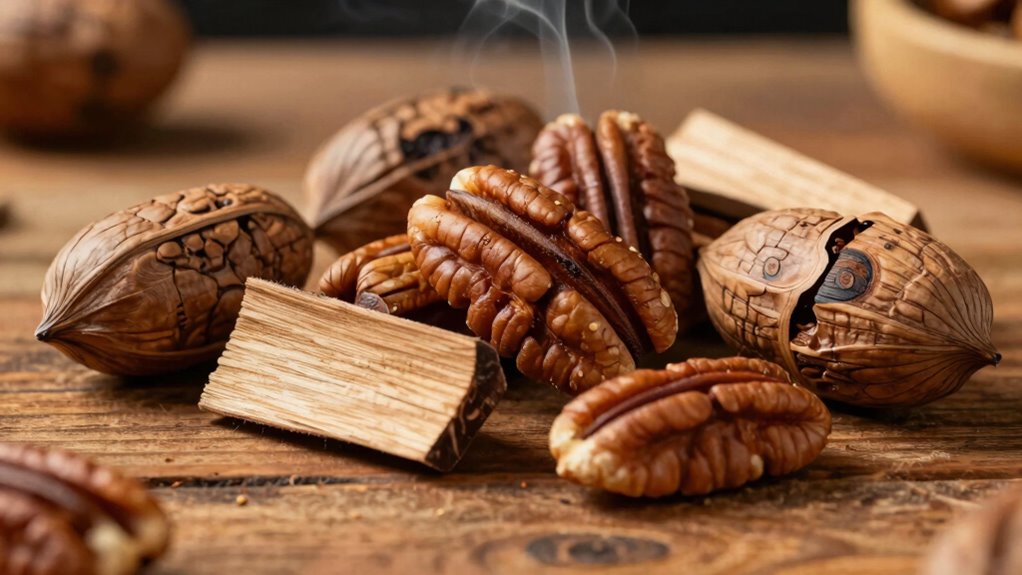
Have you ever wondered how aromatic woods like pecan, alder, and olive can deepen the flavor of your smoked meats? These woods add unique, subtle layers that enhance your dish without overpowering it. Aromatic woods contribute to flavor enhancement by imparting distinct aromas and tastes. Pecan provides a rich, nutty sweetness; alder introduces a delicate, mild smokiness; olive adds a slightly bitter, fruity note. Use them carefully to build complexity. Here’s a quick comparison:
| Wood Type | Flavor Profile | Best Use |
|---|---|---|
| Pecan | Nutty, sweet | Pork, poultry, beef |
| Alder | Mild, delicate smokiness | Fish, seafood |
| Olive | Fruity, slightly bitter | Chicken, vegetables |
These aromatic woods deepen your smoked meats, creating a more layered and flavorful experience.
Which Softwoods to Avoid When Smoking : Pine, Cedar, and Resinous Woods
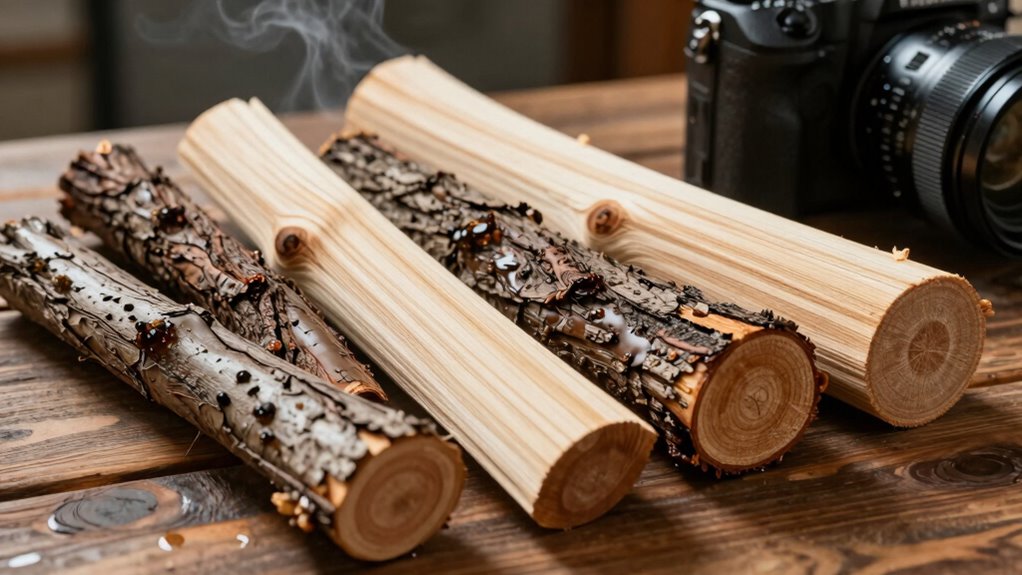
While aromatic woods like pecan, alder, and olive can enhance your smoked meats with subtle flavors, not all woods are suitable for smoking. Softwood hazards become clear when you consider resinous woods like pine and cedar, which contain high levels of resin. These woods release toxins and unpleasant flavors that can ruin your food and pose health risks. Resinous woods burn unevenly, producing excessive creosote that can clog your smoker and create dangerous flare-ups. Avoid using pine, cedar, fir, or other resinous softwoods altogether. Instead, stick to hardwoods known for their clean burn and flavorful smoke. Using the wrong woods can compromise your meat’s taste and safety, so choose wisely and steer clear of softwoods with resinous hazards. Additionally, fuel quality plays a significant role in ensuring a safe and enjoyable smoking experience, so always select well-seasoned, high-quality hardwoods. Proper wood seasoning can also reduce unwanted chemicals and improve smoke flavor, making your smoking safer and more flavorful. Understanding the resin content in different woods can help you select safer options and avoid unpleasant flavors. Moreover, selecting chemical-free wood sources is essential to prevent introducing harmful substances into your food.
How to Pick the Perfect Wood Based on Your Meat Type and Flavor Goals
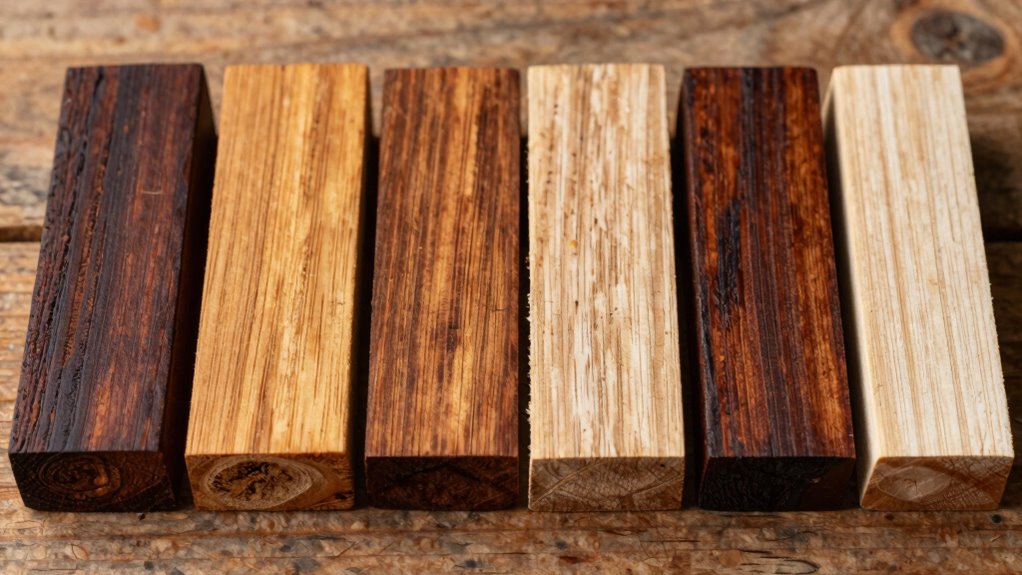
Choosing the right wood depends on the meat you’re smoking and the flavor you want to achieve. You’ll need to contemplate which woods suit different meats and how their flavor intensity can enhance or overpower your dish. Pay attention to complementary aromas and notes to create a balanced and flavorful smoked meat. Incorporating smoke flavor considerations can help you select the ideal wood for your culinary goals.
Meat Suitability for Woods
Selecting the right wood for smoking depends heavily on the type of meat you’re preparing and the flavor profile you’re aiming for. Different woods complement specific meat pairings, enhancing natural flavors without overpowering them. For example, fruitwoods like apple or cherry work well with poultry and pork, offering a mild, sweet wood aroma that elevates these meats. Hardwoods such as hickory or oak suit beef, providing a robust smoke flavor that adds depth. If you’re aiming for a lighter, more delicate taste, softer woods like alder are ideal. Understanding how each wood’s aroma interacts with your meat helps you craft a balanced flavor. Proper wood selection is essential for achieving the desired taste profile. Ultimately, choosing the right wood enhances both the meat’s natural qualities and your overall smoking experience.
Flavor Intensity Choices
When aiming for the perfect smoky flavor, understanding how different woods influence taste intensity is vital. Lighter woods like fruit woods provide subtle, sweet notes, ideal for delicate meats, while hardwoods like hickory or mesquite deliver bold, robust flavors suitable for beef or pork. To control flavor strength, consider the thickness of your wood pieces: thinner chips burn faster and produce a stronger smoke, whereas larger chunks release flavor more slowly. Proper wood storage is essential—keep your wood in a dry, ventilated space to prevent mold and preserve flavor. Teak seasoning can add a unique, mild aroma if used carefully. Remember, mixing woods can balance flavor intensity and create personalized profiles, but always start small to avoid overpowering your meat. Additionally, understanding the type of wood technology can help you select the best options for consistent flavor production, ensuring a reliable smoke profile every time. Using the right wood selection techniques can significantly improve your smoking results and flavor authenticity. Exploring wood curing methods can further enhance flavor consistency and prevent unwanted tastes, making your smoking experience more predictable. To achieve consistent results, investing in quality wood sources can make a significant difference in flavor authenticity.
Complementary Aromas and Notes
Matching the right wood to your meat enhances its natural flavors and creates a more harmonious smoky profile. Consider fruit pairing, like apple or cherry, to add subtle sweetness and aroma enhancement that complements poultry and pork. For example, fruit woods are often praised for their mild and sweet smoke, which can beautifully accentuate delicate meats. Additionally, experimenting with different woods can help you discover unique flavor combinations and elevate your smoking skills. For beef or lamb, stronger woods like hickory or mesquite bring bold, smoky notes, while fruit woods can soften the intensity with fruity aromas and delicate notes. Think about your flavor goals: if you want a light, sweet aroma, fruit woods are ideal. If your aim is a rich, robust smoke, opt for hardwoods with deeper aroma profiles. By selecting woods that align with your meat type and flavor preferences, you guarantee a balanced, memorable taste experience with well-rounded complementary aromas and notes. Additionally, understanding smoking techniques can help you better control the intensity and flavor development during the cooking process.
Tips for Preparing and Blending Wood for Better Smoking Results
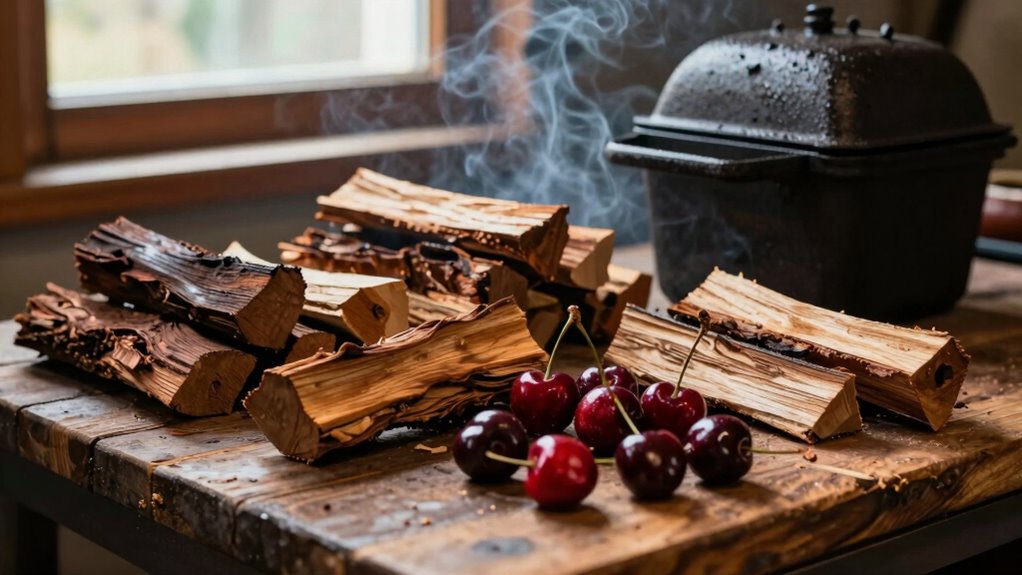
Preparing and blending wood properly is key to achieving the best smoking results. Start with well-seasoned wood to guarantee it burns clean and produces rich flavors. Proper storage techniques, like keeping wood in a dry, ventilated area, prevent moisture buildup that can cause uneven burning and undesirable tastes. When blending woods, aim for complementary flavors—combine milder woods like fruit with bolder hardwoods like oak to balance the smoke. Always cut your wood into manageable sizes for consistent burning and easier control. Additionally, consider mixing different woods to create unique flavor profiles tailored to your meat. Remember, the right preparation and blending elevate your smoking game, giving you more control over the final taste and aroma of your smoked dishes.
Common Mistakes to Avoid When Using Wood in Your Smoker
One mistake to watch out for is overusing wood chips, which can cause excessive smoke and bitter flavors. Using the wrong type of wood also affects your meat’s taste, so pick wisely. Avoid these common errors to make sure of better, more consistent smoking results.
Overusing Wood Chips
Using too many wood chips at once can lead to overly smoky flavors and an uneven cook. When you overload your smoker, it burns through wood chip moisture quickly, resulting in harsh smoke rather than a balanced flavor. To avoid this, only add small amounts at a time and monitor the smoke output. Proper wood storage tips include keeping chips in a cool, dry place to prevent moisture buildup, which can cause uneven burning. Overusing chips also risks clogging vents and creating inconsistent heat. Remember, less is more—add wood gradually and let the smoke do its work without overpowering your meat. By managing your wood chip supply wisely, you ensure a smooth, flavorful smoking process every time.
Using Wrong Wood Types
Choosing the right type of wood for your smoker is key to achieving the desired flavor without overpowering your meat. Using the wrong wood types can lead to poor wood pairing, resulting in harsh, bitter, or overly smoky flavors. Avoid common mistakes like using softwoods such as pine or cedar, which contain resins that can produce unpleasant tastes and cause flavor masking. Stick to hardwoods like oak, hickory, or fruitwoods for balanced smoke. Also, don’t overdo it—using too much or too strong wood can mask the natural flavor of your meat. Remember, the goal is to enhance, not hide, the meat’s taste. Selecting appropriate woods guarantees a harmonious flavor profile and a more enjoyable smoking experience.
How to Use Wood Blends to Create Custom Smoke Flavors

Creating custom smoke flavors starts with understanding how different wood blends interact during the smoking process. By experimenting with various wood pairings, you can achieve unique flavor profiles tailored to your taste. Focus on flavor balancing, combining woods that complement each other without overpowering the meat’s natural taste. For example, mixing fruit woods with hardwoods can add sweetness and depth. Keep in mind that some woods produce stronger smoke, so blend accordingly. Here are tips to get started:
Experiment with wood blends for balanced, personalized smoke flavors that enhance your meat.
- Use milder woods like apple or cherry with stronger woods like hickory for balanced flavor.
- Combine woods in small amounts to test flavor intensity.
- Adjust proportions based on the type of meat and your flavor preferences.
This approach helps craft personalized smoke profiles that elevate your smoking game.
Frequently Asked Questions
How Long Does Wood Need to Be Seasoned Before Smoking?
You should let your wood season for at least 6 to 12 months before smoking, depending on the size and type. Proper seasoning reduces moisture content, making the wood burn cleaner and produce better smoke. To check if it’s ready, look for cracks and a greyish color. Using well-seasoned wood guarantees your food gets the best flavor, with minimal excess smoke and creosote.
Can I Reuse Wood Chips or Chunks for Multiple Smoking Sessions?
You can reuse wood chips and chunks, but their flavor diminishes with each session. Visualize them as treasure chests of smoky potential—once used, they still hold some flavor, but not as much. Wood chip reuse minimizes waste, yet wood chunk longevity varies; chunks tend to last longer than chips. To maximize smoky richness, consider revitalizing or replacing them after a few uses to guarantee your barbecue stays flavorful.
What’s the Ideal Wood Size for Different Types of Smokers?
You should match wood chunk sizing to your smoker type for best results. For electric smokers, use smaller wood chunks or chips, as they burn more efficiently and produce consistent smoke. Larger wood chunks are ideal for offset or charcoal smokers, providing longer, slower burns. Keep in mind that proper wood size guarantees even smoke distribution and prevents over-smoking, making your smoking sessions more flavorful and enjoyable.
How Does Humidity Affect Wood Smoke Flavor?
Imagine you’re smoking brisket when the humidity rises, and you notice a milder smoke flavor. Humidity impact is significant because higher moisture content in the air slows the combustion of wood, producing less intense smoke. If the moisture content of your wood is too high, it can lead to a duller, less flavorful smoke. Adjust your smoking environment or dry your wood to control humidity impact and enhance flavor.
Are There Health Considerations When Choosing Smoking Woods?
You should consider health risks when choosing smoking woods, as some woods may contain chemical additives or toxins that could be harmful when burned. Opt for natural, untreated woods like hickory or apple to minimize exposure to potentially dangerous substances. Avoid woods treated with chemicals or painted, and always guarantee you source your wood from reputable suppliers. This way, you can enjoy flavorful smoking without risking your health.
Conclusion
Now that you know the ins and outs of smoking woods, you’re armed with the secret ingredients to turn your grill into a flavor symphony. Think of each wood type as a note in your smoky melody—choose wisely, blend boldly, and let your meat sing with rich, layered character. With a little practice, your smoker becomes your canvas, crafting mouthwatering masterpieces that leave everyone craving an encore. Happy smoking!