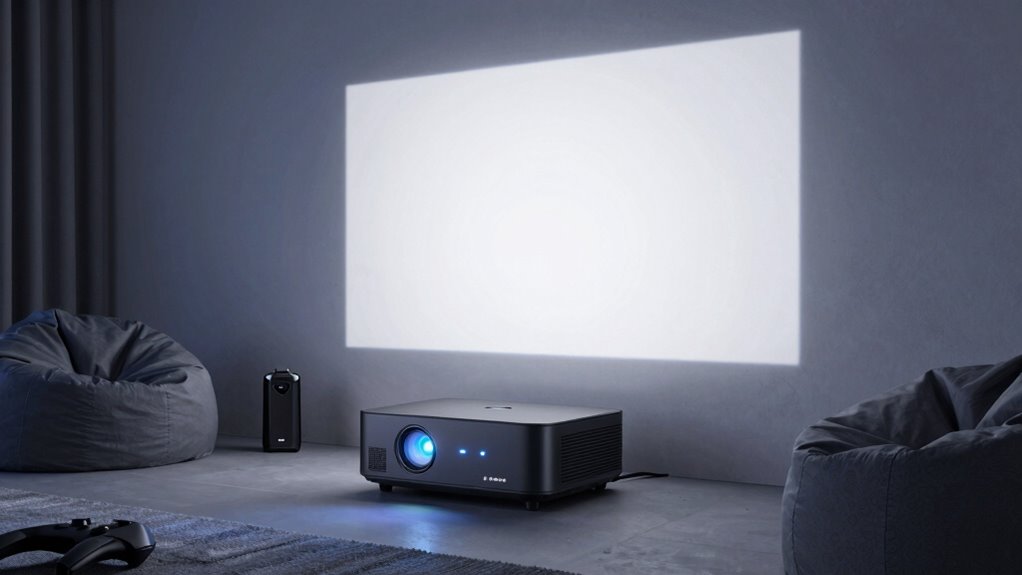

Choosing a projector for gaming involves balancing low input lag, resolution, brightness, and size. Among the best options this year are the Optoma UHD38x, known for its incredible 4K clarity and ultra-fast 4.2ms lag; the ViewSonic PX701, offering impressive 4K visuals combined with a 240Hz refresh rate at an accessible price. Meanwhile, the BenQ TH575i provides a reliable 1080p experience with quick response times, perfect for casual gamers. Each of these models makes tradeoffs between resolution, brightness, and price, so understanding your priorities helps determine the right choice.

Get business pricing on monitors, keyboards and dev gear
- Business-only prices and quantity discounts
- Tax-exempt purchasing
- Multiple users, one account, clear invoices
Key Takeaways
- The Optoma UHD38x stands out for its 4K resolution and ultra-low 4.2ms input lag, ideal for competitive gaming.
- ViewSonic PX701 offers a rare combination of 4K, 240Hz refresh rate, and lower price point, suited for fast-paced gaming in a home theater setting.
- BenQ TH575i provides good brightness and low latency at a budget-friendly price, best for casual gaming and general use.
- Choosing a projector involves prioritizing resolution, brightness, or refresh rate based on your gaming environment and space constraints.
- Long-lasting light sources and flexible setup options are key for reliable, immersive gaming experiences.
| Optoma UHD38x Bright 4K UHD Gaming Projector with 4000 Lumens and Low Input Lag |  | Best Overall for High-Resolution Gaming | Native Resolution: 3840 x 2160 | Brightness: 4000 lumens | Contrast Ratio: 1,000,000:1 | VIEW ON AMAZON | See Our Full Breakdown |
| BenQ TH575i 1080p Home Projector with Google TV, 3800lm, 16.7ms Input Lag |  | Best for Versatile Home Entertainment | Resolution: 1080p | Brightness: 3800 lumens | Input Lag: 16.7ms | VIEW ON AMAZON | See Our Full Breakdown |
| Optoma GT3900UHD 4K UHD Short Throw Laser Projector |  | Best for Small Spaces and Gaming | Resolution: 4K UHD | Brightness: 4,000 lumens | Laser Life: 30,000 hours | VIEW ON AMAZON | See Our Full Breakdown |
| BenQ TH575 1080p 3800 Lumens Home Entertainment Projector |  | Best Budget 1080p Gaming and Viewing | Resolution: 1080p | Lumens: 3800 | Latency: 16ms | VIEW ON AMAZON | See Our Full Breakdown |
| ViewSonic PX701 4K UHD Projector, 3200 Lumens, 240Hz HDR, Auto Keystone |  | Best for Flexible Gaming Setups | Resolution: 4K UHD | Lumens: 3200 | Refresh Rate: 240Hz | VIEW ON AMAZON | See Our Full Breakdown |
| projectors for gaming low input lag | Input Lag | Resolution | Brightness |
|---|---|---|---|
| Optoma UHD38x Bright 4K UHD Ga | 4.2ms | — | 4000 lumens |
| BenQ TH575i 1080p Home Project | 16.7ms | 1080p | 3800 lumens |
| Optoma GT3900UHD 4K UHD Short | Supports 1080p at 240Hz | 4K UHD | 4,000 lumens |
| BenQ TH575 1080p 3800 Lumens H | — | 1080p | — |
| ViewSonic PX701 4K UHD Project | 4.2ms | 4K UHD | — |
More Details on Our Top Picks
Optoma UHD38x Bright 4K UHD Gaming Projector with 4000 Lumens and Low Input Lag
The Optoma UHD38x excels as a versatile gaming projector with a native 4K resolution and a remarkably low input lag of 4.2ms. Compared with other options, its 240Hz refresh rate guarantees smooth motion, making it a top choice for fast-paced titles. While its high brightness of 4000 lumens ensures vivid images even in well-lit rooms, it does require a larger space to accommodate its maximum 300-inch image. This model is ideal for gamers seeking ultra-clear visuals combined with responsiveness, though the significant power consumption and size might be drawbacks for those who prefer portability or energy efficiency.
Pros:- Native 4K resolution for sharp, detailed visuals
- Low input lag of 4.2ms ideal for competitive gaming
- High refresh rate of 240Hz for smooth motion
- Bright 4000 lumens for well-lit environments
Cons:- Requires a large space for maximum image size
- High wattage may lead to increased energy costs
- Limited portability features
Best for: Gamers who prioritize high resolution and ultra-low lag for competitive or immersive play.
Not ideal for: Users with limited space or those seeking a portable, energy-efficient option.
- Native Resolution:3840 x 2160
- Brightness:4000 lumens
- Contrast Ratio:1,000,000:1
- Refresh Rate:240Hz
- Input Lag:4.2ms
- Maximum Image Size:300 inches
Our verdict“This model is the best pick for gamers who want top-tier resolution and responsiveness in a dedicated gaming setup.”
BenQ TH575i 1080p Home Projector with Google TV, 3800lm, 16.7ms Input Lag
The BenQ TH575i offers a solid 1080p resolution combined with 3800 lumens brightness, making it suitable for various lighting conditions. It includes a Google TV dongle, adding streaming versatility, and features a relatively low input lag of 16.7ms—adequate for casual gaming. However, compared to 4K models, it cannot match the detail level of newer high-resolution projectors, and its larger size means it’s less portable. This projector is well-suited for users who want a dependable, easy-to-setup device for both gaming and media consumption in a home environment.
Pros:- Bright 3800 lumens for clear images in lit rooms
- Built-in Google TV for streaming content
- Relatively low input lag for casual gaming
- Easy setup with zoom and keystone correction
Cons:- Limited to 1080p resolution
- Requires darker rooms for best contrast
- Not suited for fast-paced competitive gaming
Best for: Casual gamers and home entertainment enthusiasts seeking ease of use and streaming features.
Not ideal for: Hardcore competitive gamers who need ultra-low latency and 4K resolution.
- Resolution:1080p
- Brightness:3800 lumens
- Input Lag:16.7ms
- Screen Size:120 inches
- Connectivity:Google TV dongle
Our verdict“This projector balances affordability and versatility, making it a good choice for casual gamers and multimedia use.”
Optoma GT3900UHD 4K UHD Short Throw Laser Projector
The Optoma GT3900UHD combines true 4K resolution with a short throw lens, making it perfect for small rooms or setups like golf simulators. Its laser light source lasts up to 30,000 hours, reducing maintenance worries, while its low input lag supports 1080p at 240Hz and 4K at 60Hz, suitable for fast gaming. The premium price reflects its specialized features, but for space-constrained environments or golf enthusiasts, it offers an immersive, high-quality experience with excellent responsiveness.
Pros:- True 4K resolution with HDR support
- Short throw lens ideal for small areas
- Laser lifespan of 30,000 hours
- Supports low latency gaming at 1080p and 4K
Cons:- High price point
- Limited to specific use cases like gaming and golf simulators
- Requires dedicated space for optimal placement
Best for: Gamers with limited space or those interested in golf simulation and small-room setups.
Not ideal for: Budget-conscious buyers or those seeking a more general-purpose, high-brightness projector.
- Resolution:4K UHD
- Brightness:4,000 lumens
- Laser Life:30,000 hours
- HDR:Yes
- Input Lag:Supports 1080p at 240Hz
Our verdict“This projector is best for niche applications where space is limited but high-quality visuals and responsiveness are required.”
BenQ TH575 1080p 3800 Lumens Home Entertainment Projector
The BenQ TH575 offers a straightforward 1080p setup with 3800 lumens, suitable for gaming in bright rooms. Its 16ms latency strikes a balance between responsiveness and affordability, making it a practical choice for general use. While it doesn’t support 4K, its short throw distance allows large images from small spaces, and its noise levels may be noticeable during intense gaming sessions. This model is well-suited for casual gamers looking for a reliable, budget-friendly projector.
Pros:- Bright 3800 lumens for well-lit environments
- Low latency of 16ms for responsive gaming
- Short throw design for large images from small spaces
- Affordable price point
Cons:- Limited to 1080p resolution
- Potential noise during operation
- Requires dark room for best contrast
Best for: Budget-conscious users seeking decent gaming performance and bright images.
Not ideal for: High-end gamers wanting 4K resolution or ultra-low latency.
- Resolution:1080p
- Lumens:3800
- Latency:16ms
- Contrast Ratio:15,000:1
- Throw Distance:10.8ft for 100″ image
Our verdict“This projector is ideal for casual gamers and general entertainment at a budget-friendly price.”
ViewSonic PX701 4K UHD Projector, 3200 Lumens, 240Hz HDR, Auto Keystone
The ViewSonic PX701 stands out for its combination of 4K UHD resolution and a 240Hz refresh rate, with a low input lag of 4.2ms, making it highly suitable for fast gaming. Its bright 3200 lumens ensures vivid images, and features like auto-keystone correction and multiple ports support easy setup. While it requires a darker environment for optimal contrast, its flexible placement options and excellent responsiveness make it a compelling choice for dedicated gaming rooms or versatile home theaters.
Pros:- Stunning 4K resolution with HDR support
- High refresh rate of 240Hz for smooth gameplay
- Low input lag of 4.2ms
- Auto-keystone correction for easy setup
Cons:- Requires a darker room for best image quality
- Large projection size needs space
- Potentially more expensive for casual use
Best for: Gamers who want high resolution with flexible setup and fast response times.
Not ideal for: Casual users or those with limited space or lighting control.
- Resolution:4K UHD
- Lumens:3200
- Refresh Rate:240Hz
- Input Lag:4.2ms
- Connectivity:Dual HDMI, USB-A
Our verdict“This projector balances high-end visuals with gaming responsiveness, making it suitable for serious gamers with dedicated space.”

How We Picked
Our selection process focused on low input lag, high refresh rates, and brightness—key features for responsive gaming. We compared models across resolution, price, and versatility, prioritizing products that balance performance with usability. Each projector was evaluated for its ability to deliver smooth gameplay without sacrificing image quality or requiring excessive space. We also considered durability, setup flexibility, and user-friendliness to recommend options suitable for different types of gamers and home environments.
Factors to Consider When Choosing Projectors For Gaming Low Input Lag
When choosing a projector for gaming, the most critical factor is low input lag. A response time below 10ms ensures your actions register instantly, giving you a competitive edge. Next, consider resolution: 4K models offer sharper visuals but often come with higher prices and more space requirements. Brightness is also key—if your room isn’t dark, a projector with at least 3,800 lumens helps maintain clarity. Refresh rates of 120Hz or higher improve motion smoothness, especially in fast-paced games. Finally, think about setup and space: short throw lenses and auto-keystone correction simplify installation, even in tighter spaces.
Resolution and Image Quality
Higher resolution projectors like 4K UHD deliver crisper, more detailed images, which enhances immersion. However, they tend to be more expensive and may require more powerful hardware for optimal responsiveness. If budget allows, a 4K model with low input lag provides both visual fidelity and gaming performance. For casual gaming or limited space, 1080p options can still offer low latency and good brightness, making them practical choices for many users.
Input Lag and Refresh Rate
Low input lag is non-negotiable for competitive gaming. Look for models with lag under 10ms; anything above 16ms can cause noticeable delays. Refresh rate is equally important—240Hz or higher ensures smooth motion for fast-paced titles. The challenge is that some projectors optimize either low lag or high refresh rate, but not always both. Prioritize models like the UHD38x or ViewSonic PX701 that excel in both areas.
Brightness and Room Conditions
Brightness impacts how well your image holds up in well-lit environments. At least 3,800 lumens is recommended for daytime gaming or rooms with ambient light. In darker spaces, lower brightness models suffice. Remember, brighter projectors often consume more power and tend to be larger, so consider your space and lighting conditions carefully before buying.
Setup and Space Considerations
Short throw projectors and auto-keystone correction make setup easier and more flexible, especially in smaller rooms. Longer throw models need more space but can produce larger images. Think about where you’ll place your projector and how much space you have. A model with flexible mounting options saves time and effort, making your gaming setup more seamless.
Frequently Asked Questions
What is considered low input lag for gaming projectors?
Low input lag for gaming projectors generally means response times below 10ms. Anything under this threshold ensures that your actions are reflected on-screen almost instantly, which is especially critical for competitive or fast-paced gaming. Many high-performance models hover around 4-5ms, providing a seamless experience without noticeable delay.
Can I use a 4K projector for gaming without sacrificing responsiveness?
Yes, many modern 4K projectors now include low input lag features, allowing you to enjoy sharp visuals without significant delay. However, some 4K models prioritize image quality over responsiveness, so it’s important to check specifications. Models like the Optoma UHD38x and ViewSonic PX701 balance both high resolution and low latency, making them suitable for gaming.
Is brightness more important than resolution for gaming projectors?
Brightness is crucial if you plan to game in rooms with ambient light or during daytime. A projector with at least 3,800 lumens maintains image clarity and color vibrancy despite lighting conditions. Resolution enhances visual detail, but if your space isn’t dark enough, high brightness levels ensure you don’t sacrifice image quality for visibility.
What should I look for in a projector if I have limited space?
In small spaces, short throw or ultra-short throw projectors are ideal because they can produce large images from a short distance. Features like auto-keystone correction and flexible mounting options also help with setup. Focus on models that support responsive gaming while fitting comfortably in your available space.
Are laser projectors better for gaming than lamp-based ones?
Laser projectors, like the Optoma GT3900UHD, tend to have longer-lasting light sources, often up to 30,000 hours, and can offer brighter images. They also typically support low input lag, making them excellent for gaming. However, they usually come at a higher price point and may be overkill for casual use. For dedicated gaming setups, laser projectors provide durability and consistent performance.
Conclusion
For competitive gamers prioritizing peak performance, the Optoma UHD38x remains the best choice thanks to its combination of 4K resolution, ultra-low lag, and high refresh rate. Casual gamers or those with limited space might prefer the BenQ TH575i or BenQ TH575 for their affordability, brightness, and decent responsiveness. Space-constrained users interested in small-room setups or golf simulation should consider the Optoma GT3900UHD. Meanwhile, those seeking a flexible, high-res experience with a bit more setup ease will find the ViewSonic PX701 compelling. Ultimately, your choice hinges on your space, budget, and gaming priorities.
Halloween Picks
halloween
As an affiliate, we earn on qualifying purchases.