
Key Takeaways
- The size of the woofer significantly influences bass response; larger drivers generally produce fuller sound but require more space.
- Power output and clarity vary across models, with premium picks offering clearer high and mid frequencies for professional-quality audio.
- Build quality and connectivity features differ, impacting durability and ease of integration with various setups.
- Budget options often trade off some fidelity or bass depth, but can still serve well for casual or beginner use.
- Choosing between active (powered) and passive monitors depends on your existing audio setup and whether you want a simple plug-and-play solution.
| Mackie CR3.5 Studio Monitors (Pair), 3.5″ Woofers, Tone Knob, Black | 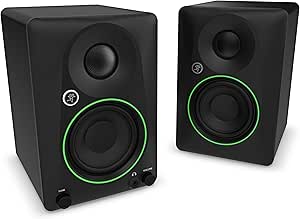 | Best Overall for Small Desks | Number of Monitors: Pair | Woofer Size: 3.5 inches | Color: Black | VIEW ON AMAZON | See Our Full Breakdown |
| M-AUDIO BX3 3.5-inch Wired Studio Monitors Pair |  | Best for Versatile Studio Monitoring | Driver Size: 3.5 inches | Woofer Material: Kevlar | Tweeter Type: Silk Dome | VIEW ON AMAZON | See Our Full Breakdown |
| Yamaha HS3 Powered Studio Monitor Pair in Black |  | Best for Accurate Studio Monitoring | Frequency Response: 70 Hz – 22 kHz | Woofer Diameter: 3.5 inches | Tweeter Diameter: 0.75 inches | VIEW ON AMAZON | See Our Full Breakdown |
| PreSonus Eris 3.5 Powered Desktop Studio Monitors, Pair – 50W, White |  | Best for Balanced, Studio-Quality Sound | Power: 50W | Woofer Size: 3.5 inches | Tweeter Size: 1 inch | VIEW ON AMAZON | See Our Full Breakdown |
| PreSonus Eris 3.5 Powered Studio Monitors, Pair |  | Best Budget Pick for Studio Monitoring | Size: 3.5 inches | Power: 50 watts | Frequency Range: 80 Hz–20 kHz | VIEW ON AMAZON | See Our Full Breakdown |
| Edifier MR3 Powered Studio Monitor, Bluetooth Active Speaker |  | Best for Versatile Home Office Listening and Casual Mixing | Hi-Res Audio Certification: Yes | Frequency Response: 52Hz – 40kHz | Power Output: 18W*2 RMS | VIEW ON AMAZON | See Our Full Breakdown |
More Details on Our Top Picks
Mackie CR3.5 Studio Monitors (Pair), 3.5″ Woofers, Tone Knob, Black
The Mackie CR3.5 stands out for its compact size and solid sound quality, making it a practical choice for users with limited space who need accurate audio for streaming or light mixing. Unlike the Yamaha HS3, which offers more detailed controls and slightly broader connectivity, the CR3.5 provides a more straightforward setup with essential features. Its included accessories and tone adjustment options make it accessible for beginners, but its basic feature set might fall short for professional audio engineers seeking more nuanced control. The limited bass extension and small drivers mean it’s best suited for desk setups rather than larger rooms or critical mixing.
Pros:- Compact size fits well on small desks
- Accurate sound reproduction for casual mixing and streaming
- Includes all necessary cables and accessories
Cons:- Limited to small, desk-oriented setups
- Basic features may not satisfy demanding professionals
Best for: Desk users with tight space constraints who want reliable sound for streaming, gaming, or light editing.
Not ideal for: Professional audio producers or those needing deep bass and extensive sound customization, as it lacks advanced controls and larger drivers.
- Number of Monitors:Pair
- Woofer Size:3.5 inches
- Color:Black
Our verdict“A strong choice for users with limited space who need decent sound quality without complex features.”
M-AUDIO BX3 3.5-inch Wired Studio Monitors Pair
The M-AUDIO BX3 offers a step up in versatility with studio-grade sound, making it ideal for users who want to switch seamlessly between music production, gaming, and streaming. Its bi-amplified design with Kevlar woofers and silk dome tweeters delivers punchy bass and clear highs that outshine the PreSonus Eris 3.5 in detail, especially for critical listening. The multiple input options and customizable EQ controls give users full control over their sound profile, but the larger footprint and more complex setup may be overkill for casual users or those in very small spaces. This monitor is better suited for those who want a professional sound with flexible connectivity.
Pros:- Studio-grade sound with rich, clear audio
- Multiple input options for flexible connectivity
- Customizable EQ for tailored sound
Cons:- Requires space for proper placement
- May be overkill for casual use
Best for: Musicians, streamers, or hobbyists seeking professional-quality sound with adaptable features.
Not ideal for: Casual listeners or users with very limited space, as it requires proper placement and can be more complex to set up.
- Driver Size:3.5 inches
- Woofer Material:Kevlar
- Tweeter Type:Silk Dome
- Connectivity:1/4-inch, 1/8-inch, RCA
Our verdict“Ideal for users who need professional sound with flexible controls, but not suited for minimal setups.”
Yamaha HS3 Powered Studio Monitor Pair in Black
The Yamaha HS3 delivers trusted studio accuracy in a compact form, making it suitable for tight spaces where precise audio reproduction is essential. Its flat frequency response, with a focus on honesty rather than bass boost, contrasts with the more bass-heavy PreSonus Eris 3.5. While it excels in producing clear, detailed sound for mixing, the limited frequency response—especially in the deeper bass range—may not satisfy those needing full-range response without external subs. Its multiple input options and Yamaha’s reputation for durability make it a reliable choice for serious users, but the lack of Bluetooth or wireless features limits convenience.
Pros:- Accurate, flat frequency response for professional work
- Multiple input options including XLR and TRS
- Yamaha’s proven build quality
Cons:- Limited deep bass response
- No wireless or Bluetooth connectivity
Best for: Home studio owners prioritizing accuracy over bass extension, especially those working on detailed mixing and mastering.
Not ideal for: Casual listeners or gamers who prefer more bass or wireless connectivity for convenience.
- Frequency Response:70 Hz – 22 kHz
- Woofer Diameter:3.5 inches
- Tweeter Diameter:0.75 inches
- Power Output:26 W
Our verdict“A dependable choice for critical audio work in small spaces, but not for bass-heavy music or casual playback.”
PreSonus Eris 3.5 Powered Desktop Studio Monitors, Pair – 50W, White
The PreSonus Eris 3.5 is designed to provide studio-quality sound in a compact form, making it perfect for users who want clear, balanced audio for production, gaming, or streaming. Its 50W power output ensures distortion-free listening at higher volumes, outperforming smaller monitors like the Mackie CR3.5 in raw power and clarity. The built-in tuning controls enable precise room adjustments, but its 3.5-inch drivers restrict deep bass response, similar to other monitors in this size class. It’s best suited for desktop use where space is limited but high audio fidelity still matters.
Pros:- Powerful, distortion-free sound at high volumes
- Built-in tuning controls for room adjustment
- Multiple input options including TRS, RCA, and aux
Cons:- Limited to desktop setups due to size
- No Bluetooth or wireless streaming
Best for: Producers, streamers, or gamers who need balanced, high-quality sound in small spaces.
Not ideal for: Large room setups or those requiring deep bass performance without external subs.
- Power:50W
- Woofer Size:3.5 inches
- Tweeter Size:1 inch
- Frequency Range:80 Hz–20 kHz
Our verdict“Excellent for users who want professional sound without needing large or complex monitors.”
PreSonus Eris 3.5 Powered Studio Monitors, Pair
The PreSonus Eris 3.5 pair offers a reliable, budget-friendly option for those wanting studio-quality sound in a small footprint. Its 50W amplification and balanced inputs deliver clear audio suitable for music production, streaming, or gaming. Compared with the Mackie CR3.5, it provides more power and adjustable tuning, making it a versatile choice for budget-conscious users. However, the 3.5-inch drivers limit deep bass and overall dynamic range, which could be a drawback for those needing robust low-end reproduction. Its straightforward setup and affordability make it appealing for beginners or those upgrading from basic speakers.
Pros:- Studio-quality, clear sound at a low price
- Adjustable tuning controls for room optimization
- Multiple wired input options
Cons:- Limited bass response due to small drivers
- No wireless or Bluetooth connectivity
Best for: Beginners or budget-conscious users who want decent studio accuracy in a compact form.
Not ideal for: Users seeking deep bass, wireless features, or room-filling sound in larger spaces.
- Size:3.5 inches
- Power:50 watts
- Frequency Range:80 Hz–20 kHz
- Inputs:TRS, RCA, aux
Our verdict“An affordable, reliable choice for entry-level users prioritizing sound clarity over bass depth.”
Edifier MR3 Powered Studio Monitor, Bluetooth Active Speaker
The Edifier MR3 stands out for its high-resolution audio clarity and flexible connectivity, making it ideal for those who want a monitor that doubles as a premium Bluetooth speaker. Unlike the PreSonus Eris 3.5, which focuses more on neutral sound for critical mixing, the MR3 offers customizable sound modes and app-based EQ adjustments, catering to users who want to tailor their listening experience. However, with only 18W power output, it might struggle to fill larger rooms or serve as the primary audio source for serious mixing. Its MDF cabinet reduces distortion, ensuring cleaner sound at moderate volumes, but the reliance on an app for full customization may feel inconvenient to some. This pick makes the most sense for home office users who value both accurate sound and wireless convenience for casual listening or light production tasks.Pros:- High-resolution audio with flat frequency response from 52Hz to 40kHz
- Multiple connectivity options including Bluetooth, RCA, and AUX
- App-based EQ adjustments for personalized sound tuning
- MDF cabinet design reduces distortion
Cons:- Limited to 18W power output, not suitable for large rooms
- Full customization requires using the app, which may be inconvenient
Best for: Home office users who want a versatile monitor for both professional audio work and everyday listening, especially those who prefer Bluetooth connectivity.
Not ideal for: Professionals needing high SPL levels for large spaces or critical mixing, as the 18W power limits volume and headroom.
- Hi-Res Audio Certification:Yes
- Frequency Response:52Hz – 40kHz
- Power Output:18W*2 RMS
- Peak SPL:92.5dB
- Drivers:3.5″ mid-low, 1″ tweeters
- Connectivity:Bluetooth, TRS, RCA, AUX, Headphone output
- Controls:Sound mode switch, EQ via EDIFIER ConneX app
- Cabinet Material:MDF
Our verdict“This monitor suits home office users who seek flexible, high-quality sound with wireless options for casual and light professional use.”