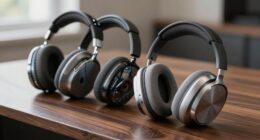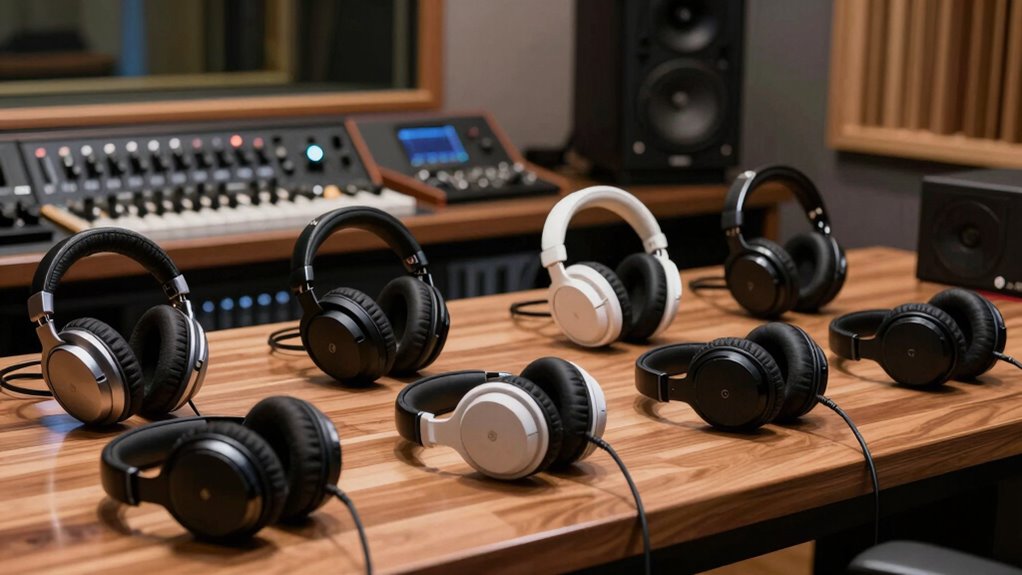

For most home studios, I’d start with the Audio-Technica ATH-M40x: its closed-back design and practical monitoring focus make it a balanced all-rounder for mixing and tracking. The Beyerdynamic DT 770 Pro (80 Ohm) is a strong alternative when isolation matters, while the AKG K240 Studio suits listeners who prefer a more open presentation. The main tradeoffs are isolation versus openness, how revealing the sound is, and whether your audio interface can comfortably drive a higher-impedance model. Read on for the full breakdown of 15 options and how their differences affect real studio decisions.

Get business pricing on monitors, keyboards and dev gear
- Business-only prices and quantity discounts
- Tax-exempt purchasing
- Multiple users, one account, clear invoices
Complete the kit


Key Takeaways
- The ATH-M40x is the most balanced starting point in this lineup: it offers a useful middle ground between the entry-level ATH-M20x and the more feature-focused ATH-M50x.
- Closed-back models dominate the lineup, making the ATH-M40x, ATH-M50x, DT 770 Pro, and Sony MDR7506 more practical for recording near a microphone than the open-back DT 990 Pro.
- The DT 990 Pro appears twice under near-identical names: both listings specify the 250-ohm open-back model, so buyers should compare the listing details rather than assume a meaningful product difference.
- Open and semi-open designs serve a different mixing preference, not a universal upgrade: the DT 990 Pro and AKG K240 Studio can feel less enclosed, but they leak sound and offer less isolation.
- Several low-cost and Bluetooth-oriented options are better viewed as flexible monitoring picks than assured mix references: the PUPGSIS, OneOdio, and FIFINE models should be chosen for practical needs like connectivity, detachable cables, or general studio use.
| Audio-Technica ATH-M50X Professional Studio Monitor Headphones, Black | 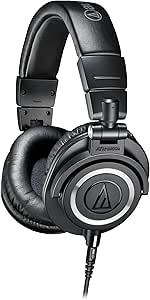 | Best All-Rounder for Mixing | Driver type: Dynamic | Frequency response: 20 Hz–28,000 Hz | Impedance: 38 ohms | VIEW ON AMAZON | See Our Full Breakdown |
| PUPGSIS M20 Wired DJ & Studio Monitor Headphones, 50mm, 3.5/6.35mm |  | Best for Shared Listening | Driver size: 50 mm | Frequency range: 20 Hz–20 kHz | Impedance: 32 ohms | VIEW ON AMAZON | See Our Full Breakdown |
| Beyerdynamic DT 770 Pro (80 Ohm) Closed-Back Studio Headphones, Black |  | Best for Recording and Isolation | Driver type: Dynamic | Frequency response: 5 Hz–35,000 Hz | Impedance: 80 ohms | VIEW ON AMAZON | See Our Full Breakdown |
| Beyerdynamic DT 990 Pro (250 Ohm) Open-Back Studio Headphones, Black |  | Best Open-Back Pick for Mixing | Driver type: Dynamic | Frequency response: 5 Hz–35,000 Hz | Impedance: 250 ohms | VIEW ON AMAZON | See Our Full Breakdown |
| Audio-Technica ATH-M20x Professional Studio Monitor Headphones, White |  | Best Entry-Level Closed-Back Pick | Driver size: 40 mm | Driver type: Dynamic | Impedance: 47 ohms | VIEW ON AMAZON | See Our Full Breakdown |
| Sony MDR7506 Professional Large Diaphragm Headphones | 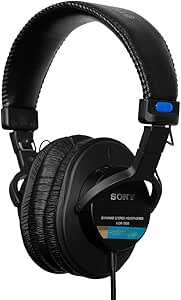 | Best for Tracking and Monitoring | Driver size: 40 mm | Frequency response: 10 Hz–20 kHz | Connectivity: Wired | VIEW ON AMAZON | See Our Full Breakdown |
| OneOdio A71 Hi-Res Wired Over-Ear Studio Headphones for DJ, Mixing – Black |  | Best for Flexible Monitoring | Driver size: 40 mm | Frequency range: 20 Hz–40,000 Hz | Impedance: 32 ohms | VIEW ON AMAZON | See Our Full Breakdown |
| Audio-Technica ATH-M40x Professional Studio Monitor Headphones, Black |  | Best for Mix-Focused Versatility | Driver size: 40 mm | Impedance: 35 ohms | Frequency range: 15–24,000 Hz | VIEW ON AMAZON | See Our Full Breakdown |
| OneOdio Wired DJ Hi-Res Over-Ear Headphones for PC, Keyboard, Guitar – Black |  | Best for Bass-Forward Cueing | Driver size: 50 mm | Impedance: 32 ohms | Frequency response: 20 Hz–40 kHz | VIEW ON AMAZON | See Our Full Breakdown |
| Audio-Technica ATH-M20x Professional Studio Monitor Headphones, Black |  | Best Entry-Level Studio Pick | Driver size: 40 mm | Impedance: 47 ohms | Frequency response: 15–20,000 Hz | VIEW ON AMAZON | See Our Full Breakdown |
| AKG K240 Studio Semi-Open Studio Headphones | 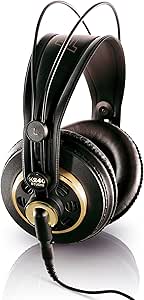 | Best for Long, Open-Feeling Sessions | Design: Semi-open, over-ear | Transducers: 30 mm XXL with Varimotion diaphragms | Headband: Self-adjusting | VIEW ON AMAZON | See Our Full Breakdown |
| OneOdio A70 Bluetooth Over-Ear Headphones, Hi-Res Wired DJ Studio – Black |  | Best for Wireless Convenience | Model: A70 | Connectivity: Bluetooth and wired; 3.5 mm and 6.35 mm connections | Bluetooth version: 5.3 | VIEW ON AMAZON | See Our Full Breakdown |
| FIFINE HD8 Wired Studio Monitor Headphones with Detachable Cables |  | Best Value for a Closed-Back Setup | Design: Over-ear, closed-back | Driver size: 50 mm | Frequency range: 20 Hz–20 kHz | VIEW ON AMAZON | See Our Full Breakdown |
| Audio-Technica ATH-M30x Professional Studio Monitor Headphones |  | Best for Portable Tracking and Editing | Model: ATH-M30x | Driver size: 40 mm | Frequency response: 20 Hz–20,000 Hz | VIEW ON AMAZON | See Our Full Breakdown |
| beyerdynamic DT 990 Pro Open-Back Studio Headphones (250 Ohm) |  | Best for Critical Listening with Studio Gear | Model: DT 990 PRO | Design: Open-back, circumaural | Impedance: 250 ohms | VIEW ON AMAZON | See Our Full Breakdown |
| studio headphones for mixing | Design | Impedance | Sensitivity | Connectivity |
|---|---|---|---|---|
| Audio-Technica ATH-M50X Profes | Over-ear, foldable | 38 ohms | 99 dB | Wired, 3.5 mm jack |
| PUPGSIS M20 Wired DJ & Studio | Over-ear, foldable | 32 ohms | 98 dB | Wired, 3.5 mm and 6.35 mm jacks |
| Beyerdynamic DT 770 Pro | Closed-back, over-ear | 80 ohms | 96 dB | — |
| Beyerdynamic DT 990 Pro | Open-back, over-ear | 250 ohms | 96 dB | — |
| Audio-Technica ATH-M20x Profes | Wired, over-ear | 47 ohms | 96 dB | — |
| Sony MDR7506 Professional Larg | Over-ear, closed-back, foldable | — | — | Wired |
| OneOdio A71 Hi-Res Wired Over- | Over-ear, foldable, swiveling earcups | 32 ohms | 110 dB | Wired; 3.5 mm and 6.35 mm jacks |
| Audio-Technica ATH-M40x Profes | — | 35 ohms | 98 dB | — |
| OneOdio Wired DJ Hi-Res Over-E | — | 32 ohms | 110 dB | Wired; 3.5 mm and 6.35 mm jacks |
| Audio-Technica ATH-M20x Profes | Over-ear, closed-back | 47 ohms | 96 dB | Wired, 3.5 mm headphone jack |
| AKG K240 Studio Semi-Open Stud | Semi-open, over-ear | — | — | Stereo 1/8-inch connector with screw-on 1/4-inch adapter |
| OneOdio A70 Bluetooth Over-Ear | Foldable, over-ear | — | — | Bluetooth and wired; 3.5 mm and 6.35 mm connections |
| FIFINE HD8 Wired Studio Monito | Over-ear, closed-back | — | — | — |
| Audio-Technica ATH-M30x Profes | Circumaural, collapsible | 38 ohms | 100 dB | — |
| beyerdynamic DT 990 Pro Open-B | Open-back, circumaural | 250 ohms | 96 dB | Wired, 3.5 mm and 6.35 mm jacks |
More Details on Our Top Picks
Audio-Technica ATH-M50X Professional Studio Monitor Headphones, Black
The ATH-M50X is the most flexible closed-back pick here for producers who need one pair for editing, tracking, and general mix checks. Its 38-ohm impedance makes it easier to drive from common headphone outputs than the 250-ohm DT 990 Pro, while the closed design offers useful isolation when recording near a microphone. The detachable cable and swiveling earcups also make it more adaptable for desk work and monitoring than the simpler ATH-M20x. Its low end is prominent, though, so I would cross-check bass decisions on speakers or another reference rather than treating its deep bass as a neutral measure. The fit can feel bulky over long sessions, and the wired connection limits movement. For buyers wanting an all-purpose studio monitor, that balance earns it the top spot.
Pros:- Closed-back construction helps reduce sound leakage during recording
- Detachable cable is easier to replace than a fixed lead
- Swiveling earcups support practical one-ear monitoring
- 38-ohm impedance suits many standard headphone outputs
Cons:- Deep, prominent bass can make low-end judgments less reliable without reference checks
- Bulky over-ear fit may feel tiring during extended sessions
- Wired-only design restricts movement around the studio
Best for: Home-studio producers who need closed-back isolation, easy-to-drive headphones, and a single pair for tracking and mix checks
Not ideal for: Mixers seeking an open, spacious presentation or a strictly neutral bass reference; the DT 990 Pro is better suited to open-back listening when leakage is acceptable
- Driver type:Dynamic
- Frequency response:20 Hz–28,000 Hz
- Impedance:38 ohms
- Sensitivity:99 dB
- Design:Over-ear, foldable
- Connectivity:Wired, 3.5 mm jack
- Cable:Detachable
- Warranty:2 years
Our verdict“Choose the ATH-M50X if you want a versatile, isolating studio pair that is easier to drive than the 250-ohm DT 990 Pro.”
PUPGSIS M20 Wired DJ & Studio Monitor Headphones, 50mm, 3.5/6.35mm
The PUPGSIS M20 stands apart from the more mixing-focused ATH-M50X and DT 770 Pro with a sharing port that lets another listener connect for collaborative checks. Its supplied 3.5 mm and 6.35 mm connectivity also makes it straightforward to move between common consumer and studio outputs, while the 32-ohm impedance is friendly to modest headphone sources. Those conveniences make it a practical choice for DJ cueing, lessons, or quick two-person reviews. The tradeoff is that the product data gives less evidence of studio-specific refinement than the established Audio-Technica and Beyerdynamic alternatives, and its 20 Hz–20 kHz range does not extend as far on paper as their stated ranges. I would pick it for shared sessions and general monitoring, not as my primary reference for detailed mix decisions.
Pros:- Sharing port supports listening with another person
- 3.5 mm and 6.35 mm connections suit common audio sources
- 32-ohm impedance is compatible with many standard headphone outputs
- Foldable design is easier to store than a fixed, non-folding pair
Cons:- Product information provides less basis for judging studio-reference performance than the DT 770 Pro or ATH-M50X
- Wired-only connection limits mobility
- Bulkier construction is less convenient for portable use
Best for: DJs, students, and home-studio collaborators who want wired monitoring with a second-listener sharing port
Not ideal for: Mix engineers who prioritize a proven reference option and detailed mix translation over shared-listening convenience
- Driver size:50 mm
- Frequency range:20 Hz–20 kHz
- Impedance:32 ohms
- Sensitivity:98 dB
- Connectivity:Wired, 3.5 mm and 6.35 mm jacks
- Weight:12.8 oz
- Design:Over-ear, foldable
- Additional feature:Sharing port
Our verdict“Choose the PUPGSIS M20 for collaborative DJ or studio listening, but favor the ATH-M50X or DT 770 Pro for a more established mix-reference option.”
Beyerdynamic DT 770 Pro (80 Ohm) Closed-Back Studio Headphones, Black
The DT 770 Pro is the strongest fit in this group for recording in the same room as a microphone: its closed-back design helps contain headphone sound, and the velour pads are intended for extended wear. Compared with the open-back DT 990 Pro, it is the more practical choice when leakage matters; compared with the ATH-M50X, its 80-ohm impedance is more demanding of the source. A capable interface or headphone output can drive it, but a basic device may leave less headroom than it would with the 38-ohm ATH-M50X. Its stated 5 Hz–35,000 Hz response is broad, yet a published range alone does not make it a neutral reference. The 3-meter cable also suits a studio desk better than travel. I rank it for tracking-first rooms where isolation and comfort outweigh portability.
Pros:- Closed-back construction helps limit sound leakage into microphones
- Velour ear pads suit extended monitoring sessions
- 3.5 mm plug includes a 6.35 mm adapter for studio connections
- 3-meter cable provides reach around a studio setup
Cons:- 80-ohm impedance can require a stronger headphone output than the ATH-M50X
- Long cable and studio-focused build are inconvenient for portable use
- Closed-back listening offers less open presentation than the DT 990 Pro
Best for: Vocalists, musicians, and engineers recording near open microphones who need closed-back isolation and long-session comfort
Not ideal for: Mobile users or anyone with a weak headphone output; the ATH-M50X is easier to drive, while the DT 990 Pro is the open-back alternative
- Driver type:Dynamic
- Frequency response:5 Hz–35,000 Hz
- Impedance:80 ohms
- Sensitivity:96 dB
- Design:Closed-back, over-ear
- Weight:9.5 oz
- Cable length:3 m
- Connector:3.5 mm with 6.35 mm adapter
- Ear pad material:Velour
Our verdict“Choose the DT 770 Pro when recording isolation and comfortable closed-back monitoring matter more than easy portability or low-power compatibility.”
Beyerdynamic DT 990 Pro (250 Ohm) Open-Back Studio Headphones, Black
For mixing in a quiet room, the DT 990 Pro offers the lineup’s clearest open-back alternative to closed models such as the ATH-M50X and DT 770 Pro. Its open-back design can make stereo placement feel less confined, which is useful when checking panning and spatial relationships. That openness comes with a firm boundary: sound escapes, so it is unsuitable for recording beside a live microphone or listening around others. At 250 ohms, it also needs a capable interface or headphone amplifier; the lower-impedance ATH-M50X is a safer match for weaker outputs. The 3-meter coiled cable and lack of isolation further anchor it to a stationary setup. I rank it for dedicated mixing spaces, not as an all-purpose or travel pair.
Pros:- Open-back design provides a less enclosed listening presentation
- Velour ear pads support long mixing sessions
- Replaceable parts can help extend service life
- Includes 3.5 mm and 6.35 mm connector options
Cons:- Sound leakage makes it unsuitable for microphone tracking or quiet shared spaces
- 250-ohm impedance calls for a capable interface or headphone amplifier
- Long coiled cable and open construction limit mobile use
Best for: Mixers working in a quiet, dedicated room with an audio interface or headphone amplifier who value an open stereo presentation
Not ideal for: Vocal tracking, shared spaces, or direct use from weak headphone outputs; the closed DT 770 Pro or lower-impedance ATH-M50X is a better fit
- Driver type:Dynamic
- Frequency response:5 Hz–35,000 Hz
- Impedance:250 ohms
- Sensitivity:96 dB
- Design:Open-back, over-ear
- Weight:8.8 oz
- Cable:3 m coiled
- Connector:3.5 mm and 6.35 mm
- Materials:Plastic, spring steel, and velour
Our verdict“Choose the DT 990 Pro for open-back mixing in a quiet studio with adequate amplification, not for tracking or everyday portable listening.”
Audio-Technica ATH-M20x Professional Studio Monitor Headphones, White
The white ATH-M20x is the straightforward entry point here for buyers who want closed-back monitoring without the extra flexibility of the ATH-M50X. Its over-ear design helps isolate the listener during tracking, and the 9.8-foot cable gives room to work at a desk. The tradeoff is that the M50X adds swiveling earcups and a more clearly specified detachable cable, making it the more adaptable choice for frequent monitoring and varied studio tasks. Against the open-back DT 990 Pro, the M20x makes more sense near microphones, but it will not provide the same open presentation for spatial mix checks. The supplied data lists a volume control and detachable cable, though it does not specify driver construction details beyond a 40 mm driver size. This is a basic, practical monitor rather than a feature-rich all-rounder.
Pros:- Closed-back over-ear design supports tracking near microphones
- 9.8-foot cable provides working reach at a studio desk
- 40 mm drivers suit general monitoring tasks
- Listed volume control and detachable cable add practical convenience
Cons:- Less adaptable for one-ear monitoring than the ATH-M50X with swiveling earcups
- Wired design and long cable are not suited to mobile listening
- Does not offer the open-back presentation of the DT 990 Pro
Best for: New home-studio owners who need an affordable-style, wired closed-back option for tracking and basic mix checks without requiring an open-back presentation
Not ideal for: Experienced mixers seeking maximum flexibility or open stereo presentation; the ATH-M50X adds swiveling earcups, while the DT 990 Pro is open-back
- Driver size:40 mm
- Driver type:Dynamic
- Impedance:47 ohms
- Sensitivity:96 dB
- Weight:261 g
- Design:Wired, over-ear
- Cable length:9.8 ft
- Connector:3.5 mm jack
- Additional features:Volume control, detachable cable
Our verdict“Choose the ATH-M20x for basic closed-back tracking and monitoring, but step up to the ATH-M50X if you need more flexible studio handling.”
Sony MDR7506 Professional Large Diaphragm Headphones
The Sony MDR7506 is a practical pick when mixing work also includes recording: its closed-back fit helps limit sound leaking into a microphone, while the detailed presentation can make edits and monitoring easier to follow. Its 9.8-foot cord gives room to move around a desk or tracking setup, and the foldable design is easier to pack than the bulkier OneOdio 50mm DJ headphones. Compared with the Audio-Technica ATH-M40x, the Sony has a simpler fixed-cable arrangement rather than a detachable cable, so cable damage is a bigger inconvenience. The tradeoff is a wired-only setup and a cord that cannot be swapped; I would choose it for a dependable monitoring tool, not for cable flexibility or wireless listening.
Pros:- Closed-back design helps reduce sound leakage during recording
- Detailed audio makes monitoring and edit work easier to follow
- Folds for more compact storage and transport
- Long 9.8-foot cord suits a fixed studio workspace
Cons:- Non-detachable cord is less convenient to replace or change
- Wired-only design restricts movement away from the audio source
- No swiveling-earcup feature for one-ear monitoring
Best for: Home-recording musicians and engineers who need closed-back headphones for tracking, editing, and desk-based monitoring.
Not ideal for: Mixers who need a replaceable cable or wireless freedom, or who want one-ear monitoring features such as the swiveling cups on the ATH-M40x.
- Driver size:40 mm
- Frequency response:10 Hz–20 kHz
- Connectivity:Wired
- Cord length:9.8 ft
- Connector:Gold-plated plug; 1/4-inch and 1/8-inch compatibility
- Design:Over-ear, closed-back, foldable
- Weight:8 oz
Our verdict“Choose the MDR7506 for detailed closed-back tracking and monitoring if a fixed, non-detachable cable is acceptable.”
OneOdio A71 Hi-Res Wired Over-Ear Studio Headphones for DJ, Mixing – Black
The OneOdio A71 suits a studio where headphones move between mixing, DJ cueing, and sharing a session. Its swiveling earcups support one-ear monitoring, while the detachable coiled cable can stretch across a workstation without being permanently tethered to the headphones. A share port also makes it easier for another person to listen alongside you. Compared with the more studio-focused Audio-Technica ATH-M40x, the A71 puts more emphasis on convenience and DJ-style handling than on a clearly specified flat response. Its 20 Hz–40 kHz range alone does not establish mix accuracy, so I would check important tonal decisions on other speakers or headphones. The plastic construction keeps the package lightweight, but may feel less reassuring than the M40x’s aluminum enclosure.
Pros:- Swiveling earcups support one-ear monitoring
- Detachable coiled cable offers stretch and easier replacement
- Share port lets a second listener connect
- Foldable design and adjustable headband aid everyday studio handling
Cons:- Plastic construction may feel less robust than the ATH-M40x
- Wired connection does not provide freedom from the audio source
- Listed frequency range does not by itself establish neutral mixing response
Best for: Producers and DJs who want one wired pair for desk monitoring, cueing, and sharing audio with a collaborator.
Not ideal for: Mix engineers seeking the most clearly specified neutral reference or a sturdier, aluminum-built alternative such as the ATH-M40x.
- Driver size:40 mm
- Frequency range:20 Hz–40,000 Hz
- Impedance:32 ohms
- Sensitivity:110 dB
- Connectivity:Wired; 3.5 mm and 6.35 mm jacks
- Cable length:6.6–9.8 ft coiled
- Design:Over-ear, foldable, swiveling earcups
- Cable:Detachable
Our verdict“Pick the A71 if flexible DJ-style monitoring and session sharing matter more than a firmly established neutral-reference profile.”
Audio-Technica ATH-M40x Professional Studio Monitor Headphones, Black
The Audio-Technica ATH-M40x is the strongest fit here for mixers who want a purpose-built wired monitor without stepping up to the more DJ-oriented OneOdio models. Its stated flat tuning is aimed at revealing balance choices, and the circumaural cups help keep listening focused in a studio. The detachable cables are a meaningful advantage over the Sony MDR7506’s fixed cord: replacing or changing a cable does not mean retiring the headphones. Swiveling cups also make single-ear checks convenient. The tradeoffs are a bulky, wired build and a 35-ohm impedance that may call for more output from some devices. It is less convenient for portable listening than a lighter foldable option, but its combination of monitoring intent and replaceable cables makes it the most adaptable mixing pick in this group.
Pros:- Flat-tuning design is aimed at monitoring and mix decisions
- Detachable cable is easier to replace than the MDR7506’s fixed cord
- 90-degree swiveling cups support one-ear monitoring
- Aluminum enclosure and pro-grade pads and headband
Cons:- Bulky design is less convenient for portable use
- Wired-only connection limits movement
- 35-ohm impedance may need more output from some playback devices
Best for: Mixers who want a wired monitor with stated flat tuning, replaceable cables, and swiveling cups for occasional one-ear checks.
Not ideal for: Mobile producers prioritizing a compact carry, wireless use, or a lightweight everyday headphone.
- Driver size:40 mm
- Impedance:35 ohms
- Frequency range:15–24,000 Hz
- Sensitivity:98 dB
- Cable:Detachable; coiled and straight options
- Ear cup design:Circumaural with 90-degree swiveling
- Materials:Aluminum enclosure; pro-grade ear pads and headband
- Foldable:Yes
Our verdict“Choose the ATH-M40x if mix-focused tuning, replaceable cables, and one-ear monitoring outweigh portability.”
OneOdio Wired DJ Hi-Res Over-Ear Headphones for PC, Keyboard, Guitar – Black
The OneOdio Wired DJ headphones stand apart from the ATH-M40x and ATH-M20x by leaning into powerful bass and DJ-friendly listening rather than presenting themselves primarily as neutral mix references. That extra low-end emphasis can make them useful for cueing and checking how bass-heavy material feels, but it can also skew judgments about low-frequency balance. Their 50 mm drivers and detachable cable make them a flexible wired option for a keyboard, guitar setup, or audio interface, and the shared port can help during collaborative listening. At 415 g, they are heavier than the 8-ounce Sony MDR7506, and their bulk is less appealing for long sessions or travel. I would treat them as a utility pair for cueing and broad monitoring, not my first choice for precise tonal decisions.
Pros:- 50 mm drivers are described as delivering powerful bass, clear vocals, and crisp highs
- Detachable cable supports replacement and easier storage
- 3.5 mm and 6.35 mm compatibility suits varied audio equipment
- Shared audio port can help two listeners follow a session
Cons:- Bass-forward presentation may complicate neutral low-end mixing decisions
- At 415 g, it is heavier than the Sony MDR7506
- Wired-only connection restricts mobility
Best for: DJs and home-studio musicians who want bass-forward wired headphones for cueing, instrument monitoring, and shared listening.
Not ideal for: Mixers making fine low-frequency balance decisions who prefer a more explicitly neutral option such as the ATH-M40x.
- Driver size:50 mm
- Impedance:32 ohms
- Frequency response:20 Hz–40 kHz
- Sensitivity:110 dB
- Weight:415 g
- Cable:Detachable
- Connectivity:Wired; 3.5 mm and 6.35 mm jacks
Our verdict“Choose these OneOdio headphones for bass-forward DJ cueing and general monitoring, not as your main neutral mix reference.”
Audio-Technica ATH-M20x Professional Studio Monitor Headphones, Black
The Audio-Technica ATH-M20x is a straightforward starting point for recording and basic mixing: its closed-back over-ear design helps isolate playback, and the 9.8-foot cable provides useful reach at a studio desk. Compared with the ATH-M40x, it gives up detachable cables and swiveling earcups, so it is less adaptable when cables need replacing or one-ear monitoring is part of the workflow. The stated 15 Hz–20 kHz range and 40 mm drivers make it a practical wired monitor, but the supplied details do not establish the same flat-tuning emphasis described for the M40x. That makes the M20x more compelling as an accessible tracking and general monitoring tool than as a single, definitive reference for critical balance decisions. Its wired-only setup also suits fixed workstations better than mobile use.
Pros:- Closed-back design provides sound isolation for tracking
- 40 mm drivers are intended for studio tracking and mixing
- 9.8-foot cable gives room to move around a desk
- Over-ear fit supports focused listening
Cons:- Fixed cable is less convenient to replace than the ATH-M40x’s detachable cable
- No swiveling-earcup feature for one-ear monitoring
- Wired-only design is less suited to mobile listening
Best for: New home-studio owners who need closed-back headphones for tracking and routine mix checks at a fixed workstation.
Not ideal for: Experienced mixers who need detachable cables, swiveling cups, or the more explicit flat-tuning focus of the ATH-M40x.
- Driver size:40 mm
- Impedance:47 ohms
- Frequency response:15–20,000 Hz
- Sensitivity:96 dB
- Cable length:9.8 ft / 2.99 m
- Connectivity:Wired, 3.5 mm headphone jack
- Design:Over-ear, closed-back
- Materials:Copper-clad aluminum, neodymium, and plastic
Our verdict“Pick the ATH-M20x as a simple closed-back starter for tracking and routine monitoring, but choose the ATH-M40x for greater mix-work flexibility.”
AKG K240 Studio Semi-Open Studio Headphones
The K240 Studio suits mixers who want a less enclosed presentation for editing and critical listening. Its semi-open, over-ear design gives it a different role from the closed-back FIFINE HD8, which is better at keeping room sound out and limiting headphone spill. The K240’s self-adjusting headband and over-ear pads support extended sessions, while its 30 mm Varimotion transducers are described as delivering a wide dynamic range, solid bass, and clear highs. That makes it a useful option for detail work, though the supplied information does not establish a flat or neutral tuning. The tradeoff is practical: sound can leak both ways, so it is a poor fit for tracking beside a microphone or working in a noisy room. Its long cable also favors a desk over portable use.
Pros:- Semi-open construction offers an alternative to the more enclosed sound of closed-back models such as the FIFINE HD8.
- Self-adjusting headband and over-ear pads are suited to extended sessions.
- 30 mm XXL transducers with Varimotion diaphragms are specified for wide dynamic range and clear highs.
- Includes a 3-meter cable and screw-on 1/4-inch adapter for studio connections.
Cons:- Semi-open design provides limited isolation and can leak sound into microphones.
- Long cable and over-ear form are less convenient for portable listening than the foldable OneOdio A70.
- Some devices may require an adapter or compatible headphone jack.
Best for: Home-studio mixers working in a quiet room who value an open-feeling fit for longer editing and listening sessions.
Not ideal for: Vocalists recording near a live microphone or mixers in noisy shared spaces, since the semi-open cups allow sound to pass through.
- Design:Semi-open, over-ear
- Transducers:30 mm XXL with Varimotion diaphragms
- Headband:Self-adjusting
- Connectivity:Stereo 1/8-inch connector with screw-on 1/4-inch adapter
- Cable length:3 meters (9.9 feet)
- Listed uses:Studio mixing, podcasts, and Hi-Fi listening
Our verdict“Choose the K240 Studio for long mixing sessions in a quiet room, but pick a closed-back model if isolation matters.”
OneOdio A70 Bluetooth Over-Ear Headphones, Hi-Res Wired DJ Studio – Black
The A70 is the convenience-first choice here, not my pick for a primary mix reference. Its Bluetooth and wired options make it easier to move between casual listening and a wired studio setup than the cable-only Audio-Technica ATH-M30x. A claimed 72-hour wireless playback and foldable construction suit people who want one pair for a desk, commute, and general listening. The 40 mm neodymium drivers are described as providing powerful bass and stereo clarity, but that description does not establish the tonal neutrality a mix decision demands. For mixing, I would favor a dedicated wired monitor headphone and use the A70 as a flexible secondary check. Its microphones, push-button controls, and music-sharing feature add everyday utility, though wireless operation brings battery dependence and wired use still means managing a cable.
Pros:- Bluetooth and wired connectivity offer more listening flexibility than the cable-only ATH-M30x.
- Manufacturer lists up to 72 hours of wireless playback.
- Foldable over-ear construction is convenient for storage and travel.
- Includes a built-in microphone and supports music sharing.
Cons:- Wireless playback depends on battery charge, making it less straightforward than a fully wired mixing headphone.
- The supplied description does not establish a neutral frequency balance for making mix decisions.
- Wired listening still requires a cable, so it does not remove cable handling in the studio.
Best for: Home producers who want one foldable headphone for casual wireless listening and occasional wired monitoring, with a long stated battery life.
Not ideal for: Mixers seeking a dedicated, consistently wired reference pair or buyers who need sound isolation characteristics specified for studio tracking.
- Model:A70
- Connectivity:Bluetooth and wired; 3.5 mm and 6.35 mm connections
- Bluetooth version:5.3
- Bluetooth range:10 meters
- Listed battery life:Up to 72 hours
- Drivers:40 mm neodymium
- Design:Foldable, over-ear
- Controls and features:Push-button controls, built-in microphone, and music sharing
Our verdict“Pick the A70 if wireless versatility matters more than having a dedicated wired reference headphone for mixing.”
FIFINE HD8 Wired Studio Monitor Headphones with Detachable Cables
The HD8 makes the strongest case for practical, wired monitoring among these five: it pairs a closed-back design with passive isolation, so it is better suited to noisy rooms and recording near a microphone than the semi-open AKG K240 Studio. Its detachable coiled cables, supplied in 3.5 mm and 6.35 mm formats, also offer a straightforward way to connect to different studio gear and replace a damaged lead. The listed 50 mm drivers and 20 Hz–20 kHz range describe its hardware, but those figures alone do not prove mix accuracy. Compared with the Audio-Technica ATH-M30x, the HD8 emphasizes cable flexibility and a stated lightweight build; the M30x has a stated 40 mm driver and collapsible design. The HD8’s passive isolation is not active noise cancellation, and its bulky over-ear form is less suited to travel.
Pros:- Closed-back cups and passive isolation help reduce room distractions and headphone spill.
- Detachable coiled cables include 3.5 mm and 6.35 mm connectors.
- Listed 265 g weight and soft cushions support longer monitoring sessions.
- 50 mm drivers and a listed 20 Hz–20 kHz frequency range.
Cons:- Passive isolation is not active noise cancellation.
- The supplied specifications do not establish a neutral response for critical mix decisions.
- Bulky closed-back construction is less convenient for portable use than the foldable OneOdio A70.
Best for: Budget-conscious home-studio owners who need wired closed-back headphones for monitoring and recording in a shared or moderately noisy room.
Not ideal for: Mixers who want an open-back presentation, active noise cancellation, or a compact pair for frequent travel.
- Design:Over-ear, closed-back
- Driver size:50 mm
- Frequency range:20 Hz–20 kHz
- Weight:265 g
- Cable:Detachable coiled cable, 9.8 feet
- Connectors:3.5 mm and 6.35 mm
- Isolation:Passive noise isolation
Our verdict“Choose the HD8 for adaptable wired monitoring and isolation, but look elsewhere if portability or an open-back presentation is your priority.”
Audio-Technica ATH-M30x Professional Studio Monitor Headphones
The ATH-M30x earns its place as a portable closed-back monitor for people who move between a home setup and field recording. Its circumaural fit is designed for sound isolation, and the collapsible construction makes it easier to pack than the bulkier FIFINE HD8. Audio-Technica specifies 40 mm drivers with rare earth magnets and highlights mid-range definition, a useful emphasis when checking vocal and instrument balance. That still does not make it a substitute for checking mixes on other playback systems. Compared with the open-back beyerdynamic DT 990 Pro, the M30x is the more practical choice for tracking and shared rooms; the DT 990 Pro is aimed at spacious critical listening but leaks sound and has a 250-ohm load. The M30x tradeoffs are its single-side cable and passive-only isolation.
Pros:- Circumaural closed-back design provides passive isolation for tracking and shared spaces.
- Collapsible construction is easier to pack than the non-collapsible FIFINE HD8.
- 40 mm drivers and stated mid-range definition support detailed monitoring.
- Includes a protective case and screw-on adapter.
Cons:- Single-side cable exit may not suit every studio layout or user preference.
- Passive isolation does not provide active noise cancellation.
- Closed-back presentation differs from the more open listening approach of the DT 990 Pro.
Best for: Mobile producers and field recordists who need foldable, closed-back headphones for tracking, editing, and monitoring outside a quiet control room.
Not ideal for: Mixers seeking an open-back soundstage or a detachable cable, or anyone who wants active noise cancellation.
- Model:ATH-M30x
- Driver size:40 mm
- Frequency response:20 Hz–20,000 Hz
- Impedance:38 ohms
- Sensitivity:100 dB
- Design:Circumaural, collapsible
- Noise control:Passive isolation
- Included items:Headphone, cable, protective case, user manual, and screw-on adapter
Our verdict“Choose the ATH-M30x if portability and isolation matter more than an open-back presentation or a detachable cable.”
beyerdynamic DT 990 Pro Open-Back Studio Headphones (250 Ohm)
The DT 990 Pro is the specialist pick for mixers with a suitable interface or headphone amplifier who want an open-back listening experience. Its design is intended to create a wide, natural soundstage, making it a different tool from the closed-back ATH-M30x, which is better suited to isolation and tracking. The 250-ohm impedance is the main buying condition: a weak headphone output may not drive it to a useful level, so check your equipment before choosing it. Open construction also lets sound escape and does little to block room noise; the AKG K240 Studio is semi-open, but the same basic caution about leakage applies. Velour ear pads and a robust headband support long sessions, though comfort cannot make this the right choice for recording beside a live microphone. Treat it as a room-bound listening tool, not an all-purpose travel pair.
Pros:- Open-back design is intended to provide a wide, natural soundstage for critical listening.
- Circumaural velour ear pads are suited to extended sessions.
- Robust headband and replaceable ear pads support continued studio use.
- Wired 3.5 mm and 6.35 mm connections suit common studio headphone outputs.
Cons:- 250-ohm impedance may require a capable headphone amp or studio interface.
- Open-back construction leaks sound and offers little isolation.
- Less suited to tracking and travel than the closed-back ATH-M30x.
Best for: Mixers and editors with a capable studio interface or headphone amp who want open-back headphones for critical listening in a quiet room.
Not ideal for: Laptop-only users with an uncertain headphone output, vocalists tracking near a microphone, or anyone who needs isolation or a portable closed-back pair.
- Model:DT 990 PRO
- Design:Open-back, circumaural
- Impedance:250 ohms
- Frequency response:Up to 35,000 Hz (listed)
- Sensitivity:96 dB
- Driver type:Dynamic
- Weight:1.2 pounds
- Connectivity:Wired, 3.5 mm and 6.35 mm jacks
Our verdict“Choose the DT 990 Pro for quiet-room critical listening if your studio gear can drive its 250-ohm load.”

How We Picked
I ranked these studio headphones for mixing by how well their design and stated features suit real monitoring tasks: judging balance, hearing detail, working near a microphone, and wearing them for extended sessions. I also weighed build and maintenance, including cable arrangements, replaceable or detachable parts where specified, and whether a design seems practical for regular studio use. Because a product listing alone cannot establish a perfectly neutral response, I avoid treating marketing language or a large driver as proof of mix accuracy.
The order favors models with a clearer role and fewer compromises for a broad range of home-studio work. The ATH-M40x leads as a versatile closed-back pick; the DT 770 Pro (80 Ohm) follows for isolation-focused work, while the ATH-M50x brings a more feature-rich alternative. Open-back models rank lower for general recording versatility, not because openness is inherently worse, but because leakage limits their use around microphones. Duplicate DT 990 Pro listings are included as supplied, with no invented distinction between them.
Factors to Consider When Choosing Studio Headphones For Mixing
Choosing headphones for mixing is less about finding one universally correct model and more about matching the design to your room, workflow, and listening habits. These broader checks can help you avoid paying for features that do not solve your actual monitoring problem.
Choose Open, Closed, or Semi-Open Around Your Recording Setup
Start with what else is happening in the room, not with a claim that one headphone style is automatically more accurate. Closed-back headphones reduce sound spill, which matters if you record vocals or acoustic instruments near a microphone. Open-back models can feel less sealed and may suit focused editing or listening in a quiet room, but their leakage can end up in a mic recording. Semi-open designs sit between those approaches, though they do not remove the need to check for spill. A common mistake is buying open-back headphones for a shared room and then discovering they disturb others or complicate tracking. If you need one pair for both recording and mixing, closed-back is usually the more adaptable starting point.
Check Impedance Against the Device That Will Drive Them
Impedance affects how easily a source can drive headphones to a useful listening level, so check the full signal chain before choosing a high-impedance model. A headphone output on a computer, interface, mixer, or portable device may behave differently from a dedicated headphone amplifier. A 250-ohm model may need more drive than a lower-impedance alternative, especially if you want comfortable headroom without turning the output up sharply. Do not assume that a higher impedance means better mixing or better sound by itself. Check your interface specifications and leave enough level margin for quiet passages. If you move between devices often, a more forgiving impedance can reduce setup friction.
Treat Frequency Balance as a Translation Tool, Not a Guarantee
Headphones can reveal edits and details, but no model makes a mix automatically translate to speakers, a car, or earbuds. Your familiarity with a headphone’s tonal balance matters: learn how trusted reference tracks sound on it before making major EQ decisions. Consistency and repeated checks are more useful than chasing a specification that promises flatness without context. A frequent mistake is boosting bass because the room or headphone fit masks it, then carrying that excess into the mix. Compare low, mid, and high frequencies at a moderate listening level, and check important choices on another playback system. Use headphones alongside other references when the mix decision affects the whole balance.
Prioritize Fit and Comfort for the Length of Your Sessions
Comfort is a working feature: pressure, heat, and clamp can distract from subtle listening and shorten sessions. Head shape, glasses, hair, and personal sensitivity all affect fit, so product dimensions alone may not predict how a pair will feel. Weight distribution and pad contact matter alongside the headband, especially if you mix for long stretches. A snug seal helps closed-back headphones isolate, but excessive pressure can make them unpleasant to wear. If possible, check the return policy and try a pair during a realistic session rather than judging it in a short listen. Do not trade away comfort for a feature you will rarely use.
Think About Cables, Replacement Parts, and Daily Handling
In a studio, small handling details can affect how often headphones get used and how long they stay useful. A detachable cable can be easier to replace than a permanently attached one, while a long cable may suit a desk setup but snag or clutter a compact workspace. Foldable or swiveling construction can help with storage and single-ear monitoring, though moving parts add another thing to handle carefully. Check whether the cable connection, pads, and other wear parts are replaceable before treating a pair as a long-term studio tool. Avoid paying extra for portability if the headphones will stay at one workstation. Match the cable and maintenance design to your actual setup.
Spend More Only When the Upgrade Solves a Real Limitation
A more expensive model makes sense when it addresses a specific constraint, such as needing stronger isolation, a preferred open-back feel, or sturdier construction for frequent use. It is a poor upgrade if the main expectation is that price alone will make mixes translate. Room treatment, monitoring habits, and reference checks can matter more than moving between similar closed-back headphones. Beginners may get more from learning one familiar pair than repeatedly changing models and second-guessing tonal differences. If you already own headphones that work for tracking, consider whether a second pair would add a genuinely different perspective. Buy for the next practical step in your workflow, not for a vague promise of professional sound.
Frequently Asked Questions
Can I mix on closed-back headphones, or do I need open-back models?
Yes, you can mix on closed-back headphones, and they are often more useful if you also record with a microphone in the same room. Their isolation helps limit headphone spill into a vocal or instrument recording. Open-back models may feel less enclosed, but that does not make them automatically more accurate for every listener or room. If you choose closed-back headphones, learn their tonal character with familiar reference tracks and check key decisions on another playback system. For a single pair handling both tracking and mixing, closed-back is often the more flexible choice.
Will a 250-ohm pair work with my laptop or audio interface?
It depends on the headphone output, so check the specifications for your exact laptop or interface rather than relying on a general rule. A 250-ohm model may play from some devices but lack comfortable volume or headroom on others. Listen for whether you can reach a clear, moderate level without running the output near its limit. If you use several sources, a lower-impedance option can be the simpler fit. A dedicated headphone amplifier is another route if you specifically want a high-impedance model and your existing output is underpowered.
Are the two DT 990 Pro listings different versions?
The supplied product names describe both as the DT 990 Pro, open-back, 250-ohm headphones, so this roundup has no confirmed model difference to separate them. Compare each listing’s exact included cable, condition, package details, and seller information before choosing. Do not assume one is an updated or lower-impedance version unless its specifications say so. The key decision is whether an open-back, high-impedance design fits your room and headphone output. If you need isolation for recording, a closed-back option in this lineup is a more suitable direction.
Is a Bluetooth headphone a good main pair for mixing?
A Bluetooth model can be convenient for general listening and wireless use, but convenience is not the same as a dependable wired monitoring workflow. Bluetooth processing and device settings can add latency or alter playback, which can complicate recording and critical timing decisions. If a model also supports wired use, check whether wired operation bypasses wireless processing and whether the cable connection suits your setup. For final balance decisions, use a consistent wired signal path and verify the mix elsewhere. A Bluetooth pair is usually easier to justify as a flexible secondary option than as the only mix reference.
Should beginners buy a starter model or move straight to a more capable pair?
A beginner should prioritize a comfortable, practical pair that can handle regular listening and, ideally, recording—not simply the most advanced-sounding model. The ATH-M20x is a straightforward entry point, while the ATH-M40x offers a broader all-round role if you want more room to grow. Moving up makes sense when a clear limitation is holding you back, such as a need for better isolation or a different open-back perspective. Before upgrading, learn your current headphones with reference tracks and check mixes on other systems. Familiarity often improves decisions more than owning several similar pairs.
Conclusion
My best overall pick is the Audio-Technica ATH-M40x for its balanced fit as a closed-back mixing and tracking option. For best value and beginners, the ATH-M20x is the simpler starting point; choose the ATH-M40x instead if you want a more capable all-round pair from the outset. The best premium-leaning choice in this group is the ATH-M50x for buyers who want a more feature-rich closed-back model, while the DT 770 Pro (80 Ohm) makes more sense when isolation is the priority. For a more open listening feel in a quiet room, compare the AKG K240 Studio with the DT 990 Pro, keeping leakage and source drive in mind. If your setup calls for a particular feature—Bluetooth flexibility, detachable cables, or a compact monitoring pair—consider the OneOdio or FIFINE options, but choose them for that practical need rather than treating them as automatic mix-reference upgrades.
Halloween Picks
halloween
As an affiliate, we earn on qualifying purchases.