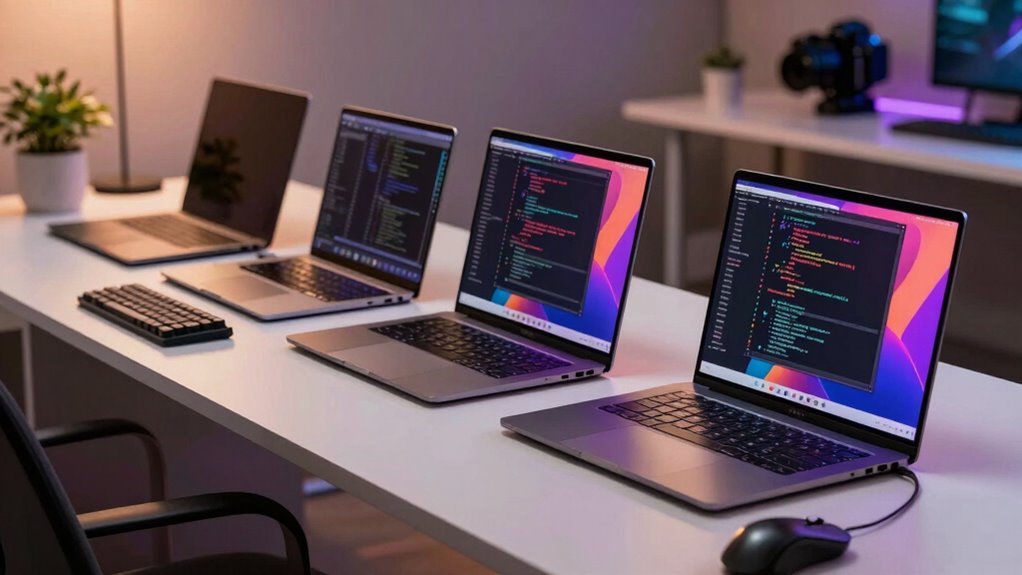

Finding the right laptop for programming in 2026 involves balancing performance, portability, and budget. The Lenovo V15 Laptop stands out as the best overall thanks to its solid AMD Ryzen 5 processor and ample RAM, ideal for most coding tasks. For those prioritizing power, the NIMO 15.6-inch AI Creator Laptop offers a high-performance AMD Ryzen 5 6600H chip with a bright FHD display. A common challenge is choosing between lightweight portability and raw computing power—each comes with tradeoffs like battery life or cost. Continue reading for a detailed breakdown of these options, tailored to different programming needs and budgets.

Get business pricing on monitors, keyboards and dev gear
- Business-only prices and quantity discounts
- Tax-exempt purchasing
- Multiple users, one account, clear invoices
Key Takeaways
- Performance hinges on CPU and RAM; high-core CPUs like Ryzen 7 excel at multitasking and compiling code.
- Display quality matters—FHD or 2K screens improve readability but may affect battery life or cost.
- Build quality and keyboard comfort significantly impact long coding sessions and daily usability.
- Storage type and capacity influence load times and project management—SSD is a must, size depends on user needs.
- Pricing varies widely; investing in higher specs can future-proof your setup but isn’t necessary for casual coding.
| Lenovo V15 Laptop, 15.6″ FHD Display, AMD Ryzen 5 5500U, 16GB RAM, 512GB SSD, Windows 11 Pro |  | Best Overall for Budget Multitasking | Display: 15.6″ FHD (1920 x 1080) | Processor: AMD Ryzen 5 5500U (6 cores, 12 threads, up to 4.0GHz) | RAM: 16GB | VIEW ON AMAZON | See Our Full Breakdown |
| NIMO 15.6-inch AI Creator Laptop, AMD Ryzen 5 6600H, 16GB RAM, 512GB SSD, FHD IPS Display |  | Best for Creative Multitasking and Future Upgrades | Processor: AMD Ryzen 5 6600H | Cores: 6 cores | Threads: 12 threads | VIEW ON AMAZON | See Our Full Breakdown |
| HP OmniBook 5 16-inch Next Gen AI PC, 2K OLED Display, Snapdragon X1, 16GB RAM, 512GB SSD, Windows 11 Home |  | Best for Portability and All-Day Battery Life | Display: 16-inch 2K OLED (1920×1200) | Processor: Snapdragon X1 | RAM: 16GB LPDDR5x | VIEW ON AMAZON | See Our Full Breakdown |
| HP 17 Inch FHD Laptop for Business & Students, 16GB RAM, 1TB SSD |  | Best for Large Screen Multitasking | Display: 17.3-inch Full HD IPS | Processor: AMD Ryzen 5 7430U | RAM: 16GB DDR4 | VIEW ON AMAZON | See Our Full Breakdown |
| HP OmniBook 5 16″ AI Laptop – AMD Ryzen 7 350, 2K Touchscreen, 16GB RAM, 1TB SSD, Windows 11 Pro |  | Best for Power and Versatile Connectivity | Display: 16 inches, 2K touchscreen | Processor: AMD Ryzen 7 350 | RAM: 16GB | VIEW ON AMAZON | See Our Full Breakdown |
| Lenovo ThinkPad E16 AMD Ryzen 7 7735HS Laptop, 16GB DDR5, 1TB SSD + 500GB HDD, Windows 11 Pro, Grey |  | Best for Power and Security in a Business-Ready Package | Processor: AMD Ryzen 7 7735HS (8C/16T, up to 4.75GHz) | Display: 16″ WUXGA IPS anti-glare, 1920×1200 | Memory: 16GB DDR5 | VIEW ON AMAZON | See Our Full Breakdown |
| Acer Aspire Go 15 AI Ready Laptop, 15.6″ FHD IPS Display, AMD Ryzen 7 7730U, 16GB RAM, 512GB SSD, Wi-Fi 6, Windows 11 Home |  | Best for Portability and Everyday Performance | Processor: AMD Ryzen 7 7730U | Display: 15.6″ FHD IPS | Memory: 16GB DDR4 | VIEW ON AMAZON | See Our Full Breakdown |
| NIMO 17.3 FHD AI Ready Laptop with AMD Ryzen 7 |  | Best for Large Screen Multitasking and Creative Work | Processor: AMD Ryzen 7 7735HS | Display: 17.3 inch FHD 1920 x 1080 | RAM: 16GB DDR5 | VIEW ON AMAZON | See Our Full Breakdown |
| NIMO 15.6 AI Creator Laptop, AMD Ryzen 5 6600H, 16GB RAM, 512GB SSD, FHD IPS Display | | Best for Content Creation and Versatile Use | Processor: AMD Ryzen 5 6600H | Display: 15.6″ FHD IPS | Memory: 16GB DDR5 | VIEW ON AMAZON | See Our Full Breakdown |
| HP 255 G10 15.6″ FHD Business Laptop with AMD Ryzen 7 and 32GB RAM |  | Best Overall for Power and Productivity | Display: 15.6″ FHD (1920 x 1080), IPS, Anti-glare | Processor: AMD Ryzen 7 7730U (8 cores, 16 threads, 2.0GHz up to 4.50GHz) | RAM: 32GB | VIEW ON AMAZON | See Our Full Breakdown |
| NIMO 15.6″ AI-Creator Laptop with AMD Ryzen 5-6600H, 16GB RAM, 1TB SSD |  | Best for Content Creators and Mobile Professionals | Processor: AMD Ryzen 5 6600H, 6-core, 12-thread, up to 4.5GHz | Graphics: Radeon 660M integrated | RAM: 16GB DDR5 | VIEW ON AMAZON | See Our Full Breakdown |
| HP OmniBook 3 17.3 inch Laptop PC with FHD Display, AMD Ryzen 3, 8GB RAM, 512GB SSD, Windows 11 Home |  | Best for Budget-Friendly Large Screen Experience | Display: 17.3 inch FHD IPS | Processor: AMD Ryzen 3 30 | RAM: 8 GB LPDDR5 | VIEW ON AMAZON | See Our Full Breakdown |
| laptops for programming | Processor | Storage | Display | RAM |
|---|---|---|---|---|
| Lenovo V15 Laptop | AMD Ryzen 5 5500U (6 cores, 12 threads, up to 4.0GHz) | 512GB PCIe NVMe SSD | 15.6" FHD (1920 x 1080) | 16GB |
| NIMO 15.6-inch AI Creator Lapt | AMD Ryzen 5 6600H | 512GB PCIe SSD | 15.6-inch FHD IPS | 16GB DDR5 |
| HP OmniBook 5 16-inch Next Gen | Snapdragon X1 | 512GB PCIe NVMe SSD | 16-inch 2K OLED (1920×1200) | 16GB LPDDR5x |
| HP 17 Inch FHD Laptop for Busi | AMD Ryzen 5 7430U | 1TB SSD | 17.3-inch Full HD IPS | 16GB DDR4 |
| HP OmniBook 5 16" AI Laptop | AMD Ryzen 7 350 | 1TB SSD | 16 inches, 2K touchscreen | 16GB |
| Lenovo ThinkPad E16 AMD Ryzen | AMD Ryzen 7 7735HS (8C/16T, up to 4.75GHz) | 1TB PCIe NVMe SSD + 500GB HDD | 16" WUXGA IPS anti-glare, 1920×1200 | — |
| Acer Aspire Go 15 AI Ready Lap | AMD Ryzen 7 7730U | 512GB PCIe Gen4 SSD | 15.6" FHD IPS | — |
| NIMO 17.3 FHD AI Ready Laptop | AMD Ryzen 7 7735HS | 1TB PCIe 4.0 SSD | 17.3 inch FHD 1920 x 1080 | 16GB DDR5 |
| NIMO 15.6 AI Creator Laptop | AMD Ryzen 5 6600H | 512GB PCIe SSD | 15.6" FHD IPS | — |
| HP 255 G10 15.6" FHD Business | AMD Ryzen 7 7730U (8 cores, 16 threads, 2.0GHz up to 4.50GHz) | 1TB PCIe SSD | 15.6" FHD (1920 x 1080), IPS, Anti-glare | 32GB |
| NIMO 15.6" AI-Creator Laptop w | AMD Ryzen 5 6600H, 6-core, 12-thread, up to 4.5GHz | 1TB PCIe SSD | — | 16GB DDR5 |
| HP OmniBook 3 17.3 inch Laptop | AMD Ryzen 3 30 | 512 GB PCIe NVMe M.2 SSD | 17.3 inch FHD IPS | 8 GB LPDDR5 |
More Details on Our Top Picks
Lenovo V15 Laptop, 15.6″ FHD Display, AMD Ryzen 5 5500U, 16GB RAM, 512GB SSD, Windows 11 Pro
This Lenovo V15 stands out for offering a balanced mix of performance and affordability, especially with its AMD Ryzen 5 5500U processor and 16GB RAM, making it a solid choice for everyday programming tasks. Compared to the HP 17-inch, it’s more portable and easier to carry around, but it lacks dedicated graphics, which might limit performance in graphics-heavy development environments. Its full HD display and multiple ports support multitasking and productivity, though details on battery life are missing, so unplugged work may be unpredictable. This model makes the most sense for students or entry-level programmers who need reliable performance without high-end gaming or intensive creative workloads.
Pros:- Powerful AMD Ryzen 5 processor with 6 cores for multitasking
- Large 16GB RAM supports running multiple IDEs and tools simultaneously
- Fast 512GB SSD enables quick boot and load times
- Full HD display with clear visuals
Cons:- No dedicated graphics card limits high-end creative or gaming tasks
- Battery life details are not specified, risking shorter unplugged sessions
Best for: Budget-conscious students or entry-level developers seeking a reliable, all-around programming laptop.
Not ideal for: Developers requiring dedicated GPU power for game development or high-end graphics work, as this model lacks a discrete graphics card.
- Display:15.6″ FHD (1920 x 1080)
- Processor:AMD Ryzen 5 5500U (6 cores, 12 threads, up to 4.0GHz)
- RAM:16GB
- Storage:512GB PCIe NVMe SSD
- Ports:USB 3.0, USB 2.0, USB Type-C, HDMI, RJ45, headphone/microphone
- Operating System:Windows 11 Pro
Our verdict“This laptop is ideal for budget-minded programmers needing dependable multitasking and portability.”
NIMO 15.6-inch AI Creator Laptop, AMD Ryzen 5 6600H, 16GB RAM, 512GB SSD, FHD IPS Display
The NIMO 15.6-inch AI Creator Laptop is tailored for those who want a high-performance machine with room to grow, powered by the AMD Ryzen 5 6600H and 16GB DDR5 RAM. Its 6-core processor and 4.5GHz boost make it more capable than the Lenovo V15 for demanding tasks like code compilation or light creative work, and its upgrade options for RAM and SSD set it apart from the simpler Lenovo. The full HD IPS display offers comfortable viewing angles, and multiple ports add versatility. However, its integrated Radeon 660M graphics aren’t meant for intensive gaming or graphics-heavy workloads, and battery life may be limited during extended unplugged use. This pick is suitable for developers who need performance now and flexibility later.
Pros:- High-performance AMD Ryzen 5 6600H processor with 6 cores and 12 threads
- Expandable RAM and SSD slots for future upgrades
- Full HD IPS display for crisp visuals
- Versatile port selection including USB-C and HDMI
Cons:- Integrated Radeon 660M graphics limit high-intensity creative tasks
- Battery life might not support long unplugged sessions
Best for: Intermediate developers or creative coders who prioritize performance and upgradeability.
Not ideal for: Gamer or creative professionals requiring dedicated high-end GPU performance, as it relies on integrated graphics.
- Processor:AMD Ryzen 5 6600H
- Cores:6 cores
- Threads:12 threads
- Boost Speed:up to 4.5GHz
- Graphics:AMD Radeon 660M
- RAM:16GB DDR5
- Storage:512GB PCIe SSD
- Display:15.6-inch FHD IPS
Our verdict“This laptop suits developers needing power and flexibility, with room for future upgrades.”
HP OmniBook 5 16-inch Next Gen AI PC, 2K OLED Display, Snapdragon X1, 16GB RAM, 512GB SSD, Windows 11 Home
The HP OmniBook 5 with its vibrant 2K OLED display excels in visual quality and portability, powered by the Snapdragon X1 for efficient, AI-enhanced performance. Its impressive battery life—up to 34 hours—surpasses most competitors like the Lenovo V15, making it an excellent choice for frequent travelers or remote workers. The Snapdragon chip offers smooth everyday computing and light programming tasks, but it falls short in demanding workloads or high-end creative work, especially without a dedicated GPU. Its premium OLED screen makes it perfect for multimedia consumption and casual coding, though the limited Windows 11 Home OS may restrict some enterprise or customization options. This laptop is best for those prioritizing battery longevity and vivid visuals over raw power.
Pros:- Vivid 2K OLED display with rich colors and sharp detail
- Exceptional battery life supports all-day unplugged use
- Efficient Snapdragon X1 processor with AI features
- Fast charging capabilities
Cons:- Limited to Windows 11 Home, restricting enterprise features
- No dedicated GPU limits graphics-intensive work
Best for: On-the-go programmers and multimedia enthusiasts who need long battery life and a stunning display.
Not ideal for: Developers requiring intensive coding environments or heavy creative workloads that demand dedicated graphics and more advanced OS features.
- Display:16-inch 2K OLED (1920×1200)
- Processor:Snapdragon X1
- RAM:16GB LPDDR5x
- Storage:512GB PCIe NVMe SSD
- Battery Life:Up to 34 hours
- Operating System:Windows 11 Home
Our verdict“Ideal for mobile professionals who value display quality and long battery life over raw computational power.”
HP 17 Inch FHD Laptop for Business & Students, 16GB RAM, 1TB SSD
This HP 17-inch model offers a generous display size ideal for multitasking and viewing multiple code windows simultaneously, significantly larger than the NIMO 15.6-inch. Its AMD Ryzen 5 7430U processor and 16GB RAM ensure smooth performance for typical programming and productivity tasks, but the larger, heavier form factor reduces portability compared to smaller, lighter options like the Lenovo V15. The 1TB SSD provides ample storage, and Windows 11 Pro enhances security and management features for professional use. However, the weight may be a drawback for those who need a portable device, and there’s no mention of dedicated graphics, which might limit some creative workloads. This is best suited for students or professionals prioritizing a large display for multitasking.
Pros:- Large 17.3-inch Full HD IPS display for expansive viewing
- Powerful AMD Ryzen 5 processor and 16GB RAM support multitasking
- 1TB SSD offers extensive storage capacity
- Windows 11 Pro enhances security features
Cons:- Heavy and less portable due to large size
- Battery life details are not provided, which may affect mobility
Best for: Students or professionals who need a large, comfortable screen for extended coding sessions and multitasking.
Not ideal for: Travelers or those who need a lightweight, portable device, as it is potentially heavy and bulky.
- Display:17.3-inch Full HD IPS
- Processor:AMD Ryzen 5 7430U
- RAM:16GB DDR4
- Storage:1TB SSD
- Connectivity:Wi-Fi 6, Bluetooth 5.4, USB-C, USB-A, HDMI
- Operating System:Windows 11 Pro
Our verdict“This laptop is perfect for users who prioritize a large screen for coding and multitasking over portability.”
HP OmniBook 5 16″ AI Laptop – AMD Ryzen 7 350, 2K Touchscreen, 16GB RAM, 1TB SSD, Windows 11 Pro
The HP OmniBook 5 with its 16-inch 2K touchscreen combines power and flexibility, driven by an AMD Ryzen 7 350 processor and 16GB RAM. Its high-resolution display is perfect for detailed coding, design, or multimedia tasks, and the 1TB SSD ensures fast data access and ample storage. The laptop’s extensive port options—including HDMI 2.1, USB-C, and multiple USB-A ports—make it highly adaptable for various peripherals, making it suitable for professional workflows. Its weight of 6 pounds makes portability less convenient, and it relies on integrated graphics, which may limit high-end creative performance. This model is best for developers who need performance, connectivity, and a vibrant screen in a mobile yet powerful package.
Pros:- High-resolution 2K touchscreen display for detailed visuals
- Powerful AMD Ryzen 7 350 processor with 16GB RAM
- Fast 1TB SSD storage for productivity
- Multiple high-end ports including HDMI 2.1 and USB-C
Cons:- Heavy at 6 pounds, less portable for frequent travel
- Limited to integrated graphics, unsuitable for high-end creative workloads
Best for: Developers and creative professionals who need high performance and extensive connectivity in a versatile, high-res touchscreen device.
Not ideal for: Travelers seeking ultra-lightweight machines, as this model is relatively heavy and less portable.
- Display:16 inches, 2K touchscreen
- Processor:AMD Ryzen 7 350
- RAM:16GB
- Storage:1TB SSD
- Graphics:AMD Radeon 860M, Integrated
- Ports:HDMI 2.1, USB Type-C, multiple USB-A
Our verdict“This laptop suits professionals needing power, connectivity, and a vivid touchscreen in a portable form factor.”
Lenovo ThinkPad E16 AMD Ryzen 7 7735HS Laptop, 16GB DDR5, 1TB SSD + 500GB HDD, Windows 11 Pro, Grey
The Lenovo ThinkPad E16 stands out for its robust AMD Ryzen 7 7735HS processor and 16GB DDR5 RAM, making it a strong choice for developers who need reliable multitasking. Its dual storage setup offers generous space for large projects, surpassing the simpler configurations of the Acer Aspire Go 15. The security features, including a privacy shutter and IR camera, are critical for those working in sensitive environments. However, its weight nearly 4 pounds makes it less ideal for portability, especially compared to lighter options like the NIMO 17.3. Notably, it lacks a dedicated GPU, which may limit tasks like GPU-accelerated coding or gaming. Overall, this model is better suited for professionals prioritizing power and security over portability.
Pros:- Powerful AMD Ryzen 7 processor with 8 cores and high clock speeds
- Dual storage with fast SSD and spacious HDD for large projects
- Advanced security features including IR camera and privacy shutter
- Bright 16-inch anti-glare display suitable for extended use
Cons:- Heavier than many portable laptops at nearly 4 lbs
- No dedicated GPU limits high-end graphics or gaming
Best for: Business professionals and hybrid workers needing a secure, high-performance machine
Not ideal for: Travelers or students who prioritize ultra-lightweight portability
- Processor:AMD Ryzen 7 7735HS (8C/16T, up to 4.75GHz)
- Display:16″ WUXGA IPS anti-glare, 1920×1200
- Memory:16GB DDR5
- Storage:1TB PCIe NVMe SSD + 500GB HDD
- Graphics:Integrated Radeon 680M
- Weight:3.99 lbs
Our verdict“This is an excellent choice for those who need a secure, powerful machine for professional coding and multitasking, despite its weight.”
Acer Aspire Go 15 AI Ready Laptop, 15.6″ FHD IPS Display, AMD Ryzen 7 7730U, 16GB RAM, 512GB SSD, Wi-Fi 6, Windows 11 Home
The Acer Aspire Go 15 offers a lightweight design with a 15.6-inch Full HD IPS display, ideal for developers who value mobility. Its AMD Ryzen 7 7730U processor provides solid performance for coding, similar to the NIMO 15.6, but with a slightly more consumer-focused feature set. The 512GB SSD ensures quick access to projects and files, while Wi-Fi 6 offers fast, reliable connectivity. Unlike the Lenovo ThinkPad E16, it sacrifices some security features for a more streamlined build, which might be less suitable for sensitive data handling. Its limited details on build quality and battery life suggest it’s best for casual or light professional use. Overall, this pick makes the most sense for those who need a portable, straightforward laptop for coding and everyday tasks.
Pros:- Lightweight and portable design for easy carrying
- Solid performance from Ryzen 7 7730U processor
- Bright, detailed FHD IPS screen for comfortable viewing
- Fast SSD and Wi-Fi 6 for quick multitasking
Cons:- Lacks dedicated GPU for high-end graphics or gaming
- Limited info on battery life and build durability
Best for: Students and remote workers needing a lightweight, capable laptop for daily programming tasks
Not ideal for: Power users requiring advanced security or high-performance graphics
- Processor:AMD Ryzen 7 7730U
- Display:15.6″ FHD IPS
- Memory:16GB DDR4
- Storage:512GB PCIe Gen4 SSD
- Connectivity:Wi-Fi 6, HDMI 2.1, USB Type-C
- Weight:Not specified but lightweight
Our verdict“A practical, portable option for students and casual programmers, though less suited for intensive professional workloads.”
NIMO 17.3 FHD AI Ready Laptop with AMD Ryzen 7
The NIMO 17.3 stands out for its expansive 17.3-inch Full HD display, making it ideal for developers who need a spacious workspace. Its AMD Ryzen 7 7735HS processor delivers heavy multitasking performance, comparable to the Lenovo ThinkPad E16, but with a focus on visual clarity and room for multiple windows. The multiple ports, including USB-C and SD card reader, add versatility for connecting peripherals and storage devices. While its battery runtime isn’t specified, the 58Wh capacity suggests it’s best used plugged in during long coding sessions. The absence of a dedicated GPU limits high-end creative or gaming tasks, but for coding, testing, and content review, it’s a capable option. This model suits those prioritizing screen real estate and connectivity.
Pros:- Large 17.3-inch display enhances multitasking and code review
- Strong CPU performance capable of demanding tasks
- Multiple ports including SD card reader and USB-C for flexible connectivity
- Reliable US-based assembly and support
Cons:- Battery life details are not specified, may vary with use
- No dedicated GPU for graphics-intensive work
Best for: Developers and creative professionals who benefit from a large screen and multiple ports
Not ideal for: Travelers or those needing ultra-lightweight laptops for portability
- Processor:AMD Ryzen 7 7735HS
- Display:17.3 inch FHD 1920 x 1080
- RAM:16GB DDR5
- Storage:1TB PCIe 4.0 SSD
- Graphics:Radeon 680M integrated
- Weight:Under 2.1 kg
Our verdict“This is a robust choice for those who need a large display and multiple connectivity options for professional coding and creative tasks.”
NIMO 15.6 AI Creator Laptop, AMD Ryzen 5 6600H, 16GB RAM, 512GB SSD, FHD IPS Display
The NIMO 15.6 features a capable AMD Ryzen 5 6600H processor, making it suitable for content creators and developers who need a balanced performance for coding and editing. Its 16GB DDR5 RAM and 512GB SSD provide smooth multitasking and fast access to files, comparable to the Lenovo V15, but with a slightly more portable profile. The full HD IPS display offers comfortable viewing angles, ideal for extended coding or creative sessions. However, with integrated graphics, it’s less suitable for high-end gaming or tasks requiring GPU acceleration. The absence of extensive battery details indicates it’s best used plugged in for demanding work. Overall, this pick is well-suited for those looking for a versatile, mid-range machine for both work and light creative projects.
Pros:- Balanced AMD Ryzen 5 processor for multitasking
- Upgradable RAM and SSD for future needs
- Comfortable FHD IPS display with good viewing angles
- Versatile port selection including USB-C and SD card reader
Cons:- Integrated graphics limit high-end creative work
- Battery runtime might be limited for all-day use
Best for: Content creators and developers seeking a balanced, portable laptop
Not ideal for: High-end gamers or users needing dedicated graphics power
- Processor:AMD Ryzen 5 6600H
- Display:15.6″ FHD IPS
- Memory:16GB DDR5
- Storage:512GB PCIe SSD
- Graphics:Radeon 660M integrated
- Battery:53.58Wh
Our verdict“A flexible, mid-range option for users who want a reliable machine for multitasking and content creation without high-end graphics demands.”
HP 255 G10 15.6″ FHD Business Laptop with AMD Ryzen 7 and 32GB RAM
This HP 255 G10 stands out for its combination of a robust AMD Ryzen 7 7730U processor and an enormous 32GB RAM, making it ideal for heavy multitasking, large codebases, and data processing—areas where the Lenovo V15 with Ryzen 5 5500U falls short. Compared to the V15, this model offers significantly more memory and a faster processor, but at the cost of increased weight and a dimmer display (250 nits). Its 1TB PCIe SSD ensures quick boot times and ample storage for project files. However, the lack of a dedicated GPU limits its suitability for GPU-accelerated tasks or gaming. This pick makes the most sense for developers and data analysts who need serious horsepower without sacrificing security, thanks to Windows 11 Pro.
Pros:- Powerful AMD Ryzen 7 processor with 8 cores for demanding workloads
- Large 32GB RAM supports extensive multitasking and large datasets
- Fast 1TB PCIe SSD for quick data access and boot times
- Windows 11 Pro enhances security and manageability
Cons:- Display brightness limited to 250 nits, affecting usability in bright environments
- Potentially heavy for portable use, weighing more than lighter ultrabooks
Best for: developers or data professionals who require high multitasking capacity and security features in a portable package
Not ideal for: frequent travelers or students needing a lighter, more portable machine with brighter display
- Display:15.6″ FHD (1920 x 1080), IPS, Anti-glare
- Processor:AMD Ryzen 7 7730U (8 cores, 16 threads, 2.0GHz up to 4.50GHz)
- RAM:32GB
- Storage:1TB PCIe SSD
- Graphics:AMD Radeon Graphics
- Connectivity:Wi-Fi 6, Bluetooth, HDMI, USB Type-A and Type-C ports
- Webcam:Yes
- Operating System:Windows 11 Pro
Our verdict“Best suited for professionals who prioritize raw power and security over portability and display brightness.”
NIMO 15.6″ AI-Creator Laptop with AMD Ryzen 5-6600H, 16GB RAM, 1TB SSD
The NIMO 15.6-inch AI-Creator Laptop combines a capable AMD Ryzen 5 6600H with 16GB DDR5 RAM and a 1TB SSD, making it a balanced choice for multitasking, content creation, and on-the-go productivity. Compared with the HP OmniBook 3, which has a smaller 8GB RAM and less powerful processor, the NIMO offers better performance for creative workflows and heavier multitasking. Its integrated Radeon 660M graphics are suitable for light creative work but fall short against dedicated GPUs for high-end editing or gaming. The battery life of over 14 hours and fast charging make it highly portable, ideal for students and professionals needing long-lasting power. However, the processor’s limited capacity may hinder intensive tasks, and details about display resolution are less clear.
Pros:- Powerful Ryzen 5 6600H processor for demanding multitasking
- Fast DDR5 16GB RAM and 1TB SSD for efficient workflows
- Excellent battery life with fast charging support
- Portable design suited for on-the-move use
Cons:- Integrated Radeon 660M graphics limit high-end creative and gaming performance
- Limited information on display resolution and color accuracy
Best for: content creators, students, or mobile professionals needing a portable, versatile machine
Not ideal for: heavy gamers or professionals requiring dedicated high-performance graphics cards
- Processor:AMD Ryzen 5 6600H, 6-core, 12-thread, up to 4.5GHz
- Graphics:Radeon 660M integrated
- RAM:16GB DDR5
- Storage:1TB PCIe SSD
- Battery:53.58Wh
- Charger:100W PD USB-C
- Warranty:2 years
Our verdict“Ideal for creators and students seeking a portable, high-performance laptop with solid battery life.”
HP OmniBook 3 17.3 inch Laptop PC with FHD Display, AMD Ryzen 3, 8GB RAM, 512GB SSD, Windows 11 Home
The HP OmniBook 3 offers a generous 17.3-inch FHD IPS display, making it a good choice for those who prefer larger screens for coding, streaming, or casual gaming. Powered by an AMD Ryzen 3 30 processor and 8GB RAM, it supports smooth multitasking for lighter workloads but may struggle with large projects or intensive programming tasks compared to the HP 255 G10. Its 512GB SSD ensures quick storage access, and battery life exceeding 14 hours supports long work sessions. However, the Ryzen 3 CPU limits performance in demanding tasks, and the absence of dedicated graphics makes it unsuitable for GPU-heavy work. This machine suits budget-conscious users who value screen real estate and extended battery life over processing power.
Pros:- Large 17.3-inch FHD IPS display with wide viewing angles
- Long battery life over 14 hours for extended use
- Fast 512GB SSD for quick storage access
- Affordable price point for entry-level users
Cons:- Processor may limit performance for intensive programming or multitasking
- No dedicated GPU restricts high-end creative or gaming tasks
Best for: beginners, students, or budget-conscious programmers needing a large display and long battery life
Not ideal for: professional developers or power users with demanding workloads requiring higher processing power
- Display:17.3 inch FHD IPS
- Processor:AMD Ryzen 3 30
- RAM:8 GB LPDDR5
- Storage:512 GB PCIe NVMe M.2 SSD
- Graphics:AMD Radeon 610M
- Battery Life:Up to 14 hours 15 minutes
Our verdict“A practical choice for users who want a large screen and long battery life on a budget, but with limited processing power.”

How We Picked
Each laptop was evaluated based on core performance metrics, build quality, display clarity, and value for money. We prioritized CPUs that handle intensive coding and multitasking, such as AMD Ryzen 5 and 7 series, combined with at least 16GB of RAM for smooth workflow. Battery life, portability, and keyboard comfort also played key roles, as they directly affect daily use. Cost-effectiveness was considered to recommend options that balance high performance with reasonable prices. The ranking reflects a combination of raw power, usability, and long-term value, ensuring options suit a wide spectrum of programming needs.Factors to Consider When Choosing Laptops For Programming
Choosing the best laptop for programming requires more than just looking at specs. You need to consider how the machine will fit into your workflow, budget, and future plans. The right laptop should support your preferred development environment, provide comfortable coding sessions, and stay reliable over time. Understanding key factors can help you avoid common pitfalls like underpowered CPUs or poor display quality, which hinder productivity and enjoyment.Processor Power and RAM
The CPU is the brain of your laptop; for programming, a multi-core AMD Ryzen 5 or higher is typically sufficient for most tasks, including compiling and running complex applications. More RAM—16GB or more—enables multitasking and smooth operation when running IDEs, virtual machines, or multiple browsers. Skipping on RAM or choosing a weak CPU can cause slowdowns, especially in larger projects or when multitasking.
Display Quality and Size
A clear, high-resolution display reduces eye strain and improves productivity, especially during long coding sessions. An FHD (1080p) display is generally adequate, but a 2K or higher resolution offers crisper text and space for multiple windows. Larger screens, like 15.6 or 17.3 inches, provide more workspace, but can reduce portability. Conversely, compact laptops are easier to carry but may require external monitors for extended coding sessions.
Build Quality and Keyboard Comfort
Durability and keyboard feel are often overlooked but crucial for daily use. A sturdy chassis protects your investment, while a comfortable, responsive keyboard speeds up coding and reduces fatigue. Look for laptops with well-spaced keys and good key travel. Cheap or flimsy keyboards can lead to discomfort and errors over time, hampering productivity.
Storage and Battery Life
An SSD drastically improves load times and system responsiveness—essential for efficient coding workflows. Capacity should match your project size; 512GB is a good starting point, but 1TB benefits larger files and multiple projects. Battery life varies; laptops with high-performance CPUs may drain faster, so consider models that balance power with endurance if mobility is key. External drives or cloud storage can offset limited internal capacity.
Price and Future-Proofing
While high-end specs cost more, they often ensure your laptop remains capable for years of development work. Budget options can suffice for beginners or light coding but might struggle with demanding tasks. Prioritize upgradeability—such as additional RAM slots—and look for recent hardware to avoid obsolescence. Avoid overly cheap models that cut corners on performance or durability, which can lead to higher costs over time.
Frequently Asked Questions
Is it better to choose a lightweight laptop or a more powerful one for programming?
It depends on your mobility needs. Lightweight laptops are ideal if you frequently work on the go or commute, but they may compromise on processing power and screen size. More powerful laptops tend to be heavier and bulkier but provide better performance for compiling large codebases and running virtual machines. Balancing portability with performance is key; consider your typical working environment and future needs before choosing.
How much RAM do I need for programming in 2026?
For most programming tasks today, 16GB of RAM offers a comfortable buffer for multitasking, running IDEs, and testing applications. If you work with large datasets, virtual machines, or intensive development environments, upgrading to 32GB can future-proof your setup. Systems with less than 8GB are likely to hinder productivity and should be avoided for serious coding work, though they may suffice for very light programming.
Do I need a dedicated GPU for programming?
Generally, programming does not require a dedicated graphics card unless you’re working with graphics-heavy projects like game development or machine learning that benefits from GPU acceleration. For typical coding, integrated graphics are sufficient, which helps keep costs down and battery life longer. If your work involves 3D rendering or AI tasks, investing in a dedicated GPU might be worthwhile, but for most developers, it’s an unnecessary expense.
Should I prioritize screen size or portability?
This depends on how you plan to use your laptop. Larger screens, such as 15.6 inches or more, improve readability and multitasking but make the device less portable. Smaller screens, like 13 or 14 inches, are more portable but may require external monitors for extended work. If you commute often or work remotely in different locations, a lightweight, smaller laptop might serve you better—just ensure it has adequate performance specs.
How important is battery life for a programming laptop?
Battery life is important if you frequently work outside the office or on the move, as it allows longer uninterrupted coding sessions. High-performance laptops with powerful CPUs and high-resolution displays tend to consume more power, reducing battery longevity. Look for models with at least 8 hours of real-world battery life if mobility is a priority, but be prepared for tradeoffs—sometimes a slightly heavier or less powerful machine can offer better endurance.
Conclusion
The ideal laptop for you hinges on your specific needs and budget. For most users seeking a reliable, all-around machine, the Lenovo V15 offers a balanced mix of performance and affordability. Beginners or those on a tight budget should consider models with sufficient RAM and a decent CPU, like the HP OmniBook 5 16-inch. Power users or professionals working with demanding applications may prefer the high-end NIMO 15.6-inch AI Creator Laptop or Lenovo ThinkPad E16. For portability, lighter options with good battery life are best, while those prioritizing display quality might lean toward models with 2K screens. Tailor your choice to your workload, mobility needs, and budget to get the best fit.
As an affiliate, we earn on qualifying purchases.Fall Picks
fall essentials