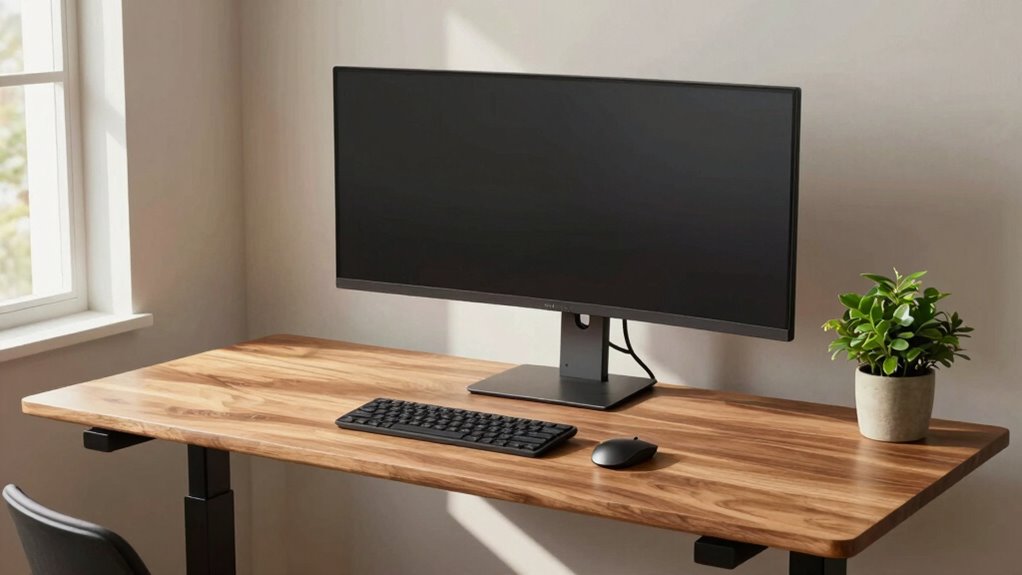

To find the ideal screen height for your neck at a standing desk, position your monitor so the top of the screen is at or just below eye level. This keeps your eyes looking straight ahead and prevents tilting your head down or up, reducing neck strain. Make certain the monitor is about an arm’s length away and adjustable if possible. Keep your posture comfortable and avoid slouching. If you want to optimize your setup further, there’s more to learn.
Key Takeaways
- Position the top of your monitor at or slightly below eye level to maintain a neutral neck position.
- Keep the monitor directly in front and about an arm’s length away for optimal comfort.
- Use adjustable stands or ergonomic accessories to easily set the screen height at the correct level.
- Reassess and adjust monitor height regularly to ensure sustained neck and eye comfort.
- Maintain proper posture with relaxed shoulders and a straight head aligned with the spine while working.
Why Proper Screen Height Matters for Your Neck and Comfort
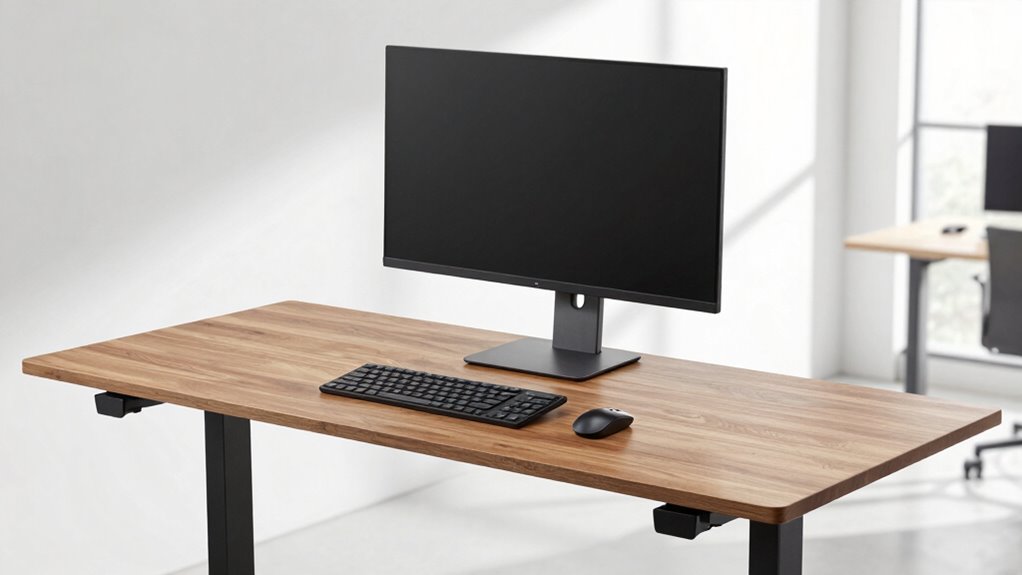
Because your screen height directly affects your neck and overall comfort, setting it at the right level is essential. When your monitor is too high or low, you strain your neck, leading to discomfort and fatigue. Using ergonomic cushions can help elevate your monitor to the proper height, ensuring your eyes are level with the top of the screen. Proper monitor calibration also plays a role, as it ensures colors and brightness are optimized for reduced eye strain. When your screen is at the right height, you maintain good posture, reducing the risk of neck pain and tension. Adjusting your monitor properly supports your neck’s natural position and promotes long-term comfort, making your standing desk setup more effective and sustainable. Incorporating anti-fatigue mats can also reduce overall fatigue and enhance your ergonomic workspace. Additionally, understanding the environmental impact of tissue paper can help you choose eco-friendly materials for your workspace accessories. Being aware of puppy-proofing tips can also inspire similar safety considerations for your ergonomic setup, ensuring a secure and comfortable workspace environment. Considering ergonomic accessories can further improve your overall comfort and support during long work sessions.
How to Find the Right Screen Height for Standing Desks
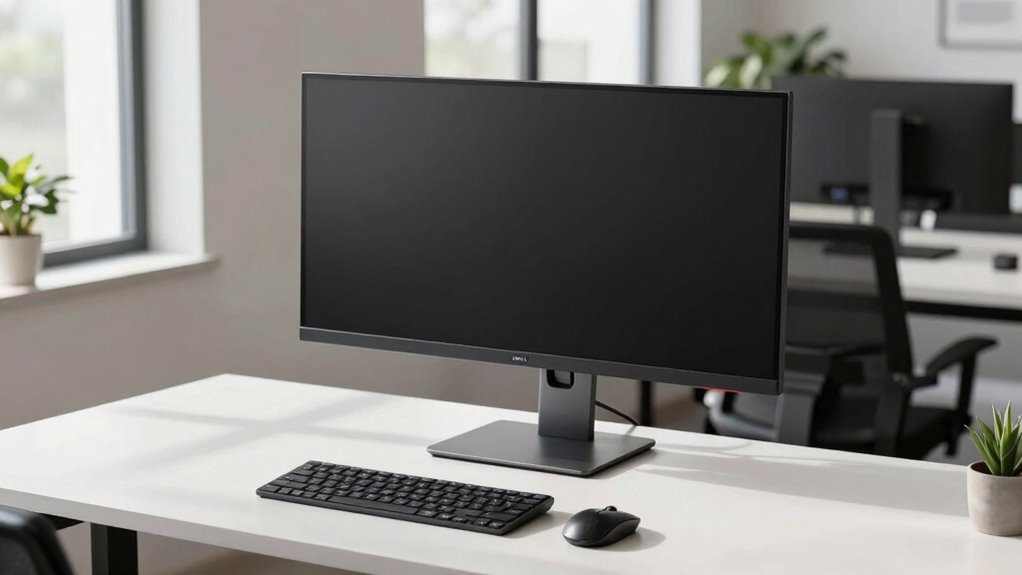
To find the right screen height, make sure your monitor is at eye level so you don’t strain your neck. Using an adjustable mount can make it easier to set the perfect position and switch between sitting and standing. Keep the screen at a comfortable viewing distance to reduce eye fatigue and maintain good posture. Additionally, being mindful of work-life harmony can help prevent burnout and promote overall well-being during your workday. Incorporating ergonomic adjustments, such as proper monitor placement and posture awareness, can further enhance comfort and support healthy habits. Regularly adjusting your setup to accommodate personal comfort is essential for maintaining productivity and preventing discomfort. Remember that wellness tourism principles, like taking regular breaks and maintaining proper ergonomics, are essential for sustaining productivity and health.
Eye Level Alignment
Finding the right screen height is essential to prevent strain and maintain good posture while using a standing desk. To achieve proper eye level alignment, position your monitor so that the top of the screen is roughly at or just below eye level. This way, your eyes look straight ahead without tilting your head up or down. When your screen is too low or high, it causes neck strain and discomfort over time. Adjust the height so that your gaze naturally falls onto the middle of the screen, reducing eye fatigue. Remember, your goal is to keep your neck relaxed and your eyes comfortable. Proper screen height ensures minimal effort to maintain good posture and helps prevent long-term neck issues. Ergonomic setup can also influence how easily you can make these adjustments for an Ergonomic setup. Ensuring your monitor is at the correct height supports good posture and reduces the risk of developing musculoskeletal problems over time. Additionally, considering natural light placement can further enhance your workspace comfort and overall wellbeing. Incorporating posture awareness practices can also help you maintain a healthier standing desk routine.
Adjustable Mount Benefits
Have you considered how an adjustable mount can make setting your monitor height effortless? With this feature, you gain significant ergonomic benefits by customizing your screen position to suit your posture perfectly. No more awkward neck angles or constant readjustments; instead, you can easily find the ideal height that keeps your neck relaxed and aligned. The flexibility advantages of an adjustable mount mean you can quickly shift your monitor for different tasks or users, promoting a healthier workspace. It also allows for seamless changeovers between sitting and standing positions, ensuring consistent comfort throughout your workday. Overall, investing in an adjustable mount helps create a versatile, ergonomic setup that supports your neck health and productivity. Proper screen height is essential for maintaining good posture and avoiding strain during long hours of work. Proper screen height is essential for maintaining good posture and avoiding strain during long hours of work. Ergonomic workspace can significantly reduce discomfort and improve your overall work experience. Additionally, adjustable mounts enable users to easily adapt their setup to evolving ergonomic standards or personal preferences. Incorporating ergonomic accessories further enhances comfort and support for extended work sessions.
Proper Viewing Distance
Ensuring the correct viewing distance is essential for a comfortable and healthy standing desk setup. You want to position your monitor so that the screen is about an arm’s length away, reducing eye strain and preventing monitor glare. Sitting too close can cause eye fatigue, while sitting too far may cause you to lean forward, straining your neck. Adjust your desk height so your monitor is at eye level, which helps maintain proper viewing distance naturally. Keep in mind that the ideal distance minimizes glare and reflections, which can cause discomfort and distractions. Regularly check your setup to make sure your monitor isn’t too close or too far, and fine-tune your desk height accordingly. Proper viewing distance promotes better posture and reduces neck and eye strain during long work hours. Being aware of your ergonomic setup can further enhance comfort and prevent long-term strain. Additionally, monitor placement plays a crucial role in maintaining optimal viewing distance and overall ergonomics. Ensuring your monitor is positioned correctly also supports the use of proper lighting to reduce glare and improve visibility. Paying attention to visual ergonomics can help prevent fatigue and maintain productivity throughout the day.
Essential Tools and Accessories for Perfecting Your Monitor Position
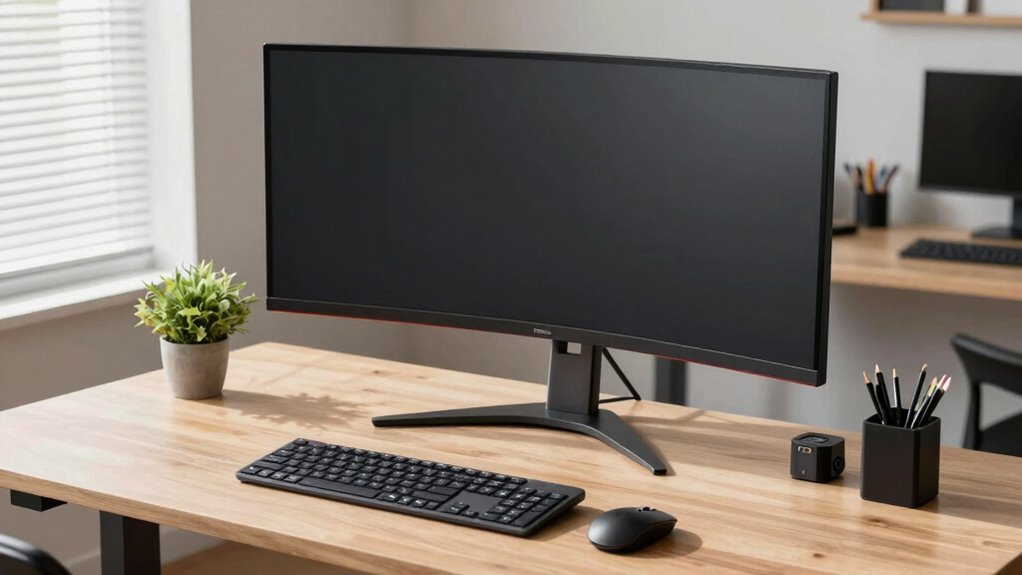
To guarantee your monitor stays at the perfect height, adjustable monitor stands are essential tools. They help you customize your setup for comfort and reduce neck strain. Additionally, selecting ergonomic accessories can make a significant difference in maintaining proper posture throughout your workday.
Adjustable Monitor Stands
Adjustable monitor stands are key to achieving the perfect ergonomic setup, allowing you to customize your screen height and angle easily. With a sturdy stand, you guarantee monitor stability, preventing wobbling that can strain your neck and eyes. This stability helps maintain proper posture, reducing fatigue during long work sessions. Many stands also feature built-in cable management, keeping cords organized and out of the way, which minimizes clutter and trip hazards. By adjusting your monitor to eye level, you promote better neck alignment and prevent discomfort. An adjustable stand makes it simple to switch between sitting and standing positions, supporting your movement and comfort throughout the day. Investing in a quality stand ensures your workspace remains ergonomic, safe, and efficient.
Ergonomic Accessories Selection
Enhancing your monitor setup with the right ergonomic accessories can make a noticeable difference in comfort and productivity. The key is to optimize monitor placement, ensuring your screen aligns with your eye level to reduce neck strain. Ergonomic accessories like monitor risers, adjustable arms, and anti-glare screens help you achieve this ideal position effortlessly. These tools allow you to customize your workspace, keeping your monitor at the correct height and angle. By selecting the right ergonomic accessories, you can prevent discomfort and promote better posture throughout your workday. Focus on accessories that support proper monitor placement, and you’ll experience less fatigue and improved focus. Ultimately, well-chosen ergonomic accessories are essential for creating a comfortable, health-conscious standing desk setup.
Common Mistakes That Cause Neck Strain at Standing Desks
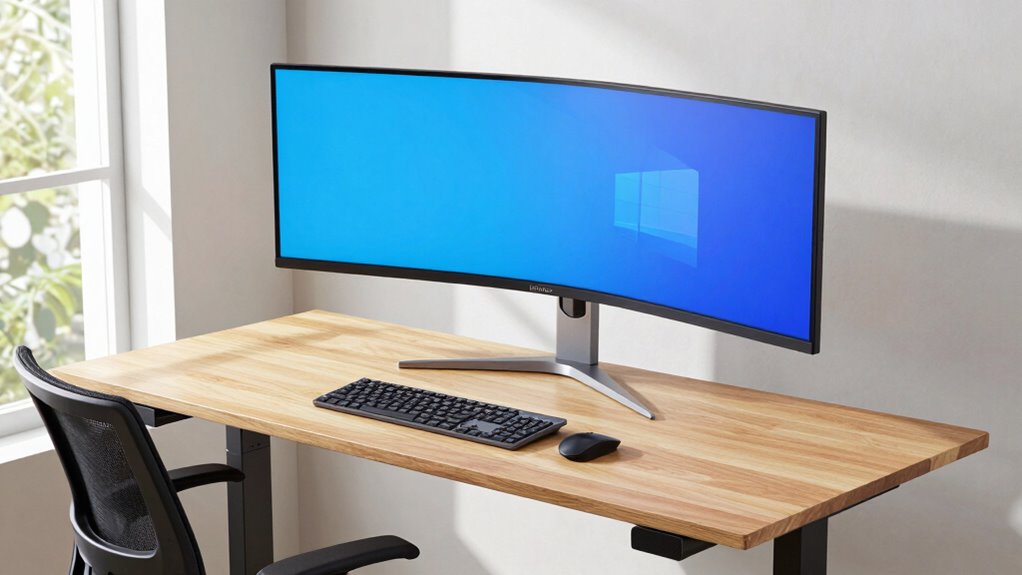
One common mistake that leads to neck strain at standing desks is positioning your monitor too low or too far forward. When your monitor isn’t at eye level, you tend to tilt your head downward, straining your neck. Poor keyboard ergonomics and incorrect desk height can compound this issue, forcing you to lean forward or crane your neck. Make certain your screen is directly in front of you and about an arm’s length away, with the top of the monitor at or slightly below eye level. Adjust your desk height so your elbows are at a 90-degree angle, allowing your wrists to stay neutral. Neglecting these factors causes unnecessary neck tension and discomfort, making it essential to set up your standing desk properly to avoid strain.
Tips for Maintaining Good Posture and Preventing Fatigue
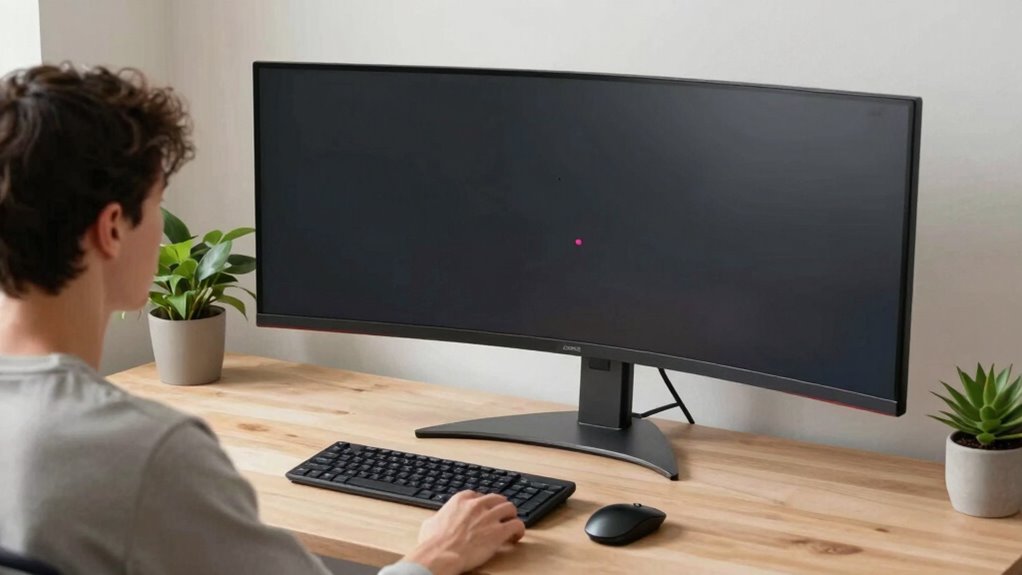
Maintaining good posture at your standing desk is essential to prevent fatigue and discomfort throughout the day. Focus on keyboard ergonomics by keeping your keyboard at a height that allows your elbows to stay close to your sides and your wrists straight. This reduces strain and promotes better circulation. Stay posture aware by regularly checking your stance—keep your shoulders relaxed, chest open, and head aligned with your spine. Shift your weight frequently and take short breaks to stretch your neck, shoulders, and legs. Avoid slouching or leaning forward, which can cause fatigue over time. By consciously maintaining proper posture and optimizing keyboard ergonomics, you’ll reduce discomfort and sustain productivity throughout your workday.
How to Adjust Your Setup Over Time for Long-Term Comfort
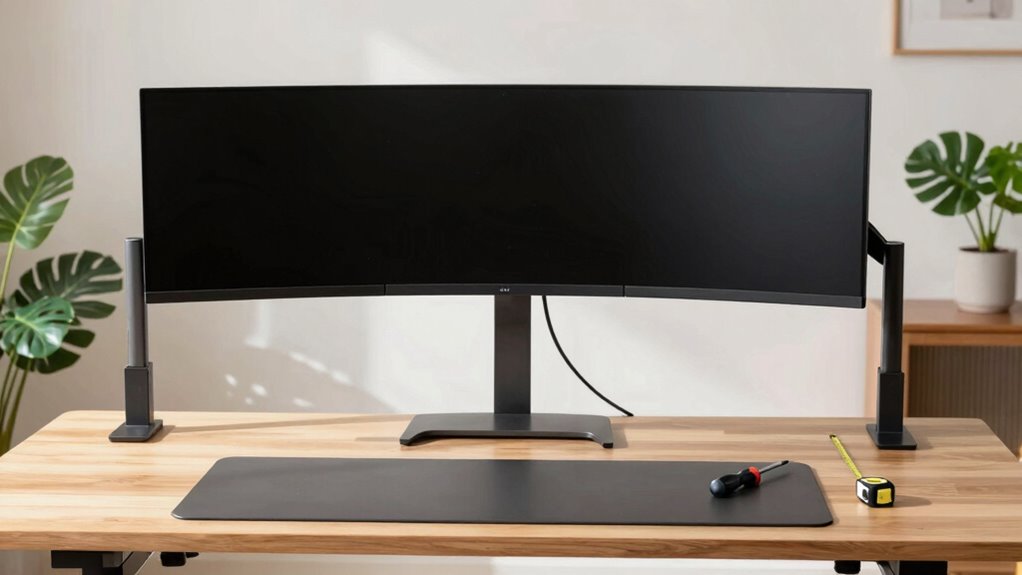
As you continue using your standing desk, it’s important to regularly reassess and fine-tune your setup to guarantee long-term comfort. Over time, your needs may change, requiring adjustments to maintain proper ergonomics. Start by checking your monitor calibration to ensure the screen is at eye level, reducing neck strain. Next, review your desk height; it should allow your elbows to stay close to a 90-degree angle while typing. Consider incorporating these steps:
- Recalibrate the monitor to maintain the ideal screen height.
- Adjust the desk height if your elbows no longer rest comfortably.
- Take regular breaks to prevent postural fatigue.
- Observe how your body feels and tweak your setup accordingly.
Consistently fine-tuning your setup helps prevent discomfort and supports long-term ergonomic health.
Frequently Asked Questions
How Often Should I Adjust My Monitor Height During the Day?
You should adjust your monitor height at least once every hour to maintain ergonomic posture and avoid strain. Regular adjustments help prevent neck and shoulder pain and support posture correction. Use ergonomic accessories like monitor risers or adjustable arms to make quick changes easily. Keep an eye on your screen alignment, ensuring the top of the monitor is at eye level, so you stay comfortable and maintain healthy habits throughout your workday.
Can Monitor Arm Flexibility Affect My Neck Posture?
Yes, monitor arm flexibility considerably affects your neck posture. When you use ergonomic arm positioning and make monitor arm adjustments, you can easily position your screen at eye level, reducing strain. Flexible monitor arms allow you to quickly shift the monitor’s height and angle as needed, helping you maintain proper neck alignment throughout the day. This adaptability keeps your neck comfortable and minimizes long-term discomfort.
Is It Better to Have the Screen Slightly Below Eye Level?
Like the gentle slope of a well-balanced scale, having your screen slightly below eye level aligns with ergonomic principles, promoting eye comfort and reducing neck strain. This setup encourages a natural head position, preventing fatigue and discomfort. You stay focused and relaxed, much like a serene landscape. Adjust your monitor to find that sweet spot where your eyes rest comfortably, ensuring long-term health and productivity at your desk.
How Do Lighting Conditions Impact Screen Height Choices?
Lighting conditions greatly impact your screen height choices. For ideal lighting optimization and glare reduction, you should position your monitor to avoid reflections from windows or lights, which often means raising or lowering the screen slightly. Adjust your setup so the screen is perpendicular to light sources, minimizing glare and eye strain. This way, you create a comfortable workspace that enhances visibility and reduces fatigue during long work sessions.
What Are Signs My Current Screen Height Is Causing Neck Strain?
If you’re experiencing neck strain, your current screen height might be off. You may notice visual discomfort, such as headaches or blurred vision, or find yourself tilting your head constantly. Consider ergonomic accessories like adjustable monitor stands to improve your setup. Proper screen height helps keep your neck in a neutral position, reducing strain and preventing long-term discomfort. Adjust your setup to make sure your eyes align with the top third of the screen.
Conclusion
Don’t let concerns about complexity hold you back—setting up your standing desk for ideal neck comfort isn’t as hard as it seems. With a few simple adjustments and the right tools, you’ll enjoy better posture and less fatigue every day. Remember, small tweaks make a big difference over time. So, invest a moment now to perfect your setup—you’ll thank yourself during those long work hours. Your neck will thank you, too!