
Your GPS accuracy can jump around because signals get disrupted by obstacles like tall buildings, trees, or bad weather, which cause errors in triangulating your position. Satellite positions, atmospheric interference, and device hardware also affect stability, leading to drifting or inaccurate location fixes even when you’re still. Improving your GPS depends on better signal reception and advanced technology. Keep exploring to understand how environmental factors and innovations work together to give you more precise positioning.

Get business pricing on monitors, keyboards and dev gear
- Business-only prices and quantity discounts
- Tax-exempt purchasing
- Multiple users, one account, clear invoices
Key Takeaways
- GPS accuracy relies on satellite signals, which can be disrupted by obstacles, weather, and atmospheric conditions, causing position jumps.
- Signal reflections (multipath effects) from buildings and terrain can mislead GPS devices, leading to inaccurate or jumping locations.
- Poor satellite geometry or weak signals reduce precision, especially in urban canyons or dense foliage areas.
- Environmental pollutants, weather, and microplastics can interfere with signal quality, increasing the likelihood of location fluctuations.
- Using additional data sources like Wi-Fi, cell towers, and sensor fusion improves stability and reduces GPS position jumps.
GPS signal booster for smartphones
As an affiliate, we earn on qualifying purchases.
As an affiliate, we earn on qualifying purchases.
Why Does GPS Keep Jumping When I’m Still?

If your GPS keeps jumping even when you’re standing still, it’s usually due to signal interference or inaccuracies in satellite data. A weak or fluctuating gps signal can cause your device to struggle with precise location tracking. Additionally, improper map calibration can make your GPS seem like it’s shifting position, even if your device’s signal is stable. Environmental factors like tall buildings, dense trees, or weather can disrupt the gps signal, making your device guess your location more frequently. Ensuring your device has a clear view of the sky helps improve signal stability. Sometimes, updating or recalibrating your map data can reduce these jumps. Moreover, the contrast ratio of your device’s GPS receiver can influence how well it distinguishes signals in challenging environments. Understanding signal interference sources can help you take steps to minimize disruptions and improve accuracy. Being aware of satellite positioning and how it affects reception can also help in troubleshooting location issues. Additionally, the satellite geometry plays a crucial role in determining overall GPS precision, so monitoring this aspect can aid in diagnosing problems. To further enhance GPS stability, users can also consider device settings adjustments to optimize reception. Remember, the combination of strong signal reception and accurate map calibration is key for a steady, reliable GPS experience.
As an affiliate, we earn on qualifying purchases.
How GPS Technology Finds Your Location
GPS technology determines your location by relying on signals from a network of satellites orbiting the Earth. These satellites transmit precise timing information that your device receives simultaneously. Using this data, your device performs signal triangulation, measuring the time it takes for signals to arrive from multiple satellites. By calculating the distance to each satellite, your device pinpoints your position through geospatial mapping. This process involves complex algorithms that interpret the distances and create a detailed map of your location. The more satellites your device connects with, the more accurate the positioning becomes. Additionally, factors such as atmospheric conditions and signal interference can sometimes affect the accuracy of the data, making it important to understand the limitations of GPS signals. External factors like signal interference can disrupt the timing data, leading to less precise location readings. Proper calibration and correction methods are often employed to improve GPS accuracy in challenging environments. This method allows your device to determine your latitude, longitude, and altitude with remarkable precision, forming the backbone of GPS navigation and location services you rely on every day. Satellite signals are crucial for maintaining the high accuracy of GPS positioning.
As an affiliate, we earn on qualifying purchases.
Environmental and Technical Factors That Disrupt GPS Signals
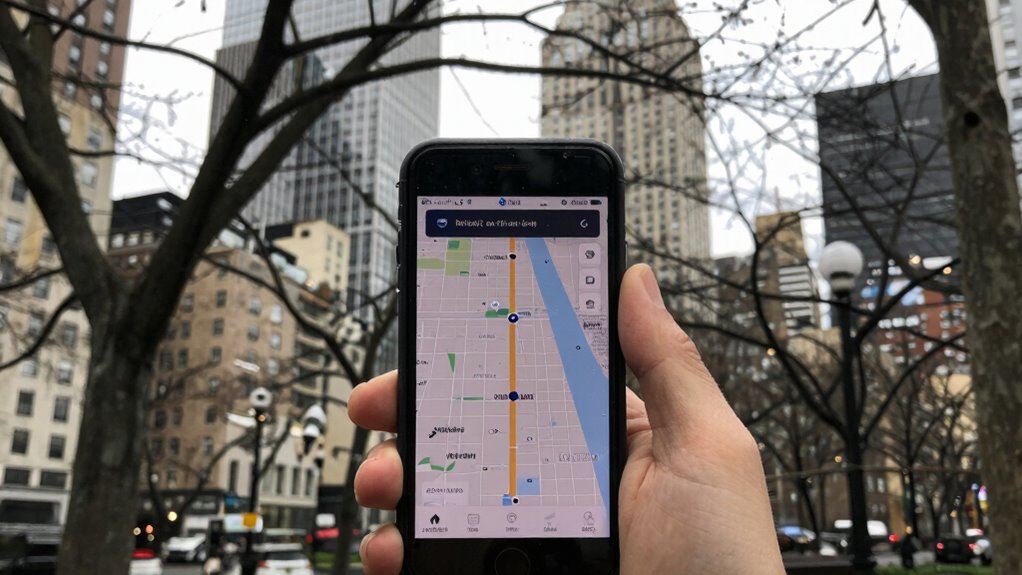
Environmental and technical factors can considerably weaken GPS signals, making it harder for your device to determine your location accurately. Atmospheric interference, such as dense clouds or ionospheric disruptions, can cause signal delays or loss. These conditions distort the signals traveling between satellites and your device, reducing accuracy. Signal reflection, or multipath effects, also plays a significant role; signals bounce off buildings, mountains, or other surfaces before reaching your device, confusing the receiver about the true location. Additionally, tall structures and dense urban areas increase the likelihood of signal reflection and blockage. Technical issues like poor satellite geometry or weak signals further contribute to inaccuracies. Being aware of Signal reflection and other environmental factors helps you understand why your GPS might jump around or seem unreliable in certain environments. Recognizing urban canyon effects can help users anticipate and mitigate signal issues in city settings. Moreover, satellite positioning can be affected by the relative locations of satellites, impacting overall accuracy. External factors such as interference sources like radio signals or electronic devices can also disrupt GPS performance, adding to the complexity of maintaining precise location data. Additionally, understanding how atmospheric conditions influence signal propagation can help in planning routes or timing for better accuracy.
GPS antenna for better reception
As an affiliate, we earn on qualifying purchases.
As an affiliate, we earn on qualifying purchases.
How Satellite Positions Affect Your GPS Accuracy
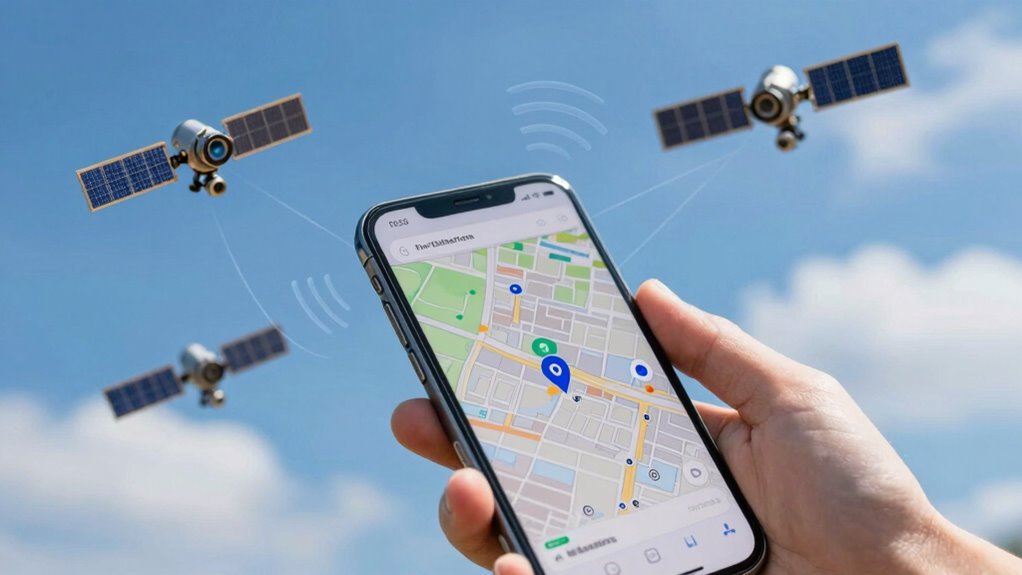
The positions of satellites in the sky directly influence the accuracy of your GPS signals. Good satellite geometry means the satellites are spread out evenly, providing better coverage and precise positioning. When satellites are clustered together or aligned in a straight line, your GPS accuracy suffers because the signals become harder to triangulate accurately. Orbital shifts can change satellite positions over time, affecting this geometry. If satellites move out of ideal positions, your device may struggle to determine your exact location, leading to jumps or errors. Maintaining ideal satellite geometry is essential for accurate positioning. Satellite constellations are designed to minimize the impact of orbital shifts, but they can still introduce variability in your GPS accuracy depending on their relative positions in the sky. Satellite orbits also influence how well your device can maintain stable and accurate location fixes. Orbital shifts are natural and unavoidable, but modern systems account for these changes to ensure consistent accuracy. Additionally, real-time adjustments and satellite tracking help mitigate the effects of orbital shifts on your GPS performance, as advancements in satellite technology enable more precise and adaptive tracking methods.
Common Obstacles That Make Your GPS Less Precise

Obstacles in your surroundings can considerably reduce the accuracy of your GPS signals. Urban canyons, which occur when tall buildings line narrow streets, block or reflect satellite signals, causing errors in your location. These reflections, known as multipath interference, make your device struggle to pinpoint your position accurately. Atmospheric interference also plays a significant role; weather conditions like heavy rain, thunderstorms, or even solar activity can disturb signal transmission. This type of signal disturbance can slow down or weaken the GPS signals reaching your device, leading to less precise location data. Additionally, dense cloud cover and varying atmospheric layers can distort signals, making your GPS seem like it’s jumping around. Being aware of these obstacles helps you understand why your GPS isn’t always perfectly accurate in challenging environments. Microplastics in dust and other environmental factors can also contribute to signal degradation, especially in areas with high pollution levels. Moreover, Atmospheric interference caused by solar activity can further disrupt signal transmission, compounding accuracy issues. External factors like urban environments and environmental pollutants can also interfere with signal quality, further reducing accuracy. Furthermore, multipath interference can be particularly problematic in areas with reflective surfaces, increasing the likelihood of positional errors.
How Your Phone’s Hardware and Software Impact GPS Precision
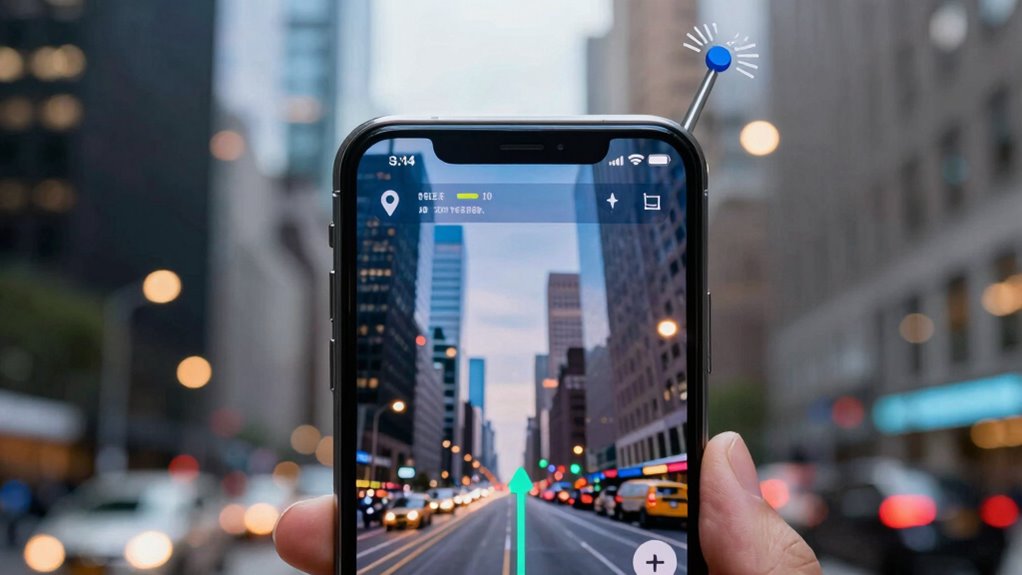
Your phone’s hardware and software play a vital role in GPS accuracy. The quality of your chipset, smart algorithms, and sensor integration all work together to improve your location data. Understanding these factors helps you get the most precise results from your device.
Chipset Capabilities Matter
Since chipset capabilities directly influence how accurately your phone can pinpoint your location, understanding their role in GPS performance is vital. Chipset limitations can restrict the precision of location signals your device receives, affecting overall accuracy. Upgrading your hardware can improve GPS functions by enabling faster data processing and better signal management. Key factors include:
- The quality of integrated GPS receivers within the chipset
- Support for multiple satellite systems (like GLONASS or Galileo)
- Faster processing speeds that reduce lag and improve signal stability
Keep in mind that older chipsets may struggle with complex signals or dense urban environments. Hardware upgrades, such as newer chipsets, often provide significant improvements, making your device more reliable for precise navigation and real-time tracking.
Software Algorithms Improve Accuracy
Software algorithms play a crucial role in enhancing GPS accuracy by interpreting and refining the raw signals received from satellites. Techniques like Kalman filtering help smooth out errors and predict your position more precisely by combining multiple data points. Machine learning algorithms further improve accuracy by recognizing patterns and correcting inconsistencies caused by signal interference or environmental factors. These advanced methods allow your device to filter out noise and make smarter estimations of your location in real time. By continuously adapting to changing conditions, software algorithms guarantee your GPS remains reliable even in challenging environments. Without these sophisticated processes, your device would struggle to provide consistent, accurate positioning, especially when signals are weak or obstructed.
Sensor Integration Enhances Precision
The accuracy of GPS signals depends heavily on the hardware components embedded in your device, such as sensors and antennas, which work together to enhance positioning data. Sensor integration uses techniques like sensor fusion, combining data from accelerometers, gyroscopes, and magnetometers to improve location accuracy. Proper calibration techniques are essential to guarantee these sensors provide reliable information, reducing errors caused by drift or environmental factors. By integrating hardware and software, your device can compensate for GPS signal disruptions and refine location estimates.
- Combines data from multiple sensors for more accurate positioning
- Uses calibration techniques to correct sensor drift
- Enhances GPS precision during signal blockages or interference
Tips to Improve Your GPS Accuracy and Stop the Jumps
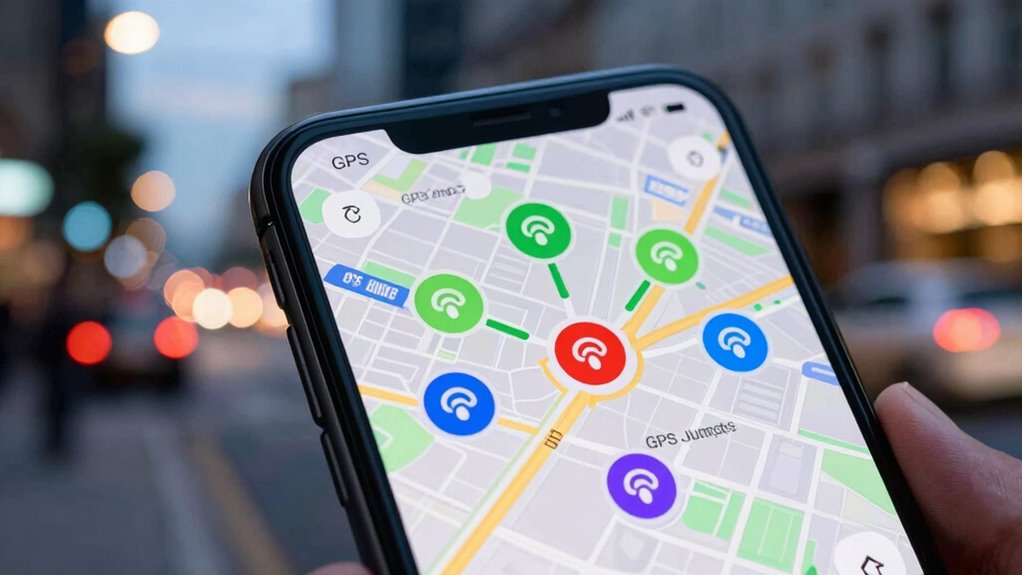
GPS jumps and inaccuracies can be frustrating, but there are practical steps you can take to improve your device’s performance. For better indoor navigation, consider using apps that combine GPS with augmented reality, which helps stabilize your position indoors where signals are weak. Keep your device’s software up to date, as updates often include improved location algorithms. Avoid obstructing your device’s antenna by holding it in ways that block signals. When outdoors, stay away from tall buildings and dense tree cover, which can cause signal reflections. Using external GPS antennas or specialized receivers can also enhance accuracy. In conclusion, calibrate your device regularly and restart it to refresh the connection, reducing location jumps and making your navigation smoother and more reliable.
When Should You Use Wi-Fi or Cell Data Instead of GPS?

While GPS signals are generally reliable outdoors, there are situations when relying on Wi-Fi or cell data provides better accuracy. Wi-Fi positioning can quickly pinpoint your location indoors or in dense urban areas where GPS signals weaken. Cell tower triangulation offers reliable estimates when GPS signals are blocked, such as in tunnels or underground. You should consider switching to Wi-Fi or cell data when:
- You’re indoors, surrounded by Wi-Fi networks
- You’re in a dense city with tall buildings obstructing GPS signals
- You need faster location updates in areas with poor GPS reception
Using Wi-Fi positioning or cell tower triangulation can improve your device’s overall accuracy, especially when GPS signals are weak or unreliable. These methods are essential for maintaining precise location data in challenging environments.
The Future of GPS: New Technologies for Better Accuracy
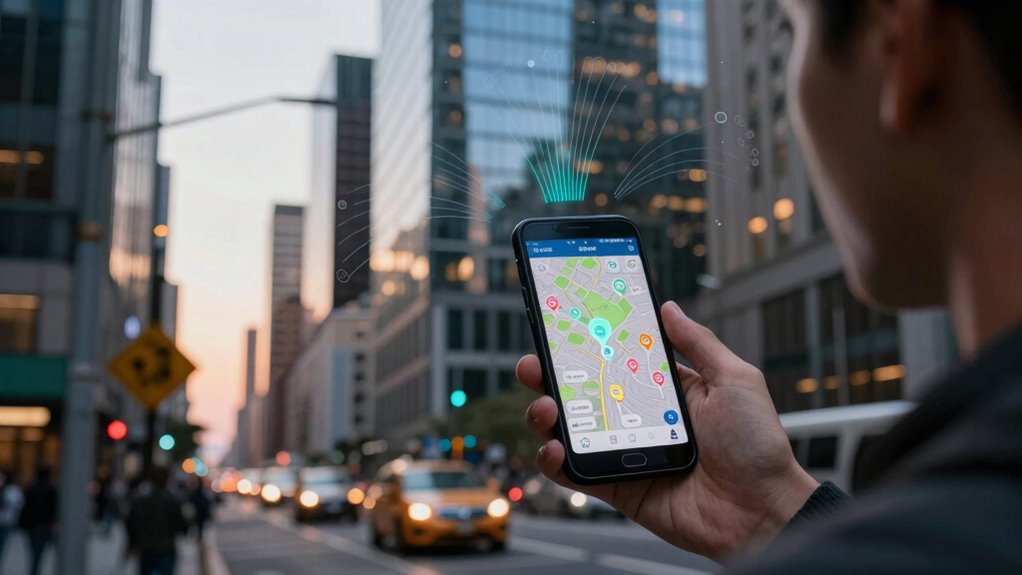
Advancements in satellite technology and processing algorithms are paving the way for more accurate positioning systems. Future GPS tech integrates augmented reality, enhancing navigation in real-time views, and improves drone navigation by providing precise location data. These innovations help reduce errors caused by signal interference and atmospheric conditions. Additionally, new satellite constellations and signals promise faster, more reliable data. Here’s a glimpse of what’s coming:
| Technology | Benefit |
|---|---|
| Multi-frequency signals | Greater accuracy |
| Real-time correction satellites | Reduced errors |
| AI-based algorithms | Smarter navigation |
These improvements enable applications like AR-guided tours and autonomous drones to operate flawlessly. As these technologies evolve, you’ll experience even more reliable, precise location data, transforming how you navigate and interact with your environment.
Frequently Asked Questions
Can Weather Conditions Influence GPS Signal Reliability?
Yes, weather conditions can affect GPS signal reliability. Satellite interference caused by heavy rain, snow, or thick clouds can weaken signals, making your location less precise. Atmospheric disturbances, like ionospheric or tropospheric delays during storms, also disrupt signal transmission. These factors can cause your GPS to jump around or lose accuracy temporarily, especially during severe weather, so it’s good to be aware of environmental conditions when relying on your device.
How Do Different Devices Affect GPS Accuracy?
A chain is only as strong as its weakest link, and different devices can affect your GPS accuracy. You might notice your location jumps or stalls because of device compatibility issues or signal interference. Some devices have better antennas and more advanced chips, providing clearer signals. Others struggle with interference from buildings or electronic gadgets. To get the best accuracy, choose a device designed for reliable GPS performance and minimize signal disruptions.
What Role Do Map Updates Play in GPS Precision?
Map updates play a vital role in GPS precision by incorporating the latest map data updates and satellite information. When you update your maps regularly, your device can better match real-world roads and landmarks, reducing errors. This guarantees your location is more accurate, especially in newly constructed areas or places with recent changes. Keeping your maps current helps your GPS provide reliable directions and precise positioning every time you use it.
Are There Legal Restrictions on GPS Signal Use?
Think of GPS signals as a guarded secret; there are indeed legal restrictions on their use. You might face limits due to privacy concerns and government regulations designed to protect sensitive information. For example, military or government-controlled areas often restrict civilian GPS access, and laws may govern how you can share or use location data. Always stay informed about local laws to avoid unintentionally crossing the line.
How Does Urban Architecture Impact GPS Performance?
Urban canyons and building interference considerably impact your GPS performance. Tall buildings block or reflect satellite signals, making your device struggle to pinpoint your exact location. This can cause your GPS to jump around or lose accuracy temporarily. When you’re in dense city areas, expect less reliable positioning, especially amidst skyscrapers. To improve accuracy, try to move to open spaces where signals are clearer and less obstructed by urban architecture.
Conclusion
Understanding why your GPS jumps around helps you navigate better, even when technology falters. While satellites endeavor for precision, environmental obstacles and hardware limitations can cause inaccuracies. It’s like trying to read a map in a storm — the clearer your surroundings and device, the steadier your location. Embrace both the tech’s potential and its imperfections, and you’ll always stay a step ahead, even when your GPS isn’t perfectly steady.
Fall Picks
fall essentials
As an affiliate, we earn on qualifying purchases.