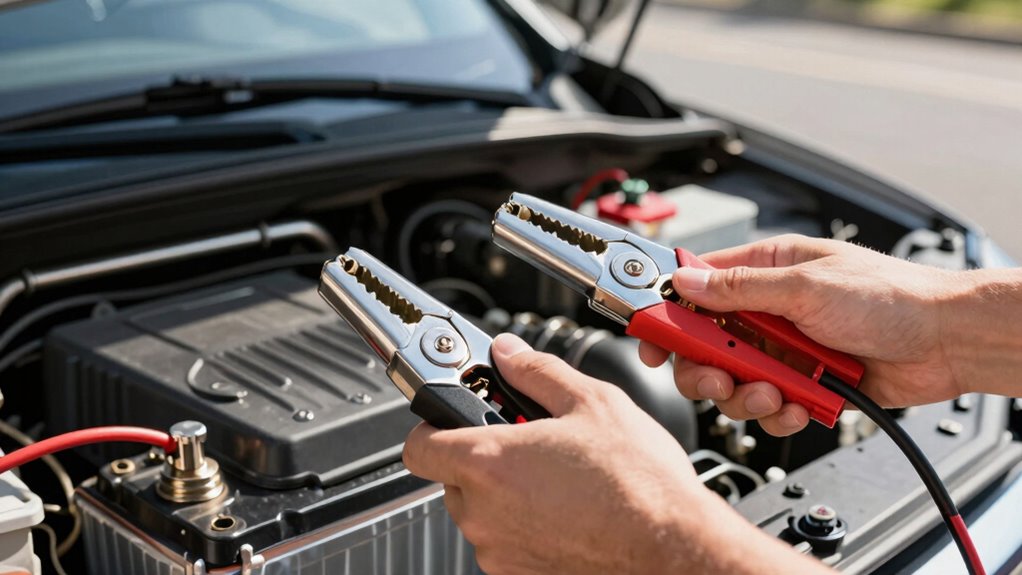

To prevent damaging your car battery when jump starting, avoid common mistakes like connecting the cables incorrectly or using an incompatible jump starter. Always connect the positive terminal first and make sure all connections are tight before powering on. Use a jump starter with the right power and safety features, and never attempt to jump a frozen or completely dead battery. Keep your battery well-maintained to extend its life. Stick with these tips, and you’ll reduce risks—continue to learn how to do it right.

Get business pricing on monitors, keyboards and dev gear
- Business-only prices and quantity discounts
- Tax-exempt purchasing
- Multiple users, one account, clear invoices
Key Takeaways
- Always connect the positive terminal first and the ground last to prevent sparks and damage.
- Use a jump starter with appropriate power and safety features for your vehicle’s battery size.
- Avoid revving the engine excessively or leaving cables connected too long during jump starting.
- Inspect the battery and cables for damage, corrosion, or leaks before attempting to jump start.
- Follow proper connection procedures and safety protocols to prevent short circuits and battery damage.
car jump starter with safety features
As an affiliate, we earn on qualifying purchases.
As an affiliate, we earn on qualifying purchases.
Common Mistakes That Damage Your Car Battery When Jump Starting
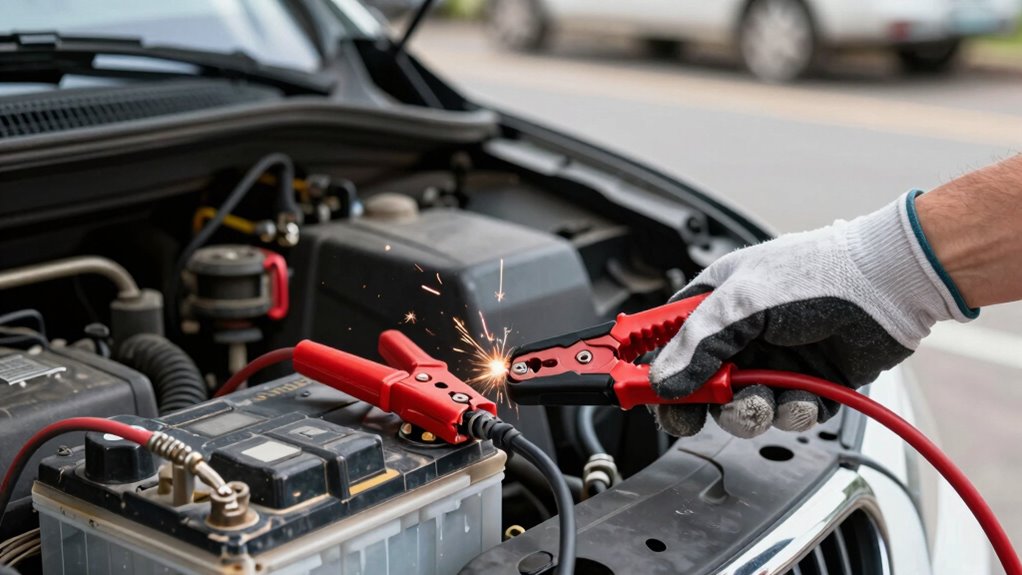
Jump starting a car may seem straightforward, but making common mistakes can quickly damage your battery. One mistake is neglecting proper battery maintenance, which can lead to sulfation or corrosion, reducing the battery’s lifespan. Many people also use incorrect charging techniques, like revving the engine excessively or leaving the jumper cables connected too long, which can cause voltage spikes and harm the battery. Avoid jumping with a completely dead or frozen battery, as this puts unnecessary stress on the system. Additionally, not inspecting the battery beforehand for leaks or damage can lead to dangerous situations. Always verify your battery is in good condition and follow correct charging techniques to prevent damage and extend its life. Proper care is essential for reliable starting and long-term battery health. Understanding battery chemistry and the role of active materials can help you better maintain your vehicle’s power source, including recognizing signs of battery failure early on. Regularly checking terminal connections and ensuring clean contacts can also prevent common issues like corrosion buildup. Incorporating proper maintenance routines can further enhance your battery’s longevity and performance.
best portable jump starter for cars
As an affiliate, we earn on qualifying purchases.
As an affiliate, we earn on qualifying purchases.
How to Properly Connect Your Jump Starter to Avoid Damage
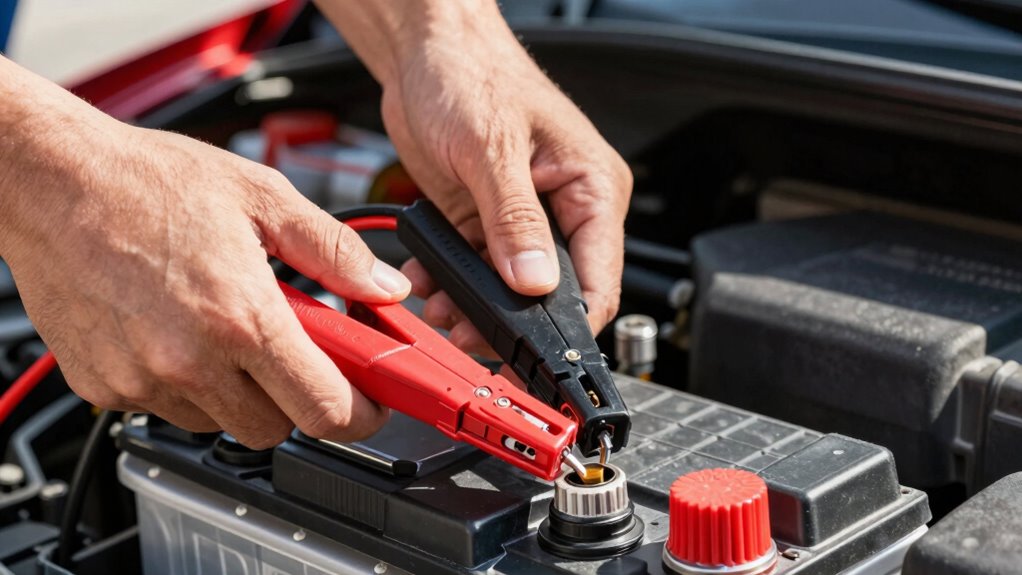
To prevent damage when connecting your jump starter, you need to follow a specific order and make certain of proper placement of the cables. Correctly establishing the proper connection is essential for safety and avoiding costly damage. Follow these steps to ensure safety precautions are met:
- Connect the positive (red) clamp to the dead battery’s positive terminal—this ensures a secure, correct connection from the start.
- Attach the negative (black) clamp to a grounded metal surface away from the battery—this minimizes spark risk and protects your vehicle.
- Finally, connect the negative clamp to the jump starter’s negative terminal—confirm all connections are tight before powering on.
- Remember that proper connection order is vital to prevent electrical issues and potential damage to your vehicle’s electrical system. Ensuring a proper initial setup can also help in avoiding accidental sparking or short circuits during connection. Additionally, understanding the battery’s location and its electrical system can make the process safer and more straightforward. It’s also helpful to familiarize yourself with safe handling procedures to further reduce the risk of accidents or damage. Being aware of the correct sequence can greatly improve safety and efficiency during the jump-start process.
As an affiliate, we earn on qualifying purchases.
Choosing the Right Jump Starter and Settings for Your Car
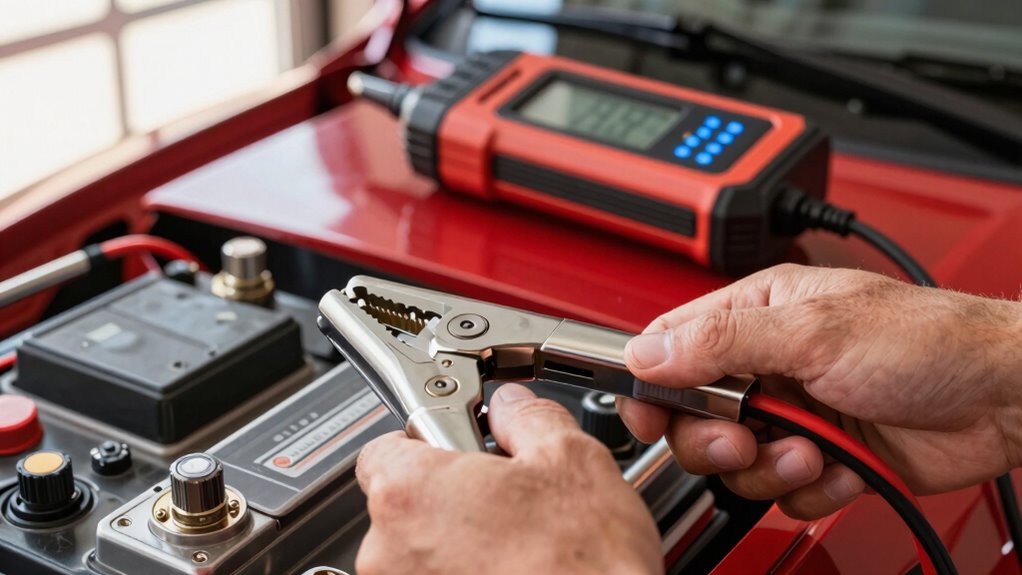
Selecting the right jump starter and adjusting its settings correctly can make all the difference in safely reviving your vehicle. First, choose a jump starter with adequate power for your car’s battery size to ensure reliable portable power and avoid straining the device. Look for models that prioritize battery safety features, like automatic shutoff and overload protection, to prevent damage to your vehicle’s electrical system. Make sure to set the voltage and current correctly—most jump starters have simple controls, but double-check the instructions. Using an incompatible jump starter or incorrect settings can cause sparks or damage. Investing in a quality device and following manufacturer recommendations helps protect your battery and ensures a safe, effective jump-start every time. Additionally, understanding ADAS sensor calibration and proper safety procedures can prevent further electrical issues during the process. Paying attention to proper device maintenance also extends the lifespan of your jump starter and maintains optimal performance. Regularly inspecting the battery terminals for corrosion and ensuring clean contacts can further improve the effectiveness of your jump-starting process. Furthermore, maintaining awareness of electrical system compatibility can help prevent unexpected complications during the jump-starting procedure. Being familiar with manufacturer guidelines ensures correct operation and enhances safety during the process.
automotive battery terminal cleaner
As an affiliate, we earn on qualifying purchases.
As an affiliate, we earn on qualifying purchases.
Tips to Prevent Overusing Your Battery and Make It Last Longer
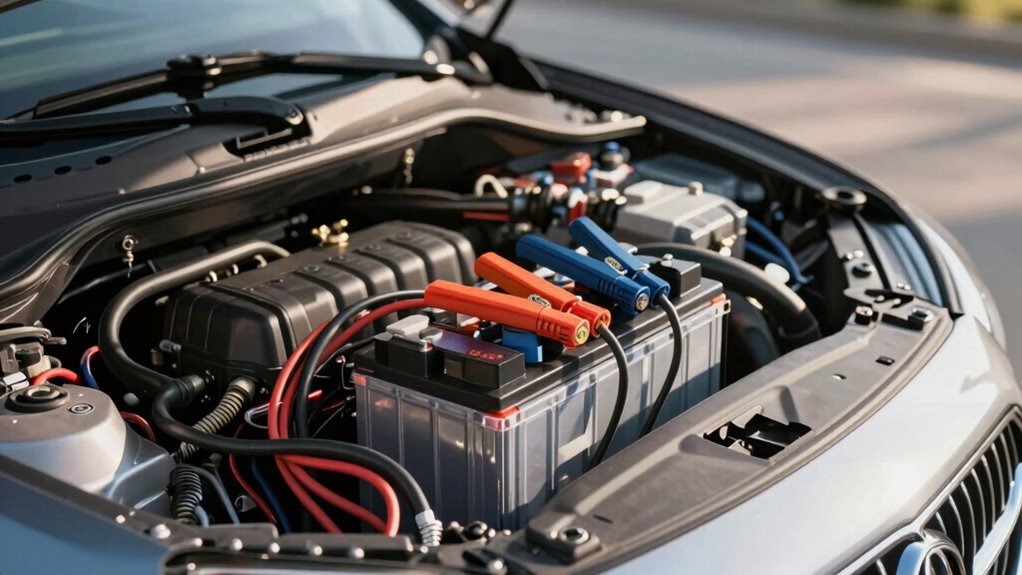
To keep your car battery healthy and avoid unnecessary strain, it’s essential to be mindful of how and when you use electrical accessories. Proper battery maintenance can notably extend your battery’s lifespan. Here are three tips to help you prevent overusing your battery:
Protect your car battery by mindful use and regular maintenance to extend its lifespan.
- Limit use of high-energy devices like the radio or heated seats when the engine isn’t running.
- Turn off lights and electronics before turning off your vehicle to avoid draining the battery overnight.
- Regularly check your battery’s condition and clean terminals to ensure peak performance and prevent unnecessary overuse.
- Be aware of home soundproofing techniques that can reduce electrical strain and preserve your battery life. Additionally, understanding battery capacity can help you better manage your electrical load and avoid overtaxing your system. Maintaining awareness of electrical load management can further help in preventing battery overuse and ensuring longevity, especially when selecting appropriate battery inverter generators for your needs.
Troubleshooting Jump Starting Problems and When to Call a Pro
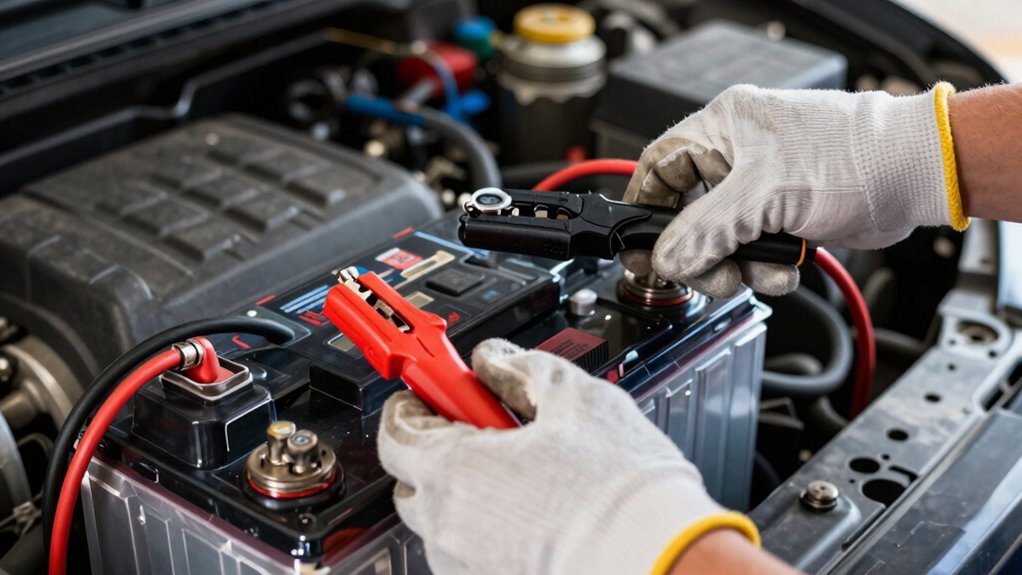
Even with careful battery maintenance, jump starting problems can still occur, and knowing how to troubleshoot them can save you time and hassle. First, check your battery connections—loose or corroded cables can prevent a proper jump. Ensure your jumper cables are in good condition and attached correctly to both vehicles. If the engine still doesn’t start, inspect your vehicle’s electrical system for underlying issues, like blown fuses or faulty relays, which can interfere with jump starting. Additionally, understanding regional flavors and the unique characteristics of different vehicle electrical systems can help you identify issues more effectively. If these steps don’t work, it’s time to call a pro. Professional mechanics can diagnose more complex electrical system problems and perform necessary repairs, preventing further damage to your battery or vehicle. Proper battery maintenance and timely expert help keep your car running smoothly. Regularly inspecting your vehicle’s electrical system can help prevent future jump-starting issues.
Frequently Asked Questions
Can Using a Jump Starter Damage Sensitive Electronic Components?
Using a jump starter can potentially cause electronic damage if not used properly, but if you follow the manufacturer’s instructions, it’s generally safe for your vehicle’s sensitive components. Proper connection and avoiding overvoltage protect component safety. Make sure you connect the jump starter correctly, turn off all electronics beforehand, and use a quality device. This careful approach minimizes the risk of electronic damage and keeps your car’s electronics functioning smoothly.
How Often Should I Perform Maintenance on My Jump Starter?
Think of your jump starter as a trusty ship that needs regular navigation checks. You should perform maintenance every 3-6 months, guaranteeing battery calibration and charger compatibility. This keeps it ready for any storm and prevents surprises. Regularly inspect for corrosion, keep it charged, and follow the manufacturer’s guidelines. Proper upkeep ensures your jump starter stays reliable, so you’re always prepared to power up when needed.
Is It Safe to Jump-Start a Hybrid or Electric Vehicle?
You shouldn’t jump-start a hybrid or electric vehicle unless you’re certain about battery safety and hybrid specifics. Hybrids have complex electrical systems that can be damaged if mishandled. Always consult the owner’s manual or a professional before attempting to jump-start these vehicles. Using the wrong method can cause serious damage, so when in doubt, seek expert help to protect your vehicle’s sensitive components and ensure safety.
What Are the Signs My Battery Is Beyond Saving?
If your battery’s health is shot, warning signs like slow engine cranking, dim lights, or frequent stalls will tell you it’s time to face facts. When your car refuses to start despite a jump, or if it’s been acting up for weeks, it’s beyond saving. Don’t ignore these signals—your battery’s asking for a retirement party. Recognize the signs early, or you’ll be pushing more than just the limits of patience.
Can Environmental Conditions Affect Jump-Starting Effectiveness?
Yes, environmental conditions can affect jump-starting effectiveness. Weather impact, especially extreme cold or hot temperatures, influences your battery’s ability to hold charge and deliver power. Temperature effects make batteries less efficient in cold weather, making jump-starts harder, while heat can cause fluid evaporation and damage. To improve success, wait for warmer conditions or use a battery warmer in cold climates. Always consider weather impact when jump-starting to avoid further issues.
Conclusion
To keep your car battery healthy, avoid common jump starting mistakes and always connect your jump starter properly. Choosing the right device and settings can prevent damage and extend your battery’s life. Did you know that over 80% of car batteries fail prematurely due to improper jump starting techniques? By following these tips, you’ll save money and avoid future car troubles. Stay attentive, and don’t hesitate to call a pro if you encounter persistent issues.
Halloween Picks
halloween
As an affiliate, we earn on qualifying purchases.