

Earthquakes happen when Earth’s tectonic plates move, causing stress to build up along faults. When that stress is released, it generates seismic waves that travel through the ground. You can detect these vibrations using seismometers, which record ground motion to help pinpoint the earthquake’s magnitude and epicenter. This technology is essential for understanding seismic activity and enhancing safety measures. There’s so much more to uncover about earthquakes and how we monitor them.
Key Takeaways
- Earthquakes are caused by the movement of tectonic plates and the release of built-up stress along faults.
- Seismic waves, generated during an earthquake, propagate from the focus and cause ground shaking.
- P-waves are the fastest seismic waves, while S-waves are slower and more destructive, traveling only through solids.
- Seismometers detect ground vibrations, allowing scientists to measure earthquake magnitude and determine epicenters.
- Early warning systems utilize seismic data to alert populations before significant shaking occurs, enhancing safety measures.
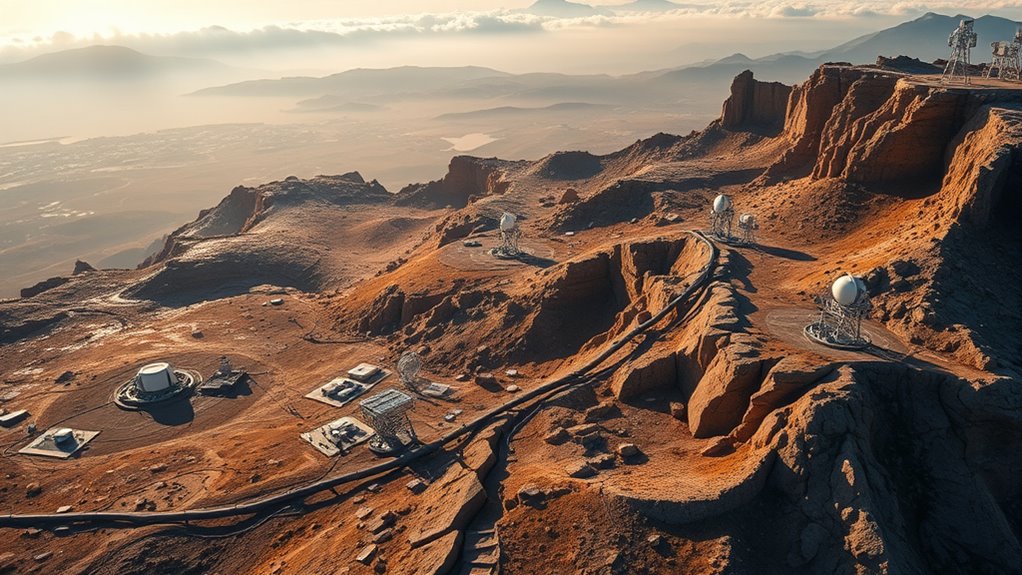
Earthquakes can strike unexpectedly, shaking the ground beneath your feet and altering landscapes in seconds. These natural phenomena result from the movement of the Earth’s tectonic plates, which are massive slabs of rock that make up the planet’s surface. When these plates shift along faults, the stress that builds up releases energy in the form of seismic waves. You may not realize it, but this movement occurs continuously, and it’s only when there’s a significant buildup of energy that you experience an earthquake.
Earthquakes are sudden releases of energy from shifting tectonic plates, altering landscapes in mere moments.
Plate tectonics is the framework that explains how the Earth’s crust operates. The crust is divided into several plates that float atop the semi-fluid mantle. As these plates move, they interact in various ways: they can collide, pull apart, or slide past one another. Each interaction can trigger seismic activity. When two plates collide, for example, one may be forced beneath the other, a process called subduction. This action generates tremendous pressure. Eventually, when the pressure overcomes the friction holding them together, the plates slip, resulting in an earthquake.
Seismic waves are the energy released during an earthquake. They propagate outward in all directions from the point of rupture, known as the focus. As these waves travel through the Earth, they cause the ground to shake. Different types of seismic waves exist, including primary waves (P-waves), which are compressional and travel the fastest, and secondary waves (S-waves), which move more slowly and can only travel through solids. You might feel the P-waves first, followed by the more destructive S-waves. This difference in speed can help you prepare, even if just for a moment.
Detecting earthquakes involves sophisticated technology. Seismometers are instruments designed to record the movements of seismic waves. When an earthquake occurs, these devices capture the vibrations and help scientists determine the quake’s magnitude and epicenter. By analyzing the data, they can track patterns and improve their understanding of tectonic activity. This knowledge is essential for developing early warning systems that can provide alerts before shaking reaches your location.
Frequently Asked Questions
How Can I Prepare My Home for an Earthquake?
To prepare your home for an earthquake, start by securing heavy furniture and appliances to walls. Consider seismic retrofitting to strengthen your home’s structure. Create an emergency kit with essentials like water, non-perishable food, and a flashlight. Don’t forget to include first aid supplies and important documents. Practice your emergency plan with family members, ensuring everyone knows how to react during an earthquake. Being proactive can make a big difference in keeping your loved ones safe.
What Should I Do During an Earthquake?
During an earthquake, think of yourself as a captain steering a stormy sea. Drop to your hands and knees to prevent being knocked over, then find a sturdy piece of furniture to shelter under. Stay put until the shaking stops, keeping an eye out for aftershock patterns. Once safe, follow seismic safety tips: check for gas leaks and stay away from windows. Your calm actions can steer you through the chaos.
Are Earthquakes Predictable?
Earthquakes aren’t fully predictable, but advancements in seismic forecasting and earthquake early warning systems have improved our ability to anticipate them. These technologies use data from seismic activity to alert you seconds before shaking occurs, giving you essential time to take cover. While we can’t pinpoint the exact moment an earthquake will strike, staying informed about your area’s seismic risks can help you prepare and respond effectively when the ground starts to shake.
How Do Earthquakes Affect Wildlife?
How do you think wildlife reacts when the ground shakes? Earthquakes can considerably impact animals, causing habitat disruption and altering food sources. You might notice shifts in animal migration patterns as species seek safer areas. The sudden changes in their environment can lead to stress and disorientation. Some animals even adapt quickly, while others struggle to cope. Understanding these effects helps us appreciate the resilience and vulnerability of wildlife during such natural events.
What Are the Long-Term Effects of Earthquakes on Communities?
Earthquakes can have lasting effects on communities, from damaged infrastructure to disrupted lives. You’ll notice that rebuilding often requires significant time and resources, leading to a slow recovery process. However, these challenges can also foster community resilience as people come together to support one another. By prioritizing collaboration and planning, communities can emerge stronger, learning from the experience and preparing better for future seismic events.
Conclusion
In the grand theater of nature, earthquakes are the dramatic plot twists that remind us of our planet’s raw power. You’ve learned that these seismic symphonies arise from tectonic ballet and can be detected with astonishing precision. Embracing this knowledge, you stand at the forefront of understanding nature’s greatest performances. So, the next time the ground rumbles, remember: it’s not just a shake; it’s the Earth’s way of reminding you that it’s alive and kicking!

Coding Notebook Indent Guide Lines, Numbered, Organized and Designed for Developers: Code workbook for programmers, CS students
As an affiliate, we earn on qualifying purchases.