

Gen Z slang, like “yeet” and “sus,” is all about fun and creativity. You’d use “yeet” to express excitement or when you’re throwing something with force, like “He yeeted the ball!” On the other hand, “sus” is short for “suspicious” and is used when someone’s acting shady. These terms often come from memes and digital culture, making conversations lively. If you’re curious about more slang and their meanings, there’s plenty more to explore!

Get business pricing on monitors, keyboards and dev gear
- Business-only prices and quantity discounts
- Tax-exempt purchasing
- Multiple users, one account, clear invoices
Key Takeaways
- “Yeet” expresses excitement or describes forceful throwing, often used in casual digital conversations.
- “Sus,” short for “suspicious,” indicates doubt about someone’s trustworthiness, commonly used in a light-hearted way.
- Both terms originate from viral memes and gaming culture, highlighting their connection to contemporary internet trends.
- Emojis enhance the meaning of these slang terms, providing emotional context and tone in communication.
- Meme culture fosters a shared language among Gen Z, creating community and relatability in conversations.
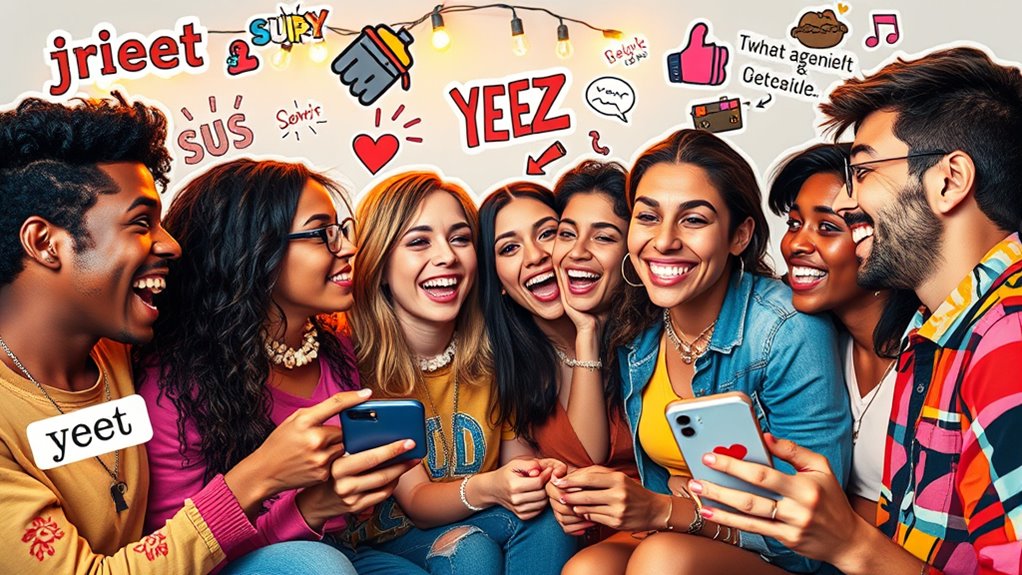
Have you ever found yourself puzzled by the latest Gen Z slang? You’re not alone. The fast-paced evolution of language among this generation can leave anyone scratching their head. Terms like “yeet” and “sus” pop up everywhere, but what do they really mean? Understanding these phrases requires a bit of context, especially since they often tie back to popular meme references and emoji usage trends.
Navigating Gen Z slang can be tricky, with terms like “yeet” and “sus” continuously evolving and rooted in meme culture.
“Yeet” is a term that originated from a viral dance video and has since morphed into a versatile expression. You might use it to show excitement, as in “Yeet! I just aced that test!” or to describe throwing something with force, like “He yeeted the ball across the field.” Its playful tone makes it a favorite among Gen Z, and it’s often accompanied by energetic emojis like the fire or celebration emojis, amplifying its meaning in digital conversations.
On the other hand, “sus” comes from the game Among Us, where players must identify the “imposter” among them. If someone’s acting shady or suspicious, you might call them “sus.” This term has seeped into everyday dialogue, often illustrated with the classic thinking emoji or a raised eyebrow emoji to emphasize doubt. It’s a way to succinctly express skepticism while keeping the conversation light-hearted and relatable.
You’ll notice that Gen Z relies heavily on popular meme references to create a shared language. When you throw out phrases like “I’m literally shaking” or “that’s a vibe,” you’re tapping into a cultural lexicon built on humor and irony. These sayings often originate from memes, which are a staple of communication in this digital age. So, when you see someone using these terms, they’re likely referencing a meme or a viral moment, making the conversation feel more connected and engaging.
Emoji usage trends play a significant role in how Gen Z communicates. Emojis aren’t just decorative; they serve as a shorthand to convey feelings and tone. For instance, a simple thumbs-up emoji can replace a lengthy agreement, while a crying-laughing emoji indicates something is genuinely funny. As you adapt to this style of communication, you’ll find that emojis enhance the meanings of the slang terms.
Additionally, understanding the nuances of color accuracy can greatly improve your overall communication skills, as it reflects the clarity and intent behind your words.
As an affiliate, we earn on qualifying purchases.
Frequently Asked Questions
How Do I Incorporate Gen Z Slang Into My Vocabulary?
To incorporate Gen Z slang into your vocabulary, start by observing how it’s used in context. Listen to conversations, watch TikToks, or read social media posts. Pay attention to the evolution of slang; it often changes with trends. When you feel comfortable, try using these terms in your own chats. Just remember, using slang authentically matters more than forcing it. You’ll sound more natural and connect better with those who use it regularly.
Are There Any Regional Differences in Gen Z Slang?
Yes, there are definitely regional slang variations among Gen Z. You might hear “lit” in urban areas but find “finna” popular in the South. Cultural influences shape these differences; for instance, local music scenes or social media trends can create distinct phrases. When you travel, pay attention to how your peers communicate; it’s a fun way to learn and connect with diverse groups. Embracing these variations can enrich your conversations!
What Slang Terms Are Considered Outdated?
Some slang terms, like “lit,” “bae,” and “on fleek,” are considered outdated as evolving slang trends emerge. You’ll notice that these terms lose their punch over time, often replaced by fresher expressions. Slang longevity varies, with some phrases lasting longer than others, but it’s clear that staying current is essential. To connect with younger crowds, you’ll want to keep an ear out for the latest buzzwords and avoid outdated lingo.
How Can I Teach Gen Z Slang to Older Generations?
To teach Gen Z slang to older generations, start by explaining the origins of the terms. Connect them to cultural influences, like social media or music, to give context. Use relatable examples, and encourage conversations where older folks can practice. Make it fun by sharing memes or videos. Ultimately, be patient; understanding slang takes time. With your guidance, they’ll appreciate the nuances and feel more connected to today’s language.
Are There Any Apps to Learn Gen Z Slang?
You can definitely find apps to help you learn Gen Z slang! Picture yourself scrolling through a vibrant app, like a digital graffiti wall, packed with slang dictionary tools. Apps like “Slangit” or “Urban Dictionary” offer interactive ways to understand current terms. You’ll discover learning slang apps that not only define words but also provide context through examples and quizzes. Plunge into, and you’ll be slaying the slang game in no time!
emoji reaction buttons for smartphones
As an affiliate, we earn on qualifying purchases.
As an affiliate, we earn on qualifying purchases.
Conclusion
In a world buzzing with Gen Z slang, understanding terms like “yeet” and “sus” is like deciphering a secret code. Embrace these expressions, and you’ll not only connect with the younger generation but also add some flair to your conversations. So, why not plunge into? Instead of feeling out of the loop, become part of the vibrant tapestry of language that colors today’s social landscape. After all, who wouldn’t want to sound in-the-know and effortlessly cool?
As an affiliate, we earn on qualifying purchases.
As an affiliate, we earn on qualifying purchases.
Fall Picks
fall essentials
As an affiliate, we earn on qualifying purchases.