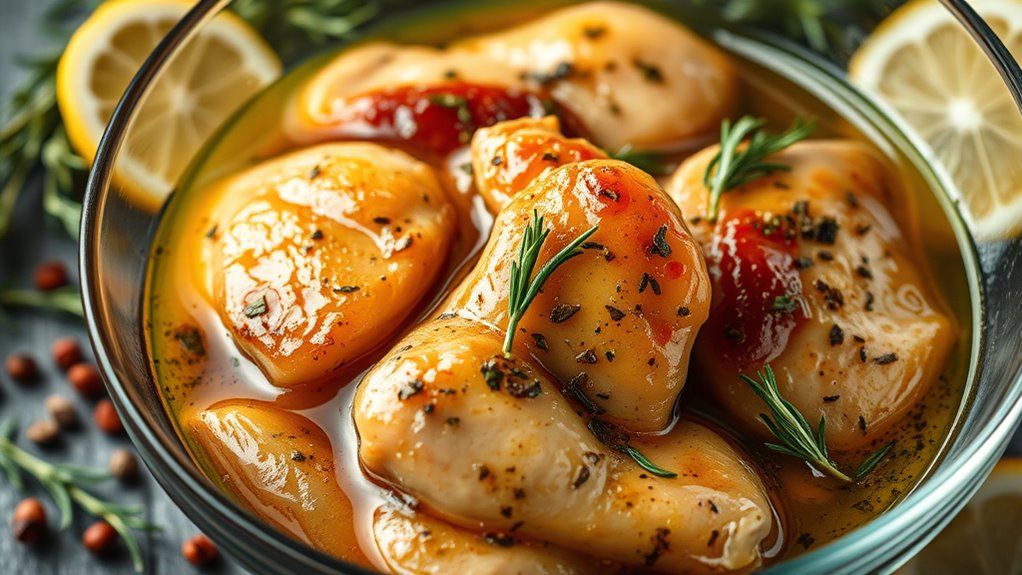

Marinating’s more than just a method; it’s a science that breaks down proteins and infuses flavors into your food. Enzymes and acids in marinades tenderize meat, making it softer and more enjoyable to eat. The longer you marinate, the more flavors penetrate, creating a rich, harmonious taste. Different ingredients spark unique chemical reactions, tailoring preferences to your dish. If you’re curious about optimizing your marinades for perfect results, there’s plenty more to uncover.
Key Takeaways
- Marinating uses enzymes and acids to break down proteins, making meat more tender and enhancing the eating experience.
- Acids and enzymes initiate chemical reactions that alter protein structures, resulting in improved texture and flavor absorption.
- Extended marinating times allow flavors and tenderness to develop further, creating a richer taste profile.
- Different marinade ingredients, like citrus for chicken or soy sauce for beef, influence both flavor and texture outcomes.
- Proper balance of marinating time and ingredient ratios is crucial to avoid overly mushy textures while maximizing flavor penetration.
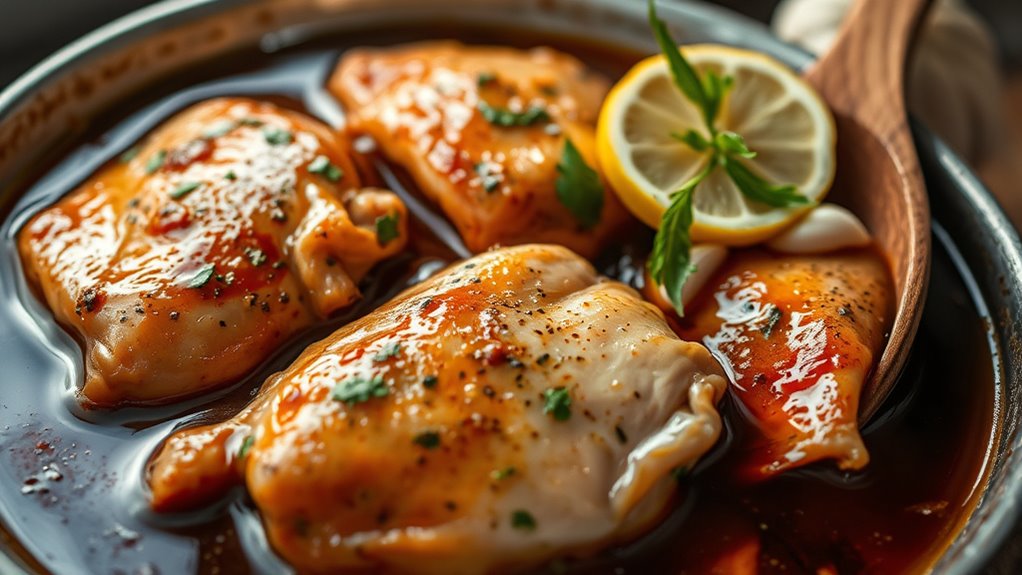
When you marinate food, you’re not just adding flavor; you’re also transforming its texture. The science behind marinades is fascinating and involves a series of chemical reactions that occur between the food and the marinade ingredients. These reactions can make a significant difference in how your dish turns out, both in flavor and tenderness.
As you soak meat in a marinade, enzymes and acids from ingredients like vinegar, citrus juice, or yogurt start breaking down the proteins. This process, known as denaturation, alters the structure of the proteins, making them more tender. You’ll notice that after a few hours or overnight, the meat becomes softer and easier to chew. This is why you often hear that marinating tougher cuts of meat can yield a much more enjoyable eating experience.
Enzymes and acids in marinades tenderize meat, making it softer and enhancing the overall eating experience.
Flavor enhancement is another vital aspect of marinating. When you add herbs, spices, and other flavor components to your marinade, you’re not just coating the surface of the food. The marinating process allows the flavors to penetrate deeply into the meat or vegetables, creating a harmonious blend of tastes that can transform a simple dish into something extraordinary. The longer you marinate, the more pronounced these flavors become, as they seep deeper into the food.
Different types of marinades work best for various foods. For example, if you’re marinating chicken, a mixture of citrus juice and herbs can impart a bright, fresh flavor while also tenderizing the meat. On the other hand, a soy sauce-based marinade might work wonders for beef, infusing it with umami richness and helping to break down tougher fibers. Depending on your choice of marinade, you’ll initiate different chemical reactions that ultimately affect both taste and texture.
However, it’s vital to strike the right balance in your marinade. Too much acid can lead to an overly mushy texture, while not enough may result in a lack of flavor. Experimenting with different combinations will help you discover what works best for your palate. Remember that the ideal marinating time varies for different foods; delicate fish might only need 30 minutes, while a hearty cut of meat could benefit from several hours or overnight.
Incorporating marinades into your cooking routine not only enhances flavor but also improves the overall dining experience. Understanding the science behind it all makes you a more informed cook, ready to create tender and flavorful dishes that impress. Additionally, just as top female singers leverage diverse revenue streams to maximize their wealth, creative cooks can utilize various marinade ingredients to elevate their culinary creations.
Frequently Asked Questions
How Long Should I Marinate Different Types of Meat?
For ideal meat tenderness, marination duration varies by type. Chicken and pork should marinate for 1 to 4 hours, while beef benefits from 4 to 24 hours, depending on the cut. Fish generally needs just 30 minutes to 1 hour. Remember, longer doesn’t always mean better; excessive marination can lead to mushiness. Adjust your times to suit your taste while ensuring that the meat absorbs those delicious flavors!
Can I Reuse Marinade After Cooking?
You shouldn’t reuse marinade after cooking, especially for food safety reasons. Once it’s touched raw meat, harmful bacteria can linger, making it unsafe. If you want to save a marinade, consider bringing it to a boil first to kill any bacteria. For future use, store it properly in the refrigerator, but it’s best to prepare a fresh batch for your next meal. Always prioritize safety to enjoy your dishes!
What Are Some Vegetarian Marinade Options?
You can create delicious vegetarian marinades using plant-based ingredients like soy sauce, olive oil, garlic, and citrus juices. For protein options, consider tofu, tempeh, or seitan, which soak up flavors beautifully. Combine balsamic vinegar with herbs for a fresh taste or use coconut milk with curry spices for something exotic. Don’t forget to add a pinch of salt and pepper to enhance the overall flavor. Enjoy experimenting with these options!
Do Marinades Work on Fish and Seafood?
Yes, marinades definitely work on fish and seafood! They infuse flavor into the delicate fish while enhancing the seafood’s texture. A good marinade can elevate the natural fish flavor, making it more vibrant and enjoyable. Just remember, seafood absorbs marinades quickly, so don’t marinate for too long—30 minutes to an hour is usually perfect. Experiment with different ingredients to find the perfect balance that complements your dish!
How Do Acids in Marinades Affect Food Texture?
Acids in marinades affect food texture by altering the pH balance, which can enhance enzyme activity. When you marinate, the acid breaks down proteins, making the food more tender. This process helps create a softer texture, especially in meats, while also allowing flavors to penetrate deeper. Just be careful not to marinate for too long, as excessive acid can turn your food mushy instead of tender and flavorful.
Conclusion
In just 30 minutes, marinades can penetrate muscle fibers, making your chicken up to 30% more tender! By using the right combination of acids, oils, and spices, you’re not only enhancing flavors but also ensuring your meals are juicy and delicious. So, next time you’re whipping up a dish, remember that a little soaking time can go a long way. Embrace the science of marinades, and watch your cooking transform into something extraordinary!

Coding Notebook Indent Guide Lines, Numbered, Organized and Designed for Developers: Code workbook for programmers, CS students
As an affiliate, we earn on qualifying purchases.