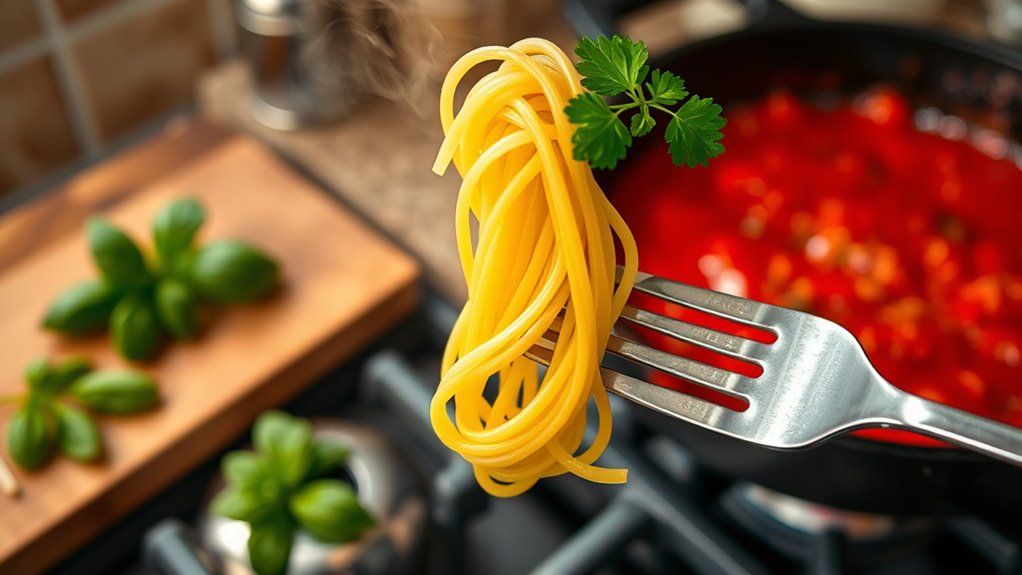

To make perfect pasta, start with a large pot of salted water. Use about one tablespoon of salt per four quarts. Cook until al dente, stirring occasionally. Toss the drained pasta with olive oil and add your sauce directly in the pot for better flavor. Enhance the dish with fresh herbs and grated cheese before serving in warm bowls. Garnish for a beautiful presentation. Keep going for more tips on perfecting your pasta game!

Get business pricing on monitors, keyboards and dev gear
- Business-only prices and quantity discounts
- Tax-exempt purchasing
- Multiple users, one account, clear invoices
Key Takeaways
- Use a large pot with well-salted water to boil pasta for optimal seasoning and flavor.
- Stir pasta gently while cooking to prevent sticking and check for al dente texture before draining.
- Toss drained pasta with olive oil to prevent sticking and enhance flavor absorption when mixing with sauce.
- Incorporate fresh herbs and adjust seasoning with ingredients like red pepper flakes or lemon juice for added brightness.
- Serve pasta in warm bowls, garnished with cheese or herbs, to enhance presentation and dining experience.
When you want to impress your family or friends with a delicious meal, mastering the art of pasta is essential. The first step is choosing the right pasta shape. Different shapes pair well with different sauces, so understanding this can elevate your dish. For instance, if you’re making a light, creamy sauce, opt for fettuccine or linguine. Their flat surfaces capture the sauce beautifully. On the other hand, if you’re preparing a robust meat sauce, consider using rigatoni or penne. Their hollow centers hold onto the sauce, ensuring each bite is packed with flavor.
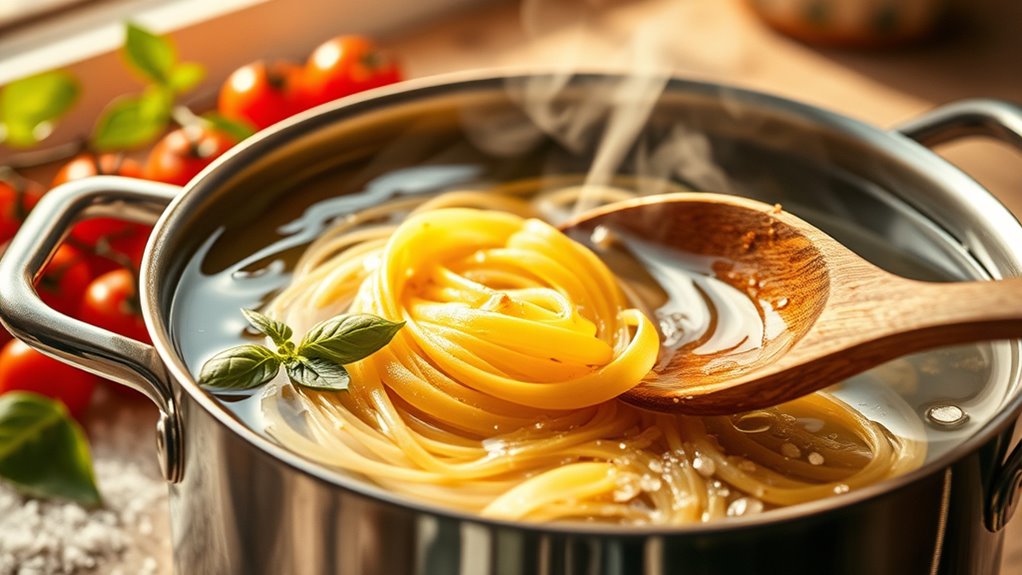
Once you’ve got your pasta shape selected, it’s time to focus on boiling it to perfection. Start by bringing a large pot of salted water to a rolling boil. The salt not only adds flavor but also helps to season the pasta as it cooks. Use about one tablespoon of salt for every four quarts of water. When the water’s boiling, add your pasta and stir it gently to prevent sticking. Cooking time varies by shape, so always check the package instructions and taste a piece a minute or two before the suggested time to achieve that perfect al dente texture—you want it to have a slight bite.
While your pasta cooks, it’s fundamental to think about seasoning techniques. A well-seasoned pasta can turn a simple dish into something extraordinary. Once you drain the pasta, don’t rinse it. Rinsing washes away the starch that helps sauces cling. Instead, toss it with a bit of olive oil right after draining to keep it from sticking. Then, add your sauce directly to the pasta in the pot. This allows the pasta to absorb the flavors better. Additionally, you can incorporate music therapy into your cooking routine to enhance your overall cooking experience and boost creativity.
If you’re making a tomato-based sauce, add fresh herbs like basil or oregano towards the end of cooking to keep their flavors vibrant. For creamy sauces, a touch of grated cheese can enhance the richness. Always taste as you go; this is where your personal touch comes in. You might find a sprinkle of crushed red pepper flakes or a squeeze of lemon juice can brighten up the dish.
Finally, presentation matters too. Serve your pasta in a warm bowl, garnish with freshly grated cheese, herbs, or a drizzle of high-quality olive oil. With these tips in hand, you’re set to create a pasta dish that’ll impress everyone at the table!
Frequently Asked Questions
How Do I Store Leftover Pasta Properly?
To store leftover pasta properly, let it cool down first. Once it’s at room temperature, place it in an airtight container. For the best pasta storage, you can add a drizzle of olive oil to prevent sticking. If you’re preserving it for longer, consider freezing it in portions. When you’re ready to enjoy it again, just reheat in boiling water or the microwave, and you’ll have delicious pasta ready to go!
Can I Use Whole Wheat Pasta Instead?
Yes, you can definitely use whole wheat pasta as a substitution! It’s a healthier option, packed with fiber and nutrients. Just keep in mind that whole wheat pasta has a nuttier flavor and firmer texture than regular pasta, so it might change the dish’s overall taste. Adjust your cooking time slightly, as it often takes a bit longer to cook. Enjoy experimenting with this nutritious alternative in your favorite recipes!
What Is the Best Type of Salt for Boiling Pasta?
When you think of a chef sprinkling salt over boiling water, envision the magic of flavor enhancement. For boiling pasta, kosher salt’s coarse texture dissolves beautifully, ensuring even seasoning. It’s your best bet for that perfect taste. You could use seasoning salt, but it often contains additives that might overpower the dish. Keep it simple with kosher salt, and your pasta will absorb just the right amount of flavor, elevating every bite.
How Do I Know When Pasta Is Done Cooking?
You’ll know your pasta is done cooking when it reaches that perfect al dente texture—firm yet tender. Start checking it a couple of minutes before the package’s recommended cooking time. Take a piece out, bite into it, and see if it has that slight chew. If it does, you’re good to go! If not, give it another minute or two, then check again until you achieve that ideal consistency.
Can I Make Pasta Without Eggs?
Absolutely, you can make pasta without eggs! Have you ever tasted the delightful texture of egg-free alternatives? Using flour and water, you can create a dough that’s just as satisfying. Add a pinch of salt for flavor, and knead it well to achieve that perfect consistency. Roll it out thin, cut your desired shape, and cook it in boiling water. You’ll enjoy a delicious, egg-free pasta that rivals traditional recipes!
Conclusion
In conclusion, mastering the art of pasta is a culinary adventure worth beginning. By boiling with precision, crafting a sauce that complements, and serving with flair, you’ll elevate your dining experience to that of a Roman feast. Remember, every bowl of pasta tells a story, so embrace the process and savor each bite. With these tips at your fingertips, you’ll create dishes that even the most discerning Renaissance chef would admire. Buon appetito!
Halloween Picks
halloween
As an affiliate, we earn on qualifying purchases.