

Solid-state batteries are a revolutionary advancement in car battery technology, using solid electrolytes instead of liquid ones. They promise higher energy densities, quicker charging times, and improved safety features compared to traditional lithium-ion batteries. As automakers and tech firms invest in this technology, we’re on the cusp of a shift in electric vehicle power sources. Understanding how these batteries can change manufacturing and charging infrastructure is crucial for grasping their full potential.
Key Takeaways
- Solid-state batteries use solid electrolytes, offering higher energy densities and quicker charging times compared to traditional lithium-ion batteries.
- Major automakers and tech firms are collaborating to accelerate the development and production of solid-state battery technology.
- Manufacturing processes are evolving to be more efficient and sustainable, driven by the shift to solid-state battery technology.
- Future charging stations will need to support ultra-fast charging to maximize the benefits of solid-state batteries.
- Solid-state batteries promise longer ranges, improved safety, and solutions to current lithium-ion battery limitations.
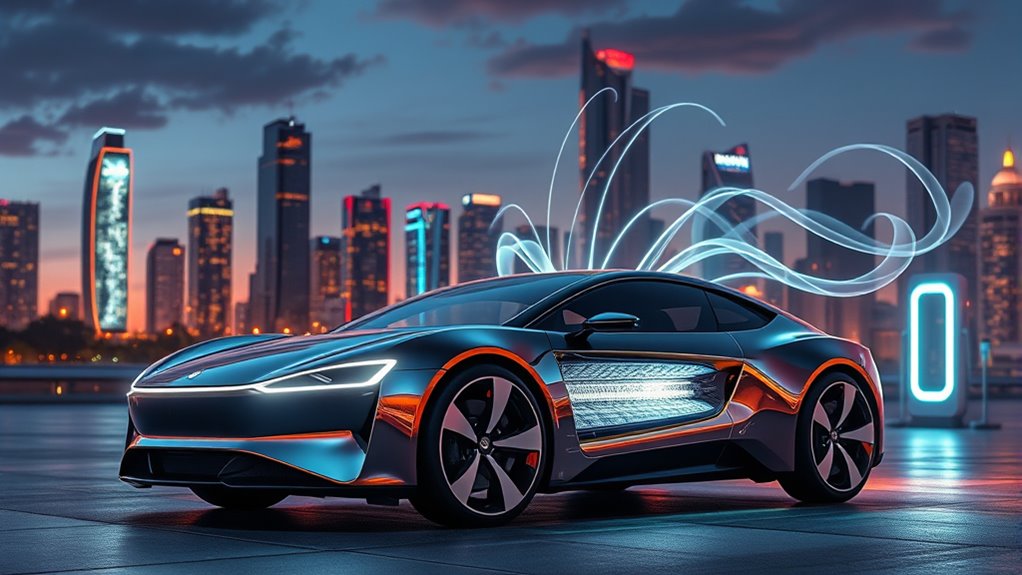
What will the future hold for car batteries? You might be wondering about the advancements on the horizon, particularly the exciting prospect of solid-state batteries. These next-generation batteries promise a seismic shift in how we power electric vehicles, enhancing both performance and safety. Unlike traditional lithium-ion batteries, solid-state batteries utilize solid electrolytes, which could lead to higher energy densities and quicker charging times. Imagine a car battery that not only lasts longer but also takes mere minutes to recharge—sounds appealing, right?
The future of car batteries lies in solid-state technology, promising enhanced performance, safety, and rapid recharging capabilities.
As the world shifts toward electric vehicles, battery manufacturing is undergoing a transformation. You’re likely to see more companies investing in solid-state technology, spurred by the need for batteries that can keep up with the growing demand for EVs. Major automakers are already collaborating with tech firms to accelerate the development of these batteries. This partnership focuses on refining production processes, making them more efficient and less costly. You’ll notice that as these innovations unfold, the landscape of battery manufacturing will change dramatically, leading to more sustainable practices and potentially lower prices for consumers like you.
The charging infrastructure will also need to adapt to these new battery technologies. Currently, you’re probably familiar with the various charging stations scattered across cities, but imagine a future where these stations are optimized for solid-state batteries. They’ll need to evolve to accommodate faster charging capabilities, ensuring that you can recharge your vehicle as quickly as refueling a gas car. You’ll want to see more widespread adoption of ultra-fast chargers that can deliver high power levels, supporting the increased efficiency solid-state batteries bring to the table.
Moreover, the transition to solid-state battery technology could solve some of the limitations of today’s lithium-ion batteries, such as issues related to safety and longevity. If manufacturers can successfully scale production, you might find yourself enjoying longer ranges and less frequent charging. This could mean fewer concerns about running out of battery during your daily commutes or long road trips.
Frequently Asked Questions
How Do Solid-State Batteries Compare to Lithium-Ion Batteries in Performance?
Solid-state batteries outperform lithium-ion batteries in both energy density and charging speed. You’ll find that solid-state batteries can store more energy in a smaller space, which means longer driving ranges. Plus, they charge faster, reducing the time you spend waiting. Their improved thermal stability also means they’re safer, minimizing risks of overheating. Overall, if you’re looking for efficiency and performance, solid-state batteries are a game changer compared to their lithium-ion counterparts.
What Are the Manufacturing Challenges of Solid-State Batteries?
You’ll find that the manufacturing challenges of solid-state batteries primarily lie in scalability and material integration. Creating a consistent, high-quality production process is tough, as the materials used must work seamlessly together. Achieving the necessary uniformity in the solid electrolyte and electrode layers is vital for performance. Additionally, scaling up production while maintaining these standards proves to be a significant hurdle for manufacturers looking to bring solid-state technology to the mainstream market.
Are Solid-State Batteries Safer Than Traditional Batteries?
Yes, solid-state batteries are generally safer than traditional batteries. They offer improved battery longevity and reduce the risk of overheating or fires due to their solid electrolyte design. Additionally, since they’re less prone to leakage, they have a lower environmental impact. You’ll find that these features make solid-state batteries a promising alternative, enhancing safety while also addressing ecological concerns as we shift towards more sustainable energy solutions.
When Can We Expect Solid-State Batteries to Be Commercially Available?
You can expect solid-state batteries to be commercially available within the next few years, but market adoption will depend on overcoming several regulatory hurdles. Companies are actively working to navigate these challenges, ensuring safety and efficiency standards are met. While some prototypes are already showing promise, widespread use in vehicles might take longer. Stay tuned, as advancements are happening rapidly, and you could see these batteries in your car sooner than you think!
How Do Temperature Extremes Affect Solid-State Battery Performance?
Imagine driving through scorching heat or freezing cold—how do those extremes impact your car’s battery? Temperature extremes can profoundly affect solid-state battery performance. While they offer better thermal stability than traditional batteries, extreme conditions can still lead to reduced efficiency and lifespan. High temperatures may cause unwanted reactions, while freezing temps can hinder ion movement. Keeping your solid-state battery within ideal temperature ranges guarantees reliable performance and longevity, no matter where your journey takes you.
Conclusion
As you explore the future of car batteries, solid-state technology stands out with its promise of increased energy density and safety. Did you know that solid-state batteries could potentially offer up to 50% more energy than traditional lithium-ion batteries? This leap in efficiency could revolutionize electric vehicles, allowing for longer ranges and shorter charging times. Embracing this innovation not only enhances performance but also paves the way for a cleaner, more sustainable automotive future.