
Choosing the right software testing tools as a student can be challenging due to the variety of options and skill levels involved. The best overall pick is Learn Selenium Testing Tools with Python because of its balance of usability and real-world relevance. Lessons Learned in Software Testing stands out for its focus on fundamental testing principles, making it ideal for foundational learning. However, tradeoffs include balancing ease of use with advanced features, and some tools may require a steep learning curve. Continue reading for a detailed breakdown of each option and what makes them suitable for different student needs.
Key Takeaways
- The top-ranked tools combine ease of use with robust automation capabilities suitable for students just starting out and those seeking to deepen their skills.
- Tools that integrate AI or machine learning tend to offer advanced features but often come with higher complexity and costs.
- Practical, hands-on tools like Selenium and JMeter are favored for their real-world applicability and extensive community support.
- Foundational books and guides are essential for understanding core concepts but may need to be paired with practical tools for effective learning.
- Cost and accessibility remain key factors; many top tools offer free or student discounts, but some premium options provide more comprehensive features.




| software testing tools for student | Format |
|---|---|
| Lessons Learned in Software Te | Book |
| Learning Selenium Testing Tool | Book |
| Selenium WebDriver Automation | Training Guide |
| Software Testing Tools: WinRun | Book |
| A Practitioner’s Guide to Soft | — |
| Effective Software Testing: A | Book |
| Software Test Design | — |
| Elevating Software Testing wit | Book |
| AI-Integrated Software Automat | — |
| Full Stack Testing: A Practica | Book |
More Details on Our Top Picks
Lessons Learned in Software Testing: A Context-Driven Approach
This book stands out for its practical, experience-based lessons tailored for students who want to understand real-world testing challenges. Its context-driven approach makes it adaptable to various testing scenarios, unlike more rigid technical guides like the Selenium books. However, with no detailed content available, it’s harder to evaluate its depth or specific insights. It’s an excellent choice for students seeking foundational principles rooted in actual testing experiences, but less suited for those wanting step-by-step tutorials or tool-specific instructions.
Pros:- Provides practical, experience-based lessons that reflect real testing scenarios
- Flexible, context-driven approach adaptable to different testing environments
- Emphasizes critical thinking and testing principles over tool-specific instructions
Cons:- Lacks detailed content or specific examples for immediate application
- No available content to assess the depth of coverage or update frequency
Best for: Students who prefer learning through practical lessons and real-world testing stories
Not ideal for: Beginners looking for detailed, step-by-step tutorials or technical exercises
- Format:Book
Our verdict“This book is ideal for students who want to deepen their understanding of testing principles through real-world insights rather than technical tutorials.”
Learning Selenium Testing Tools with Python
Compared to the Java-focused Selenium guide, this book makes the most sense for students already familiar with Python and seeking to incorporate Selenium into their testing toolkit. Its focus on practical browser automation and Python integration offers hands-on skills, but the lack of detailed content or edition info makes it hard to judge its completeness. It’s a solid choice for Python learners wanting to quickly get started with Selenium, though those needing comprehensive coverage or advanced techniques might find it lacking.
Pros:- Focuses on practical browser automation with Python, a popular language among students
- Combines testing concepts with coding exercises for immediate application
- Helps learners develop automation skills relevant to real-world testing tasks
Cons:- No detailed content or edition information limits understanding of coverage quality
- Limited focus on broader testing frameworks or advanced automation techniques
Best for: Students with basic Python skills aiming to learn browser automation testing
Not ideal for: Students seeking Java-based tutorials or detailed, step-by-step test design guidance
- Topic:Selenium testing tools with Python
- Format:Book
Our verdict“This book is perfect for Python learners who want to quickly start automating browsers, but less suited for those seeking comprehensive test design coverage.”
Selenium WebDriver Automation Testing with Java
This training guide excels for students focused on Java, Eclipse, and TestNG, providing step-by-step tutorials and practical examples that help build a solid testing foundation. Its focus on the Page Object Model (POM) offers a structured approach to maintainable test code—something the Python or older tools books lack. However, its narrow focus on Java means it might not be suitable for students interested in other languages or tools. If you’re a Java student wanting comprehensive, hands-on training, this guide provides detailed instruction, but it’s less useful for multi-language learning.
Pros:- Complete Java-based Selenium training with practical examples
- Includes step-by-step guidance and best practices for test automation
- Introduces the Page Object Model for scalable test scripts
- Covers essential tools like Eclipse and TestNG for integrated testing workflows
Cons:- Limited to Java, making it less relevant for non-Java learners
- Lacks a broad overview of other testing tools or languages
Best for: Java students or developers seeking practical, in-depth Selenium WebDriver training with POM
Not ideal for: Students interested in Python, or those looking for a broad overview of multiple testing tools
- Programming Language:Java
- Development Environment:Eclipse
- Testing Framework:TestNG
- Design Pattern:Page Object Model (POM)
- Format:Training Guide
Our verdict“Ideal for Java students wanting detailed, practical selenium training, but not suited for those exploring other languages or tools.”
Software Testing Tools: WinRunner, SilkTest, LoadRunner, JMeter, TestDirector, and QTP
This book offers a broad overview of multiple testing tools, including legacy options like WinRunner and SilkTest, alongside performance testing with LoadRunner and JMeter. It’s useful for students wanting to understand the landscape of testing tools used in industry, especially for functional and performance testing workflows. However, many tools covered are outdated or discontinued, which limits its practical relevance for current testing environments. Still, it provides a useful historical perspective and introduces various tools, making it suitable for students who want a wide-ranging overview, but less so for those seeking modern, hands-on tool training.
Pros:- Covers a variety of widely used testing tools and frameworks
- Addresses functional, performance, and test management workflows
- Includes both commercial and open-source tools like JMeter
Cons:- Focuses on legacy or discontinued tools, reducing practical relevance
- Lacks detailed descriptions or guidance for current best practices
Best for: Students interested in learning about the variety of testing tools used in industry, including legacy options
Not ideal for: Beginners or students seeking up-to-date, hands-on training with current tools
- Tools Covered:WinRunner, SilkTest, LoadRunner, JMeter, TestDirector, QTP
- Format:Book
Our verdict“Best suited for students aiming to understand the breadth of testing tools historically used in industry, but less for those needing modern, actionable skills.”
A Practitioner’s Guide to Software Test Design
This guide makes the most sense for students or early practitioners who want a clear focus on designing effective tests rather than broad tool coverage. Its dedicated approach to test design emphasizes principles and strategies that can be applied across different testing environments, unlike the more tool-centric books. However, without detailed content or examples, it’s less helpful for those seeking hands-on exercises or specific technical guidance. It’s particularly valuable for students aiming to improve their test case design skills but less suited for those looking for comprehensive tool tutorials.
Pros:- Provides practical guidance on designing effective software tests
- Focuses on core principles applicable across testing tools and environments
- Suitable for students developing fundamental testing skills
Cons:- Lacks detailed content or concrete examples to practice with
- No coverage of specific testing tools or automation frameworks
Best for: Students and beginners seeking a focused overview on effective test design principles
Not ideal for: Students wanting detailed step-by-step tutorials or tool-specific training
- ASIN:158053791X
Our verdict“Ideal for students wanting to strengthen their understanding of test design fundamentals, but not for those seeking technical tutorials.”
Effective Software Testing: A Developer’s Guide
This book stands out for its developer-focused approach, emphasizing practical testing techniques that help integrate testing seamlessly into the development process. Compared to Software Test Design, which concentrates on test planning across platforms, this guide offers actionable methods for improving day-to-day testing skills. Its main tradeoff is the lack of detailed content review, which might leave some readers wanting more depth. This pick makes the most sense for students who are actively coding and want to understand how to embed testing best practices into their work, rather than just planning or automation. The focus on real-world application helps students develop hands-on skills that are immediately useful.
Pros:- Developer-centric approach enhances practical understanding
- Focuses on real testing techniques applicable in coding projects
- Encourages integration of testing into software development
Cons:- Lacks detailed explanations or in-depth review content
- Does not cover automation or advanced testing tools
Best for: Students who want to learn how to incorporate effective testing practices directly into their development workflow
Not ideal for: Beginners seeking a broad overview of testing concepts without focus on practical application
- Format:Book
Our verdict“This book is ideal for students who want to improve their testing skills within the context of actual development work.”
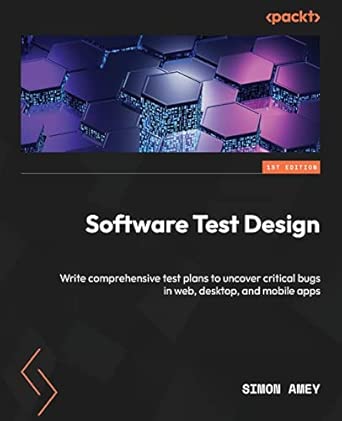
Software Test Design
This guide excels in teaching how to craft comprehensive test plans for web, desktop, and mobile applications, making it a strong choice alongside Effective Software Testing. While Effective Software Testing emphasizes practical skills, Software Test Design provides detailed frameworks for designing tests that target critical bugs across various platforms. Its main drawback is the absence of detailed content review, which could leave some students uncertain about the depth of coverage. This book is best suited for students who want to master the art of test planning for diverse application types, especially those interested in ensuring coverage for multiple device environments.
Pros:- Covers test planning for web, desktop, and mobile apps
- Focuses on identifying critical defects early
- Provides practical guidance on comprehensive test design
Cons:- No detailed review content available
- Less focus on automation or execution aspects
Best for: Students aiming to develop thorough test plans for multi-platform applications
Not ideal for: Students seeking hands-on testing techniques rather than strategic planning
- Platforms Covered:Web, desktop, and mobile applications
Our verdict“This resource is best for students who want to excel in designing detailed and effective test plans across multiple platforms.”
Elevating Software Testing with Artificial Intelligence
This book is timely for students interested in the intersection of AI and testing, exploring how AI can improve automation, accuracy, and efficiency. Unlike Effective Software Testing, which focuses on fundamental testing methods, this picks up the pace by integrating AI-driven approaches that are increasingly relevant in modern development. Its main limitation is the lack of detailed content, which might leave students wanting more concrete examples or case studies. It’s best suited for those already familiar with basic testing concepts who are eager to explore cutting-edge, AI-assisted testing strategies.
Pros:- Addresses a trending, relevant topic in testing
- Links AI techniques with practical testing workflows
- Prepares students for future developments in testing technology
Cons:- Limited detailed content or case studies
- Requires some prior knowledge of testing fundamentals
Best for: Students with a foundational understanding of testing who want to learn about AI applications in testing
Not ideal for: Absolute beginners or those looking for basic testing principles without AI focus
- Format:Book
Our verdict“This book is suitable for students eager to incorporate AI insights into their testing toolkit and stay ahead in the field.”
AI-Integrated Software Automation Testing with Java and Selenium: WebDriver, GitHub Copilot, TestNG, and Machine Learning-Based Flaky Test Detection
This resource makes a strong impression for students interested in automation, combining Java and Selenium WebDriver with AI tools like GitHub Copilot. It’s a natural choice for those who already understand basic scripting and want to explore AI-assisted workflows and flaky test detection with machine learning. Compared with Effective Software Testing, which covers general techniques, this book dives into specific automation frameworks and AI integrations, but it assumes familiarity with Java and Selenium. The limited details beyond the title suggest a steeper learning curve and some dependency on prior access to tools like GitHub Copilot. It’s best for students aiming to develop advanced automation skills with AI components.
Pros:- Covers Java-based automation testing with Selenium WebDriver
- Integrates AI workflows with GitHub Copilot
- Addresses flaky test detection using machine learning
Cons:- Requires prior knowledge of Java and Selenium
- AI features depend on access to GitHub Copilot
- Limited detailed content beyond the title
Best for: Students experienced in Java and Selenium wanting to advance into AI-supported automation testing
Not ideal for: Beginners or students unfamiliar with Java, Selenium, or AI tools like GitHub Copilot
- Programming Language:Java
- Testing Tool:Selenium WebDriver
- AI Integration:GitHub Copilot
- Framework:TestNG
- Feature:Machine Learning-Based Flaky Test Detection
Our verdict“This book suits students with existing automation skills eager to incorporate AI and machine learning into their testing processes.”
Full Stack Testing: A Practical Guide for Delivering High Quality Software
This book is ideal for students interested in understanding testing across the entire software stack, similar in scope to Software Test Design. While Effective Software Testing emphasizes individual techniques, Full Stack Testing offers a broader, end-to-end perspective on testing practices. Its main drawback is the lack of detailed content available, which makes it difficult to assess how deeply it covers complex topics. It’s best suited for students aiming to grasp a complete testing workflow, from front-end to back-end, and seeking practical, hands-on guidance to deliver high-quality software through comprehensive testing strategies.
Pros:- Covers testing strategies across all layers of software
- Provides practical, hands-on guidance
- Facilitates understanding of delivering high-quality software
Cons:- Content depth and quality are unclear due to limited details
- Less focus on automation or specific tools
Best for: Students aiming to understand and implement full stack testing in real-world projects
Not ideal for: Students looking for a quick, focused introduction to specific testing tools or automation
- Format:Book
Our verdict“This guide is best for students who want a comprehensive overview of full stack testing to inform robust testing practices.”

How We Picked
The tools in this roundup were selected based on their relevance to students learning software testing in 2026, focusing on accessibility, ease of learning, and practical application. We prioritized tools that are either free or offer significant educational discounts, and those with active community support or extensive documentation. Performance, versatility, and the ability to simulate real-world scenarios also played crucial roles in ranking. Our goal was to find a balanced mix of beginner-friendly options and more advanced tools that support growth as students progress in their testing skills.| software testing tools for student | Format |
|---|---|
| Lessons Learned in Software Te | Book |
| Learning Selenium Testing Tool | Book |
| Selenium WebDriver Automation | Training Guide |
| Software Testing Tools: WinRun | Book |
| A Practitioner’s Guide to Soft | — |
| Effective Software Testing: A | Book |
| Software Test Design | — |
| Elevating Software Testing wit | Book |
| AI-Integrated Software Automat | — |
| Full Stack Testing: A Practica | Book |
Factors to Consider When Choosing Software Testing Tools For Students
When selecting a software testing tool for students, it’s vital to consider several factors that influence both learning curve and effectiveness. The right tool should align with your current skill level while offering room to grow. Cost is another key consideration, especially for students on limited budgets, but investing in a slightly more advanced tool can pay off as skills develop. Compatibility with programming languages you’re learning, community support, and the availability of tutorials or courses also matter. Beware of tools that are overly complex for beginners or lack sufficient documentation, as these can hinder progress and motivation.Ease of Use and Learning Curve
For students just starting out, intuitive interfaces and clear documentation are essential. Tools with a gentle learning curve help maintain motivation and reduce frustration. However, more sophisticated tools may require a steeper initial investment but offer greater long-term benefits for deeper learning or project work. Balance your current skill level with the complexity of the tool to avoid feeling overwhelmed or under-challenged.
Compatibility and Programming Language Support
Many testing tools are optimized for specific programming languages like Java, Python, or C#. Choose a tool compatible with the language you’re learning, as this minimizes setup time and maximizes learning efficiency. Some tools support multiple languages, offering flexibility as your skills expand. Make sure the tool integrates well with your development environment to streamline workflows and avoid technical hurdles.
Cost and Accessibility
Budget constraints are common among students, so free or discounted tools are often the best starting points. Many vendors offer student licenses or open-source options that provide substantial features without a price tag. Investing in premium tools may be justified if they significantly improve learning outcomes or prepare you for industry standards. Always verify licensing terms and whether the tool’s features meet your specific learning goals before committing financially.
Community Support and Resources
Active communities, forums, and abundant tutorials accelerate learning and troubleshooting. Tools with extensive online support can help you solve issues faster and learn best practices. Check for official documentation, online courses, and user groups, especially if you’re new to testing. A strong support network can be the difference between a frustrating experience and steady progress.
Long-Term Growth and Scalability
Consider whether a tool can grow with your skills. Starting with beginner-friendly options that can be scaled up to more advanced features is ideal. Some tools offer modular capabilities or add-ons that support more complex testing scenarios as you advance. Avoid overly simplistic tools if you plan to pursue more complex testing projects or careers—investing in scalable options can save time and effort later.
Frequently Asked Questions
Are free testing tools sufficient for learning software testing?
Many free testing tools provide ample features for beginners and even intermediate learners, making them a practical choice for students. These tools often come with strong community support and extensive documentation, which can significantly aid your learning process. While premium tools may offer advanced features, free options are usually enough to grasp core concepts and build foundational skills. As you progress, you might find value in upgrading, but starting with free tools is generally a smart move for students.
Should I focus on automation tools or manual testing for my studies?
Focusing on automation tools is beneficial because they reflect industry practices and can save time in testing large projects. However, understanding manual testing fundamentals is equally important, as it helps you grasp testing principles and identify issues that automation might miss. Ideally, your learning path should include both areas: start with manual testing to build core skills, then gradually incorporate automation tools to enhance efficiency and scalability. Balancing both approaches will prepare you for diverse testing scenarios.
Can I learn testing tools without prior programming experience?
While some testing tools require programming knowledge, many beginner-friendly options do not demand extensive coding skills. Tools with graphical interfaces or record-and-playback features enable students to start testing without prior coding. However, developing a basic understanding of programming concepts can significantly expand your options and effectiveness in automation. If you’re new to programming, look for tools that are specifically designed to be accessible and provide ample learning resources.
How important is community support when choosing a testing tool?
Community support plays a vital role in overcoming learning hurdles and solving technical issues quickly. Tools with active online forums, tutorials, and user groups tend to have more resources, making it easier for students to learn and troubleshoot. Community support also provides opportunities to learn best practices and stay updated on new features or industry trends. Choosing a tool with a strong user base can significantly improve your learning experience and confidence.
Should I invest in premium testing tools as a student?
Premium testing tools often offer advanced features, better integrations, and dedicated support, which can be valuable if your learning or projects require those capabilities. For most students, starting with free or low-cost tools is sufficient to build foundational skills. If you plan to pursue a career in testing or need specific features like advanced automation or performance testing, investing in a premium tool may be justified. Always weigh the cost against your current needs and future goals.
Conclusion
For students just beginning their journey, Lessons Learned in Software Testing offers a solid theoretical foundation, making it ideal for those focusing on understanding core principles. Learning Selenium Testing Tools with Python stands out for practical automation skills and is best suited for learners aiming to develop hands-on technical expertise. If budget is a concern, free tools like Selenium and JMeter provide excellent entry points. For students seeking a comprehensive, scalable solution, investing in premium tools or courses can accelerate progress. Ultimately, selecting the right tool depends on your current skill level, learning goals, and future ambitions in software testing.