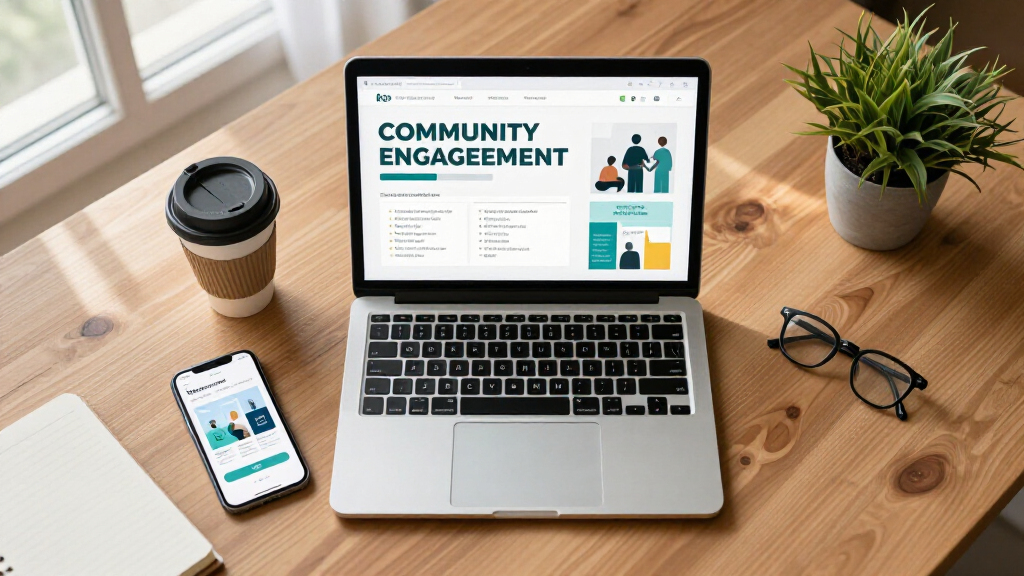

📊 Full opportunity report: How To Develop A Civic Logistics Workspace For Engaged Democracy on IdeaNavigator AI — validation score, market gap, and execution plan.

Get business pricing on monitors, keyboards and dev gear
- Business-only prices and quantity discounts
- Tax-exempt purchasing
- Multiple users, one account, clear invoices
TL;DR
A civic-dialogue nonprofit is piloting a new logistics workspace designed to automate participant recruitment, scheduling, and reporting for citizens’ assemblies. This development aims to address manual processes that hinder scalability. The project is in early testing, with plans to validate its usefulness through real-world use by coordinators.
A civic-dialogue nonprofit is piloting a new workflow tool designed to automate and simplify logistics for citizens’ assemblies. This initiative aims to address the manual, spreadsheet-based processes currently used by coordinators, which limit scalability as demand for deliberative forums grows. The project is in the testing stage, with plans to validate its effectiveness through real-world application.
The nonprofit is developing a guided event-operations workspace that guides coordinators from participant recruitment through demographic balancing, facilitator scheduling, and final reporting. The platform is intended to replace manual workflows that rely heavily on spreadsheets and email communication, which are time-consuming and error-prone.
Funders and local governments are increasingly commissioning citizens’ assemblies and deliberative panels, creating a need for scalable logistical support. Currently, small nonprofits delivering these forums manage logistics manually, which constrains their capacity to serve more communities or run larger, more complex events.
The initial testing involves recruiting five dialogue coordinators planning upcoming forums. These coordinators will manually run their participant rosters through a shared document to simulate the workflow the new platform aims to automate. Success will be measured by whether coordinators find the tool useful enough to pay for ongoing use, with a subscription model planned for revenue.
Potential Impact on Civic Engagement Logistics
If successful, this logistics workspace could significantly improve the efficiency and scalability of deliberative democracy initiatives. By automating routine tasks like participant recruitment, demographic balancing, and scheduling, nonprofits can reduce administrative burdens and focus more on content and engagement quality. This could enable wider adoption of citizens’ assemblies, especially in smaller organizations with limited resources.
Moreover, a purpose-built tool could improve the accuracy of participant data, enhance transparency, and streamline post-event reporting, making deliberative processes more trustworthy and replicable. This development aligns with broader efforts to modernize civic engagement infrastructure and foster more inclusive, participatory decision-making.
participant recruitment software for meetings
As an affiliate, we earn on qualifying purchases.
As an affiliate, we earn on qualifying purchases.
Growing Demand for Scalable Civic Logistics Tools
As governments and funders increasingly support citizens’ assemblies and deliberative panels, the demand for effective logistical support grows. Currently, many small civic organizations rely on manual workflows, which are inefficient and difficult to scale. Larger organizations and government agencies have begun exploring digital tools, but tailored solutions for small nonprofits remain limited.
Recent initiatives highlight a trend toward digital transformation in civic engagement, with some projects experimenting with platforms that integrate participant management, scheduling, and reporting. However, most existing tools are either too generic or designed for large-scale operations, leaving a gap for a lightweight, purpose-built solution for small to mid-sized civic groups.
This pilot aims to fill that gap by testing a minimal viable product (MVP) that can be validated quickly and iteratively improved based on user feedback.
“The manual nature of current logistics workflows limits the scalability of citizens’ assemblies, especially for smaller nonprofits.”
— an anonymous researcher
event scheduling and reporting tools
As an affiliate, we earn on qualifying purchases.
As an affiliate, we earn on qualifying purchases.
Uncertain Outcomes and Validation Metrics
It is not yet clear whether the proposed logistics workspace will be widely adopted by civic organizations or if it will significantly improve operational efficiency. The success depends on whether coordinators find the tool intuitive, useful, and cost-effective enough to replace existing manual workflows. Additionally, the full scope of features needed for diverse civic contexts remains to be tested, and user feedback will shape future development.
civic engagement logistics platform
As an affiliate, we earn on qualifying purchases.
As an affiliate, we earn on qualifying purchases.
Next Steps for Pilot Testing and Validation
The nonprofit plans to run pilot tests with five coordinators over the coming months, collecting feedback on usability and effectiveness. If the initial results are positive, the team will refine the platform and prepare for broader rollout. The goal is to establish a subscription-based model that can support ongoing development and scaling to other civic engagement programs.
Further, the project aims to explore integrations with existing civic tools and expand features based on user needs, with potential partnerships emerging from early success stories.
deliberative democracy workflow tools
As an affiliate, we earn on qualifying purchases.
As an affiliate, we earn on qualifying purchases.
Key Questions
How will the success of the logistics workspace be measured?
Success will be measured by user feedback, the extent to which coordinators find the tool useful, and whether they are willing to pay for ongoing use. Additional metrics include reductions in planning time and improvements in participant demographic balancing.
Can this tool be adapted for larger or different types of civic events?
While initially designed for small to mid-sized citizens’ assemblies, the platform’s core features could be expanded or customized for larger or different civic engagement formats, depending on user feedback and demand.
What are the main challenges in developing this logistics workspace?
The primary challenges include creating an intuitive interface that accommodates diverse civic contexts, ensuring data privacy, and integrating with existing civic tools and workflows.
When will the platform be available for broader use?
The project is in early testing, with broader availability contingent on pilot success. If the pilot proves effective, a wider rollout could occur within the next 12-18 months.
Source: IdeaNavigator AI
Fall Picks
fall essentials
As an affiliate, we earn on qualifying purchases.