

In the fast-paced world of software development, having the right productivity tools can make or break your efficiency. The best options streamline workflows, automate mundane tasks, and enhance collaboration. Obsidian & Zettelkasten stand out for knowledge management, while Visual Studio Code remains the go-to for code editing. However, tradeoffs exist: highly specialized tools might boost specific tasks but add complexity or cost. Continue reading for a detailed comparison to help you find the tools that fit your development style and needs in 2026.
Key Takeaways
- The top tools balance usability with advanced features, avoiding overwhelming beginners while satisfying power users.
- Automation and AI integration are becoming essential, but they often come with higher costs or learning curves.
- Open-source tools frequently outperform paid options in flexibility, but may lack dedicated support.
- All-in-one platforms tend to sacrifice depth for convenience; choosing niche tools often yields better results for specific workflows.
- Cost vs. value remains a key consideration—investing in premium tools can pay off if they save significant development time.
| The Developer’s Second Brain: Obsidian & Zettelkasten Guide |  | Best for Knowledge Management and Documentation Strategy | Focus Area: Obsidian, Zettelkasten, Markdown | Skill Level: Intermediate to advanced | Format: Printed book | VIEW LATEST PRICE | See Our Full Breakdown |
| Mastering Visual Studio Code: The Complete Handbook for Web and Software Developers |  | Best for Enhancing Coding Efficiency with VS Code | Coverage: VS Code features, Extensions, Customization | Intended Audience: Beginners to intermediate developers | Format: E-book and print | VIEW LATEST PRICE | See Our Full Breakdown |
| Claude AI Office Mastery: A Professional Textbook for Emails, Meetings, Documents, Research, Automation, and Daily Productivity |  | Best for AI-Driven Office Workflow Automation | Scope: Email, Meetings, Documents, Research, Automation | Intended Audience: Office workers, knowledge workers, managers | Format: Printed textbook | VIEW LATEST PRICE | See Our Full Breakdown |
| Git, GitHub and CI/CD: The Professional Developer’s Handbook | 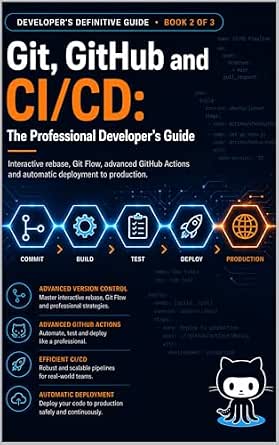 | Best for Advanced Version Control and Automation Workflows | Topics Covered: Git rebase, Git Flow, GitHub Actions, CI/CD | Skill Level: Intermediate to advanced | Format: Printed book | VIEW LATEST PRICE | See Our Full Breakdown |
| Engineering Gemini CLI for AI Automation and Workflows |  | Best for Command-Line AI Workflow Automation | Features: AI automation, Prompt engineering, Scripting, API support | Target User: Advanced developers with CLI skills | Platform: Command-line interface | VIEW LATEST PRICE | See Our Full Breakdown |
| Visual Studio Code – The Essentials: VS Code Day Preview Edition |  | Best for Developers Wanting Early Access to New Features | Preview Updates: Upcoming features | Stability: Experimental, potentially buggy | Tools Included: Core VS Code features | VIEW LATEST PRICE | See Our Full Breakdown |
| Excovip Large Linux Command Line Mouse Pad – 31.4 x 11.7 inch Desk Mat with Shortcut Reference |  | Best for Linux Enthusiasts Needing Efficient Workflow Aids | Dimensions: 31.4 x 11.7 inches (800 x 300 mm) | Material: Superfine fiber braided surface | Thickness: 0.07 inches (2 mm) | VIEW LATEST PRICE | See Our Full Breakdown |
| Visual Studio Code for Modern Developers: From Fundamentals to Advanced Productivity and Automation Techniques |  | Best for Developers Seeking a Complete Mastery of VS Code | Coverage: Fundamentals to advanced techniques | Audience: All skill levels | Focus: Productivity and automation | VIEW LATEST PRICE | See Our Full Breakdown |
| MuleSoft for Salesforce Developers: A Complete Guide for Achieving Mulesoft Certification Readiness and Building AI-Driven API Solutions |  | Best for Salesforce Developers Pursuing MuleSoft Certification | Coverage: Certification and API development | Focus: AI-driven APIs and best practices | Format: Print | VIEW LATEST PRICE | See Our Full Breakdown |
| AI Tools for Software Developers: The Beginner’s Playbook to Code Faster, Debug Smarter, and Ship More in 2026 |  | Best for Beginners Exploring AI to Boost Development | Audience: Beginners | Focus: AI tools for coding and debugging | Content Scope: Practical guidance | VIEW LATEST PRICE | See Our Full Breakdown |
| The Developer’s Playbook for Large Language Model Security: Building Secure AI Applications |  | Best for AI Security Practitioners | Focus Area: AI security strategies | Audience: Advanced developers and security teams | Content Depth: Security challenges and best practices | VIEW LATEST PRICE | See Our Full Breakdown |
| Google Cloud for Developers: Write, Migrate, and Extend Your Code |  | Best for Cloud Migration and Integration | Coverage: Cloud writing, migration, extension | Target Audience: Beginner to intermediate developers | Practicality: Best practices and strategies | VIEW LATEST PRICE | See Our Full Breakdown |
| The AI Advantage for Software Developers: Prompts, Agent Systems, and High-Performance Workflows to Grow Faster in the Age of AI |  | Best for AI-Driven Workflow Optimization | Focus Areas: AI prompts, agent systems, workflows | Audience: Intermediate to advanced developers | Content Approach: Practical strategies over technical tutorials | VIEW LATEST PRICE | See Our Full Breakdown |
| Python Programming Cheat Sheet Desk Mat – Large Mouse Pad with Complete Code Reference (31.5″ x 11.8″) |  | Best for Quick Reference and Coding Efficiency | Size: 31.5″ x 11.8″ | Material: Neoprene rubber backing | Thickness: 3 mm | VIEW LATEST PRICE | See Our Full Breakdown |
More Details on Our Top Picks
The Developer’s Second Brain: Obsidian & Zettelkasten Guide
This book stands out by offering a detailed approach to organizing developer knowledge using Obsidian and Zettelkasten, making it an excellent resource for coders who want to systematize their notes and project documentation. Compared with the more workflow-focused guides like Mastering Visual Studio Code, this title emphasizes long-term information management over immediate coding efficiency. However, its technical depth can overwhelm newcomers, and it offers limited insight into alternative tools like Notion or Roam. For developers aiming to build a reliable personal knowledge base that improves work clarity, this guide provides practical strategies rooted in Markdown and effective note-linking.
Pros:- Provides detailed strategies for structuring knowledge and documentation
- Focuses on practical applications with Markdown and Obsidian
- Helps improve long-term information retrieval and project organization
Cons:- Can be too technical for developers new to note-taking automation
- Limited discussion on alternative tools or broader workflows
Best for: Developers seeking to organize complex information, documentation, or research efficiently.
Not ideal for: Beginners or those seeking quick coding tips—this book is too technical and focused on knowledge systems.
- Focus Area:Obsidian, Zettelkasten, Markdown
- Skill Level:Intermediate to advanced
- Format:Printed book
Bottom line: This book is ideal for developers who want to master knowledge management rather than immediate coding workflows.
Mastering Visual Studio Code: The Complete Handbook for Web and Software Developers
This comprehensive handbook makes a strong case for maximizing Visual Studio Code’s features to boost daily productivity, especially compared to general guides like The Developer’s Second Brain which focus on knowledge systems. It covers essential tips and customizations that can significantly streamline the development process. While it offers practical advice suitable for both beginners and seasoned users, it falls short on detailed examples for some of the more advanced features, and it lacks references to updates or community resources. For developers focused on mastering their editor to write code faster and more efficiently, this guide provides actionable insights.
Pros:- In-depth coverage of VS Code features and extensions
- Suitable for users at all experience levels
- Practical tips for improving coding workflows
Cons:- Lacks detailed examples for some complex features
- No mention of official updates or community plugins
Best for: Web and software developers looking to deepen their VS Code expertise and improve coding speed.
Not ideal for: Developers seeking broader project management or automation tools—this is strictly focused on the editor itself.
- Coverage:VS Code features, Extensions, Customization
- Intended Audience:Beginners to intermediate developers
- Format:E-book and print
Bottom line: This handbook is best for developers wanting to unlock faster, more efficient coding within Visual Studio Code.
Claude AI Office Mastery: A Professional Textbook for Emails, Meetings, Documents, Research, Automation, and Daily Productivity
This textbook guides professionals toward integrating AI tools into daily office tasks, making it a good complement to technical developer tools like Git, GitHub and CI/CD. It emphasizes automation, research, and productivity enhancements, but lacks detailed technical instructions or step-by-step guides, which may frustrate users seeking hands-on setup advice. Its broad scope covers email management, meetings, and document automation, making it suitable for knowledge workers rather than developers focused solely on coding workflows. For those interested in leveraging AI for office productivity, this resource offers practical insights but requires additional technical resources for implementation.
Pros:- Comprehensive coverage of AI applications in office tasks
- Practical tips for automation and research workflows
- Suitable for a broad professional audience
Cons:- Lacks detailed technical setup instructions
- No user reviews available to validate effectiveness
- Potentially too advanced for complete beginners
Best for: Professionals who want to incorporate AI into their routine office tasks and workflows.
Not ideal for: Developers primarily looking for coding or automation tools for software pipelines—this is office productivity-focused.
- Scope:Email, Meetings, Documents, Research, Automation
- Intended Audience:Office workers, knowledge workers, managers
- Format:Printed textbook
Bottom line: This guide is best for professionals interested in applying AI to streamline daily office tasks rather than direct coding automation.
Git, GitHub and CI/CD: The Professional Developer’s Handbook
This handbook offers an in-depth look at complex Git techniques and CI/CD pipelines, making it ideal for developers already comfortable with basic version control but seeking to automate and optimize their deployment processes. Unlike the more general Mastering Visual Studio Code, which focuses on editor mastery, this guide dives into real-world workflows like Git rebase, Git Flow, and GitHub Actions, providing practical examples. However, it presumes a solid foundation in Git and lacks detailed setup instructions for some tools, which could slow down beginners. This pick makes the most sense for experienced developers aiming to refine their release processes and integrate code automation efficiently.
Pros:- Comprehensive coverage of advanced Git techniques
- Includes practical examples for real-world deployment workflows
- Focuses on automation with GitHub Actions and CI/CD pipelines
Cons:- Too technical for those new to Git or automation
- Limited guidance on initial setup for some tools
Best for: Experienced developers needing advanced Git workflows and CI/CD automation expertise.
Not ideal for: Beginners or developers unfamiliar with command-line tools—this is geared toward seasoned practitioners.
- Topics Covered:Git rebase, Git Flow, GitHub Actions, CI/CD
- Skill Level:Intermediate to advanced
- Format:Printed book
Bottom line: This handbook suits experienced developers wanting to elevate their version control and deployment automation skills.
Engineering Gemini CLI for AI Automation and Workflows
This CLI toolset targets developers working on AI automation and prompt engineering, making it highly specific compared to broader productivity guides like Mastering Visual Studio Code. It excels at enabling scripting, API integration, and managing AI workflows efficiently, which can significantly speed up AI project development. However, its lack of detailed specifications and the absence of user reviews could pose challenges for newcomers. This product makes the most sense for technically skilled developers who want to embed AI automation deeply into their workflows rather than those seeking plug-and-play solutions or beginner-friendly interfaces.
Pros:- Powerful command-line tools for AI automation
- Supports scripting and API integration
- Enhances developer productivity in AI projects
Cons:- Limited technical specifications and user feedback
- Requires considerable command-line expertise
Best for: Developers experienced with command-line interfaces and AI scripting who want to optimize AI workflows.
Not ideal for: Beginners or developers looking for graphical tools—this requires comfort with CLI and scripting.
- Features:AI automation, Prompt engineering, Scripting, API support
- Target User:Advanced developers with CLI skills
- Platform:Command-line interface
Bottom line: This CLI is best for developers seeking to streamline AI workflows through scripting and automation at a technical level.
Visual Studio Code – The Essentials: VS Code Day Preview Edition
This edition of VS Code stands out for providing a glimpse into upcoming features, making it ideal for developers who want to stay ahead of the curve. Unlike the more comprehensive Mastering Visual Studio Code, which covers in-depth usage, this preview offers a quick way to test new tools before they hit the stable release. However, its limited details and potential bugs mean it’s better suited for experimental use rather than mission-critical workflows. The preview edition enhances coding efficiency by integrating essential tools, but developers should be prepared for instability that can disrupt productivity. Compared to the full-featured options, this version is a tradeoff between early access and stability.
Pros:- Provides early access to upcoming features
- Includes essential tools for coding efficiency
- Helps developers stay ahead with preview updates
Cons:- Limited information on specific features can cause confusion
- Preview version may contain bugs affecting workflow
- Less stable than fully released editions
Best for: Developers eager to test upcoming features and contribute feedback during VS Code’s development cycle
Not ideal for: Developers needing a stable, fully-supported environment for production work
- Preview Updates:Upcoming features
- Stability:Experimental, potentially buggy
- Tools Included:Core VS Code features
- Target Audience:Early adopters
- Release Type:Preview/Beta
- Platform Compatibility:Windows, macOS, Linux
Bottom line: This pick makes the most sense for adventurous developers who want to influence future VS Code improvements, accepting some instability in return.
Excovip Large Linux Command Line Mouse Pad – 31.4 x 11.7 inch Desk Mat with Shortcut Reference
This oversized mouse pad offers a broad surface that improves comfort and precision, especially for intensive coding sessions. Its superfine fiber surface ensures smooth mouse movement, surpassing standard mouse pads in control, akin to the precision sought in Visual Studio Code for Modern Developers’s advanced tips. The included Linux command reference makes it particularly valuable for Linux users who rely on quick access to terminal commands, though the large size can be cumbersome on small desks. The non-slip rubber base keeps it stable during intense work, but the design’s focus on Linux commands limits its versatility for users outside that ecosystem. For Linux developers with ample desk space, this pad can streamline command execution and improve ergonomics.
Pros:- Large surface area for comfortable use
- Smooth surface offers precise control
- Includes a handy Linux command reference guide
- Non-slip rubber base for stability
Cons:- Too large for small or cluttered desks
- Design heavily focused on Linux users, less suitable for others
Best for: Linux developers who want a large, stable workspace with quick command access
Not ideal for: Desk setups with limited space or users focused on cross-platform development without Linux needs
- Dimensions:31.4 x 11.7 inches (800 x 300 mm)
- Material:Superfine fiber braided surface
- Thickness:0.07 inches (2 mm)
- Base:Non-slip rubber
- Edge Design:High stretch silk precision locking edges
Bottom line: This mouse pad suits Linux developers needing extra workspace and quick command access, provided they have adequate desk space.
Visual Studio Code for Modern Developers: From Fundamentals to Advanced Productivity and Automation Techniques
This book offers a broad, detailed approach to mastering Visual Studio Code, covering everything from basic features to automation and productivity hacks. Unlike the VS Code – The Essentials preview edition, which provides early access to features, this guide consolidates practical tips and techniques suitable for all skill levels, making it ideal for developers aiming for a deep understanding. Its coverage of automation techniques complements the essential tools provided in the preview edition but lacks specific technical details or code examples, which might frustrate those seeking hands-on guidance. Overall, this resource helps developers unlock VS Code’s full potential, though it demands a time investment to absorb its comprehensive content.
Pros:- Covers both fundamentals and advanced techniques
- Suitable for all skill levels
- Provides practical tips for automation and efficiency
- Helps develop a deep understanding of VS Code
Cons:- Lacks detailed technical examples in the description
- Broad coverage may feel overwhelming for some users
Best for: Developers wanting a structured, comprehensive guide to maximize VS Code productivity
Not ideal for: Developers seeking quick, actionable tips without in-depth explanations
- Coverage:Fundamentals to advanced techniques
- Audience:All skill levels
- Focus:Productivity and automation
- Format:Printed book
- Language:English
Bottom line: This book makes sense for developers committed to mastering VS Code thoroughly, especially those interested in automation.
MuleSoft for Salesforce Developers: A Complete Guide for Achieving Mulesoft Certification Readiness and Building AI-Driven API Solutions
This guide is tailored for Salesforce developers aiming to pass MuleSoft certification and develop AI-powered APIs. Compared to the more general AI Tools for Software Developers, which targets beginners and broad AI integration, this book dives deep into MuleSoft-specific topics, making it a dense but valuable resource. Its comprehensive coverage of certification areas and practical exercises helps bridge the gap between theory and real-world application. However, for those new to MuleSoft or without prior API experience, the density can be overwhelming, and it may require supplementary resources. Overall, it’s a strategic investment for developers committed to mastering MuleSoft’s ecosystem for advanced integrations.
Pros:- Thorough coverage of MuleSoft certification topics
- Includes practical exercises for hands-on learning
- Focuses on building AI-driven API solutions
Cons:- Dense content may be intimidating for beginners
- Lacks detailed specifications or technical breakdowns
Best for: Salesforce developers focused on certification and integration projects involving AI-driven APIs
Not ideal for: Beginners without API or MuleSoft experience, or developers seeking a lighter introduction
- Coverage:Certification and API development
- Focus:AI-driven APIs and best practices
- Format:Print
- Target Audience:Salesforce developers
- Difficulty:Advanced
- Practical Exercises:Included
Bottom line: This guide is best for serious Salesforce developers aiming to achieve MuleSoft certification and build sophisticated APIs with AI integration.
AI Tools for Software Developers: The Beginner’s Playbook to Code Faster, Debug Smarter, and Ship More in 2026
This book offers accessible guidance for developers new to AI, emphasizing practical ways to accelerate coding, improve debugging, and deliver projects faster. Compared to the more technical Visual Studio Code for Modern Developers, which covers broad productivity techniques, this playbook focuses specifically on AI tools and how beginners can incorporate them into their workflow. Its emphasis on practical advice makes it attractive for those just starting out, but the rapid pace of AI development means some content could become outdated quickly. This resource is a good entry point for developers eager to leverage AI, though they should stay alert for updates and new tools.
Pros:- Practical guidance tailored for beginners
- Focuses on improving coding speed and debugging with AI
- Covers the latest AI tools for developers
Cons:- No detailed technical specifications
- Rapid AI advancements may render some content outdated
Best for: Beginners curious about integrating AI into their development process for faster, smarter coding
Not ideal for: Experienced developers looking for in-depth technical details or advanced AI workflows
- Audience:Beginners
- Focus:AI tools for coding and debugging
- Content Scope:Practical guidance
- Update Cycle:Rapidly evolving
- Format:Digital/Print
- Target Tech:Latest AI tools
Bottom line: This book suits new developers ready to start using AI tools to enhance their productivity, with an understanding that AI tech evolves quickly.
The Developer’s Playbook for Large Language Model Security: Building Secure AI Applications
This book stands out for providing practical security strategies tailored specifically to large language models, making it a valuable resource for AI developers concerned with safety and robustness. Compared to more general development guides like Google Cloud for Developers, it dives deep into security challenges unique to AI systems, though it falls short on detailed technical implementation examples, which might frustrate those looking for step-by-step instructions. This focus on advanced security makes it less accessible for beginners, but essential for teams deploying sensitive AI applications. The coverage of key challenges such as data privacy, model poisoning, and safeguard techniques makes it a critical read for AI security specialists.
Pros:- Offers practical security strategies tailored for AI models
- Addresses critical challenges like data privacy and model poisoning
- Provides actionable best practices for secure AI deployment
Cons:- Lacks detailed, step-by-step technical implementation guidance
- May be too advanced for those new to AI security concepts
Best for: AI developers and security teams working on large language models who need actionable security frameworks.
Not ideal for: Beginners or developers seeking a broad overview of AI development, as the book is too advanced and lacks practical coding examples.
- Focus Area:AI security strategies
- Audience:Advanced developers and security teams
- Content Depth:Security challenges and best practices
Bottom line: This book makes the most sense for experienced AI developers and security specialists focused on safeguarding large language models.
Google Cloud for Developers: Write, Migrate, and Extend Your Code
This book is a solid choice for developers who want to understand how to leverage Google Cloud services effectively, especially when compared to the more specialized The AI Advantage for Software Developers. It offers a broad overview of cloud development, migration, and extension strategies, making it useful for teams transitioning to cloud infrastructure. While it covers essential best practices, it sometimes lacks detailed technical examples, which could leave advanced users wanting more concrete guidance. Its practical approach makes it suitable for developers at all skill levels, but those seeking in-depth tutorials on specific cloud services may find it too general.
Pros:- Comprehensive guide to Google Cloud development
- Practical strategies for migration and extension
- Accessible for developers of all skill levels
Cons:- Lacks detailed technical examples in some sections
- May be too general for advanced cloud users
Best for: Developers beginning or intermediate in cloud migration and integration looking for a comprehensive guide to Google Cloud.
Not ideal for: Advanced cloud engineers or specialists needing detailed, hands-on technical tutorials, as the book remains at a high level.
- Coverage:Cloud writing, migration, extension
- Target Audience:Beginner to intermediate developers
- Practicality:Best practices and strategies
Bottom line: This book makes the most sense for developers seeking a broad, practical introduction to Google Cloud, rather than deep technical specifics.
The AI Advantage for Software Developers: Prompts, Agent Systems, and High-Performance Workflows to Grow Faster in the Age of AI
This book is ideal for developers aiming to incorporate AI tools like prompts and agent systems into their workflows, especially when compared to general coding reference guides like the Python Programming Cheat Sheet Desk Mat. It emphasizes practical strategies for high-performance AI workflows, helping developers stay competitive by adopting AI-driven techniques. However, it lacks detailed technical tutorials, which limits its usefulness for those seeking hands-on implementation. Its focus on advanced concepts makes it less suitable for beginners, but it offers valuable insights for experienced developers looking to leverage AI for faster growth and productivity enhancements.
Pros:- Provides practical strategies for AI integration
- Focuses on high-performance workflows and agent systems
- Helps developers stay competitive in the AI era
Cons:- Lacks detailed, step-by-step technical tutorials
- May be too advanced for complete beginners
Best for: Intermediate to advanced developers interested in integrating AI into their development processes for acceleration and efficiency.
Not ideal for: Novice programmers or those looking for basic coding references, as it focuses on high-level strategies and workflows without tutorials.
- Focus Areas:AI prompts, agent systems, workflows
- Audience:Intermediate to advanced developers
- Content Approach:Practical strategies over technical tutorials
Bottom line: This book is best suited for experienced developers seeking to leverage AI for workflow acceleration and growth.
Python Programming Cheat Sheet Desk Mat – Large Mouse Pad with Complete Code Reference (31.5″ x 11.8″)
This desk mat provides an immediate, large-scale reference for Python syntax, data structures, and OOP concepts, making it ideal for quick lookups during intense coding sessions. Compared to the other books, it offers a tangible, practical tool rather than theoretical knowledge. Its size and color-coded sections improve workflow efficiency, especially for students or professionals who prefer quick access over reading lengthy materials. On the downside, its large footprint may be cumbersome on small desks, and over time, the text might fade without proper care, which could diminish its usefulness.
Pros:- Provides quick access to Python syntax and references
- Large size offers ample workspace and easy navigation
- Durable, non-slip surface ensures stability
- Color-coded sections facilitate quick locating of concepts
Cons:- May be too large for small desks or limited space
- Text may fade with extended use without proper care
Best for: Python programmers, students, and professionals who need a durable, quick-reference workspace tool.
Not ideal for: Developers looking for in-depth tutorials or conceptual explanations, as this is primarily a reference aid.
- Size:31.5″ x 11.8″
- Material:Neoprene rubber backing
- Thickness:3 mm
- Weight:0.45 kg
- Non-slip:Yes
- Color coding:Yes
Bottom line: This desk mat is best for Python developers who want a durable, extensive reference at their fingertips during daily coding tasks.

How We Picked
Our evaluation focused on core factors that impact developer productivity: ease of use, feature set, integration capabilities, customization options, and overall value. We prioritized tools that are widely adopted and well-supported, ensuring they deliver measurable efficiency gains. The ranking also considers user feedback, versatility across different development environments, and how well the tools complement each other in a typical workflow. By balancing these criteria, we aimed to identify tools that cater to both individual developers and team environments, offering practical solutions for 2026.
Factors to Consider When Choosing Developer Productivity Tools
Choosing the right developer productivity tools involves understanding your specific workflow, project needs, and budget. While feature-rich options are tempting, overloading your toolkit can lead to complexity and frustration. Conversely, too minimal a setup may limit your potential. Here are key factors to consider when selecting tools that align with your development style and goals.Compatibility and Integration
Ensure the tools you choose seamlessly integrate with your existing environment, including your IDE, version control system, and cloud services. Compatibility reduces setup time and minimizes disruption. For teams, consistent toolchains foster collaboration and streamline code review processes. Opting for tools with open APIs or broad plugin ecosystems often enhances integration options, making your workflow more cohesive and adaptable.
Ease of Use and Learning Curve
Tools should boost productivity without requiring steep learning curves, especially if you’re working under tight deadlines. User-friendly interfaces and clear documentation save time and reduce errors. However, more complex tools with advanced features may be worth the investment if they deliver significant efficiency gains once mastered. Balance your current skill level with the potential long-term benefits of more sophisticated solutions.
Automation and AI Capabilities
Automation tools and AI integrations are transforming development workflows by handling repetitive tasks, code generation, or testing. While these features can dramatically increase output, they often introduce costs and setup complexity. Consider your team’s familiarity with AI tools and whether the productivity boost justifies the investment. A gradual adoption approach ensures you gain benefits without overwhelming your existing processes.
Cost and Total Value
Budget constraints are a real factor, but the cheapest tools aren’t always the most cost-effective in the long run. Evaluate whether the features and support offered justify the price. Open-source options often provide flexibility without licensing fees, but paid tools may include dedicated support, updates, and integrations that save time and reduce risk. Weigh upfront costs against potential productivity gains to find the best value.
Scalability and Future-Proofing
Your development environment will evolve, so choose tools that can grow with your needs. Consider whether they support larger teams, complex workflows, or new programming languages. Investing in scalable tools can prevent costly migrations later. Additionally, staying updated with industry trends ensures your toolkit remains relevant and competitive in fast-changing tech landscapes.
Frequently Asked Questions
How do I choose between free and paid developer productivity tools?
Free tools are ideal for small projects or individual developers with limited budgets, especially if they offer essential features and strong community support. Paid tools typically provide more advanced capabilities, dedicated support, and seamless integrations, which can be worth the investment for larger teams or mission-critical projects. Assess your specific needs, team size, and the potential productivity improvements before making a choice, as sometimes paying for a tool yields better long-term value.
Should I prioritize tools that integrate with my existing IDE or use standalone solutions?
Prioritizing tools that integrate with your primary IDE can significantly streamline your workflow by reducing context switching and simplifying setup. Seamless integration ensures you can access features without leaving your development environment, saving time and minimizing errors. However, standalone solutions may offer specialized functionalities that your IDE lacks. Balance these options based on how much time you spend switching contexts versus the value of the added features.
How important is AI and automation in developer productivity tools?
AI and automation are becoming increasingly vital, enabling faster coding, smarter debugging, and automated testing. They can dramatically reduce repetitive tasks, freeing you to focus on complex problem-solving. However, integrating these tools can involve a learning curve and higher costs. Consider whether the efficiency gains align with your workflow and whether your team has the capacity to adopt and maintain AI-driven solutions effectively.
What should I look for in a knowledge management tool for developers?
A good knowledge management tool should support easy note-taking, linking related ideas, and quick retrieval of information. Features like markdown support, tagging, and bidirectional links improve organization and discoverability. Compatibility with your existing work environment and collaboration features are also important for team settings. The goal is to reduce time spent searching for information and to foster a culture of shared knowledge.
Is it better to choose niche or all-in-one productivity platforms?
Niche tools excel at specific tasks, offering deep functionality that broad platforms might lack, but they can require more management and integration effort. All-in-one platforms provide convenience and a unified interface, reducing setup time and complexity. Your choice depends on your workflow: if you need specialized features, niche tools are preferable; for simplicity and less setup, all-in-one solutions work well, especially for smaller teams or individual developers.
Conclusion
For those seeking the best overall experience, the top picks combine ease of use with powerful features, making them suitable for most developers in 2026. Budget-conscious teams should consider options offering strong value without sacrificing essential capabilities. Beginners will benefit from intuitive, well-documented tools that ease them into productivity workflows. For larger teams or enterprise environments, investing in premium, scalable solutions can deliver significant long-term gains. Tailor your choice to your project’s scope, your team’s size, and your growth plans to maximize your development efficiency.